Telephone/WhatsApp:+86 156 2656 0610
Telephone/WhatsApp:+86 156 2656 0610
Email:seekmach@gmail.com

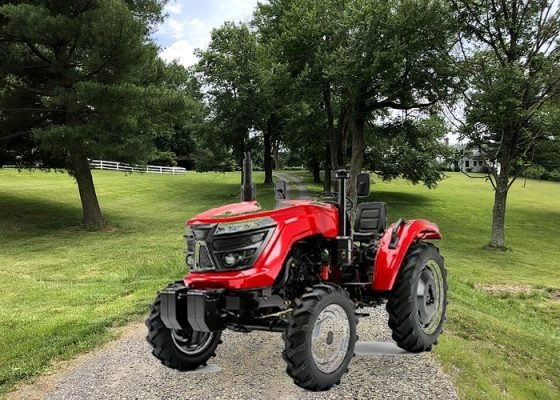
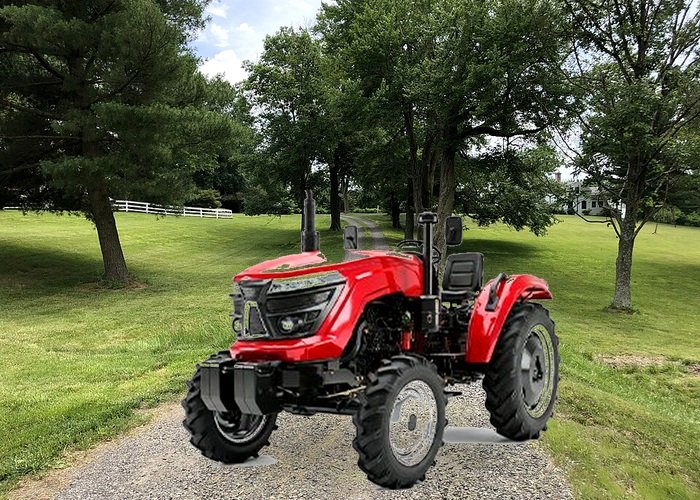
Choosing tractor horsepower sounds like a numbers problem, but most landowners discover it is really a work problem. Five acres of open grass is not the same as five acres with a steep gravel lane, wet pasture corners, a garden, fencing projects, and a pile of material that always needs moving. Ten acres can be easy if the work is mostly mowing. Ten acres can feel demanding if the tractor also handles driveway grading, loader work, small farm chores, and seasonal cleanup.
That is why the best starting question is not, “How much horsepower can I buy?” It is, “What jobs will this tractor do every month?” A compact tractor should match the work that repeats. If you choose only for one big weekend project, the machine may feel too large, too small, or poorly matched for the next few years of ownership.
This guide uses a practical 5 to 20 acre lens. If you want to compare machines while reading, open the SeekMach tractor category and use this article as a jobsite checklist. The right tractor is the one that fits your land, your attachments, and your work rhythm.
Acreage does not tell the whole story. A five-acre property with a long gravel driveway and a woodlot may need more tractor than a ten-acre property that is mostly open mowing. Before thinking about horsepower, write down the jobs in plain words: mowing, loader work, grading, garden prep, moving firewood, pulling a trailer, handling gravel, clearing brush, or maintaining a small pasture.
Now rank them by frequency. A job done every week matters more than a job done once a year. If mowing is the weekly job, maneuverability and mower matching matter. If driveway repair happens after every heavy rain, traction and rear implement performance matter. If loader work is constant, ballast, visibility, and hydraulic performance become important.
Itu SeekMach product overview is useful here because it lets you compare tractors with excavators, skid steer loaders, and lawn mowers. Sometimes a buyer expects one tractor to do everything when another type of machine would handle part of the work better.
| Property situation | Typical tractor priorities | What to check before buying |
|---|---|---|
| 5 acres, mostly lawn and garden | Maneuverability, mower match, light loader work | Turning space, mower width, storage, turf protection |
| 5-10 acres with gravel drive | Loader work, rear blade or box blade, traction | Ballast, tire choice, driveway grade, wet areas |
| 10 acres mixed pasture and property work | Mowing, pulling, loader work, implement flexibility | PTO needs, hitch setup, field access, service space |
| 10-20 acres with heavier chores | More reserve power, stronger lift, larger implements | Soil, slopes, transport, attachment weight |
| Small farm with repeated implement work | PTO, hydraulics, operator comfort, service access | Daily use pattern, implement storage, maintenance plan |
Use the table as a starting point, not a strict rule. The same acreage can need different tractors depending on terrain and tasks.
Horsepower matters, especially when running PTO-driven implements like rotary cutters or tillers. But horsepower does not work alone. Tractor weight, traction, tire choice, transmission, hydraulic flow, loader lift, and implement match all shape real performance. A tractor with enough engine power can still struggle if it lacks traction or is paired with the wrong attachment.
For landowners, the common mistake is treating horsepower as the main answer. A better question is whether the tractor can complete the whole job comfortably. Can it pull the mower without bogging down? Can it grade the driveway without spinning? Can it lift material safely with proper ballast? Can the operator see what the loader is doing?
For general tractor safety habits, Penn State Extension’s tractor safety resources are useful because they explain why stability, rollover risk, and safe operation matter in ordinary property work.
A front loader turns a compact tractor into a daily helper. It moves mulch, soil, compost, gravel, feed, tools, branches, and small piles of debris. For many landowners, the loader is used more often than any rear implement.
Loader work also adds responsibility. A raised bucket changes the tractor’s balance. Heavy material should be carried low. Rear ballast matters. Soft ground matters. The operator needs a clear view of the bucket edge. If loader work is a major part of your acreage plan, do not choose a tractor only by engine power. Look at lift, ballast options, hydraulic response, and how comfortable the machine feels during slow, precise movement.
A gravel driveway reveals whether a tractor is matched to the property. Grading asks for traction, weight, slow control, and the right rear attachment. A box blade or rear blade can be simple, but it still needs a tractor that can pull steadily without bouncing or losing grip.
If your property has a long drive, a sloped section, or washouts after rain, include driveway work in the buying decision. Walk the drive after bad weather. Look for low spots, loose stone, soft shoulders, and tight turnarounds. Then ask whether the tractor and rear implement setup can work that route comfortably.
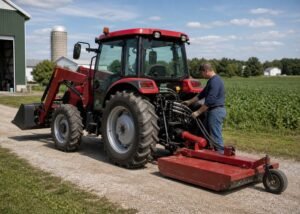
Implements are where tractor ownership becomes real. A rotary cutter, finish mower, tiller, box blade, rear blade, carry-all, sprayer, and trailer all have different needs. Some need PTO power. Some need tractor weight. Some need enough space to turn. Some need storage room when not in use.
Before buying, list the implements you realistically expect to use in the first year. Then check whether the tractor can run them comfortably. The SeekMach application solutions page can help you think by job type instead of only by product category.
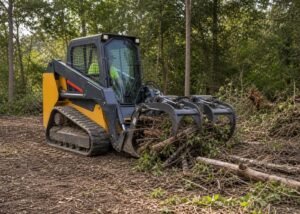
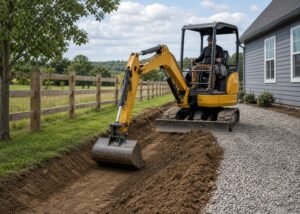
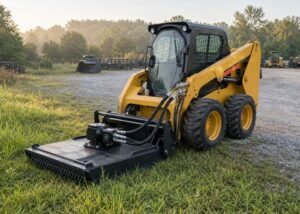
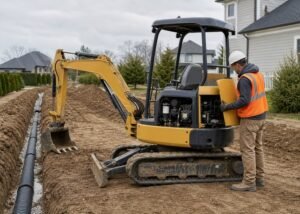
If your most important work is digging trenches or drainage, compare an excavator for controlled digging. If most work is loading pallets or cleaning a compact jobsite, a pemuat kemudi selip may be a better match. A tractor is strongest when it pulls, mows, grades, carries, and runs implements across property.
Before choosing, watch how compact tractors work on small properties. This related YouTube video is a useful reference for seeing compact tractor work and maintenance habits: compact tractor small acreage work and maintenance. Do not watch only the moving machine. Watch the attachment setup, turns, approach to material, and pace of the work.
Videos help because they show what numbers cannot: how much room the tractor needs, how slowly good loader work happens, and how different attachments change the job.
The first mistake is buying too small because the property sounds small. Five acres can still include heavy driveway work, slopes, and loader tasks. A tractor that is underpowered or too light may spend more time struggling than working.
The second mistake is buying too large because the buyer wants reserve capacity. A larger tractor may feel strong, but it can be harder on lawns, harder to store, and more awkward in gardens, orchards, and tight lanes.
The third mistake is ignoring tire choice. Turf, industrial, and agricultural-style tires all behave differently. Your soil, slopes, lawn sensitivity, and traction needs should guide the choice.
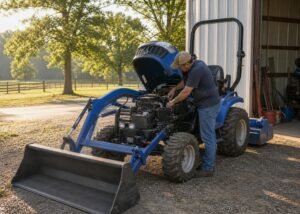
The fourth mistake is forgetting service access. A tractor that is easy to inspect, clean, grease, and maintain will be used with more confidence.
Picture a ten-acre property after three days of rain. The grass is long near the fence line, the gravel drive has a soft shoulder, and a small pile of compost needs to move from the barn to the garden. A tractor chosen only for mowing may handle the grass but feel light when pulling gravel back into place. A tractor chosen only for loader lift may feel clumsy around trees and lawn edges.
This is why the normal workday matters. The owner may spend thirty minutes carrying compost, one hour mowing rough grass, twenty minutes repairing the drive, and another twenty minutes moving branches. None of those jobs is extreme by itself. Together, they tell you what tractor size and horsepower range will feel comfortable.
If the tractor can move between those jobs without constant struggle, it is probably close to the right match. If every job requires a compromise, the machine may not fit the property.
PTO horsepower matters when the tractor runs powered implements such as rotary cutters, tillers, spreaders, or certain mowers. Engine horsepower and PTO horsepower are not the same thing, so check the implement requirement carefully. A tractor may have enough engine power for loader work but still be near the lower edge for a wider rotary cutter.
Attachment width should also match the land. A wider implement can finish faster in open ground, but it may be awkward near fences, trees, gates, and uneven corners. A slightly smaller implement that fits the property can be more useful than a wider one that only works well in perfect open areas.
A tractor needs a place to live, and attachments need space too. Before buying, decide where the tractor will park, where the rear implements will sit, and whether there is enough room to connect tools safely. A machine that barely fits in storage can become annoying every time it is used.
Access also matters around the property. A tractor may be fine in an open field but frustrating near a garden gate, orchard row, shed, or wooded lane. Measure the narrow places, not just the acreage.
For 5 to 20 acres, the right tractor is not the one with the biggest number. It is the one that fits your repeated jobs, runs your attachments, stays stable on your ground, and remains practical to maintain. Start with the work. Then check horsepower, PTO, loader lift, traction, tire choice, and implement matching.
If the tractor fits your normal week, it will feel useful for years. If it only fits one imagined project, it may become an expensive compromise.
It depends on the jobs. Light mowing and garden work may need less tractor than loader work, driveway grading, and brush cutting on the same acreage.
No. Horsepower matters, but tractor weight, traction, ballast, hydraulic performance, and implement matching also shape real work.
Many landowners find a front loader useful for soil, mulch, gravel, firewood, branches, and general cleanup. Plan ballast if loader work is common.
A suitable tractor with enough traction and a rear blade or box blade is often useful. The best setup depends on driveway length, slope, gravel condition, and washout patterns.
Choose a tractor for mowing, pulling, grading, and implement work. Compare a skid steer loader if the work is mostly loading, carrying, and compact site cleanup.