Telephone/WhatsApp:+86 156 2656 0610

Telephone/WhatsApp:+86 156 2656 0610
Email:info@seekmach.com



Quick answer: Select compact equipment from the recurring work cycle, access envelope, ground conditions, attachment demand, transport payload, operator skill and annual utilization—not from a generic market label.
| Tugas | Primary machine check |
|---|---|
| Below-grade digging | Excavator reach, stability and attachment hydraulics |
| Memuat | Loader ROC, lift path and load center |
| Property work | Tractor PTO, hitch, tires and ballast |
No. Attachment ownership, transport, downtime and operator productivity determine the useful cost.
Quick answer: Choose compact equipment by the recurring job, access limits, ground conditions, attachment demand, transport plan and support needs—not by market-size headlines.
| Work pattern | First machine question |
|---|---|
| Trenching and below-grade work | Excavator reach, stability and attachment hydraulics |
| Loading and material handling | Loader ROC, lift path and load center |
| Property maintenance | Tractor PTO, hitch, ballast and implement fit |
Include trailer capacity, attachment changeover, daily inspection, service access, parts lead time and operator readiness before committing to a machine type.
No. Versatility helps only when the attachments, transport and operator workflow suit the actual jobs.
Urban job sites are getting smaller, more complex, and more expensive to disrupt — and fleet managers who are still sizing up are getting outpaced by those who have already sized down.
The construction industry is undergoing a structural pivot. Large-scale greenfield development is giving way to dense urban infill, utility replacement, and mixed-use redevelopment in tight corridors where a full-size excavator simply cannot operate efficiently. This shift isn’t cyclical — it indicates a permanent change in how cities grow. According to Future Market Insights, the global compact construction equipment market is projected to reach approximately $107.5 billion by 2030, a figure that signals broad industry consensus, not just a niche trend.compact construction equipment
Compact excavators are now outperforming mid-size units on ROI for urban fleet operations, driven by lower fuel consumption, reduced transport costs, and faster mobilization cycles. On congested city sites, a 1.5- to 3-ton machine often completes work that would require road closures and extended permits for larger equipment. The math favors compact, and 2026 fleet strategy increasingly reflects that reality.
Global urbanization is the underlying engine. As more infrastructure spend concentrates inside existing city boundaries rather than expanding outward, machinery footprint requirements shrink accordingly. Fleet managers are adapting by building smaller, more versatile lineups capable of rotating across multiple urban contracts simultaneously.
Access to this technology has also expanded meaningfully. Factory-direct models are lowering the entry barrier for contractors who previously couldn’t justify the capital outlay — whether that means exploring purpose-built urban excavators or sourcing a full compact lineup direct from the manufacturer. That democratization of access is reshaping competitive dynamics across fleet tiers.
What’s accelerating this transition even further is the integration of precision technology directly into compact machines at the factory level — and that’s exactly where the next layer of the 2026 strategy gets interesting.
Precision grade control is no longer an aftermarket luxury reserved for large-scale earthmovers — compact machines are now arriving from the factory floor with it built in.
According to the Association of Equipment Manufacturers (AEM), integration of 2D and 3D grade control systems into compact excavators is becoming a standard factory-fit requirement. This shift fundamentally changes what a small machine can accomplish on a congested urban site. Where operators once relied entirely on trained instinct to hit grade, semi-autonomous trenching guidance now does the heavy lifting — which matters enormously given the ongoing skilled labor shortage squeezing fleet managers across North America.
Grade control in compact units doesn’t just add precision — it actively removes the margin for costly human error on every dig.
In practice, 3D systems use GPS-referenced machine models to prevent over-digging in real time. The bucket stops where the design surface says it should, protecting both schedule and material budgets. A common pattern on drainage and utility projects is a measurable reduction in rework cycles, simply because operators aren’t guessing depth. For fleet managers evaluating right-sized equipment for tight sites, that precision translates directly into predictable project margins.
Factory-fit grade control also benefits from ISO 9001-certified processes, which enforce dimensional tolerances and quality verification at every stage of assembly. When a sensor array or control interface is integrated at the factory under a certified quality management system — rather than retrofitted in the field — calibration consistency is far more reliable. The result is a compact machine that behaves like precision infrastructure, not a scaled-down approximation.
As fleets modernize around this new baseline of intelligent, compact capability, a parallel conversation is accelerating — one centered on power source. The same duty cycles that make compact machines ideal for grade control work also position them perfectly for the next operational frontier: zero emission construction equipment and the electrification strategies reshaping fleet TCO in 2026.
Electric compact machinery is reshaping job site economics — and the compliance angle is only part of the story.
Itu compact construction equipment market has emerged as the ideal proving ground for battery-electric technology precisely because compact duty cycles align naturally with current battery capabilities. Mini excavators, skid steers, and compact track loaders typically operate in short, intense bursts — digging, loading, grading — rather than running continuously at peak load for eight-plus hours. That intermittent demand profile means a modern lithium-ion pack can realistically cover a full shift without mid-day charging anxiety, something that remains a genuine constraint for larger electric machines.
Operating context is where electric compact equipment moves from interesting to indispensable. Hospitals, schools, residential neighborhoods, and historic districts all impose noise ordinances that effectively shut diesel equipment out of the most valuable contract windows — early mornings, evenings, and weekend slots. A battery-electric compact unit running below 65 decibels doesn’t just comply; it opens access to premium contracts that competitors running diesel simply cannot bid on.
The financial case is hardening, too. As International Construction (KHL Group) notes:
“The move toward electrification in the compact segment is no longer just about emissions; it is about the total cost of ownership.”
Diesel engines require oil changes every 250–500 hours, fuel filters, coolant flushes, and emissions system servicing. Electric drivetrains eliminate most of that scheduled maintenance, cutting service costs by an estimated 30–40% over a machine’s working life. Fuel price volatility — a recurring pressure that fleet managers have tracked closely through 2025 — also disappears as a budget variable.
CE marking rounds out the business case. For fleet managers sourcing equipment for global deployment, CE-marked electric compacts meet baseline regulatory requirements across European markets and set a compliance floor that simplifies export logistics, insurance underwriting, and resale valuation in multiple jurisdictions simultaneously.
That versatility across regulatory environments points directly to the next competitive frontier: how these same compact platforms are being configured to carry an expanding universe of powered attachments.
The modern compact excavator isn’t just a digging machine — it’s a hydraulic power platform capable of running an expanding universe of precision tools that redefine what a single piece of equipment can accomplish on a job site.
Reflecting broader 2026 construction machinery trends, attachments now account for up to 25% of the total value of a compact machine’s utility, according to EquipmentWorld. That figure reframes the purchasing decision entirely. Fleet managers who evaluate a machine based on its base-unit specs alone are leaving significant operational leverage on the table. The real ROI calculation has to include what the machine can become once it’s paired with the right attachment ecosystem.
Quick-coupler adoption is one of the highest-impact, lowest-friction upgrades available to fleet operators today. Hydraulic or mechanical quick-couplers eliminate the time-consuming process of manual pin changes, allowing operators to swap between a bucket, breaker, and auger in minutes rather than hours. On commercial utility or municipal projects — where a single machine may transition between three task types in a single shift — that agility compounds into measurable savings across the project timeline.
The attachment conversation gets more sophisticated when high-flow auxiliary hydraulics enter the picture. Tools like hydraulic shears, tiltrotators, Dan flail mowers draw considerably more hydraulic flow than standard buckets. Tiltrotators in particular, which allow full 360-degree rotation and tilt of any attachment, typically require flow rates between 15–25 gallons per minute to operate at full performance. Specifying a machine with factory-configured high-flow circuits — rather than retrofitting later — is the smarter procurement path.
This is where OEM/ODM capability becomes a genuine differentiator. Seekmach’s custom integration options allow fleet buyers to configure hydraulic output, coupler compatibility, and auxiliary circuit specs at the build stage, avoiding the cost and compromise of post-purchase modifications. Explore the Seekmach blog for attachment guidance that breaks down flow requirements by tool category.
As attachment intelligence grows, so does the data generated by the machines carrying them — which sets the stage for the next frontier in fleet management strategy.
Smart construction equipment is no longer a luxury category — in 2026, it’s the baseline expectation for any fleet that wants to remain competitive on complex, multi-stakeholder projects.
Gartner identifies AI and automation as top strategic technology trends for 2026, emphasizing the balance between rapid adoption and practical, measurable application. That tension plays out clearly on the modern job site, where fleet managers are weighing the real cost of smart machine integration against tangible productivity gains.
AI-driven predictive maintenance is proving to be the highest-ROI entry point. Rather than scheduling service intervals by the calendar, machine telematics now flag hydraulic pressure anomalies, track undercarriage wear cycles, and alert operators before a minor issue becomes a mobilization delay. In practice, this shifts maintenance from a cost center into a risk management tool — one that compact machine operators running fuel-efficient equipment on tight urban schedules can’t afford to ignore.
Edge computing is the infrastructure layer making this possible without constant connectivity. By processing sensor data directly on the machine rather than routing it through a cloud server, operators get real-time feedback on load stress, tilt thresholds, and attachment performance — even on remote sites with limited signal.
The automation-versus-oversight balance remains a genuine challenge. Fully autonomous compact machines are still years from widespread deployment. What’s emerging instead is augmented operation — semi-automated features like grade control and swing limiters that reduce operator fatigue while keeping a human in final control.
Critically, smart machines are also becoming communication nodes. Project management software now pulls live cycle counts, fuel burn, and idle-time data directly from the machine, giving municipal project leads the transparency they demand.
This connectivity layer is quietly changing how procurement decisions get made — and whether you source through a traditional dealer or go factory-direct heavy equipment matters more than ever in that equation.
Direct sourcing from certified manufacturers is now one of the highest-leverage decisions a fleet procurement manager can make in 2026.
The traditional dealer model is under pressure. As compact excavator technologies matures and global export infrastructure strengthens, the layered markups of regional distributors are increasingly difficult to justify. Mid-tier construction firms are recognizing that the same machine reaching them through a three-tier channel can be sourced at 15–25% lower landed cost by engaging manufacturers directly — without sacrificing after-sales support.
Certification is your first filter. When evaluating any direct-from-factory partner, ISO 9001 and CE certifications aren’t optional talking points — they’re baseline proof that a manufacturer operates within a documented quality management system. Shandong SeekMach, for example, runs a 50,000 m² integrated production facility purpose-built to maintain these standards at scale. That kind of vertical integration matters because it compresses the gap between design intent and finished product, reducing the variation risk that plagues disjointed supply chains.
Integrated production directly benefits the buyer. When fabrication, assembly, hydraulic fitting, and quality inspection happen under one roof, defect detection happens earlier and rework costs stay internal — not passed downstream to the customer. In practice, buyers sourcing from integrated manufacturers report fewer commissioning issues and faster warranty resolution. For fleet managers running tight urban job sites where downtime is acutely expensive, that reliability advantage compounds quickly.
A practical checklist when evaluating direct-from-factory partners:
As global fleet strategy continues to evolve, understanding which manufacturers are positioned to build lasting partnerships — rather than transact — becomes the real differentiator. That question of long-term positioning leads directly into the broader conversation around future-proofing your entire fleet for the decade ahead.
The 2026 machinery cycle marks a decisive inflection point — fleet managers who read the signals now will hold a structural advantage through 2030 and beyond.
The clearest signal from the 2026 White Paper on Development Trends is that the industry is leaving behind simple product-sale models. The new competitive moat is ecosystem integration — suppliers, dealers, telematics platforms, and financing partners operating as a unified service layer rather than disconnected vendors. For fleet managers, this means procurement decisions made today carry longer tail implications than in any previous cycle. Choosing a machine is increasingly choosing an ecosystem, and that ecosystem either supports your operational scaling or constrains it.
Alongside this structural shift, there’s a tangible replacement pressure building. Large portions of global heavy equipment fleets are aging past their optimal service windows. As those machines come due for replacement, the calculus has fundamentally changed. The default assumption — replace heavy iron with equivalent heavy iron — no longer holds in urban-dense markets where jobsite constraints, emissions regulations, and labor costs have all tightened simultaneously. Compact equipment isn’t a compromise for fleets managing this transition; it’s the rational upgrade path. Understanding long-term ownership economics becomes critical when evaluating whether compact machines can absorb the workload previously handled by larger units.
The compact segment is, in the clearest strategic terms, a blue ocean for the next decade. Market saturation in the heavy equipment tier is driving margin compression across the board, while the compact segment continues to attract new buyer categories — municipalities, specialty contractors, utility operators — who were previously priced or sized out. That expanding buyer base, combined with accelerating multi-tool attachment adoption, positions compact machines as the highest-growth category in the fleet space through 2030.
Each of these forces — ecosystem integration, replacement cycles, and blue-ocean demand — ties directly into the key takeaways that will shape smart fleet planning decisions for the year ahead.
Compact equipment has crossed a strategic threshold — it is no longer auxiliary infrastructure but the primary tool shaping how urban construction gets done in 2026.
Compact equipment earns its place in urban projects not by compromising on power, but by delivering precision where brute scale cannot. As city cores densify and jobsite access tightens, the ability to work within constrained footprints defines project viability. Fleet managers who still measure machine value in raw horsepower are applying an outdated metric. The field has moved toward multi-tool versatility as the decisive measure — a machine that accepts a tiltrotator, a high-flow shear, and a grading blade across a single shift replaces what would have otherwise required three separate mobilizations.
Electrification deserves the same reframe. It is easy to categorize zero-emission equipment as a compliance play, but the total cost of ownership math tells a different story. Reduced fuel spend, lower scheduled maintenance intervals, and quieter operation that unlocks off-hours urban work windows all feed the bottom line directly. For compact duty cycles specifically — the shorter shifts and repeated repositioning that characterize urban infrastructure work — battery technology in 2026 is genuinely ready. The Global Fleet Summit 2026 consensus among procurement leaders has reinforced this point: electrification is a TCO decision before it is an environmental one.
Factory-direct sourcing, covered in detail earlier in this piece, remains the most reliable path to accessing advanced technology without absorbing the markups built into multi-tier distribution. The compact machinery segment is now recognized as an emerging market opportunity worth tens of billions — meaning more manufacturers are competing on specification depth, not just price. That competitive pressure benefits buyers who engage early and directly.
Before making final procurement decisions, understanding operational risk is equally important. Even the most capable compact machine introduces safety variables on tight sites that experienced operators manage through discipline and protocol — a factor that belongs in any complete fleet planning conversation.
The questions that remain — around attachment priorities, warranty structures, and real-world shift performance — are addressed directly in the next section.
Compact construction equipment in 2026 raises three questions fleet managers ask more than any other — and each has a clearer answer than you might expect.
Is zero-emission equipment ready for full-day commercial shifts?
For compact duty cycles, the answer is yes. Battery-electric compact excavators and skid steers operating in the 1–6 ton class routinely complete 6–8 hour urban site shifts on a single charge, particularly when regenerative hydraulics recover energy during swing and boom-down cycles. Heavier continuous-duty applications — rock breaking over multiple shifts — still favor diesel or hybrid configurations. However, for the trench work, utility installation, and finish grading that defines most compact schedules, electric drivetrains have crossed the practical threshold. Fleets piloting electric compact units report fuel and maintenance savings that typically recover the price premium within 18–24 months.
What attachments matter most heading into 2026?
Two stand above the rest. Tiltrotator have moved from a Scandinavian specialty to a near-universal productivity multiplier — operators reduce repositioning time by up to 40%, which translates directly into daily output on congested sites. High-flow shears and processors rank second, driven by the surge in demolition and infrastructure renewal contracts filling urban project pipelines. If you’re evaluating which platform to standardize around, reviewing sub-ton performance specs early informs which carriers can support these attachment demands without hydraulic compromise.
How does factory-direct sourcing affect warranty and service coverage?
Integrated production eliminates the fragmented supply chains that delay parts. Seekmach, for example, supplies CE-marked equipment with factory-direct support across more than 50 countries — meaning warranty claims, parts fulfillment, and technical support trace back to a single accountable source rather than a distributor network that may hold inconsistent inventory.
Built for the Toughest Jobs. Whether your fleet operates on dense urban sites or remote terrain, the compact equipment decisions you make in 2026 will define your operational ceiling for years ahead. Explore your options, pressure-test your sourcing channels, and move with the cycle — not behind it.
Search performance shows readers need a faster answer for compact construction equipment market. Confirm the exact model, operating weight, included equipment, service support, documents, and recurring ownership costs in writing. Compare alternatives on the same scope and never substitute a headline number for a complete delivered-and-supported specification.
| Check | Evidence | Decision |
|---|---|---|
| Machine fit | Manual and serial-specific specification | Pass only when job limits are covered |
| Mendukung | Parts list, warranty route, response owner | Price downtime risk separately |
| Total cost | Written quote with exclusions | Compare like for like |
Related planning: used compact tractor inspection checklist Dan mini excavator trailer transport guide.
Search performance shows that readers need a faster, clearer answer for compact construction equipment market. Confirm the exact model, operating limits, included equipment, service support, documents, and recurring ownership costs in writing before committing.
| Check | Evidence | Decision |
|---|---|---|
| Machine fit | Manual and serial-specific specification | Pass only when the intended job is covered |
| Mendukung | Parts list, warranty route, response owner | Price downtime risk separately |
| Total cost | Written quote with exclusions | Compare like for like |
Related planning: use the used compact tractor inspection checklist, itu compact tractor loader ballast guide, and the hydraulic coupler pressure guide.
Keep the serial-specific specification, inspection findings, included attachments, support contact, warranty exclusions, delivery scope, and all assumptions used in the comparison.
Search performance indicates that buyers need a faster way to match compact construction equipment to access, production, transport, and attachment constraints. Start with measured gate width, working radius, ground conditions, lift or dig requirement, trailer payload, local service coverage, and the exact attachment interface—not a broad machine label.
| Decision factor | Evidence to collect | Stop condition |
|---|---|---|
| Site access | Measured width, height, turning and tail clearance | The machine cannot enter, rotate, or leave safely |
| Working capacity | Manual ratings at the required reach and attachment weight | The job depends on exceeding a rated limit |
| Mengangkut | Operating weight plus attachment, fuel, chains and trailer limits | Combined load exceeds any vehicle or axle rating |
| Mendukung | Parts path, service contact, warranty scope and lead time | Downtime exposure has no practical mitigation |
Use the mini excavator side-shift boom guide for confined trench work, compare skid steer tires for soft ground and winter traction, and review the compact tractor snow-removal setup when seasonal utilization affects the purchase.
Ask which specifications are serial-specific, what is excluded from the delivered configuration, how attachment weight changes usable capacity, what maintenance is due at delivery, and who owns the response when a part or warranty claim stops the machine.
2026-08-25 performance update: evidence to verify before committing. A small contractor should choose compact construction equipment by the job that controls access, production and risk—not by market forecasts. Write down the narrowest entrance, required dig depth or lift height, heaviest attachment and payload, surface limits, transport capacity, hydraulic demand and annual utilization before comparing machine types.
| Primary bottleneck | Machine path to evaluate first | Verification question |
|---|---|---|
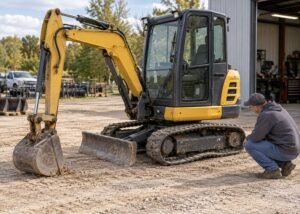
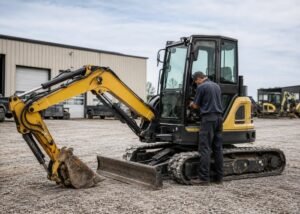
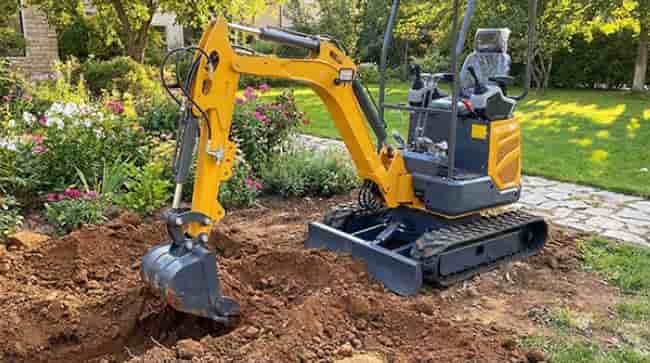
| Below-grade digging and utilities | Mini excavator | Can reach, tail swing and lift chart fit the trench? |
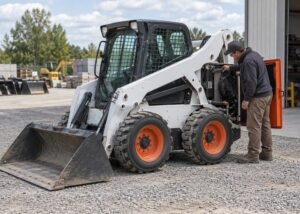
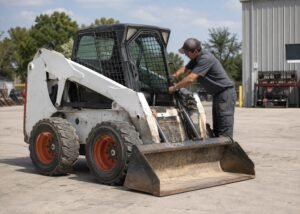
| Fast loading and attachment changes | Skid steer or compact track loader | Do ROC, flow, coupler and ground pressure match? |
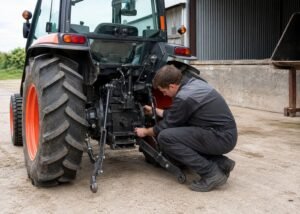
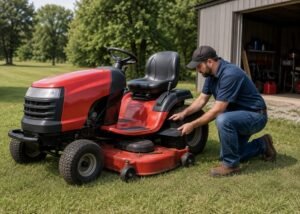
| Mowing, PTO work and property travel | Compact tractor | Do PTO power, hitch, ballast and tires fit? |
Compare ownership only after the machine passes the job-fit screen. Include mobilization, attachments, operator time, maintenance, downtime and resale. The land-clearing machine comparison shows how the same decision changes when vegetation, roots and finish work dominate.
This update gives readers a faster decision path for compact construction equipment market. Start with the actual job, measured access, surface and slope, workload, transport limits, operator experience and service support rather than choosing from a headline specification alone.
| Decision | Evidence to verify | Next step |
|---|---|---|
| Job and site fit | Dimensions, terrain, material, cycle time and working envelope | Reject configurations that exceed a documented limit |
| Machine condition | Serial-specific manual, maintenance record and controlled function test | Price faults and downtime separately |
| Total ownership fit | Delivered quote, transport, wear parts, service route and warranty contact | Compare like-for-like scope |
Use a written checklist and preserve photographs, measurements and the exact configuration offered. A generic brochure, translated duplicate page or short demonstration does not replace serial-specific evidence.
Continue with this related SeekMach decision guide and review the current equipment categories.
Use these focused checks when a compact machine develops a symptom under load. For tractors, follow the compact tractor hydraulic overheating diagnostic sequence. For excavators, measure rather than guess with the mini excavator slew-ring play guide. For skid steers, preserve the fluid evidence described in the skid steer chaincase oil inspection.
Each path begins with the correct manual, a safe isolation procedure, and a repeatable record. Link the symptom to temperature, movement, fluid condition, hours, attachment, and work cycle before approving parts.
Match the symptom to the correct evidence before buying parts. Diagnose compact tractor steering that becomes hard when hot, preserve oil evidence with the mini excavator final-drive oil guide, and isolate deck rotation faults using the zero-turn mower spindle-bearing diagnostic.
Each guide begins with safe isolation, model-specific documentation, and repeatable before/after measurements. This reduces unnecessary component replacement and improves the maintenance record.
Start with the symptom and identify where force is lost. Diagnose tractor PTO torque loss under implement load, measure mini excavator boom and bucket cylinder drift, and trace a skid steer parking brake that will not release.
Each path begins with safe isolation and model-specific documentation, then separates electrical commands, hydraulic pressure, friction parts, valves, seals, linkage, and load. Record before-and-after measurements so the next maintenance decision is based on evidence rather than repeated parts replacement.
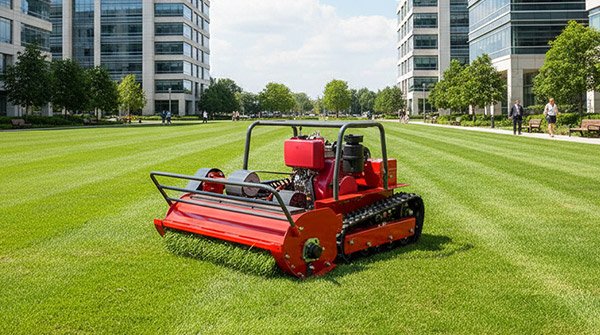
Start with the symptom and follow one measured path: diagnose a mini excavator that pulls to one side, trace a compact tractor PTO that will not engage, or restore a remote control mower pairing fault.
Supporting checks include track sag and undercarriage drag Dan hydraulic coupler and hose inspection. Each guide begins with safe isolation, records the original condition and verifies the repair under the same operating conditions.
Small changes in heat, travel alignment or cut quality can identify a service need before a job stops. Follow the skid steer hydraulic-overheating path when temperatures rise under load, the mini excavator track recovery and prevention path for a loose or derailed track, and the zero-turn uncut-strip guide for deck, blade, tire and overlap checks.
Each guide begins with a safe parking condition and ends with a model-specific verification. Use this hub to select the machine and attachment that fit the job before operating or servicing equipment.
Match the job to the machine, then use descriptive service paths for temperature, travel and cut-quality symptoms before a failure stops work.