Telephone/WhatsApp:+86 156 2656 0610

Telephone/WhatsApp:+86 156 2656 0610
Email:info@seekmach.com

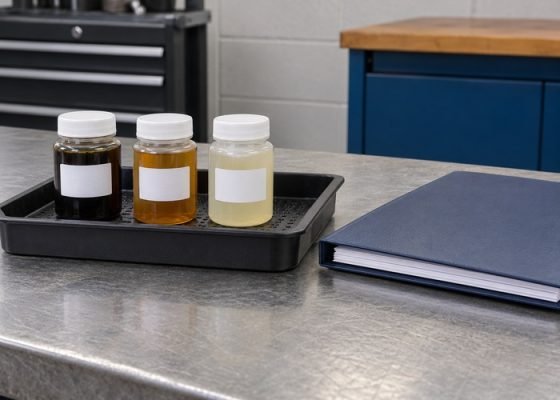
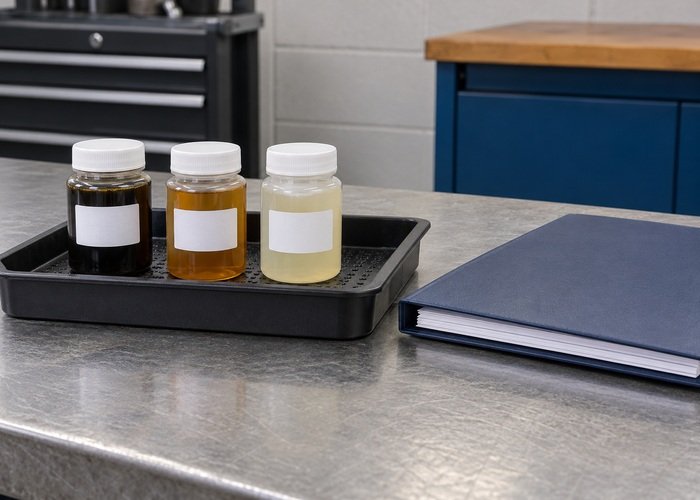
Before handing over used hydraulic oil from a mini excavator, identify the fluid, its origin and any known contamination, then confirm the applicable classification and collection arrangements. Keep it separate from other waste streams while the responsible provider determines how it should be handled. An informal offer to take “old oil” is not enough evidence of a suitable destination.
This guide helps owners organize a service-to-collection record. It does not assign a universal waste code, approve a disposal route or provide a draining procedure. The legal examples below are identified by jurisdiction; confirm the requirements for the actual site, fluid and people handling it before storage or movement.
Record which machine and system produced the fluid, when the service took place and who performed it. Keep the known product identity and relevant maintenance record together. A container labelled only “oil” does not explain whether it holds used hydraulic fluid, unused product, fuel residues or a mixture.
Distinguish facts from assumptions. The product originally specified for the machine may not be the product actually removed if the service history is uncertain. Report any known topping-up, accidental addition or other event that may affect identity. Do not create certainty by copying a manual’s recommended oil name into the waste description.
Itu hydraulic filter service guide concerns the maintenance task that may accompany a fluid service. The resulting liquid, removed filters and contaminated materials need their own appropriate identification and handling arrangements. Do not assume they all belong in one collection container.
In the United States, the EPA used-oil business guidance considers origin, use and contamination in defining used oil. Hydraulic use can fall within that framework, while state requirements may be stricter. The definition is not permission to combine unknown liquids or choose any collector.
Keep that US context explicit. A business elsewhere must use the applicable local classification rather than treating the EPA term as a worldwide waste code. The responsible waste specialist needs the actual history and composition information, including uncertainty, to decide which requirements apply.
Ask the provider what information is missing before a quotation can be accepted. If an analysis or additional documentation is required, retain the request and the resulting interpretation. A convenient collection price does not resolve an unanswered classification question.

Itu EPA reference table includes used industrial hydraulic fluid among its examples, while distinguishing unused oil wastes, antifreeze and certain other materials. A substance outside the used-oil definition may still be regulated and harmful. Its exclusion is not permission to discard it without assessment.
Record whether the fluid has contacted water, cleaning products, solvents or other substances where known. Do not decide that an uncertain mixture is ordinary hydraulic oil because it looks dark or feels oily. Retain the observations for the provider who will determine the appropriate route.
Keep unused surplus, service-drained fluid and spill-cleanup materials distinct in the information you send. They may have different histories even if the original product was the same. A single general description can hide the distinction needed for classification, storage and collection.
Itu GOV.UK waste-classification guidance explains the need to identify and classify business waste and provide appropriate information to a contractor. It addresses a separate jurisdictional framework from the US examples above. Use the rules and competent advice applicable to the actual site.
Do not invent a waste code from a short internet description. A code or classification supplied for another company’s stream may not describe your fluid. Ask how the classification was determined and what supporting information should be retained. Keep any unresolved composition question visible in the record.
Where the requirements depend on hazardous properties or other characteristics, have the responsible provider establish the appropriate assessment. An oil condition report intended to guide maintenance is not automatically a waste-classification decision. Its relevance must be confirmed for the question being answered.
| Information | What to state | What to confirm |
|---|---|---|
| Origin | Machine, system and service date | Which stream is being offered? |
| Identity | Known product and uncertainty in the history | Is further evidence required? |
| Contamination | Known additions, water or other contact | How does it affect classification and acceptance? |
| Quantity and containers | Measured or estimated amount and identified storage units | What handling and collection arrangement is appropriate? |
| Destination and documents | Proposed collector and receiving facility | Are authorization and paperwork suitable for this stream? |
Describe quantities honestly and retain the units. A volume estimated from container capacity is different from a measured collected quantity. Label it accordingly and reconcile the final collection document with the information supplied, rather than changing a number simply to make the records agree.
Use a container reference that remains recognizable through storage and collection. If there are several units, the collector should be able to connect each one to its description. A vague statement that all drums contain the same thing should not replace actual knowledge of their contents.
Have the responsible provider confirm suitable containment, identification and the storage arrangement. Follow the actual fluid and site requirements. Keep unknown materials separate and report a damaged container or leak through the site’s established arrangements. This article supplies no improvised containment design or spill-treatment recipe.
Do not add coolant, cleaning liquids or another waste stream to save space or simplify a collection. Mixing can change the information needed for safe handling and the appropriate route. If mixing has already occurred, disclose it rather than describing the contents as an unchanged single product.
Keep any sampling under an approved plan. Record who collected a sample, when and from which identified unit, and retain the interpretation supplied. A photograph of a sample jar is not a classification result, and a result from one container should not silently be applied to every container on site.
Ask the proposed provider to confirm that its arrangements cover the identified stream and the actual movement. Verify the authorization and receiving arrangements required locally. An informal recommendation or an offer to collect without documentation should not be treated as proof that the route is suitable.
Agree who supplies the relevant documents and which information must accompany the movement. The required document type depends on the applicable classification and jurisdiction. Do not assume that an ordinary invoice alone replaces all required waste-transfer or consignment information.
State any collection constraints in advance, including access and the condition of the identified units. A driver arriving at the site should not have to discover that the offered material differs from the accepted description. Resolve a discrepancy with the responsible provider before an unsuitable handover is completed.

Keep the collection date, provider, destination information, identified units and relevant documents with the service record. Record any refused unit or unresolved discrepancy separately. A receipt for part of a collection should not make the remaining material disappear from the site’s inventory.
Itu hydraulic oil analysis guide concerns the machine’s fluid-condition enquiry. Retain relevant findings, but distinguish maintenance conclusions from the waste provider’s acceptance and classification. A report can be useful evidence without answering every subsequent legal or handling question.
Keep new fluid handling separate as well. The clean hydraulic oil transfer guide addresses fluid going into the system. Equipment or containers used for waste should not be treated as suitable for clean supply without the appropriate approved arrangements.
If the collected quantity differs from the planned amount, record the explanation where available. If a unit remains on site, identify who will arrange its next step. The service job may be mechanically complete while the waste handover is still open; make that distinction visible to the people responsible.
Retain records for the period required locally and keep them retrievable by machine, service event and collection reference. No universal retention period is prescribed here. The useful result is a traceable sequence from the work that produced the material to the authorized handover, with uncertainties preserved rather than hidden.
Where several service jobs contribute material to a collection, keep each contribution traceable under the approved arrangements. Do not let a consolidated invoice erase the identity of a unit that was refused, left behind or described differently at handover.
No. Identify its origin, use and known contamination under the applicable classification framework.
Do not assume it describes your stream. Obtain the appropriate classification for the actual material.
Do not mix streams as a convenience. Confirm the appropriate arrangements and disclose any mixture that already exists.
Not automatically. Confirm what it establishes and obtain the relevant classification, acceptance and authorization evidence.