Telephone/WhatsApp:+86 156 2656 0610
Telephone/WhatsApp:+86 156 2656 0610
Email:info@seekmach.com

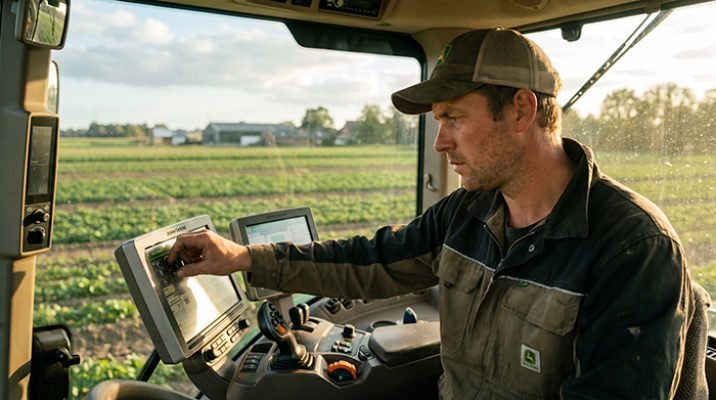
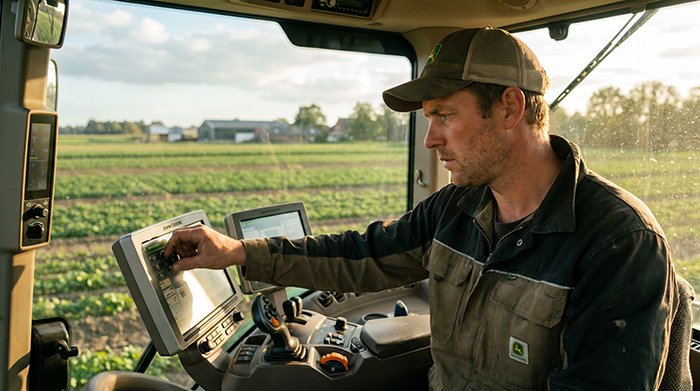
Tractor cab ergonomics have quietly become one of the most consequential performance variables in modern agricultural and construction operations — yet most SME owners still treat it as an afterthought.
The cab’s transformation over the past three decades is remarkable. What began as a rudimentary weather shield — thin metal walls, a basic seat bolted to the floor, and a single lever for steering — has evolved into a pressurized, climate-controlled environment packed with digital displays, precision controls, and telematics systems. As Profitable Farming Magazine noted, “The cab is no longer just a workstation; it is a high-tech control center where visibility and climate control are as critical as engine horsepower.” That shift in physical complexity demands a corresponding shift in how operators interact with the machine.
For SME owners, the business case is direct: comfort is a productivity metric. Research consistently shows that ergonomic stress accumulates across a shift, degrading decision-making speed and precision long before physical fatigue becomes visible. An operator working through discomfort isn’t just uncomfortable — they’re slower, less accurate, and more prone to costly errors. Consider a modern flat-floor cab design with an adjustable suspension seat; the difference in operator output over an eight-hour shift compared to a cramped, fixed configuration is measurable in acres covered and fuel burned.
Central to any ergonomic assessment is what engineers call the “Golden Triangle” — the spatial relationship between seat position, steering wheel angle, and pedal reach. When these three contact points are properly aligned, the operator’s body moves efficiently through repetitive control inputs. When they’re misaligned, cognitive load spikes. The operator compensates physically, which pulls mental bandwidth away from the task itself — GPS adjustments, implement depth changes, obstacle avoidance — exactly where situational precision matters most.
That link between physical strain and cognitive performance runs deeper than intuition suggests, and it’s rooted in measurable structural science — which is where vibration analysis enters the picture.
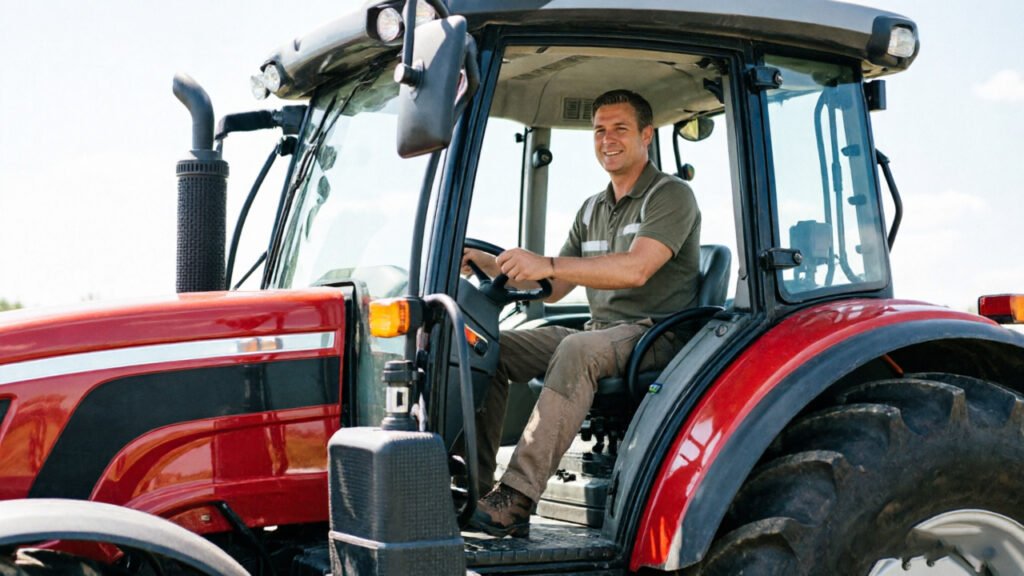
Structural vibration is one of the least visible — yet most damaging — forces acting on agricultural machinery operator comfort during a full shift.
Finite Element Method (FEM) analysis has transformed how engineers diagnose these threats. By modeling a tractor cab as a mesh of discrete structural elements, FEM simulations can pinpoint specific resonance frequencies — the points at which the cab structure vibrates in amplified, self-reinforcing waves. According to research on vibration and noise analysis of tractor cabs using FEM, these resonance frequencies are a direct contributor to musculoskeletal disorders, making their identification a critical first step in cab design.
The damping challenge is where chassis engineering gets complex. Low-frequency vibrations — typically in the 1–10 Hz range — travel efficiently through rigid frames and seats, landing squarely in the lumbar spine and lower extremities. Passive damping systems, including rubber isolation mounts and tuned mass dampers integrated into the cab subframe, work by absorbing and dissipating that vibrational energy before it reaches the operator. The structural integrity of the cab itself plays a decisive role here: a frame with poor rigidity will flex unpredictably, generating secondary vibration paths that even well-designed isolation systems can’t fully counter.
Acoustic comfort is closely tied to structural performance in ways that aren’t immediately obvious. A cab that vibrates excessively also radiates more noise — panel resonances amplify engine harmonics, hydraulic whine, and field debris impact into a sustained auditory load. That noise load isn’t just unpleasant; it degrades situational awareness by masking critical audio cues like unusual equipment sounds or external hazards.
Bolded callout: Reducing structural resonance doesn’t just protect joints — it directly preserves the operator’s ability to perceive and respond to their environment safely.
Memahami what creates fatigue at a structural level sets the foundation for the next critical question: where should controls be positioned to minimize the physical demand placed on an already-stressed body?
Where a operator sits in relation to the controls determines everything — fatigue levels, error rates, and long-term physical health all trace back to this single spatial relationship. According to the American Society of Agricultural and Biological Engineers, the so-called “Golden Triangle” — the configured relationship between the seat, steering wheel, and pedals — is the primary determinant of operator fatigue in the cab. Smart tractor cabin design features place every high-frequency control within this triangle deliberately, not arbitrarily.
The Primary Reach Zone is the ergonomic sweet spot where controls should always live. This zone spans the area directly in front of the operator at roughly elbow height, extending no more than 16 inches outward. Anything placed beyond it forces the operator into repeated shoulder extension or spinal rotation — movements that accumulate into Work-related Musculoskeletal Disorders (WMSDs) over a season of 8–12 hour shifts. Research published on tractor cab ergonomics confirms that poor control placement is a leading driver of operator strain in agricultural settings.
Three reach-zone priorities define an optimally configured cab:
Neutral posture is not a luxury — it’s a productivity mechanism. When the body maintains its natural alignment, muscle fatigue slows dramatically and cognitive bandwidth stays available for field decision-making rather than managing physical discomfort. The compounding effect of poor reach geometry is exactly the kind of hidden operational cost that compounds quietly — and it sets the stage for understanding why controlling whole-body vibration is the next critical variable to address.
Whole-body vibration is one of the most underestimated threats to operator health — and addressing it is among the best tractor cab features for long working hours that equipment manufacturers can prioritize.
Exceeding 0.5 m/s² of daily vibration exposure is not just uncomfortable — it’s clinically dangerous. Research consistently shows that tractor operations frequently surpass the ISO 2631-1 daily exposure action value of 0.5 m/s², the internationally recognized threshold above which employers must take corrective action. Beyond that threshold, operators face compounding risks: chronic lower back pain, intervertebral disc degeneration, and cumulative musculoskeletal disorders that develop silently over years of field work. A single season may not trigger symptoms, but a decade of daily exposure beyond safe limits often results in injuries serious enough to end careers.reers.
The mechanical solution starts with the seat. For operators running 8–12 hour shifts across uneven terrain, a standard foam seat offers almost no meaningful vibration attenuation. Air-suspension seats — designed to actively respond to terrain-induced impulses — are the foundational intervention. These systems use pressurized air bladders and dampers tuned to the operator’s body weight, dynamically absorbing shock frequencies that rigid seats simply transfer directly to the spine. The difference in cumulative daily vibration dose between a basic seat and a properly tuned air-suspension system can be substantial, often pushing exposure back below the action value threshold.
Factory-direct damping solutions take that protection a step further by engineering vibration attenuation into the cab structure itself, not just the seat. Seekmach integrates multi-stage damping at the cab mounting points, effectively isolating the operator environment from powertrain and terrain-generated frequencies before they even reach the seat. This layered approach — structural isolation combined with seat-level absorption — is what separates cabs that technically meet standards from those that genuinely protect operators over the long term.
Of course, vibration management addresses what operators feel. What they see matters just as much — and that’s where cab design decisions around glass area and pillar geometry become the next critical factor in operator wellbeing and safety.
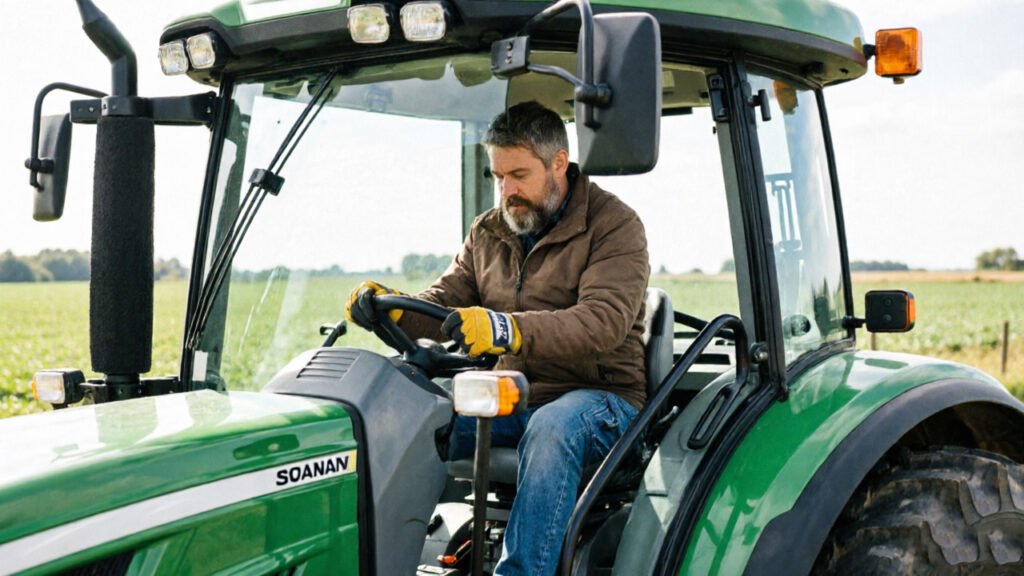
Clear sightlines aren’t a comfort feature — they’re a safety system, and understanding what makes a tractor cab ergonomic starts with recognizing how much visibility matters.
Pillar design is one of the most consequential cab decisions a buyer can make. Thick A-pillars create blind spots that force operators to physically reposition themselves to check clearances — adding fatigue, slowing work, and introducing risk. Slim pillar engineering, combined with expansive glass areas, dramatically reduces those gaps in the operator’s field of view. The practical result is faster, more confident maneuvering without constant head movement or guesswork.
That advantage becomes critical during hitching and tight-space operations. Aligning implements on uneven terrain, reversing toward a wall-mounted implement rack, or working near structures and livestock — all of these demand precise spatial awareness. When blind spots shrink, so does the margin for costly mistakes. According to the Health and Safety Executive Agriculture Sector, improving cab visibility can reduce the risk of on-farm accidents by up to 22%, particularly during hitching and maneuvering. That’s not a marginal gain — it’s a measurable shift in daily operational risk.
There’s a cognitive dimension here as well. Straining to see around pillars or peering through small glass panels places a continuous low-level demand on the brain. Over a ten-hour shift, that cumulative load contributes to decision fatigue — the same phenomenon that erodes accuracy and reaction time as the day progresses. Wider, unobstructed glass areas reduce that mental overhead, keeping operators sharper later in the day when errors are statistically most likely.
The financial case follows naturally. Fewer accidents mean fewer equipment repairs, lower insurance premiums, and reduced liability exposure. When visibility-related incidents drop, the return shows up directly on the balance sheet — setting the stage for a deeper look at how the cab environment itself shapes operator performance. That environment extends well beyond sightlines, into the air operators breathe and the temperature they work in.
A tractor cab’s climate system does far more than keep operators comfortable — it actively protects their health, sharpens their focus, and sustains peak performance across long working shifts.
Pressurized cabs are non-negotiable on modern agricultural equipment. When a cab maintains positive internal air pressure, it creates a barrier that prevents unfiltered outside air from seeping through door seals and structural gaps. According to the Farm Equipment Association, pressurized and filtered HVAC systems actively prevent the inhalation of silica dust and agricultural pesticides — two of the most significant occupational health hazards in field operations — while simultaneously reducing the cognitive load placed on the operator. That second benefit often goes unnoticed: an operator who isn’t managing respiratory discomfort is an operator who can stay mentally sharp through hour six of a planting run.
This is closely related to insights that emerge from vibration and noise analysis of tractor cab based on FEM modeling, which consistently shows that environmental stressors — whether mechanical or airborne — stack up cumulatively. A cab that controls noise, vibration, Dan air quality reduces the total physiological burden on the operator rather than addressing each hazard in isolation.
Thermal comfort directly influences reaction times. Research consistently links cabin temperatures outside the 68–77°F comfort band with measurable declines in cognitive performance and manual dexterity. An HVAC system that reacts quickly to external temperature swings — whether that’s a summer afternoon in the southern plains or an early-morning frost — keeps the operator’s core temperature stable and their decision-making reliable.
For fleets operating across diverse climates, HVAC capacity ratings matter as much as filtration quality. A system engineered for mild European conditions may be undersized for the heat load of a Texas harvest season. Matching HVAC output to the actual operating environment is a specification decision that pays back in sustained operator productivity, not just occupant comfort.
The result is a cabin environment that protects long-term health and maintains daily output — exactly the kind of durable, user-centric design that separates a cost-effective fleet investment from a liability. Understanding how those specifications are validated and who bears responsibility for maintaining them points directly to why manufacturing standards matter so much.
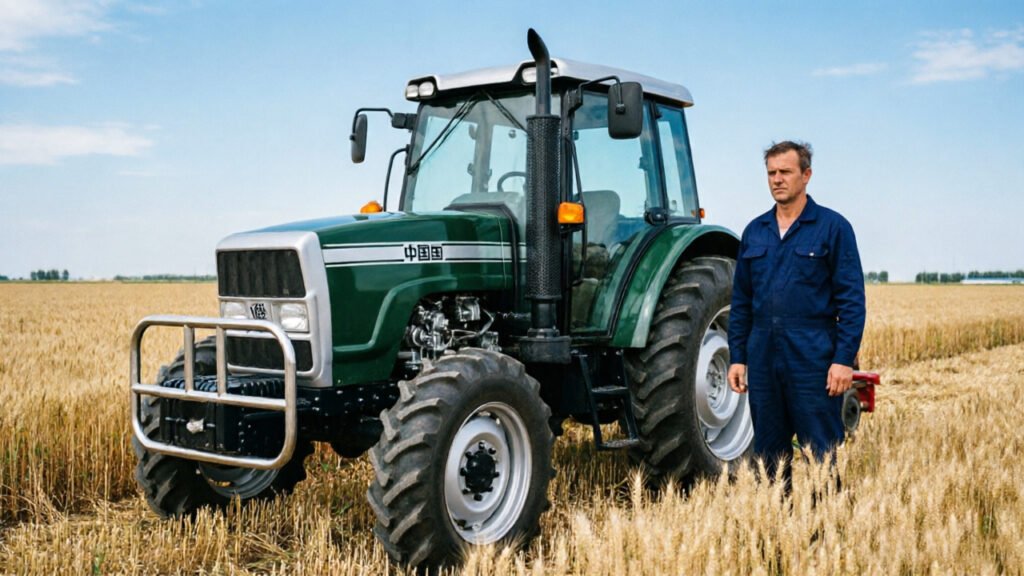
Ergonomic quality isn’t just about what features a cab includes — it’s about whether those features are built to a verifiable, consistent standard that holds up across years of heavy use.
CE and ISO 9001 certifications aren’t marketing badges; they’re independently verified proof that a manufacturer’s design and production processes meet defined quality benchmarks. For fleet managers evaluating a tractor purchase, these certifications provide a concrete basis for trusting ergonomic claims — from seat suspension ratings to cab pressurization specs. Without them, even the most appealing feature list is difficult to verify at scale.
Cost structure matters enormously when building or expanding a fleet. Factory-direct manufacturing eliminates the middleman margins that typically inflate purchase prices without adding engineering value. Those recovered costs can be redirected into higher-spec cabin features — better seat damping systems, upgraded HVAC filtration, or reinforced acoustic insulation — rather than absorbed into distribution overhead. For SME operators managing tight capital budgets, that difference can determine whether a quality ergonomic cab is financially realistic or out of reach.
Long-term durability compounds the ROI argument further. Cabs designed with genuine user-centric intent — where control placement, visibility, and vibration management are engineered together rather than bolted on as afterthoughts — hold their functional value over a longer service life. Reduced operator fatigue means fewer errors, lower turnover, and less downtime. For a small fleet where each machine and each operator carries significant weight, that longevity isn’t a luxury; it’s a core business asset.
Seekmach’s integrated production model ties these threads together. By maintaining CE and ISO 9001 certifications while controlling manufacturing from design through delivery, consistent ergonomic quality isn’t dependent on supplier variables or distribution chain compromises.
As the evidence in this article converges — from vibration thresholds to cabin visibility to climate control — the next step is identifying exactly which ergonomic checkpoints deserve your attention before any purchase decision.
Every ergonomic decision in a tractor cab ultimately traces back to five measurable checkpoints — get these right, and operator performance, health, and safety fall into place.
In practice, these five checkpoints form a coherent framework rather than a wishlist. Each one reinforces the others: a well-isolated seat is more effective inside a pressurized, acoustically managed cab. Knowing which checkpoints to verify — and how to test them in real conditions — is exactly where the selection process becomes critical.
Choosing the right tractor cab is ultimately a business decision — one where operator comfort and long-term productivitthey are inseparable from the bottom line.
The single most reliable way to evaluate a cab before committing is the “Reach and Sight” test. During any demo, have the operator sit in a neutral, relaxed posture and note whether every primary control — steering, throttle, PTO engagement — falls within natural arm reach without leaning or twisting. Then, without adjusting the seat, check whether sightlines to the implement and field boundaries are unobstructed. If either condition fails, no amount of feature-listing changes the ergonomic reality of that cab. What you see in 10 minutes of hands-on testing tells you more than a spec sheet ever will.
OEM/ODM customization matters more than most SME buyers realize. Standard configurations are designed around average operators in average conditions — but agricultural work is rarely average. Specific row spacing, regional terrain, or operator populations with particular reach profiles may all demand tailored solutions. Partnering with a manufacturer that offers genuine OEM/ODM services means ergonomic standards can be built in from the design stage rather than patched on after delivery. SeekMach supplies factory-direct equipment and OEM/ODM services to over 50 countries, which means the ergonomic specification you negotiate is the one that ships — no intermediary dilution.
For small and mid-sized operations, the factory-direct model removes the margin layers that inflate cost without adding comfort. High-spec ergonomic features — suspension seating, climate zoning, optimized control placement — become accessible at price points that make sense for realistic fleet budgets.
Ultimately, the operator is the most critical asset on any farm. Prioritizing their workstation isn’t a concession to comfort — it’s a strategy for protecting output, reducing turnover, and compounding efficiency across every working season. Make ergonomics the first filter in your next equipment decision, not an afterthought.