Telephone/WhatsApp:+86 156 2656 0610
Telephone/WhatsApp:+86 156 2656 0610
Email:info@seekmach.com

Hydrostatic vs gear tractor is not a debate you can settle with one sentence. The better choice depends on how the tractor spends its day: loader work around buildings, long mowing passes, driveway grading, tilling, snow cleanup, orchard turns, or steady pulling in open ground. If you are comparing machines in the SeekMach tractor category, start with the work pattern rather than a favorite transmission label.
A hydrostatic transmission usually feels easier for forward and reverse changes. That matters when you are nudging a loader bucket into gravel, backing around a shed, mowing between trees, or working in short cycles. A gear or shuttle-style tractor often feels more direct during steady pulling, long field passes, and jobs where the ground speed stays consistent. Neither answer is automatically “professional” or “beginner.” The right answer is the one that keeps the operator controlled, comfortable, and within the tractor’s limits.
Before choosing, list the jobs that happen every month. Mark how often you change direction, how long the tractor runs at one speed, how much loader work you do, and whether several operators will share the machine. The transmission is not separate from tires, ballast, PTO power, loader capacity, terrain, and implement choice. It is part of the whole workday.
Hydrostatic tractors use pedals or treadle controls to vary speed and direction without shifting through gears in the same way. This makes it easier to creep, stop, reverse, and repeat. Operators often like that for loader work because small speed changes happen quickly while both hands stay focused on steering and loader controls.
Gear tractors use selected ratios to set ground speed. Some require clutching and shifting; others use synchronized or shuttle controls that make direction changes easier. A gear tractor can feel efficient and predictable when pulling an implement at a steady pace. For mowing long open fields, grading a long lane, or pulling a tiller through consistent soil, that steady rhythm can be an advantage.
The difference is not just mechanical. It changes operator fatigue. A day of short back-and-forth loader cycles can make a manual shift pattern feel busy. A day of long straight rows can make hydrostatic pedal control feel less important. If two people use the same tractor, include the less experienced operator in the test drive.
| Work pattern | Hydrostatic often feels better | Gear often feels better |
|---|---|---|
| Loader work | Frequent forward and reverse, inching into piles | Long carry routes with fewer direction changes |
| Mowing around obstacles | Easy speed changes and backing | Open fields at steady ground speed |
| Driveway grading | Good for short corrections and tight areas | Good for long steady pulls with a box blade |
| Tilling or ground work | Useful for precise speed changes | Direct feel for steady draft work |
| New operators | Easier to learn for many users | Requires more deliberate shifting habits |
| Long work sessions | Less shifting in tight tasks | Less pedal modulation in steady tasks |
Use this table as a starting filter, not a rule. A well-designed gear tractor with shuttle control may handle loader work nicely. A hydrostatic tractor with enough cooling, traction, and power can handle serious property work. The exact model and setup matter.
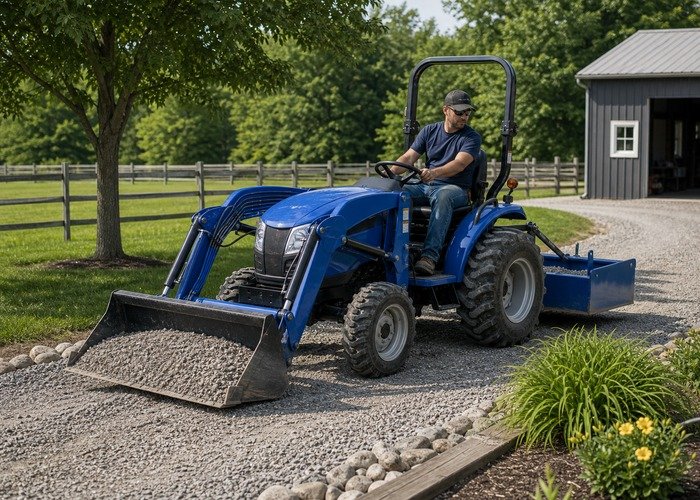
Loader work is usually a short-cycle job. Scoop, lift slightly, back up, turn, carry, dump, reverse, and repeat. In that rhythm, hydrostatic control can feel natural. You can creep toward a pile, ease into it, back out, and adjust speed without thinking about which gear is selected. When the work is around buildings, fences, trucks, or garden beds, that control is valuable.
But hydrostatic ease does not remove the need for ballast and safe loader habits. Keep the bucket low during travel, use proper rear ballast, avoid abrupt turns, and respect slopes. The NIOSH agriculture safety program is useful background because it treats machinery safety as a full setup and behavior system, not just a machine feature.
If loader work is the main job every day, compare whether a tractor is the right carrier at all. The SeekMach skid steer loader category may fit better when jobs are dominated by pallet handling, material loading, tight turns, and frequent attachment changes.
PTO work changes the discussion. A finish mower, rotary cutter, tiller, or spreader often wants a steady engine rpm and a ground speed that matches material conditions. A gear transmission can make that rhythm feel settled once you select the right ratio. A hydrostatic tractor can still run PTO implements well, but the operator must avoid using ground speed to mask a poor implement match or overloaded condition.
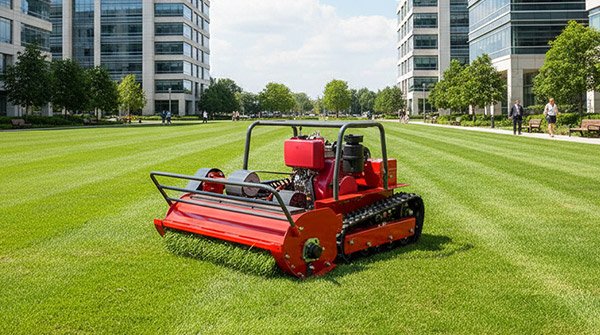
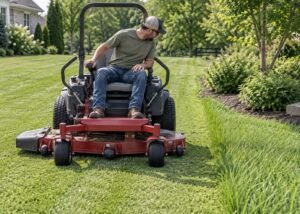
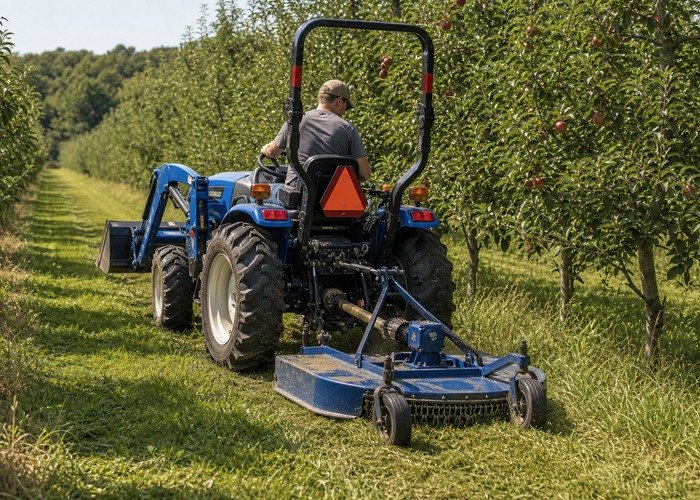
For mowing around trees, small paddocks, orchards, and buildings, hydrostatic speed changes are handy. For wide open pasture cutting, a gear tractor can be perfectly comfortable. Match the transmission to the mowing pattern, not just the acreage. If finished lawn quality is the main goal, check the SeekMach lawn mower category before assuming a tractor-mounted mower is the best tool.
The Penn State Extension tractor safety resources are a helpful reminder to respect PTO guarding, shutdown procedures, and safe operator position. Transmission choice will not protect an operator who clears material from a running driveline or approaches an implement before all motion stops.
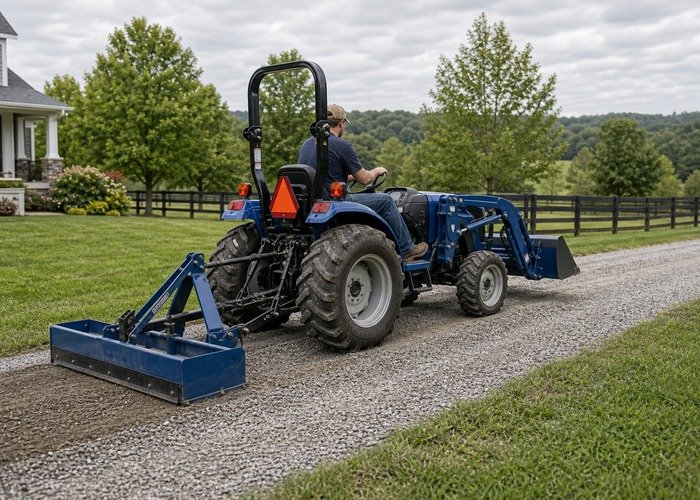
Driveway grading, box blade work, land plane passes, and light tillage reward steady speed and traction. A gear tractor can give a direct feel when pulling. The operator selects a gear, sets engine speed, and listens to how the implement loads. That simple rhythm makes sense on long gravel lanes or open soil.
Hydrostatic tractors are also useful for grading, especially when the route has tight corrections, short pushes, or obstacles. The key is heat and workload awareness. Long heavy pushing at low speed can be hard on any machine if the operator uses the transmission as a substitute for proper ballast, implement size, and technique. Work in lighter passes before forcing the tractor.
Transmission choice does not change the basic slope rules. Keep loads low, avoid side slopes when possible, travel slowly, and follow the operator manual. Hydrostatic braking feel can be comfortable for controlled movement, but it does not make a tractor immune to rollover. Gear tractors require deliberate clutch and brake habits, especially when changing direction or descending.
The OSHA agricultural operations page gives broader context for farm and property equipment risks. Rollover protective structures, seat belt use, terrain judgment, and speed control matter more than a transmission preference. A tractor that feels easy to drive can still be dangerous when used casually.
Hydrostatic systems need clean fluid, proper filters, cooling airflow, and service intervals followed closely. Heat, contamination, and neglect are not friends of hydrostatic drives. Gear transmissions also need correct fluid, clutch adjustment where applicable, linkage care, and operator habits that avoid grinding and abuse. Both systems last longer when used within design limits.
Ask how the tractor will be serviced. Can filters be reached? Is the cooling screen easy to clean? Are fluid specifications clear? Does the manual explain towing limitations, warmup, and operating ranges? A good transmission choice becomes a bad ownership experience if routine maintenance is ignored.
Choose hydrostatic if most work includes loader cycles, close maneuvering, frequent direction changes, multiple operators, mowing around obstacles, and short property chores. Choose gear if most work includes steady pulling, long mowing passes, simple field routes, and operators comfortable with shifting. Choose a shuttle or synchronized setup when you want some of the gear-transmission feel with easier direction changes.
Do not let transmission choice distract from the rest of the tractor. Loader rating, PTO horsepower, hydraulic flow, tire type, ballast, implement fit, and access dimensions still decide whether the tractor can do the work. Use the SeekMach product overview when the job list might actually call for a different machine, such as an excavator for trenching or a skid steer for high-cycle loading.
The first mistake is buying the transmission a neighbor likes without comparing job patterns. The second is test-driving only on flat pavement, where both transmissions may feel fine. Test with the kind of steering, reversing, and attachment control you will actually use. The third mistake is treating hydrostatic as a cure for oversized implements. It is easier to adjust speed, but it does not create more PTO power.
The fourth mistake is ignoring the operator. A tractor used by family members, employees, or seasonal help needs controls that those people can use safely after a long day. A transmission that one experienced operator loves may frustrate another. Put the real users in the seat before deciding.
Use a test drive that copies real work. For loader use, drive toward a pile, stop, feather the loader, reverse, turn, and place the bucket low as if carrying material. For mowing, hold a steady engine speed, slow for a turn, and line up the next pass. For grading, imagine a long driveway pass where consistent ground speed matters. If the tractor will work near barns, orchard rows, fences, or garden beds, include tight turns rather than only open pavement.
Ask the dealer or seller how the transmission should be warmed up, what fluid service interval applies, and what operating habits shorten life. Ask whether towing restrictions apply if the tractor cannot run. The answers should be clear and match the manual. If the transmission choice still feels confusing, compare the entire machine through the SeekMach tractor application solutions, because the problem may be implement fit, not pedal or gear style.
The University of Minnesota Extension farm machinery resources are also useful when thinking about tractors as working systems. Transmission choice should sit beside tire setup, ballast, implement width, field condition, and seasonal maintenance.
| Main work mix | Transmission clue | Setup detail to verify |
|---|---|---|
| Loader, mulch, gravel, snow | Hydrostatic often feels easier | Rear ballast, loader visibility, cooling airflow |
| Long mowing passes | Gear or hydrostatic can work | PTO horsepower, deck width, grass conditions |
| Orchard, fence, tight mowing | Hydrostatic often saves motion | Turning room, tire scuffing, operator comfort |
| Box blade driveway work | Gear can feel steady | Tire ballast, implement width, traction |
| Multiple new operators | Hydrostatic may reduce learning time | Clear controls, seat switch, safe training |
| Heavy draft work | Gear or heavier tractor may fit | Weight, traction, implement size, soil |
This table should push you toward questions, not shortcuts. A hydrostatic tractor with poor ballast is not better for loader work than a correctly set up gear tractor. A gear tractor with the wrong PTO rating is not better for mowing simply because it feels direct.
Often yes, especially for loader work and close maneuvering. It is usually easier to learn because speed and direction changes are simple. Training is still required.
Gear tractors often feel efficient and direct during steady pulling. The right answer still depends on tractor weight, tires, ballast, implement size, and soil conditions.
PTO output is a separate specification. Compare PTO horsepower directly, and match the implement to the tractor’s actual rating.
Hydrostatic is convenient around obstacles and frequent turns. Gear can be comfortable on long open passes. The mowing pattern matters more than the word on the spec sheet.
Follow the fluid, filter, and cooling maintenance schedule. A hydrostatic drive is reliable when used and serviced correctly, but heat and dirty fluid can shorten life.
Often yes, but the attachment may feel different. Loader, mower, tiller, box blade, and rear blade work all depend on ground speed control, PTO power, weight, and operator rhythm.
Watch a helpful transmission comparison here: hydrostatic and gear tractor discussion on YouTube. Then choose by the workday: direction changes, steady pull, PTO demand, terrain, operator skill, and the attachments that will actually be on the tractor.