Telephone/WhatsApp:+86 156 2656 0610

Telephone/WhatsApp:+86 156 2656 0610
Email:info@seekmach.com

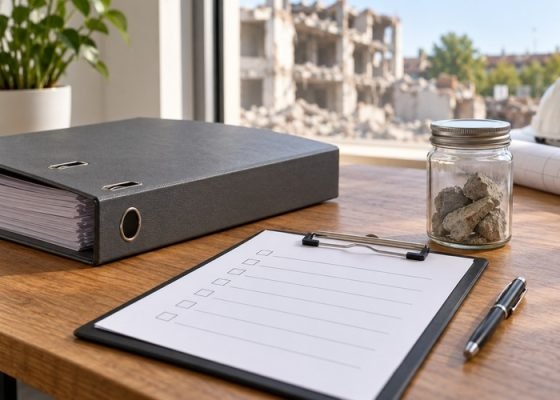
Plan silica dust controls before selecting a mini excavator and breaker for concrete demolition. The decision includes the material, the task, the operator’s actual enclosure, other workers and the applicable exposure-control requirements. An open canopy is not a filtered enclosed cab, and choosing a smaller breaker does not by itself establish a safe exposure.
This is a pre-job information and equipment-enquiry guide. It uses United States federal construction requirements as a specific example, with separately identified California and British sources. The employer and responsible safety professionals must establish the rules and controls that apply at the actual site. This article does not certify any SeekMach machine or prescribe a respirator for an unassessed job.
Record whether the machine will demolish, abrade or fracture silica-containing material, rather than describing every activity as excavation. Include the material information available and distinguish confirmed facts from assumptions. The work plan should identify other activities that may occur before, during or after the breaker task.
In the US federal construction standard, Table 1 treats heavy-equipment demolition and hoe-ramming separately from grading and excavating that does not involve those activities. The official 2025 CFR edition of 29 CFR 1926.1153 documents these federal provisions. Review the current applicable requirements with the responsible person before work. Do not apply a handheld-tool row to a mounted hoe-ram simply because both break concrete.
The task description is a useful purchasing input, but it is not the whole demolition plan. Structural stability, utilities, fragments, access and other hazards still require their own assessment. Keep the silica-control enquiry connected to that plan without suggesting that a dust-control decision approves the complete method of work.
Under the federal Table 1 heavy-equipment demolition entry, the equipment is operated from an enclosed cab; applicable cab provisions also address filtration, positive pressure, seals, dust and heating and cooling. A roof, glazed accessory or marketing description alone does not demonstrate that those provisions are met.
Ask the supplier for documentation describing the actual machine configuration and the relevant cab system. Record exactly what is supplied, what evidence is available and what remains unconfirmed. Do not infer a filter rating or enclosure performance from a photograph, a closed door or the presence of air conditioning.
If the proposed machine cannot be shown to meet the selected control approach, return the question to the employer’s responsible safety professional before procurement or work. Do not improvise an enclosure, fit an unidentified filter or describe an open canopy as equivalent. The federal standard includes an alternative exposure-control route when Table 1 is not fully and properly implemented; that route requires its own assessment and controls.
Instead of asking whether a machine is “good for demolition,” describe the task and ask for the documented configuration that would be delivered. Separate carrier and breaker suitability from the evidence needed for the selected exposure-control approach. The supplier should not have to guess which part of a broad question is being approved.
Use a named machine reference and retain the supplier’s written response. If several cab options are offered, identify the option actually quoted. A brochure showing an enclosed model should not be treated as evidence that the ordered open-canopy configuration has the same enclosure or filtration features.
Le SeekMach excavator catalogue can start an equipment enquiry. A catalogue entry is not a silica-control certificate. Ask for the relevant evidence before deciding whether a proposed configuration can be used within the responsible person’s site-specific plan.
The US federal demolition entry also addresses employees outside the cab engaged in the task, requiring water and/or dust suppressants as necessary to minimize dust emissions. A protected operator does not remove the need to consider those workers. Record their activities rather than treating the excavator operator as the only person involved.
Describe who may be breaking, sorting, handling or coordinating in the work area and how their tasks interact. The responsible person needs that information to select and implement the control approach. Do not invent a universal exclusion distance or assume that standing beyond the machine’s movement zone resolves a dust-exposure question.
Water application needs planning around the task, equipment and site. Agree the responsibility, supply and arrangements under the approved method, including any secondary hazards that need consideration. The presence of a hose in a quotation is not evidence that a suitable dust-control system has been designed or implemented.
California publishes its own construction silica requirements in section 1532.3. For work there, the responsible person should review the applicable state requirements instead of relying on a federal summary alone. Confirm the current requirements for the actual location and employer arrangements.
For British context, the HSE construction dust guidance uses an assess, control and review approach. It is a separate regulatory context. Its inclusion here supports careful planning, not a claim that US tables automatically satisfy British duties or that British guidance replaces a US obligation.
For other countries, obtain the applicable local guidance and qualified advice. Do not select a convenient overseas threshold or machine claim to fill a gap in the project record. A purchasing enquiry can proceed while information is gathered, but an unanswered compliance question should remain explicit.
| Planning item | Evidence to gather | Question for the responsible person |
|---|---|---|
| Material and activity | Known material information and actual task description | Which task classification and requirements apply? |
| Operator arrangement | Exact cab configuration and supporting documentation | Does it support the selected control approach? |
| Other workers | Roles, work sequence and interaction with demolition | How will their exposure be addressed? |
| Control equipment | Approved specification, responsibilities and availability | Can the plan be implemented throughout the task? |
| Changes and defects | Reporting route and reassessment responsibility | Who decides when the plan needs review? |
Use the table as an information-gathering aid. It is not an exposure assessment or a completed control plan. Each unanswered item should have a responsible person and a route to resolution, rather than a decorative check mark that implies the site has already been reviewed.
Attach the machine and attachment references to the same enquiry. The breaker operation and maintenance guide concerns another part of the equipment decision. An attachment that is hydraulically compatible still needs a suitable job plan and exposure controls.
Ask the employer’s responsible professional to determine the complete control approach and any respiratory protection requirements for the actual work. A general internet recommendation cannot establish suitable protection, fit or program requirements. Do not treat a disposable mask purchase as permission to proceed with an unresolved control plan.
The federal standard’s alternative exposure-control provisions apply where the specified Table 1 approach is not fully and properly implemented. That is not an automatic exception for a small machine or a short job. Keep the selected route and the evidence supporting it clear in the project documentation.
Likewise, absence of a visible cloud is not a substitute for the relevant assessment. Observations can help identify a change or problem, but they should not be described as a measured exposure result. Retain actual assessment information separately from photographs and informal site notes.
Record who will receive reports of damaged cab seals, unavailable control equipment, changed material or an altered work sequence. The responsible person should decide what review is needed before work continues under changed conditions. A procurement-stage description should not silently become a permanent approval for every later task.
If another crew or hired machine arrives, confirm that the documented arrangement still describes what is actually present. Keep any substitution visible and ask the appropriate person to review it. Similar machine size or a similar-looking enclosure cannot establish equivalence without supporting evidence.
Le breaker tool shape guide addresses a separate material-and-tool enquiry. Changing from a moil point to a chisel does not by itself establish that dust exposure has been controlled. Preserve the distinction when purchase and site teams discuss substitutions.
At handover, retain the approved equipment references, relevant assessment information and outstanding actions. Record what was checked and who made the decision. Avoid a broad statement that the machine is “silica compliant” without specifying the configuration, task and basis of that statement.
No. Confirm the actual enclosure and supporting evidence for the selected control approach.
Do not assume so. Classify the actual task under the applicable requirements.
No. Establish the material, work activity and applicable exposure-control approach before choosing equipment.
No. Request the exact configuration evidence and have the responsible person assess the proposed application.