Telephone/WhatsApp:+86 156 2656 0610
Telephone/WhatsApp:+86 156 2656 0610
Email:info@seekmach.com

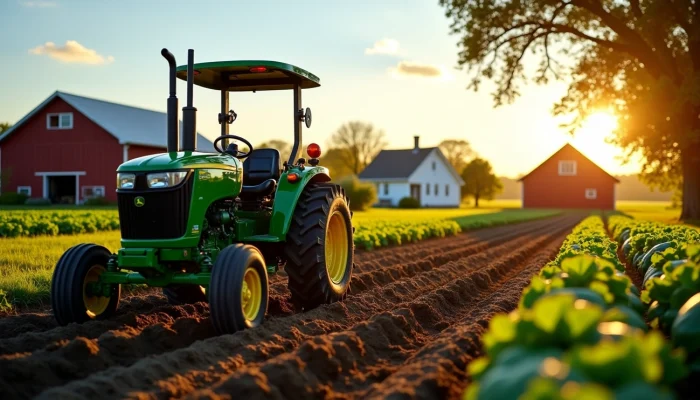
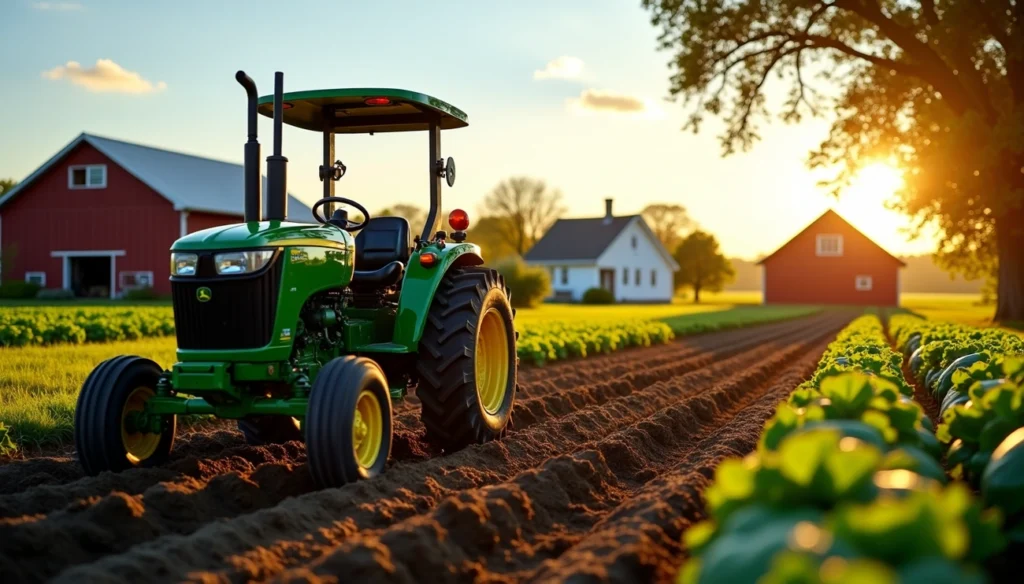
Small farms can secure quality tractors without breaking the bank by matching equipment to actual needs, exploring diverse purchasing options, and leveraging available financing programs.
• Match tractor horsepower to your farm size: under 5 acres needs 25-35 HP, while 5-15 acres requires at least 35 HP for efficient operations.
• Explore multiple purchasing channels including used equipment dealers, online auctions like TractorHouse.com, and direct farmer-to-farmer sales for better pricing.
• Leverage USDA microloans up to $50,000 with simplified applications, or Farm Credit equipment financing starting at 5.95% fixed rates.
• Thoroughly inspect engine, transmission, and hydraulic systems before purchase—test cold starts, check for oil contamination, and verify all mechanical functions.
• Consider lease-to-own arrangements with low monthly payments and 10% to $1 buyout options that allow tax write-offs during the lease period.
Smart equipment acquisition combines realistic needs assessment with strategic financing, enabling small farms to access reliable machinery that supports long-term growth and operational efficiency.

Finding a quality farm tractor for sale that fits a small farm budget might seem challenging, but it’s entirely achievable with the right approach. Horsepower directly influences work efficiency and energy consumption, so choosing equipment that matches your operational needs prevents unnecessary power waste. Besides cost considerations, compatibility between your tractor and supporting machinery ensures seamless workflow across different crops.
We’ll guide you through understanding your specific tractor requirements, exploring options like used farm tractor for sale listings and small farm tractor for sale opportunities, evaluating critical components including farm tractor tires for sale condition, comparing emerging options like electric farm tractor for sale models, and assessing farm tractor trailers for sale. We’ll also cover financing strategies that make quality equipment accessible for small farms in 2026.
Small farms under 5 acres function well with compact tractors ranging from 25 to 35 horsepower. Properties between 5 and 15 acres need compact or utility tractors with at least 35 horsepower to handle moderate labor. Once you reach 20 acres or more, utility tractors with 40 horsepower minimum become necessary for adequate pulling power.
Terrain matters just as much as acreage. Hilly or rugged terrain requires tractors with four-wheel drive and a low center of gravity for stability. Flat land allows smaller machines to operate efficiently, while sloped ground demands more traction and power. Working in wet or marshy conditions requires aggressive tread patterns on tires to prevent getting stuck.
Consider the type of work you perform most frequently. Mowing pastures, one of the most critical jobs on small farms, prevents fields from reverting to forest. For haymaking operations, small square bales require around 50 PTO horsepower. Tillage activities including plowing, disking, and harrowing demand different power levels based on soil conditions.
Your crop type determines tractor suitability. Out of 375 row-crop operations, only 4 tasks can be performed with utility tractors under 90 horsepower. In contrast, all 110 vegetable crop operation tasks require less than 90 horsepower. Forage operations allow 13 out of 75 tasks to be completed with utility-sized tractors.
Match your tractor to specific implements. Rotary cutters need 15 to 30 PTO horsepower depending on width. Tillers demand 20 to 40 PTO horsepower based on size and soil type. Loader work moving dirt or gravel functions adequately with 25 to 40 horsepower.
For reference, tractors between 45 and 60 horsepower handle clearing overgrown fields, grading roads, and common farm chores. Most small livestock farms perform tasks easily with an 85 PTO horsepower tractor.
The implement you attach determines workload intensity. Front-end loaders, rotary cutters, box blades, and tillers place different demands on your machine. Check your tractor’s PTO rating, as this controls power supplied to implements. Mismatching values results in inefficient operation and potential equipment damage.
The used tractor market offers substantial savings compared to new equipment purchases. Private sellers typically provide lower upfront costs than dealerships. However, when you factor in financing terms, warranty coverage, and long-term maintenance support, dealers often deliver better overall value. Your experience level matters here. If you can inspect tractors independently and have cash available, private sales work well.
Dealerships maintain smaller used inventories compared to their new equipment selections. In view of this limitation, approach farm equipment dealers the same way you would car dealerships. Dealers list their used equipment on the same websites as auctions and private sellers. The advantage? Factory-trained technicians, genuine parts access, and established service relationships.
TractorHouse.com provides access to thousands of listings with detailed descriptions, specifications, photos, and videos. The platform features quality used equipment from Case IH, CLAAS, John Deere, Massey Ferguson, and New Holland. BigIron Auctions operates weekly unreserved online auctions where all equipment is lien-free, and seller contact information appears on every listing. This transparency helps you communicate directly with sellers before bidding.
Reputable auction houses remain easy to hold accountable if issues arise with purchased tractors. Retirement auctions frequently feature well-maintained equipment since farmers typically sell functional machinery rather than problem units. For instance, recent estate sales showed a Ford 4600 diesel tractor with 2,300 hours selling for $5,300, while a 1954 Ford NAA from the original owner brought $3,750.
Buying directly from neighboring farmers allows you to assess the seller’s reputation for equipment maintenance. Similarly, you gain firsthand knowledge about how the tractor was used and stored.
FSA makes direct and guaranteed loans to family-size farmers who cannot obtain commercial credit from banks or Farm Credit System institutions. Operating loans cover equipment purchases, livestock, seed, and supplies. Each fiscal year, FSA targets a portion of its funds specifically to beginning farmers and ranchers. Microloans designed for small and beginning farmers offer up to $50,000 using simplified applications. Since their debut in 2013, USDA has issued more than 8,400 microloans, with 70% going to beginning farmers.
Farm Credit institutions offer specialized equipment financing through programs like AgDirect and Farm Credit EXPRESS. Fixed rates for financing farm equipment start at 5.95%. AgDirect provides financing on tractors, combines, center pivots, implements, and strip-till equipment from dealerships, auctions, or private sellers. Most credit decisions return within seconds, with processing completed in three business hours. Down payment requirements generally range from 0% to 30% of the purchase price.
Lease-to-own plans feature low monthly payments with terms starting at 36 months. Budget-friendly buyout options range from 10% to $1. Your business may write off lease payments each tax year. You build equity in equipment throughout the lease and take ownership at the end of the term.
USDA provides technical assistance and financial backing for rural businesses and cooperatives to create quality jobs in rural areas. Beginning Farmer and Rancher Development Program provides grants to organizations that train and provide technical assistance on production, marketing, and business management.
Cooperatives meet the economic needs of member-owners while keeping profits local. USDA Cooperative Services supports cooperatives through technical assistance and information on available funding. In 2013, business and cooperative funding through Rural Development helped 4,200 farmers.
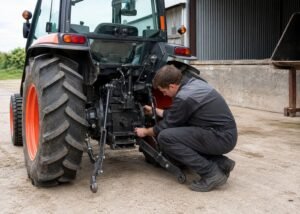
Start with a cold engine test, as this reveals true condition. Blue or white smoke signals worn rings or fuel issues. Check oil on the dipstick twice: once before starting, then after running to detect froth indicating head gasket problems allowing coolant into the engine. Look for creaminess or water signs in the oil. Open the radiator for bubbles and check the engine fill port for gasses.
Test transmission strength by pushing down brakes and driving against them. If the transmission can’t stall the engine, it’s slipping and losing pressure. Shift through all gear ranges to verify smooth operation without chatter.
Monitor hydraulic fluid levels and quality, as the pump accounts for 25% of system problems. Inspect hoses and fittings for leaks, particularly at flex points on loaders where failures occur first. Test hydraulic cylinders and remotes by cycling them to check for leaks and verify lifting power.
Check tire pressure daily using a digital gage. When tread depth drops below 20%, expect decreased traction and increased slippage. Run your hand along sidewalls to detect cracks, cuts, or exposed cords. Deep sidewall cracks make tires susceptible to failure.
Cycle each hydraulic remote, test PTO operation, and verify brakes hold the tractor during clutch testing. Check steering responsiveness during low-speed turns.
Request detailed service logs showing dates, parts replaced, and maintenance observations. The hour meter reveals usage intensity; most farm tractors last 5,000 to 10,000 hours with proper servicing.
Protection Plus covers used equipment under seven years old with less than 4,000 operating hours. Ag Guard now extends powertrain coverage on tractors up to 15 years old, covering pre-emissions models.
Quality farm equipment doesn’t have to stretch your budget beyond reach. Most important, match your tractor to actual acreage and tasks rather than overbuying horsepower you won’t use. Explore used tractors from reputable dealers and auctions, secure financing through agricultural lenders or microloans, and thoroughly inspect mechanical systems before purchasing. With careful evaluation and strategic financing, you can acquire reliable equipment that supports your farm’s growth without compromising financial stability.
Q1. What size tractor do I need for my small farm?
For farms under 5 acres, a compact tractor with 25-35 horsepower is typically sufficient. Properties between 5-15 acres work well with at least 35 horsepower, while farms of 20 acres or more require utility tractors with a minimum of 40 horsepower. Your terrain also matters—hilly or rugged land needs four-wheel drive and better stability features.
Q2. Where can I find affordable used tractors?
You can find quality used tractors through several channels: authorized dealerships with certified pre-owned equipment, online marketplaces like TractorHouse.com, farm equipment auctions including BigIron Auctions, estate sales from retiring farmers, and direct purchases from neighboring farmers. Each option offers different advantages in terms of pricing, warranty coverage, and inspection opportunities.
Q3. What financing options are available for small farm equipment purchases?
Small farmers can access FSA direct and guaranteed loans, USDA microloans up to $50,000 with simplified applications, equipment financing through Farm Credit institutions with rates starting at 5.95%, and lease-to-own arrangements with low monthly payments. Additionally, government grants and cooperative purchasing programs provide financial support for qualifying farmers.
Q4. How do I evaluate a used tractor’s condition before buying?
Start by testing the engine when cold to check for smoke and oil quality. Inspect the transmission by testing it under load, examine hydraulic systems for leaks and proper operation, check tire tread depth and sidewall condition, test all mechanical functions including PTO and brakes, and review the maintenance history. Most well-maintained farm tractors last 5,000-10,000 hours.
Q5. How much horsepower do I need for common farm tasks?
Rotary cutters require 15-30 PTO horsepower, tillers need 20-40 horsepower depending on soil type, and loader work functions well with 25-40 horsepower. For haymaking with small square bales, you’ll need around 50 PTO horsepower. Most small livestock farms can handle their tasks with an 85 PTO horsepower tractor, while tractors between 45-60 horsepower work well for clearing fields and general farm chores.