Telephone/WhatsApp:+86 156 2656 0610

Telephone/WhatsApp:+86 156 2656 0610
Email:info@seekmach.com

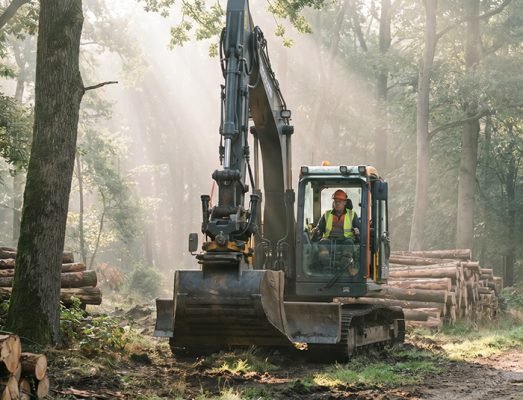
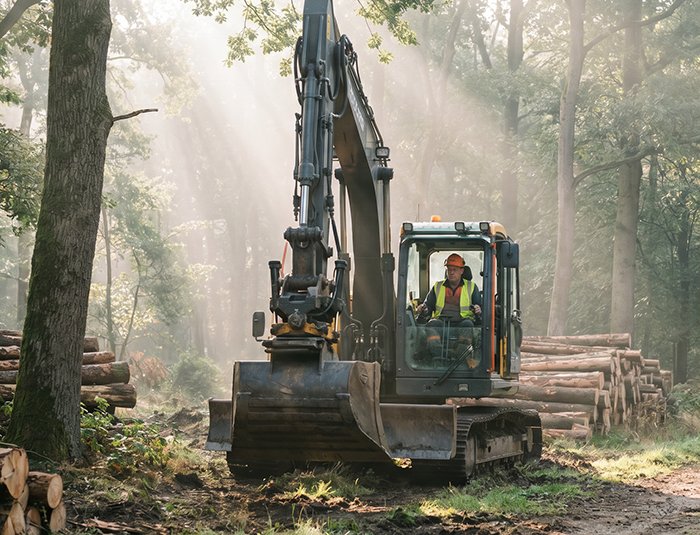
We thoroughly tested excavator forestry conversion guide to help you make an informed decision. Forestry is facing a quiet labor crisis. Chainsaw crews are harder to recruit, more expensive to insure, and slower to deploy across increasingly complex terrain. As timber operations scale up and sustainability standards tighten, the industry is turning to a tool that’s been hiding in plain sight on every jobsite: the excavator.
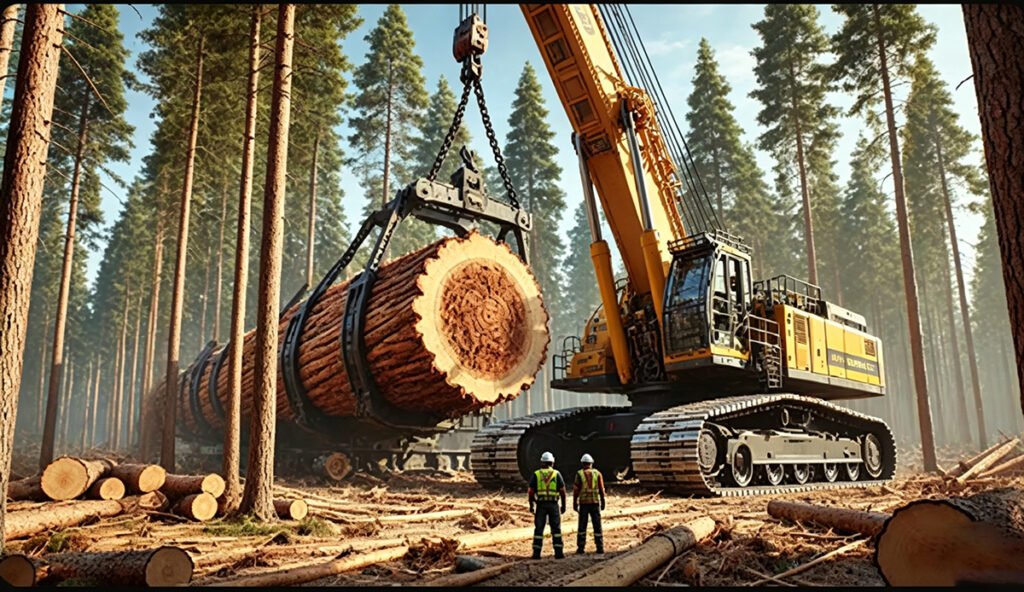
Precision Forestry is the practice of treating land management as a surgical operation — removing only what’s needed, where it’s needed, with minimal collateral damage to the surrounding ecosystem. It’s the opposite of clear-cutting. It demands accuracy, repeatability, and control that manual operations simply can’t deliver at scale.
That’s where excavator forestry conversion enters the picture. A modern excavator isn’t just a digging machine. It’s a mobile hydraulic power plant capable of driving dozens of specialized attachments — from directional felling heads and brush cutters to stump grinders and log grapples. Operators searching for a excavator forestry conversion guide (a guide to converting excavators for forestry applications) quickly discover that the same base machine can perform tasks that once required five separate pieces of equipment.
The numbers back this up. According to FPInnovations, mechanized harvesting using excavators with specialized attachments can increase wood production efficiency by up to 30% compared to manual chainsaw operations — a figure that makes the capital investment case almost immediately.
Comprensión how to unlock that efficiency starts with the ground beneath your tracks — which is exactly where the next section picks up.
The environmental argument for excavator-based forestry goes deeper than emissions or fuel efficiency. It starts at ground level — literally. Compactación del suelo is one of the most underestimated threats to long-term timber productivity. When heavy wheeled machinery repeatedly crosses the same forest floor, it crushes the porous soil structure that tree roots depend on for oxygen and water absorption. Studies have found that compacted soils can reduce timber yields by 20–40% in subsequent rotations, a hidden cost that rarely shows up on a single-season balance sheet.
This is where tracked excavators demonstrate a clear mechanical advantage. Wide rubber or steel tracks distribute the machine’s weight across a significantly larger footprint than the narrow tires of conventional logging trucks. According to FAO Reduced Impact Logging Guidelines, purpose-built forestry excavators substantially reduce soil compaction by utilizing wide tracks and high-ground-clearance undercarriages — a design that becomes especially critical in marshy terrain, wet bottomlands, and sensitive riparian zones where wheeled vehicles can quickly churn topsoil into an unusable quagmire.
| Factor | Wheeled Logging Trucks | Tracked Excavators |
|---|---|---|
| Presión sobre el suelo | High (concentrated load) | Low (distributed load) |
| Performance in wet terrain | Poor — frequent rutting | Strong — stable footing |
| Root zone disruption | Significativo | Mínimo |
| Recovery time for soil | Years | Seasons |
Responsible forestry isn’t just good ethics — it’s sound economics. los World Bank’s framework for sustainable land management explicitly identifies maintaining soil ecosystem integrity during industrial operations as essential to long-term land productivity. Operators who align with these standards aren’t just protecting their environmental credentials; they’re protecting future yield.
Understanding the right track maintenance practices further extends the service life of these low-impact undercarriages, compounding the ecological benefit over time.
What makes this precision possible at scale, however, isn’t just the machine itself — it’s what you attach to it.
The ecological and labor advantages covered in the previous sections only materialize when the right attachments are on the machine. As the International Journal of Forest Engineering notes, the shift toward “precision forestry” relies on the excavator’s ability to act as a multi-tool carrier, performing everything from site preparation to final harvesting with surgical accuracy. That versatility comes down to four core attachment categories — each one purpose-built to replace an entire crew of specialized workers.
Here’s a breakdown of the attachments transforming excavators into precision forestry powerhouses:
Understanding the multi-attachment application ecosystem for forestry excavators — the multi-attachment application ecosystem for forestry excavators — is essential before investing in any single tool. The attachments are only as effective as the machine carrying them. If you’re working with a smaller unit, understanding how hydraulic flow scales with machine size is a critical first step.
Of course, running high-demand attachments like processor heads and mulchers puts significant stress on the host machine — which is exactly why converting a standard excavator for forestry duty requires more than just a coupler swap.
Operators frequently ask how to convert a standard excavator into a forestry machine — and the answer isn’t a single upgrade but a layered set of modifications that address safety, hydraulic performance, and terrain protection simultaneously. Get these right, and a general-purpose excavator transforms into a capable, productive forestry tool.
⚠ Hydraulic Compatibility Warning: Always confirm that your excavator’s hydraulic flow and pressure ratings match the specific attachment specifications. Mismatched systems can cause overheating, premature pump failure, or attachment damage — an expensive mistake in the field.
Understanding how hydraulic flow connects to attachment performance also applies when evaluating other carrier platforms — exploring hydraulic-driven attachments for compact machines offers useful context for comparing system demands across equipment types.
With a properly converted machine ready for demanding terrain, the conversation naturally expands into how excavators are reshaping larger environmental priorities — from wildfire prevention to meeting modern ESG commitments.
The conversion process covered in the previous section transforms an excavator into a precision instrument — but the impact of that machine extends well beyond the job site. Properly equipped forestry excavators are now central to two of the most pressing environmental challenges of our time: wildfire mitigation and habitat restoration.
Firebreak creation has traditionally relied on controlled burns, chemical treatments, or manual clearing crews — all methods with significant drawbacks. Modern excavators equipped with forestry mulching heads offer a cleaner alternative. By converting brush, deadwood, and small trees directly into mulch on-site, these machines eliminate combustible fuel loads without introducing chemicals into the soil or releasing large plumes of smoke into the atmosphere.
According to the USDA Forest Service, this approach creates effective firebreaks while aligning with global ESG standards — a critical consideration for municipalities and land management agencies under increasing pressure to demonstrate carbon accountability. The mulched material also acts as a natural ground cover, retaining moisture and reducing erosion along cleared corridors.
A mulching excavator doesn’t just remove a fire hazard — it converts that hazard into an ecological benefit, returning organic matter to the forest floor in a single pass.
This is precisely why demand for specialized forestry tooling — including what the industry refers to as 挖掘机伐木头附件 (excavator timber and tree-clearing attachments) — has grown substantially in fire-prone regions across the western United States.
On the restoration side, excavators are proving equally valuable. Invasive species removal demands selectivity that bulk clearing equipment simply can’t provide. A skilled operator using a thumb-equipped arm or a rotating grapple can extract invasive root systems while leaving native vegetation intact — something a bulldozer blade makes impossible.
This targeted capability directly supports carbon-neutral city planning goals. Urban foresters and land managers working toward net-zero frameworks rely on healthy, biodiverse green corridors that sequester carbon consistently over time. Restoring those corridors through precision excavation accelerates ecosystem recovery far faster than passive regrowth alone.
The operational questions that naturally follow — from selecting the right machine size to maintaining hydraulic systems in demanding environments — are worth addressing directly, and the next section does exactly that.
What is the best size excavator for forestry work?
Most forestry contractors find that machines in the 20- to 35-ton class strike the right balance between reach, hydraulic output, and site maneuverability. Smaller mini excavators (under 6 tons) suit selective thinning and tight trail work, while larger machines handle heavy mulching and stump grinding. In practice, matching machine weight to soil conditions prevents ground compaction — a critical consideration for sustainable precision forestry outcomes.
Can I use a standard excavator for mulching?
A standard excavator can accept a mulcher attachment, but the results depend heavily on hydraulic flow capacity. Most excavator mulcher attachments require high-flow auxiliary circuits — often 40–80 GPM — that stock machines may not deliver without an upgraded hydraulic package. Without sufficient flow, rotor speed drops and productivity suffers significantly. Always verify your machine’s hydraulic specs against the attachment’s requirements before purchasing.
How do I maintain hydraulic systems in dusty forest environments?
Forestry environments accelerate hydraulic contamination faster than almost any other jobsite. A common pattern is to inspect and replace filters at half the standard interval, monitor fluid temperature during extended mulching runs, and use high-viscosity hydraulic fluid rated for variable temperature swings. Fitting a quality attachment coupler system with sealed quick-connects also reduces dirt ingestion during attachment swaps.
What are the safety requirements for forestry-spec machines?
Forestry-spec machines must meet FOPS Level II (Falling Object Protective Structure) certification as a baseline — standard cabs typically only offer Level I protection. Additional requirements include full-coverage guarding on undercarriage and cylinders, polycarbonate window screens, and emergency stop systems accessible from outside the cab. Always verify local regulatory requirements, as forestry safety standards vary by state and contract type.