Telephone/WhatsApp:+86 156 2656 0610

Telephone/WhatsApp:+86 156 2656 0610
Email:info@seekmach.com

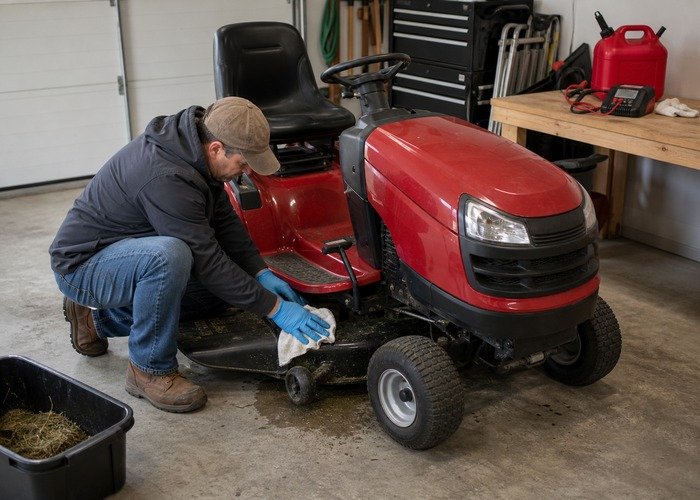
Learning how to store a lawn mower for winter is less about making the garage look tidy and more about protecting the next spring start. Old fuel, moisture, grass buildup, dull blades, weak batteries, flat tires, and neglected oil can turn a good mower into a frustrating first job of the season. A careful winter storage routine keeps the mower safer, cleaner, and easier to service when grass starts growing again.
The right storage steps depend on mower type. A walk-behind gas mower, riding mower, zero-turn mower, and battery mower all need slightly different attention. If you are comparing machines in the SeekMach lawn mower category, include storage space, battery access, deck cleaning, blade service, and seasonal maintenance in the buying decision. A mower that is easy to maintain is more likely to be maintained.
Do the work after the final cut, while the weather is still dry enough to clean the machine properly. Waiting until a cold wet day usually means the mower gets parked with damp grass packed under the deck and stale fuel in the system.
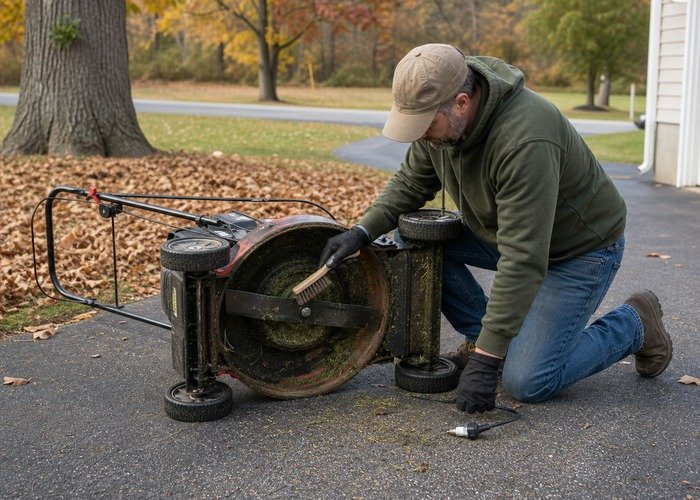
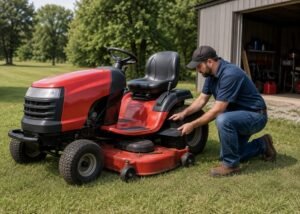
Before cleaning or inspecting a mower, shut it down fully and prevent accidental starting. For a gas walk-behind mower, disconnect the spark plug wire before working near the blade. For a battery mower, remove the battery or follow the manufacturer lockout procedure. For a riding mower or zero-turn, park on level ground, set the brake, remove the key, let hot parts cool, and keep hands away from belts, pulleys, and blades.
los Consumer Product Safety Commission lawn mower safety guidance is a useful reminder that mower injuries often come from blade contact, thrown objects, and unsafe handling. Winter storage is maintenance time, but the blade is still sharp enough to hurt someone.
Wear gloves and eye protection when brushing debris, scraping a deck, or handling fuel. Keep children and pets away from the work area. Work outside or in a well-ventilated space when fuel or solvents are involved.
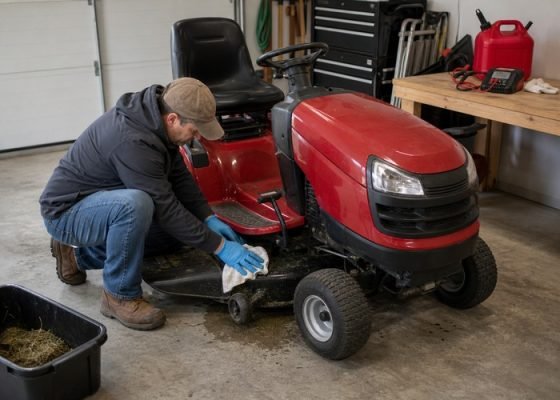
Grass clippings trap moisture. Under the deck, that moisture can encourage corrosion, reduce airflow, and make next season’s cut worse. Brush loose material first. Scrape packed grass carefully without damaging paint or belts. Avoid spraying water into bearings, electrical connectors, or hot engine parts. Let the mower dry before storage.
A clean deck also helps you inspect the blade and spindle area. Look for bent blades, cracked edges, loose hardware, damaged belts, worn pulleys, and caked debris around discharge passages. If the mower cut unevenly during the last month of the season, this is the time to find out why.
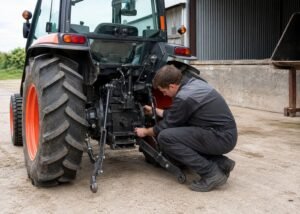
For larger properties, compare mower maintenance needs with the SeekMach tractor category. A tractor-mounted mower, riding mower, and zero-turn each has different cleaning access, storage space, and seasonal service needs.
Fuel is one of the most common winter storage problems. Gasoline can age, absorb moisture, and leave deposits that make spring starting difficult. Follow the mower manual first. Many owners either run the tank nearly empty according to the manual or store with fresh fuel treated with stabilizer. Do not store an old half-tank from summer and hope for the best.
los U.S. Energy Information Administration gasoline explainer is a helpful general reference for understanding gasoline as a refined fuel, while mower manuals give the machine-specific storage procedure. Use only approved fuel containers, keep fuel away from ignition sources, and store it according to local safety rules. For fuel handling and storage awareness, the OSHA flammable liquids overview is another useful safety reference.
If the mower has ethanol-related storage sensitivity, follow the manufacturer’s recommendation for fuel type and stabilizer. Label the fuel can with the purchase date. Old mystery fuel should not become next spring’s troubleshooting problem.
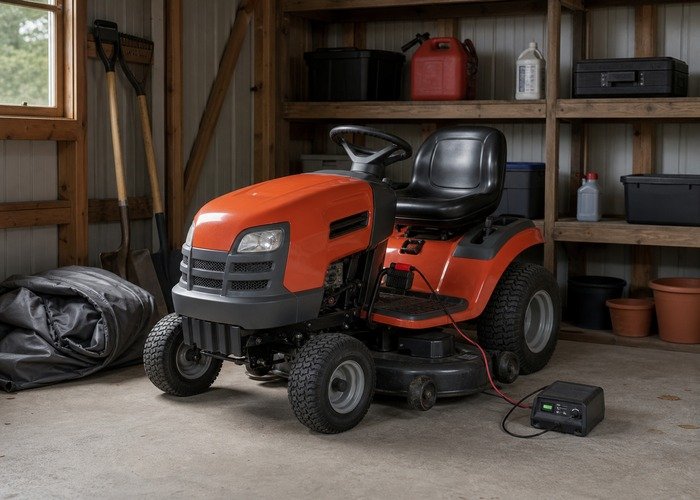
Batteries dislike neglect. A lead-acid starting battery on a riding mower may discharge over winter, especially in cold storage. Clean the terminals, check for corrosion, and use a compatible maintainer if the manual allows it. Do not use a charger that is too aggressive or leave a damaged battery unattended.
Battery-powered mowers need a different routine. Follow the manual for storage charge level, temperature range, and whether the battery should be stored in the mower or indoors. Avoid damp locations and extreme temperatures. Inspect packs and chargers for damage before storage.
los U.S. Fire Administration lithium-ion battery safety page is relevant for battery equipment owners because charging, storage, damage, and heat exposure matter. Use the charger designed for the battery and keep charging areas clear of clutter.
Many gas mower owners change oil before storage so acids and contaminants do not sit in the engine all winter. Follow the manual for oil type, interval, and filter procedure. Replace or clean the air filter as recommended. Check the spark plug condition and keep service notes so spring work starts with known maintenance history.
Blade service is easier when the mower is already clean. Remove the blade only if you can do it safely with the right tools and torque it correctly afterward. A dull blade tears grass and leaves brown tips. A bent or unbalanced blade can vibrate and damage the mower.
For owners who maintain several property machines, the SeekMach product application solutions page can help organize which machine handles mowing, grading, hauling, and cleanup. Maintenance gets easier when each machine has a clear job and a clear seasonal checklist.
Riding mowers and zero-turns should be parked on a level surface with tires properly inflated according to the manual. Long storage on low tires can create flat spots or sidewall stress. Check control cables, linkages, steering components, deck lift parts, and parking brake function before putting the mower away.
Do not store a mower where water drips from a roof edge or where fertilizer, pool chemicals, or corrosive materials sit nearby. A dry, ventilated shed is better than a sealed damp corner. If you use a cover, choose one that does not trap moisture against the machine.
los SeekMach our products page is a useful starting point if mowing is only one part of a broader property equipment plan. Storage space often decides whether a mower, compact tractor, skid steer, or excavator is practical for a property owner.
| Paso | Why it matters | Practical check |
|---|---|---|
| Clean deck and frame | Reduces moisture and buildup | Brush, scrape, dry, inspect discharge path |
| Manage fuel | Prevents stale fuel problems | Fresh stabilized fuel or manual-approved draining |
| Service oil and filters | Protects engine and spring startup | Change or inspect by manual interval |
| Care for battery | Avoids weak spring start | Charge or maintain as recommended |
| Inspect blade and belts | Prevents vibration and poor cut | Sharpen, replace, or schedule service |
| Store dry and ventilated | Limits corrosion and mildew | Avoid leaks, chemicals, and trapped moisture |
A checklist works only if it matches the actual mower. Keep the manual nearby and write down what you completed. Next spring, that note saves guessing.
Good winter storage makes spring simple. When mowing season returns, inspect for leaks, nests, cracked fuel lines, rodent damage, loose hardware, tire pressure, battery condition, and blade security before the first cut. Add fresh fuel if needed, reconnect the battery or spark plug, and start the mower in a safe ventilated area.
Do not rush directly from storage to tall wet grass. Let the engine warm according to the manual, listen for unusual vibration, and test controls in an open area. A mower that shakes, smells of fuel, smokes heavily, or does not stop properly should be serviced before use.
If the yard is large or uneven, review whether the mower still fits the job. The SeekMach skid steer loader category y SeekMach excavator category may support landscape repair, drainage, or cleanup work that should not be forced onto a mower.
The most common mistake is parking the mower dirty, warm, and damp after the last cut. Grass packed under the deck keeps moisture against metal, hides blade damage, and makes the first spring inspection unpleasant. Another mistake is leaving untreated old fuel in the tank or carburetor when the manual recommends a different storage procedure. That small shortcut can turn into hard starting, surging, or a service visit at the busiest time of year.
Battery neglect is another avoidable problem. A weak riding mower battery may freeze, sulfate, or fail to crank after months of sitting. A lithium battery stored outside its recommended temperature range can lose capacity or become unsafe if damaged. Keep chargers, cords, and batteries away from clutter and moisture, and check them occasionally instead of forgetting them until spring.
Finally, avoid burying the mower behind heavy tools, fertilizer, chemicals, or wet tarps. You should be able to inspect it during winter, move it without dragging attachments across the deck, and reach the battery or fuel system if needed. Good storage is boring, visible, dry, and easy to reverse when grass starts growing.
If time is short, do the work in the order that prevents the most trouble. First, make the mower safe to touch by shutting it down, cooling it, removing the key, and disconnecting the spark plug or battery as appropriate. Second, clean the machine while the grass is still soft enough to remove. Third, handle fuel according to the manual so stale gasoline is not left to create spring problems. Fourth, check the battery, tires, blades, belts, oil, and filters. Fifth, park the mower where it will stay dry and easy to inspect.
That order matters because it keeps the work practical. A perfectly sharpened blade does not help if the deck stays wet all winter. A full battery does not help if old fuel blocks the carburetor. A clean machine still needs safe storage away from moisture and corrosive materials. Treat winter storage as a short closing routine for the mowing season, not a major repair project. When the routine is simple enough to repeat, it is more likely to happen every year. Clear labels help too.
Follow the manual. Some procedures call for running the tank dry or draining fuel; others recommend fresh fuel with stabilizer. The wrong approach for a specific engine can create spring starting problems.
For many riding mowers, removing or maintaining the battery can help, but the correct choice depends on battery type, storage temperature, and manufacturer guidance. Battery mowers have their own storage charge and temperature rules.
Be careful. High-pressure water can force moisture into bearings, seals, electrical parts, and places that do not dry quickly. Brushing, scraping, and controlled rinsing are usually safer unless the manual provides a specific wash procedure.
The basics are similar, but zero-turn mowers add hydrostatic drives, more belts, larger decks, heavier batteries, and different tire and control checks. Use the model manual and do not ignore transmission service intervals.
Watch this related mower winterization video: lawn mower winter storage on YouTube. Then use the checklist before the machine disappears into the shed. Knowing how to store a lawn mower for winter is one of the simplest ways to avoid a bad first mow in spring.