Telephone/WhatsApp:+86 156 2656 0610
Telephone/WhatsApp:+86 156 2656 0610
Email:info@seekmach.com

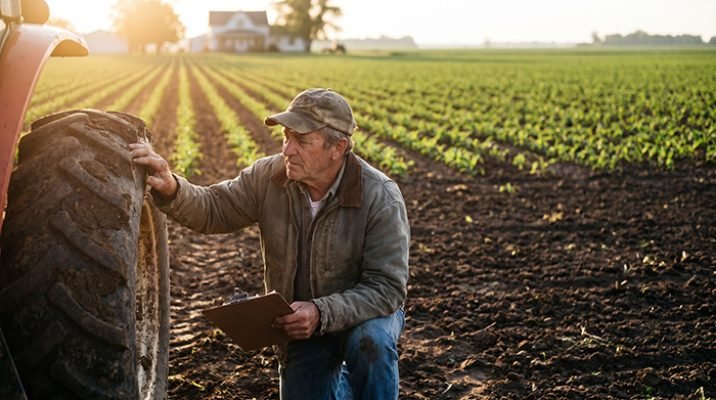
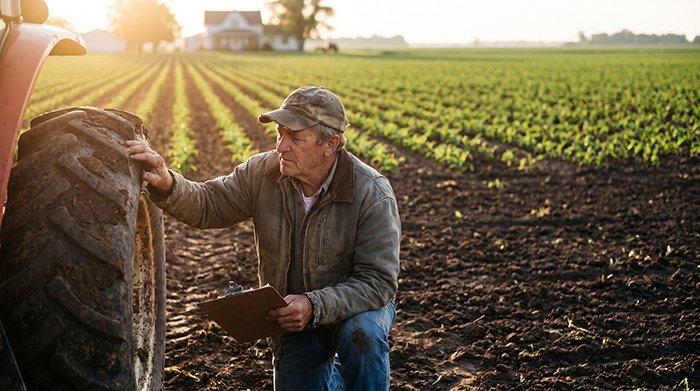
The tire is not a consumable — it’s a capital decision that shapes every output metric your operation produces.
Agricultural tractor tires represent the only point of contact between hundreds of horsepower and the soil beneath them. That interface determines how efficiently engine power translates into tractive force, how much fuel burns to cover an acre, and whether your field recovers quickly or suffers season-long compaction damage. According to University of Minnesota Extension, soil compaction can reduce crop yields by as much as 10% to 25% — a staggering figure that traces directly back to how a tire distributes load across the ground.
Procurement managers and fleet owners who still treat tires as a commodity purchase are leaving measurable ROI on the table. The industry has shifted decisively toward performance-based procurement, where selection criteria include lug angle geometry, ply rating, radial versus bias-ply construction, and load index — not just price per unit. A guide to matching tires with soil conditions reinforces this point: the wrong tire on the wrong terrain forces the tractor’s drivetrain to compensate, accelerating wear on axles, transmission components, and the tire itself.
Incorrect tire selection also hits fuel efficiency harder than most operators expect. Excessive slip caused by under-specified tread patterns forces the engine to work beyond its optimal load range. Michelin’s agricultural tire guidance notes that improper inflation and poor tire-to-task matching are among the leading contributors to avoidable fuel waste in farm fleets.
Perhaps the most underappreciated concept in tire procurement is that durability is site-specific, not universal. A tire rated for exceptional longevity on hard-packed Midwestern clay may degrade rapidly in loose, sandy coastal soils. Understanding this distinction — before purchase — separates strategic buyers from reactive ones. For operations evaluating tractors with configurable tire specs, the conversation about tires must start at the spec sheet, not after delivery.
These stakes make spelling variations and regional terminology more consequential than they first appear — which is exactly where procurement decisions can quietly go off course.
Spelling variations in agricultural equipment procurement are more than a stylistic quirk — they can signal entirely different regional certification frameworks that directly affect what lands on your farm.
“Tyre” and “tire” describe the exact same component, but the spelling encountered on a spec sheet often indicates which regional compliance pathway the product followed. As noted across Reddit discussions and global trade platforms like GlobalTradePlaza, the terminology debate is largely informal — technical specifications remain standardized through ISO protocols regardless of how the word is spelled. That said, procurement managers sourcing equipment internationally can’t afford to treat this as a trivial detail.
CE and ISO certifications should be non-negotiable checkpoints in any global purchasing decision. CE marking signals conformity with European safety and performance directives, while ISO standards govern rubber compound quality, load index accuracy, and dimensional tolerances. Whether a supplier lists “tractor tyres” or “tractor tires” on their export documentation, the underlying question is the same: does this product meet verifiable manufacturing standards? When evaluating classifications like R-1 vs R-1W tractor tires — a distinction that affects wet-grip performance and lug depth — sourcing from certified manufacturers ensures the classification actually reflects tested field behavior, not just a label.
Rubber compound quality is where global standards do the most invisible work. A tire that passes ISO load and inflation testing has been produced within controlled compound formulations, meaning its durability projections are meaningful rather than theoretical. Operators sourcing from unfamiliar markets can use front tire selection guidance to benchmark minimum performance expectations before issuing purchase orders.
Platforms with genuine international export experience help bridge these terminology and certification gaps, translating regional naming conventions into verifiable specs. That same expertise becomes even more critical once you move deeper into structural decisions — specifically, which tire carcass construction actually suits the terrain your tractor works every day.
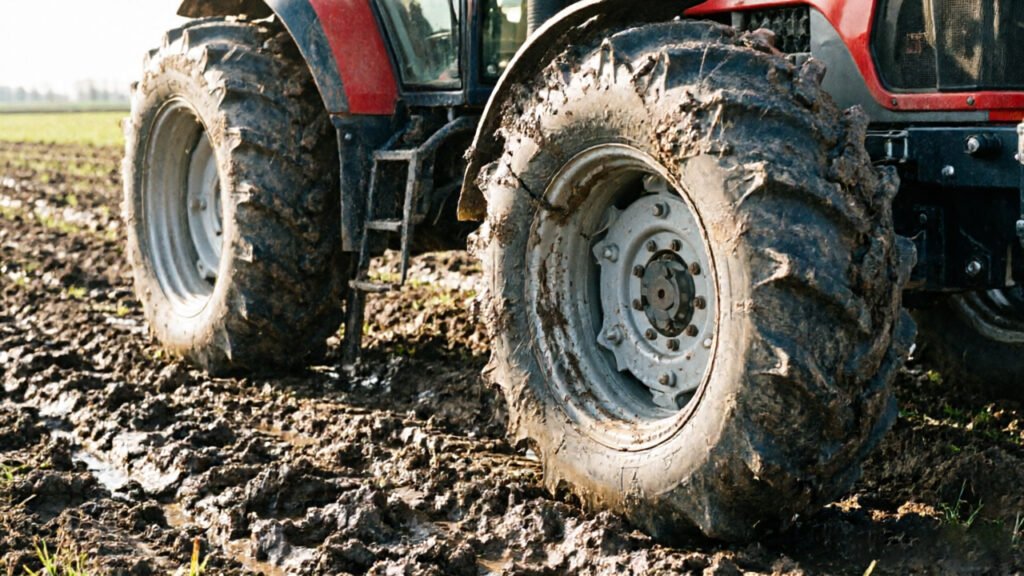
The radial vs bias tractor tires debate isn’t about which construction is superior — it’s about which architecture matches the job your tractor actually does every day.
Carcass construction is the single most influential structural variable in long-term tire performance and soil health.
Radial construction uses ply cords that run perpendicular to the direction of travel, allowing the sidewall and footprint to flex independently. That flexibility does two things well: it spreads the contact patch across a wider surface area to reduce ground pressure, and it generates less heat during long field passes, which translates directly into lower rolling resistance and measurable fuel savings. For row-crop and general farming operations — especially those running high-hour field seasons — radial tires consistently deliver better agronomic outcomes per dollar spent.
Bias-ply construction, on the other hand, layers cords at opposing diagonal angles, creating a stiffer, more integrated sidewall. That rigidity becomes an asset in punishing environments. In forestry operations, rocky construction sites, or terrain where sidewall punctures are a constant threat, the reinforced structure of a bias-ply tire absorbs lateral strikes without folding or deforming. The tradeoff is higher ground pressure and more heat — drawbacks that matter far less when survival, not efficiency, is the priority.
Where the calculus gets more interesting is with IF (Increased Flexion) and VF (Very High Flexion) radial technology. According to University of Minnesota Extension, IF and VF tires can carry the same load at 20% to 40% lower inflation pressures than standard radials. Running lower pressure without sacrificing load capacity directly reduces soil compaction — a benefit with real agronomic and long-term yield implications, particularly on heavier clay ground. For operators sizing up a new compact unit, understanding how tractor horsepower affects terrain demands is useful context before committing to a carcass type.
Matching carcass to duty cycle is the practical takeaway here. Once you’ve locked in the right construction, the next variable that determines real-world performance is tread depth — and that’s where the R-1 versus R-1W decision comes into play.
Choosing between R-1 and R-1W tires is one of the most consequential — and most misunderstood — decisions in agricultural equipment procurement.
R-1 is the industry benchmark for general-purpose farming in moderate to dry conditions. Its lug depth and spacing strike a balance between traction on loose soil and acceptable wear on harder surfaces. For operators running mixed schedules — field work in the morning, gravel laneways in the afternoon — R-1 remains the practical default.
R-1W (the “W” stands for wet) takes that same lug geometry and deepens it significantly. According to Firestone Ag, R-1W tread patterns provide 20% to 25% deeper tread depth than standard R-1 patterns. That extra rubber displacement is engineered specifically for wet, heavy clay soils where shallower lugs simply glaze over the surface rather than bite into it. If your operation covers waterlogged bottomland or dense clay fields, R-1W can meaningfully reduce slip and protect soil structure by improving weight distribution.
However, deeper isn’t always better — and this is where many operators make a costly mistake. On hard-packed or paved surfaces, those extended lugs flex and scrub against the ground in a phenomenon called lug wipe. Over time, this accelerates wear unevenly, shortening service life and raising the question of when to replace tractor tires far sooner than expected. Proper tire selection for your terrain is one of the most reliable ways to extend that interval.
The core principle is straightforward: more rubber doesn’t equal more life if the application is wrong. An R-1W running weekly road transport will wear faster than an R-1 doing the same job — the deeper lugs simply have more material exposed to damaging surface contact. Match the tread to the dominant working condition, not the worst-case scenario.
Beyond the R-1 and R-1W distinction, some terrain demands something even more specialized — which is exactly where purpose-built patterns enter the picture.
Not every field is a cornfield — and tread patterns designed for saturated paddies or multi-surface municipal work demand a fundamentally different engineering approach than the R-1 and R-1W tires covered earlier.
R-2 tires exist for one reason: traction where conventional lugs simply sink and spin. Designed specifically for rice paddies, marshlands, and waterlogged soil, R-2 tires feature lug depths roughly twice that of a standard R-1. That extra depth allows the tire to bite through standing water and soft mud layers to reach firmer substrate beneath. Key characteristics include:
The limitation worth noting: R-2 tires are genuinely specialized. On firm or dry ground, those deep lugs create excessive vibration and uneven wear, making them a poor fit outside their intended environment.
R-5 (MPT) hybrid patterns fill the gap for tractors that split time between field and pavement. According to Alliance Tire Group, hybrid tread patterns combine lug stability with agricultural traction to extend service life on hard roads — a real advantage for municipal fleets, road-shoulder maintenance crews, and mixed-use compact utility operators. Traditional agricultural lugs flex and “squirm” on asphalt, generating heat and accelerating wear. The block-style hybrid pattern distributes load more evenly across the contact patch, reducing that squirm effect significantly.
As machinery trends toward greater versatility heading into the 2030s, R-5 patterns are gaining adoption in fleet procurement planning. Operators tracking specs against a tractor tire load index chart will notice that R-5 fitments often support higher load ratings at lower inflation pressures — a useful attribute when one machine handles both loader work on concrete and light field tasks. CEAT Specialty notes that matching inflation to actual load conditions is among the most effective ways to extend tire life across mixed-surface work.
Understanding which pattern matches your terrain is only half the equation — knowing when that pattern has given everything it can is equally critical, which is exactly where wear science comes in.
Replacing tractor tires at the right moment — not too early, not too late — is one of the highest-leverage decisions in your total cost of ownership. Whether you spell it the American way (“tire”) or the British way (“tyre”), the difference between tyre and tire is purely regional; the physics of wear and failure are universal.
Signs your tires are due for replacement:
The 20% Rule matters more than most operators realize. Waiting until lugs are essentially bald forces the engine to compensate for lost traction with higher fuel consumption — an invisible cost that accumulates across every field pass. In practice, degraded tread also extends field time per acre, compounding the loss.
Vibration is a particularly costly symptom to ignore. As Successful Farming notes, using a deep-lug R-2 tire on dry, hard ground causes “lug wipe” and rapid vibration-induced wear — stress that transmits directly into wheel bearings, axle seals, and the drivetrain. Drivetrain repairs triggered by tire neglect routinely cost 5–10x the price of a timely replacement.
One often-overlooked maintenance tool is a Tractor Tire Load Index Chart. Matching inflation pressure precisely to the load index prevents the edge-wear pattern caused by over-inflation, which concentrates ground contact on the center of the tread and accelerates uneven degradation. Resources like CEAT Specialty’s maintenance guide provide practical inflation guidelines by tire size and load rating.
Knowing when to replace is only half the equation — knowing what to replace with, and where to source it, is where procurement strategy becomes equally critical.
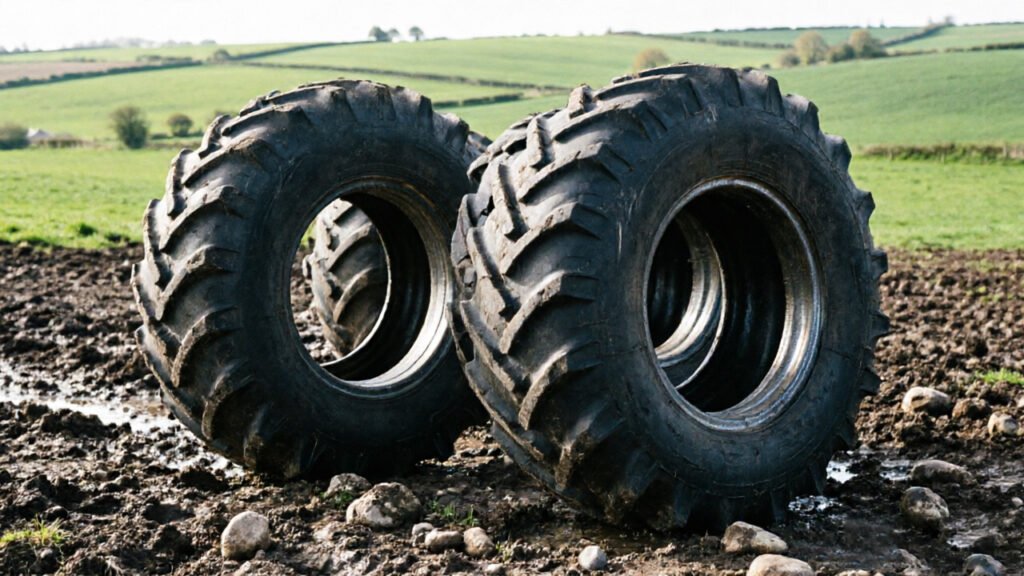
Where you buy your tires matters almost as much as which tires you buy — and the difference between factory-direct and middleman sourcing can add up to thousands of dollars per season.
Choosing factory-direct isn’t just about price; it’s about traceability, compliance, and customization that generic resellers simply can’t guarantee.
OEM/ODM customization is one of the clearest advantages of going direct. Regional soil conditions vary dramatically — heavy clay in the Midwest demands different compound hardness than the sandy loam of the Southeast. A manufacturer with OEM/ODM capabilities can tune tread geometry, rubber durometer, and carcass ply rating to your specific operating environment. Middlemen typically stock what sells broadly, not what works specifically for your acres.
Factory-direct compliance is another critical factor. ISO and CE certifications aren’t just paperwork — they validate load ratings, compound integrity, and dimensional accuracy. When a sourcing layer sits between you and the manufacturer, tracing that documentation becomes difficult. Manufacturers operating at scale, such as Seekmach with its 50,000m² facility serving 50+ countries, embed CE compliance into every production run rather than treating it as an afterthought.
Manufacturer tenure separates serious suppliers from opportunistic ones. A producer with 15+ years in agricultural tires has refined vulcanization processes, compound formulas, and quality control checkpoints that newer or generic resellers haven’t developed. That institutional knowledge directly reduces your blowout and premature wear risk.
Before finalizing any sourcing decision, run through these procurement questions:
Watch this overview to see how tread design translates into real-world field performance before you commit to a spec:
YouTube Video: THE ULTIMATE TRACTOR TIRE GUIDE
With sourcing strategy locked in, the final step is distilling everything — tread selection, inflation management, soil matching, and supplier vetting — into a decision framework you can act on immediately.
Every decision covered in this article — from tread selection to sourcing strategy — ultimately connects to one outcome: protecting your investment and maximizing what your land produces.
According to University of Minnesota Extension, correct tire selection can prevent a 10–25% loss in crop yield caused by soil compaction alone. That single data point reframes tire procurement from a maintenance line item into a direct yield strategy. With that in mind, four principles should guide every tire decision you make.
Match tread to moisture conditions first. R1 tires suit dryer, firmer soils where moderate lug depth delivers sufficient traction without excessive ground disturbance. R1W tires, with their deeper lugs, are built for wet, heavy clay conditions where slip resistance is non-negotiable. Running the wrong pattern for your soil type accelerates wear and compounds compaction damage — two costs that compound quietly until they’re impossible to ignore.
IF/VF technology is not a luxury upgrade — it’s a yield protection tool. Increased Flexion and Very High Flexion tires carry equivalent loads at significantly lower inflation pressures, spreading the contact footprint and reducing compaction depth. For farms managing sensitive soil structure across multiple seasons, this technology pays for itself through healthier root zones and more consistent yields.
Compound quality starts at the source. As covered in the procurement section, CE-certified, factory-direct manufacturers provide the material consistency that determines long-term carcass integrity. Cut-rate sourcing often means inconsistent rubber compounds that degrade faster under field stress — a false economy with measurable consequences.
Load index monitoring is non-negotiable. Operating beyond a tire’s rated load index stresses the internal carcass, shortens service life, and creates safety risks that no maintenance schedule can fully offset.
These four pillars — tread matching, IF/VF adoption, verified sourcing, and load discipline — answer most of the questions heavy equipment owners face. Some of those questions, however, deserve more specific answers, which the next section addresses directly.
Choosing the right agricultural tractor tires raises practical questions — and the answers directly shape your operating costs, soil health, and uptime.
What is the difference between R1 and R1W tires?
R1 tires are standard agricultural tread tires designed for general field conditions. R1W tires feature tread lugs that are roughly 25% deeper, making them purpose-built for wet, muddy, or heavy clay soils where standard R-1 treads lose grip. If your operation regularly deals with saturated ground, the R-1W’s added bite is worth the trade-off in slightly higher soil disturbance — as outlined in this guide to choosing tires for different soil conditions.
How do I read a tractor tire load index chart?
The load index is a numeric code that maps directly to the maximum weight a tire can safely carry at a specified inflation pressure. A higher number means greater load capacity. You match your tractor’s axle weight — found in the operator manual — against the chart to confirm the tire’s rated capacity meets or exceeds that figure. Running under-rated tires accelerates sidewall fatigue and creates a safety hazard.
Are radial tires worth the extra cost for small farms?
In practice, radial tires deliver a larger, more even footprint that reduces soil compaction and improves fuel efficiency — benefits that compound over a full growing season. For small farms running fewer annual hours, the payback period is longer, but the compaction reduction alone can protect long-term soil structure. Six tips for choosing tractor tires covers the radial vs bias trade-off in useful detail.
Does Seekmach provide custom tire configurations for their tractors?
Seekmach works with buyers to match tire specifications to their specific field conditions and implement requirements. With growing market demand for high-efficiency, specialized agricultural tires heading into 2032, having a supplier who treats tire selection as part of the overall machine package — not an afterthought — is a meaningful operational advantage. Contact Seekmach directly to discuss which configuration best fits your acreage, soil type, and workload.