Telephone/WhatsApp:+86 156 2656 0610
Telephone/WhatsApp:+86 156 2656 0610
Email:info@seekmach.com

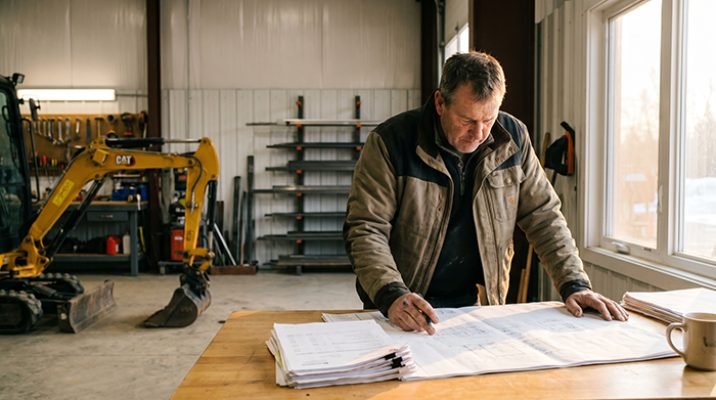
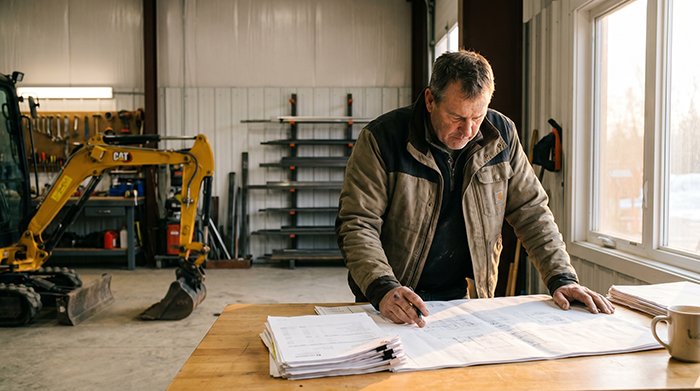
The decision to buy a mini excavator versus rent one isn’t really about upfront cost — it’s about how many hours you’re putting on a machine each year.
Tabla de contenido
PalancaWhen annual utilization crosses 600 to 800 hours, ownership consistently outperforms rental on a pure cost basis, according to industry analysis from Equipment World. For contractors running steady project pipelines, that threshold is easier to hit than most assume — and crossing it marks the point where every rental invoice starts looking like money left on the table.
Rental costs compound silently. A typical mini excavator rental runs $300 to $600 per day or $1,500 to $2,500 per week. Stack that across a moderately busy season, and a contractor can spend $20,000 to $40,000 annually — with nothing to show for it. No residual asset value. No depreciation write-off. No equity. That’s the hidden cost rental advocates rarely surface: every dollar spent renting is a dollar that could have been building ownership equity in a depreciating-but-recoverable asset.
Ownership flips the cost structure entirely. Instead of variable expenses tied to project frequency — which tend to rise with inflation and peak-season demand — owners face a predictable fixed payment schedule. Spring inventory shifts can create real pricing windows for buyers who time their purchase strategically, making the entry cost even more manageable. That predictability matters enormously when bidding jobs and protecting margins.
This is where Total Cost of Ownership (TCO) becomes the right lens. TCO accounts for purchase price, financing, maintenance, insurance, and eventual resale — weighed against the accumulated cost of renting the same capability over the same period. For contractors hitting or approaching that 600-hour mark, TCO math almost always favors buying. And once ownership makes financial sense, the advantages don’t stop at the balance sheet — they extend to how and when you can actually deploy the machine.
Ownership isn’t just about saving money over time — it’s about being able to say yes when a rental-dependent competitor has to say no.
Any honest mini excavator rental vs purchase analysis has to account for what happens at 7 a.m. on a Monday when a landscaping client calls with an emergency drainage job that needs to start by noon. For a contractor who owns their machine, that call is revenue. For one who relies on a rental yard, it’s a scramble — check availability, arrange pickup, complete paperwork, transport the unit — and often, it’s a missed opportunity entirely.
The hidden cost of rental logistics is measured in hours, not just dollars. Every rental cycle involves pickup, drop-off, inspection sign-offs, and administrative back-and-forth that pulls an operator or project manager off productive work. Even a straightforward rental transaction can consume two to four hours of billable time before a single bucket of dirt moves. Multiply that across a busy season and the drag on productivity becomes significant.
Peak-season availability compounds the problem. Rental fleets in high-demand markets frequently hit capacity constraints during spring and summer — the exact windows when contractors are trying to scale. A shortage at the rental yard doesn’t just delay one job; it can stall a pipeline of booked work, damage client relationships, and hand contracts to better-equipped competitors.
“Ownership provides contractors with the ‘readiness advantage,’ allowing them to respond to emergency jobs or schedule changes without the lead times associated with rental fleet availability.” — Association of Equipment Manufacturers (AEM)
Having the right compact machine size sitting on your trailer overnight transforms how you bid projects. Contractors report greater confidence quoting tight timelines precisely because there’s no third-party logistics variable in the equation. That confidence translates directly into more aggressive — and more profitable — bids.
The financial case for ownership runs deeper than utilization hours alone. Before closing that loop entirely, it’s worth examining how the tax code actually rewards the purchase decision in ways most contractors underestimate.
Smart contractors know that the real purchase price of a mini excavator isn’t the sticker number — it’s what you actually pay after the U.S. tax code works in your favor.
Section 179 of the Internal Revenue Code allows businesses to deduct the full purchase price of qualifying equipment in the year it’s placed into service, rather than spreading depreciation across five to seven years. For a mini excavator purchased at $30,000, that’s a potential $30,000 reduction in taxable income — immediately. The IRS sets an annual deduction limit (over $1 million as of recent tax years), so most small contractors qualify with room to spare. You can verify current thresholds directly on IRS.gov.
Rental vs. ownership tax treatment works very differently. Rental payments are classified as operating expenses — deductible, yes, but only in the period they’re paid, with no lasting asset on your books. A purchased machine is a capital asset. It builds equity, appears on your balance sheet, and unlocks depreciation strategies that rental spending never can.
When you factor in factory-direct pricing, the math gets even more compelling. A lower purchase price means a lower cost basis — but the tax deduction still offsets real dollars that would have otherwise gone to the IRS. Whether you’re evaluating compact 1.5–1.8-ton models or larger machines, a factory-direct price reduction of $3,000–$5,000 over dealer retail amplifies your effective savings considerably.
Tax Tip: The question of “is it better to lease or buy a mini excavator” often hinges on tax strategy. Leases may offer smaller monthly deductions, but an outright purchase with Section 179 can yield a larger single-year tax reduction — especially in a high-revenue year when offsetting income matters most.
Consulting a CPA before purchasing is strongly advised. A qualified accountant can align the purchase timing with your fiscal year, assess bonus depreciation opportunities under current law, and structure the transaction to maximize your net benefit. The equipment decision and the tax decision should be made together.
All of this positions ownership as a financial instrument — not just a cost. And that reframes the next natural question: what is the machine worth when you’re ready to move on?
Mini excavators hold their value better than almost any other category of heavy equipment — and that makes compact excavator ROI for contractors a far stronger long-term story than the purchase price alone suggests.
According to auction data from IronPlanet and Ritchie Bros. Auctioneers, mini excavators in the 1–6-ton class retain a higher percentage of their original value compared to larger 20-ton units. The reasons are structural, not accidental.
Size creates liquidity. Compact machines appeal to a broader pool of buyers — landscapers, utility contractors, municipalities, and rental yards all compete for the same used inventory. A 20-ton excavator requires a specialized buyer, specialized transport, and a project scale that narrows the field significantly. A 3-ton machine. fits on a standard trailer, moves with a half-ton pickup, and can be listed, shown, and sold in days rather than weeks.
Depreciation cost per hour is the metric that matters. Sticker price divided by years of use is a rough estimate. But dividing total depreciation by actual machine hours reveals the true cost of ownership — and compact machines consistently outperform larger equipment on this measure because demand in the secondary market supports stronger resale floors. As explored in discussions of total cost of ownership, the purchase price is rarely the most important number in the long run.
Certifications protect future value. Machines carrying CE and ISO certifications are verifiably compliant with international safety and performance standards. In the used market, buyers pay a premium for documented compliance — and sellers with certified equipment face less price resistance and fewer negotiation challenges.
| Factor | Mini Excavator (1–6 ton) | Large Excavator (20+ ton) |
|---|---|---|
| Resale demand | Broad, cross-industry | Narrow, project-specific |
| Transport cost | Low (standard trailer) | High (specialized hauling) |
| Depreciation rate | Lower per hour | Higher per hour |
The financial case for ownership doesn’t end at depreciation, though. When you stack resale strength alongside the day-to-day operational advantages — the kind that show up directly in your bottom line — the argument becomes even harder to ignore.
Ownership converts a recurring operating expense into a balance-sheet asset — and for contractors running the numbers, that shift changes everything about how equipment fits into a business.
The question of how many hours per year to justify buying an excavator is really the wrong frame. The better question is: what are you giving up by not owning? Rental rates have climbed steadily alongside demand, and every dollar paid to a rental yard disappears. Ownership builds something.
1. Elimination of rental markups. Rental companies price equipment to cover their own financing, maintenance, and profit margin — typically 150–200% above ownership cost over a multi-year window. Factory-direct supply chains eliminate middleman costs further, compressing the initial outlay and accelerating break-even.
2. Building business equity. A owned machine appears on your balance sheet as a depreciating asset — not a liability. That equity supports financing applications, bonding capacity, and business valuations when you’re ready to scale or sell.
3. Customization with attachments. Rentals come as-is. Owned machines can be fitted with thumbs, augers, hydraulic breakers, or grading buckets that stay mounted between jobs — a direct productivity multiplier rentals simply can’t match, as noted by RDO Equipment’s ownership analysis.
4. Consistent maintenance history. When you control service intervals, you know exactly what’s been done. Operator familiarity with a single machine also reduces fuel consumption and wear — intangible savings that compound over time.
5. Long-term cost stability. Rental rates fluctuate with market demand. Ownership locks in a predictable monthly payment that doesn’t spike during peak seasons when rental fleets run short.
6. Brand reputation and client confidence. Arriving on a job site with your own logoed equipment signals permanence. Subcontractors and clients alike read owned machinery as evidence of an established, stable operation — a competitive edge that doesn’t show up in any ROI spreadsheet but matters in every bid.
Of course, the quality of the machine you buy matters as much as the decision to buy. That’s where manufacturing standards enter the conversation.
Factory-direct sourcing from certified global manufacturers has fundamentally rewritten the assumption that lower price means lower quality.
For contractors evaluating ownership, the certification question comes first. CE marking and ISO compliance aren’t optional extras — they’re the baseline threshold that separates professional-grade machinery from equipment that creates liability on a job site. CE certification confirms a machine meets European health, safety, and environmental standards, while ISO quality frameworks govern how consistently a manufacturer builds to those benchmarks. Together, they give buyers an auditable guarantee rather than a sales promise.
Facility scale signals manufacturing seriousness. Seekmach Industrial operates a 50,000m² production facility backed by 15+ years of OEM expertise — the kind of infrastructure that supports precision tolerances, quality control at volume, and component traceability across production runs. A manufacturer at that scale isn’t assembling machines opportunistically; it’s engineering them systematically. That distinction matters when a hydraulic seal fails on a job site 800 miles from the nearest dealer.
The Ace Asok market presence reinforces a broader pattern playing out across the compact equipment sector. As factory-direct channels have matured, regional distributors and contractors have gained access to machinery that was previously only available through legacy dealer networks — often at 20–35% lower acquisition cost without sacrificing the certifications that protect both the operator and the investment. The ‘direct from factory’ model now delivers verified OEM durability, not a compromise.
OEM and ODM expertise also shapes long-term reliability in ways that aren’t visible at purchase. Manufacturers with deep OEM experience design machines with serviceability in mind — standardized parts, documented tolerances, and accessible service manuals. That engineering discipline translates directly into lower lifetime maintenance costs, which connects naturally to what separates well-maintained owned equipment from the hard-run rental units that so many contractors inherit — a subject worth examining closely in any real-world ownership analysis.
Ownership only pays off if the machine keeps running — and that means treating maintenance as a revenue strategy, not an afterthought.
According to cehome.com, proper maintenance and operator control awareness are the two most critical factors determining excavator longevity. That insight carries serious weight when you’re making a multi-year capital commitment.
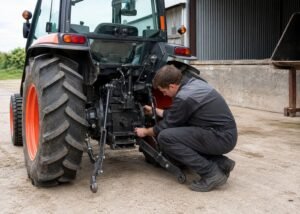
The ownership advantage here is structural. Rental units are routinely “hard-run” by successive operators who have no financial stake in the machine’s condition. Fluid changes get skipped. Filters run past their service intervals. By contrast, an owner-operator controls every service touchpoint — and that control compounds over time into lower repair costs and a stronger resale position.
Maintenance Essentials — Five Golden Rules for Long-Term Reliability:
That last point deserves emphasis. Quick-change attachments transform a single machine into a multi-tool platform, but they also introduce additional hydraulic fittings that require routine inspection. Owners who stay on top of these checks protect both performance and resale value simultaneously.
Understanding total cost of ownership across similar equipment categories consistently shows that disciplined maintenance schedules are the single biggest differentiator between owners who see strong ROI and those who don’t. The machine you buy today is worth significantly more in three years if every service interval is documented and every wear item is addressed on schedule — a fact that ties directly into the broader financial picture covered next.
Buying a mini excavator is one of the clearest ROI decisions in contracting — once you understand the variables that separate a smart purchase from an expensive mistake.
Ownership wins decisively when annual utilization exceeds 600 hours. Below that threshold, rental may still cover occasional project needs. Above it, every additional hour on your own machine compounds into pure margin. As detailed throughout this article, the math shifts permanently once fixed ownership costs are spread across high-frequency use.
Tax treatment accelerates that math significantly. Section 179 of the IRS tax code allows businesses to deduct the full purchase price of qualifying equipment in the year it’s placed in service, rather than depreciating it over time. In practical terms, that can reduce the effective out-of-pocket cost of a 3.5-ton machine by 20–30% in year one alone — turning a six-figure capital decision into something far more manageable.
Factory-direct sourcing removes a cost layer that most contractors never question. As construction equipment sourcing research consistently shows, direct-to-market models allow contractors to access industrial-grade machinery without traditional dealer markups — meaning you’re paying for the machine, not the distribution chain. That pricing advantage is structural, not a one-time promotion.
The readiness advantage is a growth multiplier, not just a convenience. Owning your equipment means you can respond to same-day project opportunities, stack jobs efficiently, and scale throughput without being held hostage to rental yard availability. According to industry analysis on rent vs. buy decisions, contractors who own their equipment consistently report higher project completion rates and stronger client retention.
Finally, mini excavators hold their value. Secondary market demand for compact excavators remains robust, meaning a well-maintained machine retains significant resale value — effectively acting as a depreciating asset that never reaches zero while it keeps generating revenue. That liquidity reduces the real risk of ownership considerably.
The decision has many moving parts, and the right questions can sharpen your thinking quickly. The next section addresses the most common ones directly.
Mini excavator ownership delivers measurable returns — but only when you ask the right questions before signing a purchase order.
Is buying a mini excavator a good investment for a small landscaping business?
For small landscaping businesses running consistent excavation work — grading, drainage, planting beds — ownership typically makes financial sense once you’re logging 15 or more billable days per month. At average rental ratYes, that threshold arrives faster than most contractors expect. The key variable is utilization: a machine sitting idle erodes ROI quickly, while one working steadily generates returns that compound over time. Understanding how total cost of ownership drives ROI — not just the sticker price — is the mindset shift that separates smart buyers from less informed ones.
Why is purchasing better than hiring for long-term projects? Rental costs are predictable in the short term but punishing over extended timelines. On a project running three months or longer, rental fees can exceed the purchase price of a comparable machine. Ownership also eliminates scheduling conflicts, mobilization delays, and the operational restrictions many rental companies impose on attachments and work conditions — all of which quietly inflate project costs.
What are the risks of buying factory-direct from international manufacturers?
The primary risks are parts availability, warranty enforcement, and support responsiveness. Buyers should verify that the manufacturer maintains domestic parts inventory, offers a written warranty backed by a local entity, and provides documented service records. A lower purchase price loses its appeal when a hydraulic repair takes six weeks because components are shipping from overseas.
How do I calculate the payback period for a 3.5-ton excavator?
Divide your total acquisition cost by your monthly savings over rental — or by net monthly revenue if you’re subleasing the machine. According to MechLink, payback periods for mini excavators typically range from 18 to 36 months depending on local rental rates and utilization. A machine generating $2,500 in monthly rental savings against a $40,000 purchase price breaks even in roughly 16 months — before factoring in resale value.
SeekMach is a professional manufacturer and exporter dedicated to the R&D and production of excavators, loaders and tractors. We guarantee to provide you with the best quality service.