Telephone/WhatsApp:+86 156 2656 0610
Telephone/WhatsApp:+86 156 2656 0610
Email:info@seekmach.com

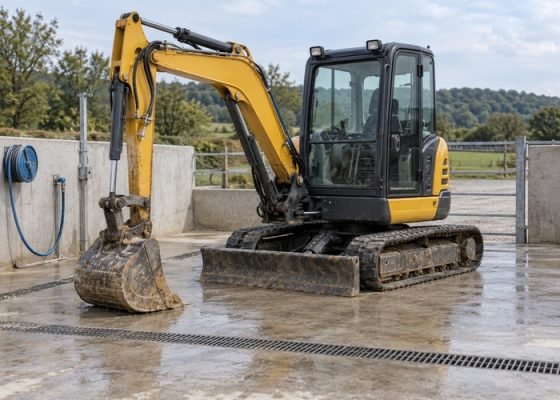
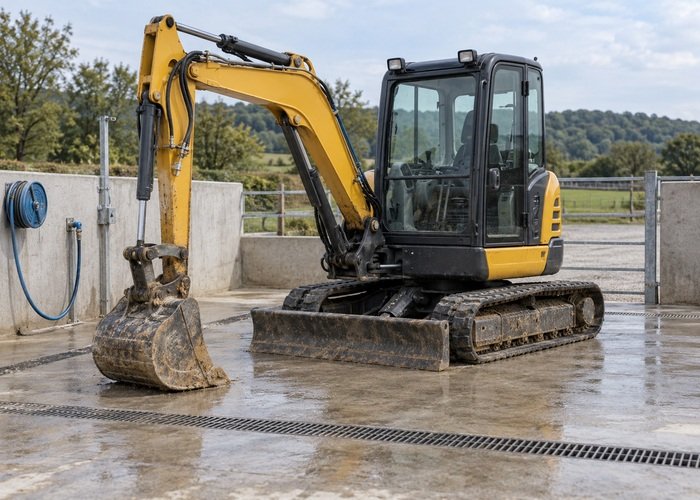
Mini excavator biosecurity cleaning means planning how to remove retained soil and organic debris before equipment moves between sites, while meeting the receiving site’s specific requirements. Include the bucket, tracks, blade, attachments, transport vehicle and any equipment used during cleaning. Use an approved cleaning location and manage removed material and runoff appropriately. A quick rinse or a clean-looking cab does not establish that a machine is ready for a sensitive site.
This guide is a transfer-planning checklist for landscaping, forestry, agricultural and other ground-disturbing work. It does not prescribe a disinfectant, dilution, pressure-washing technique or universal clean certificate. Site restrictions, local biosecurity authorities and the machine manufacturer’s cleaning instructions determine the actual method and release criteria.
Before booking the move, ask whether the destination has a written biosecurity policy. Identify any declared pest, invasive plant, disease or restricted material that changes the normal process. Record who can interpret those requirements and who is authorised to accept the arriving equipment. Do not leave the discussion until the trailer reaches the gate.
Ask whether the requirement concerns visible cleanliness, a documented cleaning process, specialist treatment or another defined condition. Those are different forms of evidence. A contractor’s photographs may help show what was inspected, but they do not prove that a pathogen has been eliminated.
Forestry Commission and APHA biosecurity guidance identifies dirty machinery, vehicles, soil and organic material as possible transport pathways. Its UK tree-health context explains why movement planning matters. Requirements for another country, pest or receiving property must be confirmed separately.
Keep a short movement history: departure site, work area, material handled and intended destination. Record known restrictions using the site’s own description. Do not label an ordinary muddy machine infected without evidence, and do not describe a restricted site as unrestricted because the operator saw no obvious symptoms.
Include attachments that were exchanged during the job. A bucket left beside a stockpile or a blade that contacted different ground may have a different history from equipment stored in a clean area. Make the transfer record identify which components are actually travelling.
For hired equipment, agree who arranges cleaning and who supplies the record. The rental handover guide can help organise responsibilities and condition photographs. A rental return inspection and a biosecurity release answer different questions, so keep both decisions clear.
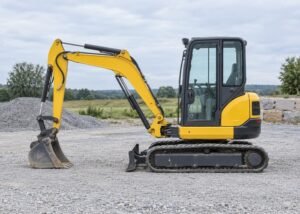
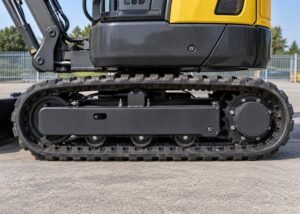
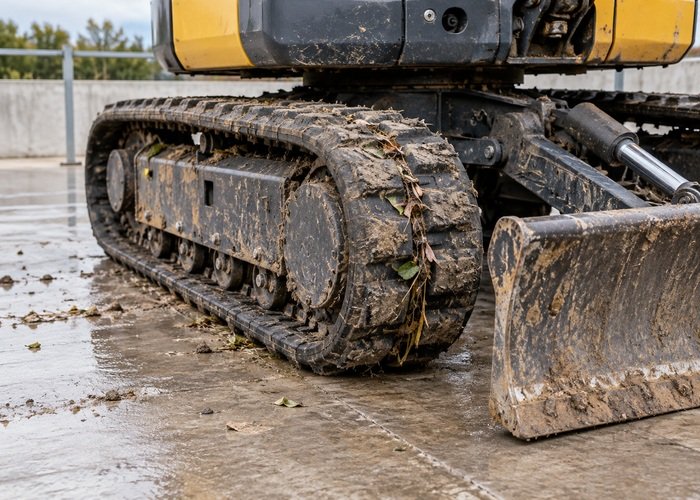
Use safe access and the manufacturer’s instructions to identify where material can remain. Common inspection areas include track tread, accessible undercarriage surfaces, blade corners, bucket surfaces and attachment interfaces. Record inaccessible areas so that an authorised service provider can plan further access rather than leaving the omission hidden.
| Area | Observation to record | Planning question |
|---|---|---|
| Tracks and accessible undercarriage | Retained soil and plant fragments | How will approved cleaning and inspection reach these surfaces safely? |
| Bucket and attachments | Material in corners, interfaces or stored equipment | Are separate attachments included in the release? |
| Blade and machine exterior | Soil or organic debris on accessible surfaces | Which areas need attention without damaging components? |
| Cab access and footwear | Debris carried through steps and footwell | Can cleaned equipment be recontaminated during loading? |
| Trailer and loading equipment | Material retained on the transport system | Is the clean machine being placed on a clean transport route? |
This map organises observations; it is not an instruction to dismantle the machine. Never lift or support the excavator using an improvised method to inspect underneath it. Any movement, removal of guards or service access needs the appropriate safe procedure.
Ask the departure-site contact where cleaning is permitted and how removed material will be handled. A convenient roadside area may not be an acceptable place to release soil or wash water. Establish the location before the machine is loaded or driven toward a clean part of the site.
England’s tree-health pilot biosecurity protocol gives an example of a programme with defined biosecurity measures and equipment support. Its programme-specific requirements should not be copied as a universal rule. Use the site’s competent adviser to decide which measures apply to your move.
Check practical access to the approved facility. Include safe parking, collection arrangements, lighting and the ability to keep pedestrians away from the task. If the required facility is unavailable, agree a revised transfer plan instead of creating an uncontrolled wash area.
Get the machine manufacturer’s instructions for cleaning sensitive components and accessible surfaces. Ask how to protect electrical equipment, seals and other vulnerable areas. Do not assume that a method suitable for a detached steel bucket is suitable for every part of the excavator.
Where the site specifies disinfection or specialist treatment, obtain the authorised product and procedure from the responsible adviser. Follow the product information and required precautions. This article gives no universal chemical mixture, contact time or treatment sequence because the target organism and equipment can change the requirement.
Keep observations separate from the treatment record. “Visible soil removed from accessible tread” describes a check. “Machine sterilised” is a much stronger claim that should not appear without valid evidence. Use precise language that the next inspector can understand.
Agree how retained soil, organic debris and cleaning water are collected and managed. Include used brushes, tools, protective equipment and other items that could carry material onward. An otherwise careful machine inspection can be undermined by putting dirty cleaning tools back into a transport vehicle.
Forest Research’s biosecurity practice guide discusses machinery hygiene and contamination pathways in forestry. It supports treating cleaning as an organised process rather than an isolated spray-down. Use the relevant site and environmental advice to establish the permitted handling route for your debris and water.
If the material may be restricted, ask before disposing of it as ordinary waste. Record the approved destination or handling method and the person who supplied that instruction. Do not take it to another property simply because that property has space to receive it.
Have the designated person compare the finished condition with the receiving site’s criteria. Record the areas checked, inaccessible areas, outstanding concerns and any additional action required. An honest incomplete result is more useful than a signed release that omits part of the machine.
Check the transport vehicle, trailer deck, ramps and any travelling attachment under the agreed plan. Establish how the operator reaches the machine without carrying departure-site debris back onto cleaned surfaces. Think through the loading sequence before declaring the transfer ready.
Once the machine is released, avoid sending it back through the dirty work area. If its condition changes before departure, record that change and repeat the necessary checks. A cleaning record refers to the condition and scope actually inspected, not every later movement.
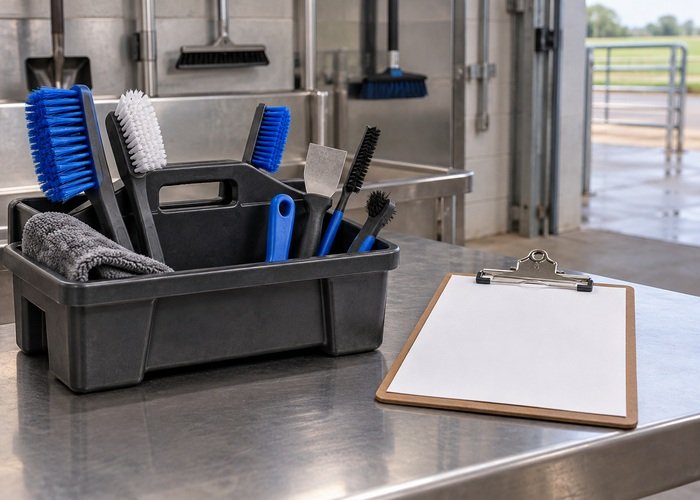
Include machine and attachment identification, departure and destination sites, cleaning location, date, method reference and the person responsible. List the inspected areas and the result against the agreed criteria. Attach useful photographs without presenting them as laboratory evidence.
Record any exception explicitly. If a specialist must inspect an inaccessible component, show that as outstanding. If the destination accepts the machine subject to a particular restriction, preserve the acceptance and its scope. Do not replace a conditional decision with a simple unchecked box labelled clean.
Das daily inspection checklist helps organise routine machine condition checks. It should sit alongside, rather than replace, the site-to-site hygiene record. Mechanical readiness and destination biosecurity acceptance remain separate responsibilities.
Keep confirmed cleaning requirements and equipment references with the machine’s records. The parts identification guide can help when an authorised service provider needs component information for safe access. Do not remove unfamiliar parts just to complete a cleaning checklist.
Review delays after a transfer. Was the problem missing site information, unsuitable access to a wash facility or an attachment omitted from the record? Correcting that planning gap is more useful than increasing the number of boxes on the form. Keep the checklist specific enough for the actual machine and destination.
No. Confirm the destination’s criteria, required process and acceptance evidence. Visible cleanliness is not proof that a particular pest or pathogen is absent.
Include the transport system in the site-specific plan. Retained material on decks, ramps or travelling attachments can undermine the machine’s cleaned condition.
Obtain the approved instruction for the relevant site, organism and equipment. Do not adopt a universal dilution or treatment from another application.
Agree responsibilities before the move. Record the person who completed the checks and the receiving party’s acceptance where required.