Telephone/WhatsApp:+86 156 2656 0610

Telephone/WhatsApp:+86 156 2656 0610
Email:info@seekmach.com



A useful mini excavator rental handover record identifies the exact machine and attachments, captures their condition before delivery, records hours and fuel consistently, and repeats the same checks at return. Its purpose is to make changes traceable. A signed sheet without clear observations is weak evidence; a folder of unidentified photographs is difficult to compare.
For a small rental fleet, the most practical starting point is one condition report per hire, linked to a stable machine ID. Separate operational safety decisions from commercial questions about cleaning, wear or damage. A machine with a safety-critical defect must be assessed before it goes back into service, regardless of whether responsibility for the defect has been agreed.
This guide focuses on the handover record. For wider fleet selection and operating planning, see the mini excavator rental business checklist. Use the specific machine and attachment manuals for inspection methods and acceptance limits.
Record the fleet number, manufacturer, model, serial number and hire reference. Add delivery and collection dates, the actual inspection time, and the names or roles of the people involved. Keep the customer’s personal details in the rental system rather than copying them into publicly accessible photo folders.
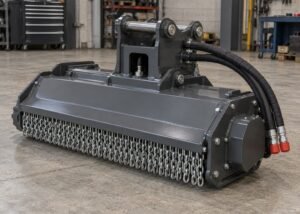
Attachments need their own identity. A bucket that fits the excavator may still belong to a different hire. Record each bucket, breaker, auger, thumb or coupler supplied, using an asset tag or another reliable identifier. List loose accessories, keys and manuals. Where no serial number is available, photograph a distinguishing mark and give the item a stable inventory reference.
The machine serial number also helps resolve parts questions later. A model name alone may not identify a production change. SeekMach’s mini excavator spare parts ordering guide explains the information to assemble before requesting replacement components.
| Record field | Evidence to retain | Why it matters |
|---|---|---|
| Machine identity | Fleet tag and serial-plate photograph | Links the inspection to one unit |
| Attachment identity | Asset reference and overview photograph | Prevents swapped items from appearing equivalent |
| Hours | Readable meter photograph with inspection time | Provides a consistent use record |
| Kraftstoff | Gauge reading and agreed recording method | Makes the comparison understandable |
| Existing defects | Location, description, close-up and wider view | Distinguishes prior condition from later change |
| Release decision | Inspector, outcome and unresolved items | Separates observation from permission to operate |
Choose a fixed sequence around the machine: front, rear, both sides, operator area, undercarriage and supplied attachments. Use approximately the same camera position at return. Consistent views make comparisons faster than a large collection of unrelated close-ups. Photograph on stable ground with the machine secured according to its manual.
Take an overview before a detail photograph. A close-up of a scratched panel should be paired with a wider image showing which panel it is. Include enough context to distinguish a mark from a shadow, wet surface or reflection. If mud hides an area, record that it could not be assessed; do not mark it undamaged simply because no damage is visible.
Preserve original files and their timestamps. Use a folder name based on the hire reference and inspection stage, then number images in route order. Keep annotated copies separate from originals. If the camera clock is wrong, note the discrepancy in the report rather than silently editing the apparent capture time.
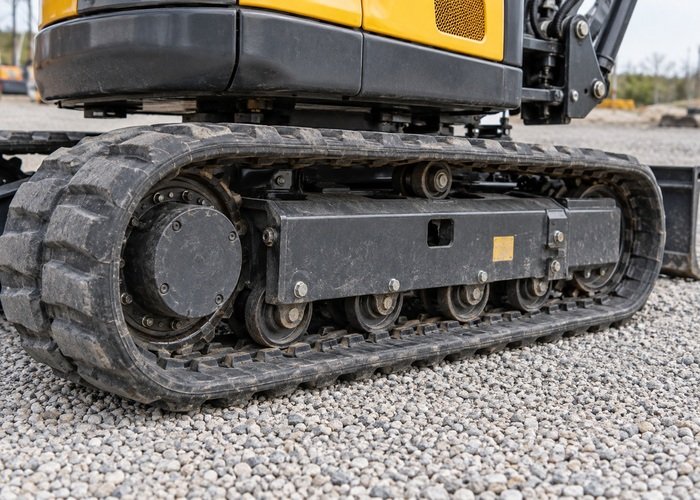
Replace broad labels such as “good” with observations. For example, “left rear cover has a shallow dent beside the latch, shown in photos 08 and 09” is more useful than “cosmetic wear.” Describe the location, visible extent and evidence reference. Avoid diagnosing an internal failure from a photograph alone.
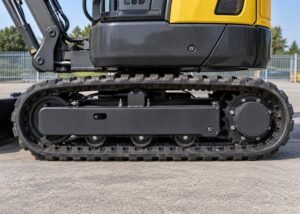
For tracks, record visible cuts, missing tread sections, exposed reinforcement or other observed deterioration. For panels, note dents, cracks and broken latches. For hoses and cylinders, record visible leakage or damage without putting hands near a suspected pressure leak. Measurements and service decisions should follow the equipment-specific procedure.
Use three distinct outcomes: acceptable for the intended release, requires assessment, or unavailable for hire. Add a separate commercial note if a cleaning or damage discussion remains open. An invoice decision should not determine whether an unresolved control, attachment or structural concern receives technical attention.
Photographs show visible condition; they do not establish that controls, interlocks or attachment retention work correctly. Have a competent person complete the relevant checks using the manual and the site’s safe system of work. Record what was checked and any limits on the inspection rather than letting a signature imply every possible test was performed.
The UK Health and Safety Executive’s excavator guidance discusses operator competence, exclusion areas and inspection arrangements. It is useful safety context for UK work, rather than a substitute for local requirements or a model-specific procedure. Keep people clear of machine movements during any functional demonstration.
At handover, identify who is receiving the equipment and how the relevant instructions will be supplied. A brief demonstration does not establish competence by itself. Record any unfamiliar controls or attachment arrangements that require further instruction. If a safe demonstration cannot be completed, document that limitation and resolve it before release.
Photograph the hour meter at both inspections. Record the displayed reading as shown, including decimals where available. If the display is unreadable or has been replaced, explain the limitation. Compare return hours with the delivery reading, but investigate an implausible difference before treating it as confirmed use.
Fuel records need the same method at each stage. A gauge reading taken on a slope should not be compared unquestioningly with one taken on level ground. Note the gauge state and the agreed fuel policy in the rental agreement. A gauge photograph supports the record; it does not measure an exact quantity of fuel consumed.
Count accessories at return against the original list. Check whether a second bucket, attachment hoses, keys or instruction pack have returned with the machine. If an item is missing, record it separately from a machine-condition defect. This keeps the discussion specific and gives the customer a clear opportunity to locate the item.
Use the same identity checks and photo route. Where possible, compare the original images while the machine is still available for inspection. Mark each observation as unchanged, changed, newly visible after cleaning, or not assessable. These categories are more honest than forcing every item into an immediate pass or fail.
If cleaning is needed before an area can be examined, retain photographs of the arrival condition first. Follow the manual when cleaning, protecting sensitive components and avoiding methods that can cause damage. Record who completed the later inspection and when it occurred so the sequence remains clear.
For a suspected new defect, write the observation before estimating the repair. Identify whether further diagnosis is required and who will perform it. Share the relevant evidence through the agreed customer process. A condition difference establishes that something changed; responsibility, repair scope and charging depend on the agreement and applicable requirements.
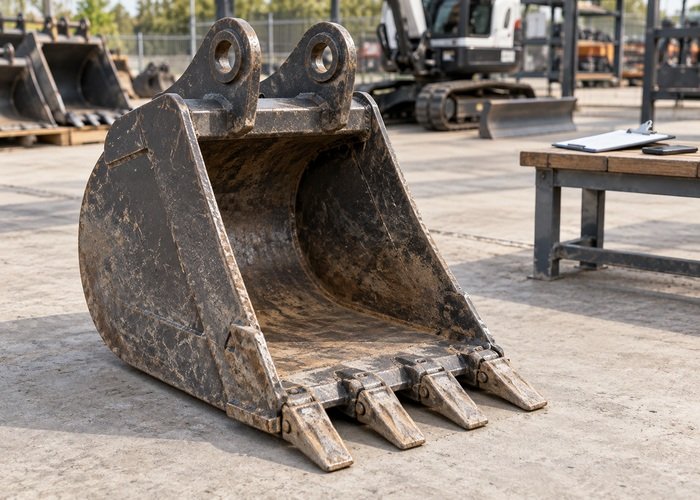
A useful exception log contains the observed issue, photo references, the immediate action, the person responsible for assessment and the next review point. Keep it linked to the machine record. Do not bury an unresolved concern in a free-text note that the next dispatcher may never see.
The HSE’s work-equipment inspection guidance explains that inspection scope and frequency depend on the equipment and risk, and that records can be important. For this handover process, use a checklist that prompts meaningful observations rather than collecting signatures without evidence.
When a machine is held for assessment, preserve its status through scheduling, dispatch and maintenance records. Close the exception only when the assessment and any necessary work are documented. Keep the original observation alongside the resolution so future inspectors can understand the history rather than seeing only a cleared checkbox.
After several hires, review repeated observations by machine and attachment. Frequent missing accessories may suggest that the dispatch list needs clearer identification. Repeated unreadable meter photographs may point to poor lighting or an inconsistent camera routine. These are process findings; they do not prove misuse or predict repair costs.
For UK operators, the HSE’s PUWER overview provides context on suitable equipment, maintenance, inspection and training. Apply the requirements relevant to your location. Keep commercial record improvements aligned with, but separate from, the competent inspection and maintenance programme.
When comparing machines for a future fleet purchase, include service information, attachment identification and access to appropriate manuals in the discussion. Browse SeekMach’s mini excavator range und contact the team with the intended hire applications and required documentation. Confirm the exact supplied configuration in writing.
No. It records acknowledgement of the information presented. It does not prove that unrecorded checks were completed or that a machine is safe. Keep the actual inspection observations and release decision identifiable.
Use consistent overview photographs and add details for marks that could be disputed or need monitoring. The goal is a clear condition baseline, rather than a large image count. Record areas that cannot be assessed.
Follow the agreed collection process, retain timestamped evidence and record that the inspection was not joint. Do not describe an unsigned return report as customer agreement. Communicate any disputed observations through the established process.
Yes, if each attachment has a separate identity, condition entry and evidence reference. Avoid a single “attachments returned” checkbox when the supplied items differ in type or condition.
Set retention with reference to your agreement, operational needs and applicable local requirements. Restrict access to customer information and retain only what is needed. There is no universal retention period established by this sample workflow.