Telephone/WhatsApp:+86 156 2656 0610

Telephone/WhatsApp:+86 156 2656 0610
Email:info@seekmach.com

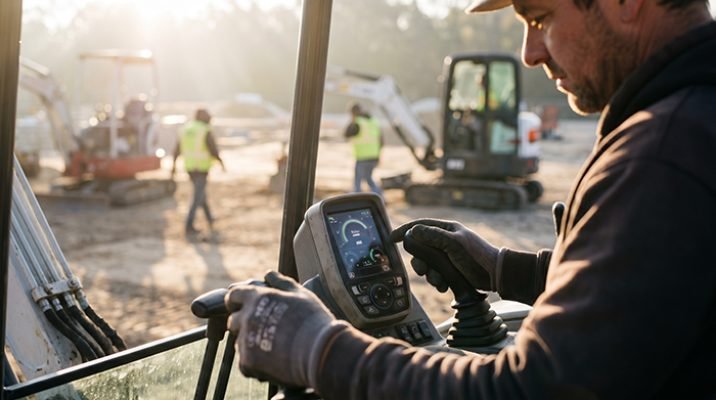
Fuel costs aren’t a line item anymore — they’re a margin killer, and the contractors who understand that are quietly outpacing everyone else.
The compact machinery industry is undergoing a fundamental shift. For decades, purchasing decisions centered on raw power, bucket capacity, and breakout force. That calculus is changing. What separates profitable operations from struggling ones in 2026 isn’t just horsepower — it’s how intelligently a machine manages the power it already has. The 2026 White Paper on the Development Trends of Compact Construction Machinery confirms this shift is no longer emerging — it’s arrived.
Fuel efficiency has become the single most important factor in mini excavator ROI for small-to-mid-sized contractors.
For owner-operators running two or three machines, diesel spend can consume 30–40% of total operating costs on an active job site. That’s before factoring in idle time, which routinely accounts for 30% or more of total engine hours on typical excavation projects. Margins in residential and light commercial contracting rarely exceed 10–15%, which means fuel inefficiency doesn’t just hurt — it can erase profit entirely.
2026 is pivotal for a specific reason: Stage V and Tier 4 Final emissions standards are now deeply integrated across compact equipment lineups, and manufacturers are competing not just on compliance, but on how efficiently their engines perform within those constraints. A genuinely fuel efficient excavator in this environment isn’t just cleaner — it’s architecturally different, built around systems that reduce waste at every operating phase.
Understanding that architecture starts with hydraulics. The way modern machines move fluid — and when they decide not to — is where the biggest efficiency gains are hiding.
Modern load-sensing hydraulics represent the single biggest leap in reducing fuel consumption per hour in mini excavators — cutting waste at the source rather than managing it after the fact.
Traditional open-center hydraulic systems were simple but wasteful by design. Oil circulated continuously through the system at full flow, regardless of whether the attachment was moving or sitting idle. That constant circulation burned fuel even when the machine was doing nothing productive. In contrast, flow-on-demand technology uses variable displacement pumps that read actual load requirements in real time and deliver only the hydraulic pressure the task genuinely needs — nothing more.
The practical difference is significant. According to research published by the International Journal of Fluid Power (IJFP), advanced load-sensing hydraulic systems in 2026 mini excavators can reduce fuel consumption by up to 15% compared to traditional fixed-flow setups. That’s not a marginal gain — on a machine running eight hours a day across a full construction season, it translates directly into thousands of dollars in recovered margin. You can explore how this efficiency plays out across machine classes in this side-by-side size comparison.
For precision applications — finish grading, landscaping, utility work in tight urban corridors — load-sensing isn’t just about fuel savings. It gives operators finer control at low flow rates, reducing overcorrection and rework. The hydraulic circuit responds proportionally, not abruptly.
There’s also a longer-term mechanical benefit worth noting. Hydraulic efficiency and engine longevity are directly linked. When a pump stops fighting unnecessary back-pressure, operating temperatures drop, fluid degradation slows, and wear on seals and cylinders decreases measurably. The engine isn’t compensating for wasted energy — it’s working at a more consistent, sustainable load.
Smarter hydraulics don’t just save fuel; they extend the productive life of the machine itself. And that efficiency story doesn’t stop at the pump — the electronics managing engine output are evolving just as rapidly.
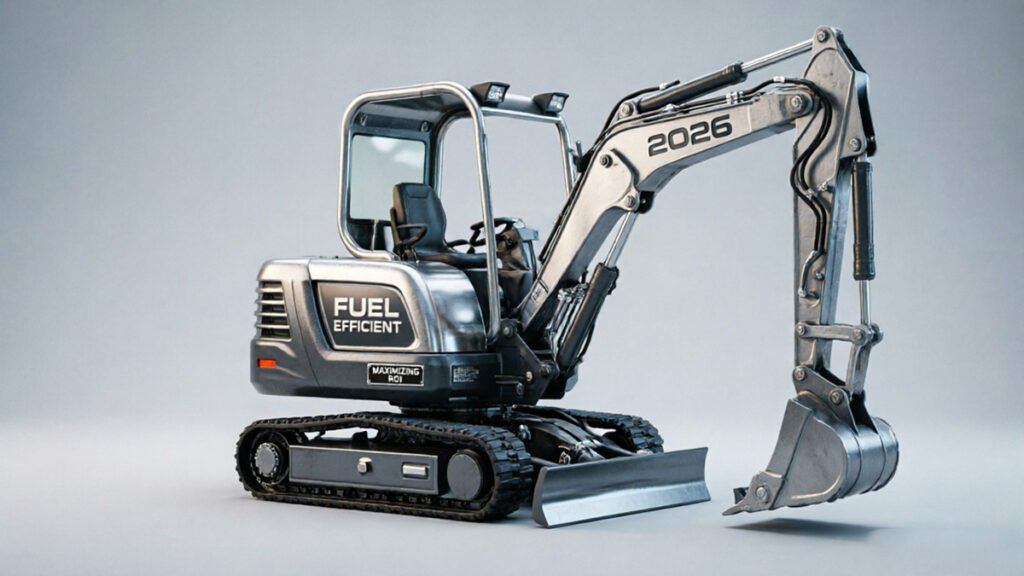
Modern ECUs have transformed the mini excavator from a blunt instrument into a precision machine — one that anticipates demand rather than simply reacting to it.
As load-sensing hydraulics (covered in the previous section) handle the fluid side of efficiency, electronic control units manage the combustion side. The two systems work in concert, and understanding their relationship is central to making sense of 2026 mini excavator trends. According to the Diesel Progress / Association of Equipment Manufacturers (AEM), the integration of Stage V and Tier 4 Final engines with advanced ECUs allows predictive sensors to optimize torque curves during mode transitions — precisely the moments when fuel is most likely to be wasted.
Three capabilities define what modern ECUs actually do on a job site:
“Idle reduction technology isn’t just a fuel play — it’s becoming a contract requirement on urban infrastructure projects where emissions targets are written directly into bid specifications.” — Industry comment, Finning Equipment Blog
The carbon footprint angle matters here too. Municipal and urban construction contracts increasingly mandate emissions compliance, and Stage V engines paired with electronic torque management give contractors a measurable way to demonstrate compliance without sacrificing productivity.
What the spec sheet won’t tell you, though, is how much these savings vary by job condition. That’s exactly what makes calculating real-world fuel consumption per hour the critical next step.
Fuel consumption figures on spec sheets rarely survive contact with a real job site — and the gap between rated burn rates and actual costs is where construction profitability quietly erodes.
The core formula is straightforward: multiply the engine’s rated fuel consumption (gallons per hour) by your hourly diesel cost, then factor in your actual utilization rate. What that formula can’t capture on its own is how dramatically real-world variables distort the baseline number.
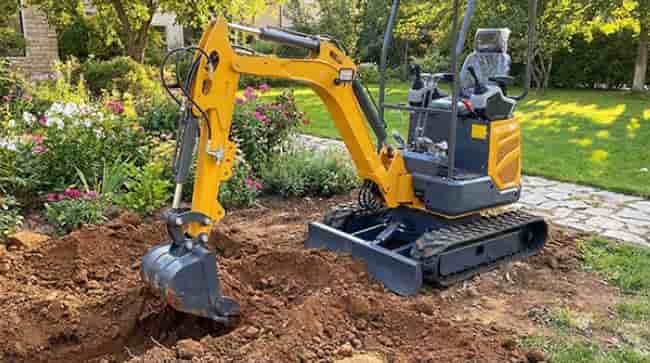
Soil density is one of the most underestimated factors. Compact clay or rocky subsoil can push fuel burn 25–40% above the manufacturer’s estimate compared to working in loose topsoil. Operator skill compounds this — smooth, deliberate movements use significantly less fuel than jerky, over-throttled technique. Attachment use matters too; running a hydraulic thumb or auger continuously taxes the system in ways a standard bucket does not. For a mini excavator for landscaping projects, where operators frequently switch between attachments across varied terrain, these variables stack up quickly.
“Idle time is the silent killer of construction profitability.” According to the Association of Equipment Management Professionals, telematics data consistently shows that mini excavators spend 30% to 40% of their operating time idling — burning fuel and generating zero productive output. On a machine consuming 1.5 gallons per hour at idle, a single 10-hour workday can waste 4–6 gallons before a single bucket of soil is moved.
Telematics platforms bridge the gap between lab tests and job site reality by logging idle time, throttle position, and load cycles in real time. Operators using auto-idle and shutdown features in combination with telematics data report measurable reductions in weekly fuel spend — without sacrificing cycle times.
When benchmarking 2026 models against 2015–2020 machinery, the delta is stark. Older engines running fixed-displacement hydraulics often consumed 1.8–2.2 gallons per hour under moderate load. Modern machines with the load-sensing and ECU systems covered earlier in this article regularly operate below 1.4 gallons per hour under comparable conditions. That difference compounds over a full season into thousands of dollars in recovered margin — and it’s precisely why hybrid drivetrain technology is emerging as the next frontier.
Hybrid technology is quietly reshaping what fuel efficient construction equipment looks like in the sub-3-ton category — and the electric swing motor is leading that charge.
As noted by Equipment World / Off-Highway Research, “the shift toward electrification in the sub-3-ton category is driven by zero-emission needs, but immediate gains come from electric swing motors.” That framing matters. Full battery-electric excavators remain expensive and range-limited for most job sites. What’s actually moving the needle in 2026 is the strategic placement of electric motors at the highest-impact point in the machine’s work cycle: the upper-structure rotation.
The swing motor is an ideal electrification entry point because rotation accounts for a disproportionately large share of a mini excavator’s energy draw during typical dig-and-dump cycles. Replacing a hydraulic swing motor with an electric one allows the system to do something a conventional diesel drivetrain simply cannot — recover energy during deceleration. When the upper structure slows, regenerative braking captures that kinetic energy and routes it back into a buffer capacitor or small battery pack. That stored energy then assists the next swing or supplements hydraulic demand peaks, reducing the load placed directly on the diesel engine.
For contractors weighing machine selection against tightening urban work conditions, zero-emission zones are becoming a procurement filter rather than an afterthought. Cities across the US are piloting low-emission construction corridors, and machines that can demonstrate measurable hybrid contribution — even on a diesel chassis — are increasingly favored in bid requirements. The 1.2-ton class is where this hybrid architecture is gaining the fastest traction, given its urban-utility profile.
Full electrification still carries trade-offs around charging infrastructure, upfront cost, and payload capacity. For most contractors, the hybrid middle ground delivers meaningful fuel savings and emission reductions without demanding an operational overhaul. Understanding where these machines are sourced — and how manufacturers are engineering them — becomes the next critical question.
Factory-direct procurement is quietly becoming the sharpest competitive edge for contractors spec’ing a mini excavator for construction work under 2026 emissions standards.
Buying direct from the manufacturer means the latest CE-certified technology reaches your job site without dealer markup inflating the price. When regional distributors add margin at every tier, the cost of upgraded fuel management systems and auto-idle controls compounds fast. Factory-direct channels compress that chain, so the efficiency hardware buyers actually need in 2026 is priced against real production cost — not retail positioning.
Scale matters more than most buyers realize. Seekmach operates a 50,000m² manufacturing facility with 15+ years of OEM expertise, supplying equipment to 50+ countries. That footprint isn’t just a branding figure — it signals the production capacity and quality infrastructure required to maintain consistent ISO and CE certification across high-volume output. Smaller shops can certify a single batch; maintaining that standard across global supply is a different discipline entirely.
OEM/ODM capability is the clearest signal for long-term parts availability. Manufacturers who design and engineer their own components — rather than assembling third-party parts under a badge — control the supply chain when a hydraulic pump or ECU sensor needs replacement two years from now. That continuity is worth pricing into a purchase decision today.
Mid-tier industrial manufacturers are winning the 2026 market precisely because they sit in the right position: technology-forward enough to meet evolving emissions requirements, but lean enough to avoid the overhead that inflates pricing at legacy OEM scale. The benefits compound across three purchasing dimensions:
As procurement strategy tightens around efficiency ROI, sourcing decisions are becoming inseparable from long-term fleet planning — which leads directly to how the broader mini excavator market is projected to evolve through 2035.
The mini excavator sector isn’t slowing down — and the efficiency standards reshaping ROI in 2026 are just the opening act of a much longer transformation.
Market Research Future (MRFR) projects significant growth and technological evolution in the mini excavator market through 2035, driven by tightening emissions regulations, urbanization, and the rising demand for compact, fuel-efficient machines in space-constrained job sites. That trajectory has direct implications for every purchasing decision you make today.
The transition from 2026 compliance standards to 2035 sustainability goals is not a distant concern — it’s already influencing resale markets, financing terms, and fleet lifecycle planning.
In practice, contractors who invest in high-efficiency diesel now are bridging a strategic gap. Today’s Tier 4 Final and Stage V-compliant machines are engineered as stepping stones toward electrification — carrying over load-sensing hydraulic architecture, telematics-ready platforms, and idle-reduction systems that will integrate cleanly with hybrid and full-electric drivetrains as those technologies mature. Buying a legacy, low-efficiency unit to save money upfront increasingly looks like a liability when measured against resale curves. Fuel-efficient models are holding residual value more aggressively as buyers at the secondary market become more sophisticated about TCO.
Resale value gap: A common pattern emerging in equipment auctions is that machines with documented idle-reduction features and lower lifetime fuel burn command 10–15% premiums over comparable legacy units of the same age. That spread is expected to widen as 2030 and 2035 benchmarks approach.
One practical approach is to treat current efficiency specs as a floor, not a ceiling. The hydraulic efficiency principles that reduce fuel waste in today’s compact equipment apply across machine categories — they’re durable investments in operational logic, not just compliance checkboxes.
When you pull all these threads together — hybrid swing motors, factory-direct pricing advantages, and decade-long market projections — the case for high-spec diesel in 2026 becomes harder to argue against. The next step is distilling what that means for your bottom line right now.
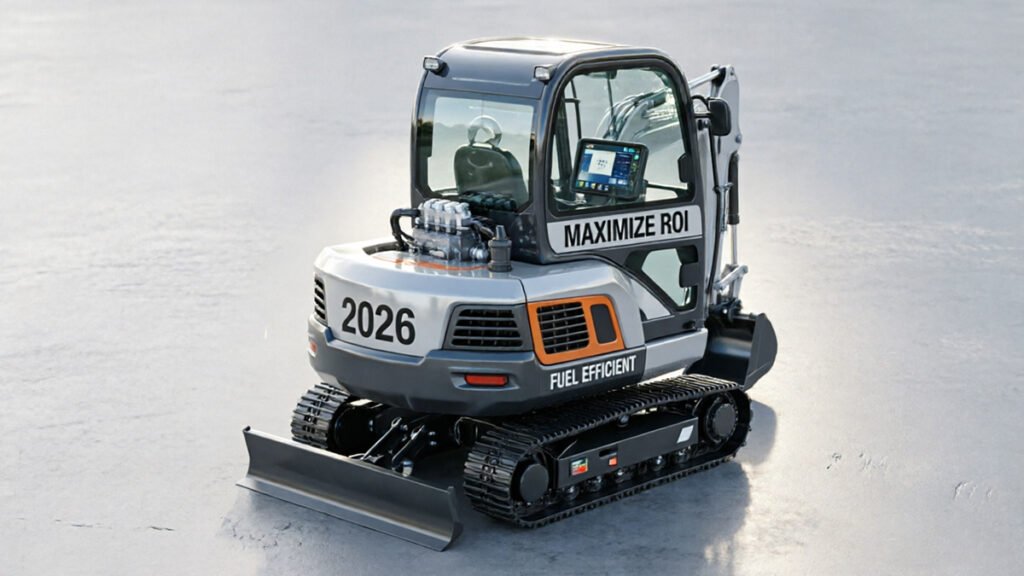
The 2026 efficiency landscape has a clear message: contractors who ignore idle time, outdated hydraulics, and legacy procurement strategies are leaving measurable money on the table every single shift.
Idle reduction is the single highest-impact lever for total cost of ownership in 2026. According to AEMP Fleet Data, between 30% and 40% of a mini excavator’s operating time is spent idling — a staggering figure when fuel accounts for a significant share of operating budgets. Addressing that window isn’t a minor optimization; it’s a structural fix that compounds across every job, every season.
Load-sensing hydraulics represent the most accessible near-term win. In practice, upgrading to a load-sensing system — or spec’ing one from the outset — can cut fuel costs by approximately 15% immediately, because the pump only delivers flow and pressure on demand rather than running at full output continuously. That efficiency gain doesn’t require operator retraining or workflow changes. The machine simply burns less while doing the same work.
Factory-direct sourcing connects both threads. As covered in earlier sections, procuring direct from the manufacturer allows fleets to specify load-sensing pumps, auto-idle calibration, and modern telematics without paying the markup layers that come with multi-tier distribution. For contractors navigating tighter 2026 emissions compliance requirements, factory-spec machines also arrive pre-compliant rather than requiring retrofits.
Finally, hybrid drivetrain components are no longer reserved for premium-tier machines. Electric swing motors paired with diesel powerplants are becoming a standard offering rather than an optional upgrade — a shift that reflects how deeply electrification has moved into the workhorse segment.
Still have questions about how these technologies work day-to-day? The next section addresses the most common queries contractors ask before committing to a 2026-spec purchase.
The right answers to these questions can directly shape procurement decisions, job-site budgets, and long-term fleet ROI in 2026.
Q: What is the average fuel consumption per hour for a 2026 mini excavator?
Fuel consumption varies by machine class and workload, but most 2026 mini excavators in the 1–6 ton range burn between 0.8 and 2.5 gallons per hour under active digging conditions. Lighter 1–2 ton models typically sit at the lower end of that range, while 5–6 ton machines working in dense soil push toward the upper limit. According to research on mini excavator fuel efficiency, idle time alone can account for 30–40% of total fuel spend — meaning the machine’s rated consumption is only part of the real-world picture.
Q: Are factory-direct excavators CE-certified for international use?
CE and ISO certifications are are non-negotiable markers of quality for any reputable factory-direct manufacturer. Seekmach’s machines carry CE certification as a standard, ensuring compliance with European safety and performance directives. This matters for operators purchasing internationally, since certified machines face fewer import complications and align with the emission compliance standards increasingly required on public contracts.
Q: How does auto-idle technology actually save money on the job site?
Auto-idle systems detect when hydraulic inputs are inactive for a set interval — typically 4–8 seconds — and automatically reduce engine RPM. Industry data on reducing idle time in excavators shows this single feature can cut fuel consumption by up to 20% on mixed-activity job sites. Over a full workweek, that translates to meaningful dollar savings without any change in operator behavior.
Q: What is the difference between a standard and a fuel-efficient hydraulic pump?
Standard gear pumps deliver fixed flow regardless of demand, burning fuel even when the system needs minimal pressure. Fuel-efficient variable-displacement pumps adjust output to match actual hydraulic demand in real time, reducing energy waste during light-duty tasks like positioning or grading. The practical case for fuel-saving operator techniques reinforces that pairing smarter pump technology with good operational habits compounds savings across a machine’s full service life. For fleet managers evaluating 2026 models, the pump specification deserves as much scrutiny as the headline fuel consumption figure.