Telephone/WhatsApp:+86 156 2656 0610
Telephone/WhatsApp:+86 156 2656 0610
Email:info@seekmach.com

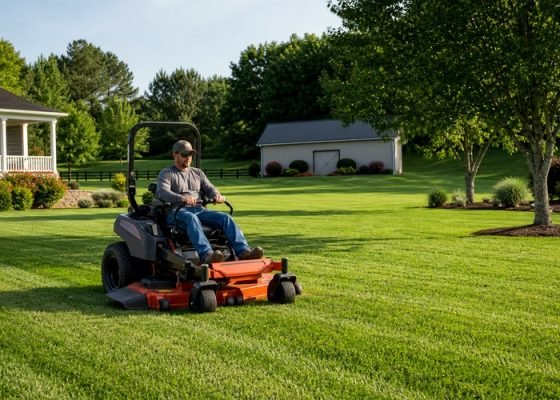
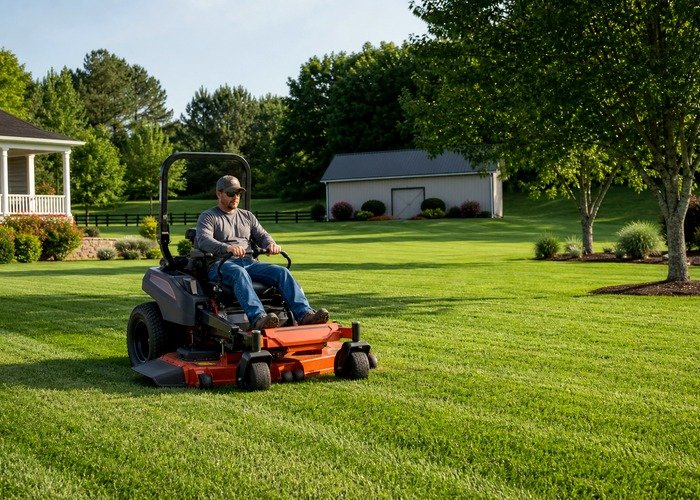
The best lawn mower is not simply the biggest deck or the fastest machine. A mower has to fit the yard, the person using it, the storage space, the gates, the slopes, the grass growth, and the weekly routine. A push mower can be ideal on a small yard and exhausting on a large one. A riding mower can save time but may be awkward around beds and trees. A zero-turn mower can be fast in open areas but still needs terrain judgment. Use this guide alongside the SeekMach product overview and SeekMach application solutions pages to connect mower choice to real property work.
Start by measuring the mowing area, not the lot size. Remove the house, driveway, buildings, woods, garden beds, pond, and areas you do not mow. Then note gates, slopes, wet areas, ditches, obstacles, storage path, and how often the grass gets ahead of schedule. The right mower is the one that handles the hardest ordinary week, not the easiest spring afternoon.
| Yard situation | Mower type to compare first | Why it may fit | Main caution |
|---|---|---|---|
| Small, flat, many obstacles | Push or self-propelled walk-behind | Control, low storage demand, simple turns | Can be slow if grass grows fast |
| Medium yard with mild slopes | Self-propelled or compact riding mower | Balances effort and maneuverability | Check gate and storage fit |
| Large open yard | Riding mower or zero-turn mower | Saves time on long passes | Deck size must still fit turns and obstacles |
| Commercial or frequent mowing | Commercial walk-behind, riding, or zero-turn | Productivity and durability matter | Maintenance and downtime planning are critical |
Deck size affects how much grass the mower cuts per pass, but wider is not always better. A wide deck can reduce passes in open areas, yet it can scalp uneven ground, struggle near trees, and fail to fit through gates. A narrower deck may take longer in straight lines but produce a cleaner route around beds, fences, and tight corners. Deck choice should follow the route, not just the yard acreage.
For healthy lawns, mowing frequency and height matter as much as deck width. University extension guidance such as University of Minnesota Extension mowing practices explains why removing too much leaf blade at once can stress grass. A mower that encourages regular cutting may be better than a giant deck that sits unused because it is hard to maneuver.
Small yards often reward control. A push mower or self-propelled mower can turn around beds, trees, fences, and narrow strips without overcomplicating storage. Electric models may be convenient where the area is predictable and batteries can be charged near storage. Gas models may still fit where grass grows thick or the owner prefers fast refueling. The key is not motor type; it is whether the mower makes the weekly job easy to start and finish.
Do not buy a riding mower for a small yard only because it looks easier. Turning space, storage, gate width, and deck overlap may erase the time savings. If a small yard has slopes, check the manual and choose a mower that the operator can control safely. A mower that feels heavy, awkward, or hard to stop is the wrong fit even if it technically cuts the grass.
Medium yards create the most choices. A self-propelled mower may still be comfortable if the route is simple and storage is tight. A compact riding mower may help when the area is larger or the operator has limited time. The decision should include walking distance, slope, grass thickness, obstacles, and whether the mower must pass through a gate or around landscaping.
For many homeowners, the best medium-yard mower is the one that gets used consistently. If mowing takes too long, grass gets tall, cut quality drops, and the job becomes frustrating. If the mower is too large, maneuvering and storage become the frustration. Walk the route and count tight turns before deciding that more deck width is the answer.
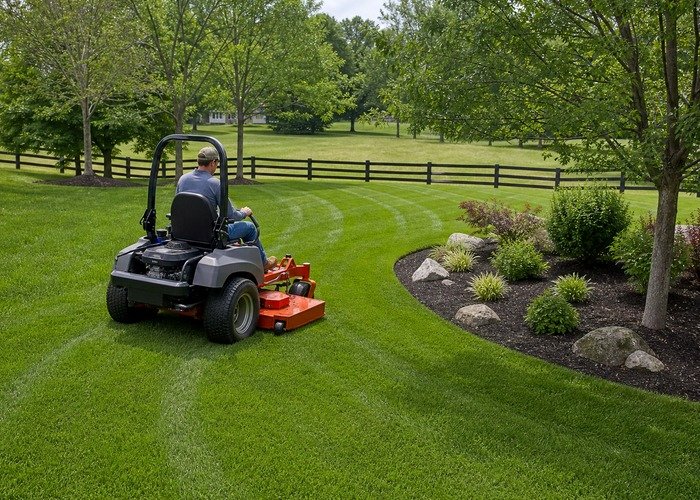
Large yards often justify riding mowers or zero-turn machines, but route planning still matters. Long straight passes reward deck width and speed. Trees, slopes, drainage swales, fences, and landscape beds reduce the advantage. A mower that turns efficiently around obstacles can finish faster than a wider machine that needs repeated backing and trimming. For a large property, test how the mower handles the actual route, not only an open strip of grass.
Large yards also raise fatigue and safety issues. Long mowing sessions increase exposure to noise, vibration, heat, debris, and slope decisions. CPSC lawn mower safety guidance at CPSC lawn mower safety is useful for homeowners, while OSHA’s landscaping page at OSHA landscaping hazards and solutions is helpful for work settings.
Slopes change the mower decision quickly. A machine that feels stable on flat ground may become risky on a side slope or near a ditch. Wet areas can reduce traction and leave ruts. Rough ground can make a wide deck scalp, bounce, or leave an uneven cut. If slopes or rough areas are common, study the manual, walk the route, and consider whether a different mower type or separate trimming method is needed.
Avoid mowing wet grass when possible. It can clump, clog the deck, reduce traction, and leave a poor cut. If wet areas are unavoidable, plan slower passes, higher cutting height, and cleanup time. A mower should be chosen for real conditions, including the weeks when rain changes the job.
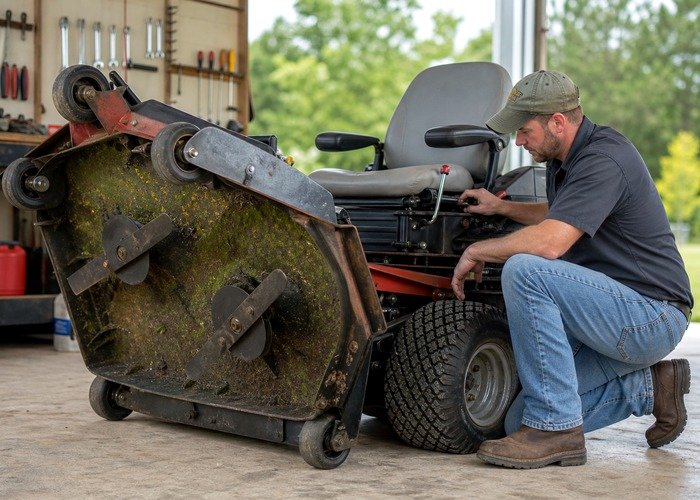
Storage is a buying factor. A mower that barely fits into a shed may be skipped when the grass needs cutting. Check doorway width, turning room, ramp angle, charger access, fuel storage, and whether the deck can be cleaned safely. A riding mower or zero-turn machine needs more storage planning than a walk-behind mower, and it may need more service room around the deck and engine or battery system.
Maintenance also changes by mower type. Walk-behind mowers still need blades, wheels, deck cleaning, and engine or battery care. Riding mowers add belts, tires, steering, larger decks, and more service points. Zero-turn mowers can be productive, but the owner should be comfortable with routine inspections and safe operation. A mower that is hard to maintain will not stay productive.
Think about the end of the mowing session, not only the start. The best mower is easy to park, clean, inspect, and prepare for the next cut. If cleaning the deck requires awkward lifting, if the fuel or battery routine is inconvenient, or if the mower blocks other tools in storage, the weekly habit becomes harder. Small friction repeated every week often matters more than a small speed advantage on one open pass.
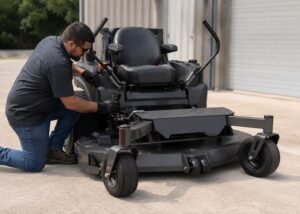
A push mower is simple and controlled, but it depends on operator effort. A self-propelled mower reduces fatigue and helps on mild slopes or larger walk-behind routes. A riding mower improves comfort and time on larger lawns. A zero-turn mower can be very efficient around obstacles and open areas, but it requires practice and careful slope awareness. None of these types is universally best.
The broad definition of a lawn mower at Wikipedia lawn mower overview is only a starting point. Your decision should be based on mowing route, storage, service, and operator comfort. If the property also uses tractors or other machines, compare mower fit with the SeekMach tractor category and SeekMach product overview pages so tasks are not duplicated awkwardly.
The first mistake is buying too much deck for the route. The second is buying too little mower for a yard that regularly gets tall and thick. The third is ignoring slopes. The fourth is assuming a zero-turn mower is safer or faster in every yard. The fifth is forgetting maintenance access and storage. The sixth is choosing by a single best-case test instead of the hardest normal week of the season.
Another mistake is replacing a mower before checking blade and deck condition. A dull blade, packed deck, low tire, bent spindle, or uneven cutting height can make any mower look weak. If the current mower leaves strips or tears grass, inspect the basics before deciding the entire category is wrong.
For small yards, compare push and self-propelled mowers first. For medium yards, decide whether walking time or storage space is the bigger constraint. For large open yards, compare riding and zero-turn mowers by route, deck fit, slopes, and maintenance. For commercial or repeated mowing, prioritize uptime, service access, operator comfort, and predictable parts. The SeekMach application solutions page can help place mower choice inside the full property workflow.
The best mower type is the one that makes regular mowing realistic. A clean, consistent cut comes from a mower that fits the route, the grass, the operator, and the maintenance routine. Buy for the yard you actually mow, not the open field you wish every yard looked like.
A small fenced yard with beds, trees, and a narrow gate usually rewards a mower that is easy to maneuver and store. A wider deck may look efficient but waste time around obstacles. A self-propelled walk-behind mower may be the best upgrade if the operator wants less effort without losing control. If the yard is small but slopes are present, the safest choice may be a lighter mower that can be controlled confidently rather than a heavy machine that feels unstable.
A medium suburban yard often comes down to routine. If the owner mows weekly and has easy storage, a self-propelled mower may be enough. If mowing is squeezed between work, weather, and family schedules, a compact rider may help keep grass from getting too tall. The important question is not whether the yard is medium on paper. It is whether the mower lets the operator finish before fatigue, heat, or time pressure leads to rushed cutting.
A large property with long open passes can justify a riding or zero-turn mower, but only if the route is open enough to use the speed. Trees, ditches, slopes, gates, and outbuildings reduce the advantage. Before buying, sketch the route and identify trimming zones. If a large mower handles the open area but leaves too much hand trimming, the total workday may not improve. A balanced setup may use one main mower plus a smaller tool for edges and tight areas.
A riding mower or zero-turn mower is often worth comparing first, but deck size, slopes, obstacles, storage, and maintenance decide the fit.
No. Wider decks save time in open areas but can be awkward around gates, trees, uneven ground, and landscaped beds.
Yes, if the route is manageable and the operator is comfortable. Self-propelled drive can reduce fatigue.
Deck condition, blades, tires, belts, starting, controls, leaks, battery or fuel system, steering, and service history.
– CPSC lawn mower safety – University of Minnesota Extension mowing practices – OSHA landscaping hazards and solutions – Lawn mower definition – EPA small equipment engine regulations – Lawn mower buying guide video