Telephone/WhatsApp:+86 156 2656 0610
Telephone/WhatsApp:+86 156 2656 0610
Email:info@seekmach.com

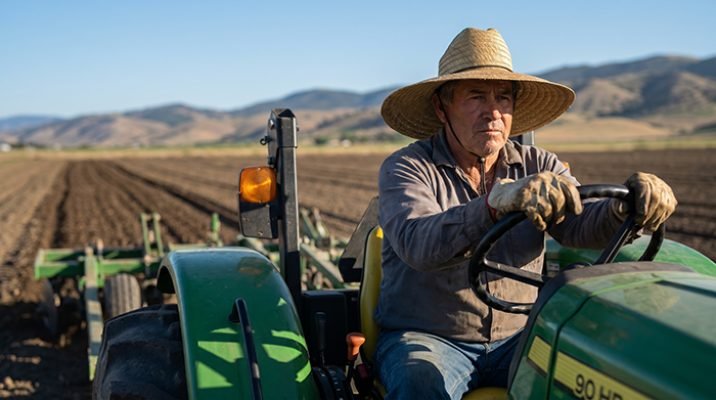
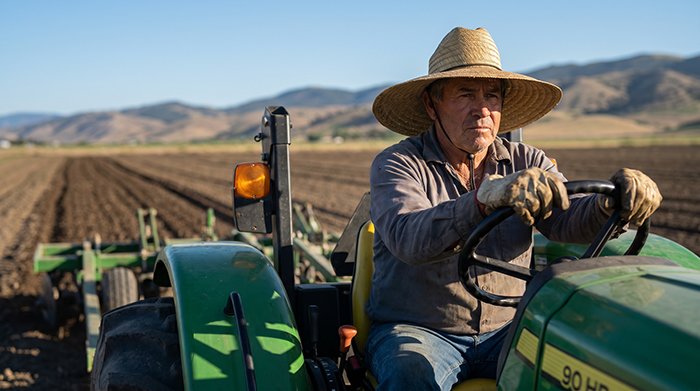
The 90HP tractor sits at the exact crossroads where hydraulic muscle, fuel discipline, and real-world versatility converge — making it the true commercial standard for mid-scale farming.
There’s a clear line between a hobby farm tractor and a commercial workhorse, and it runs right through the 90HP bracket. Compact machines under 50HP handle light chores well — and smaller compact options deliver strong ROI for operations under 20 acres — but the moment a farm scales toward 50 to 200 acres, the demands shift dramatically. Soil preparation, implement cycling, and multi-task days require a machine that doesn’t ask you to choose between power and economy.
The Utility Threshold is the point where hydraulic capacity stops being a limitation and starts being an advantage. At 90HP, a tractor generates enough hydraulic flow to operate heavy-duty implements — from loaders to post drivers — without the fuel penalty that comes with larger 120HP-plus platforms. According to University of Missouri Extension research, 90HP tractors serve as the utility sweet spot for medium-sized farms precisely because they combine the hydraulic capacity for heavy-duty operations with genuine fuel efficiency.
This balance matters enormously for producers managing 50 to 200 acres. At that scale, you’re running the machine hard across diverse tasks — not just mowing a lawn. The full range of 90hp tractor uses spans ground engagement, material handling, crop harvesting, and infrastructure work, all without the overhead costs of a larger row-crop machine.
The five core applications ahead reveal exactly why operators at this scale keep coming back to this power class — starting with one of the most demanding: heavy-duty haying and forage work.
Haying is one of the most PTO-intensive tasks on any mid-scale farm, and it’s a primary reason 90HP tractor applications in modern farming have expanded so dramatically in recent years.
PTO horsepower — not engine horsepower — is the number that actually matters when you’re running implements in the field. A typical 90HP tractor delivers roughly 75–80 PTO horsepower at the shaft, which aligns precisely with the demands of commercial haying equipment. According to University of Missouri Extension research, intensive implements like disc mowers and large round balers typically require a minimum of 60–80 PTO horsepower to maintain consistent speed and density.
Consistent ground speed is the hidden variable in bale quality. Drop below the implement’s rated PTO load — as often happens with underpowered 60HP units in thick, wet forage — and bale density becomes erratic, leading to spoilage and wasted crop. A properly matched 90HP unit maintains that steady draw, producing uniform bales across variable stand conditions.
Here’s a snapshot of common haying implements and their PTO demands:
Running a 60HP tractor on large balers is technically possible in ideal conditions, but real farms rarely offer ideal conditions. Thick stands, morning damp, and uneven terrain push those machines beyond their comfort zone regularly.
That power reserve also matters beyond hay — it opens the door to precision field work, which is exactly where the 90HP category proves its versatility in row-crop and secondary tillage operations.
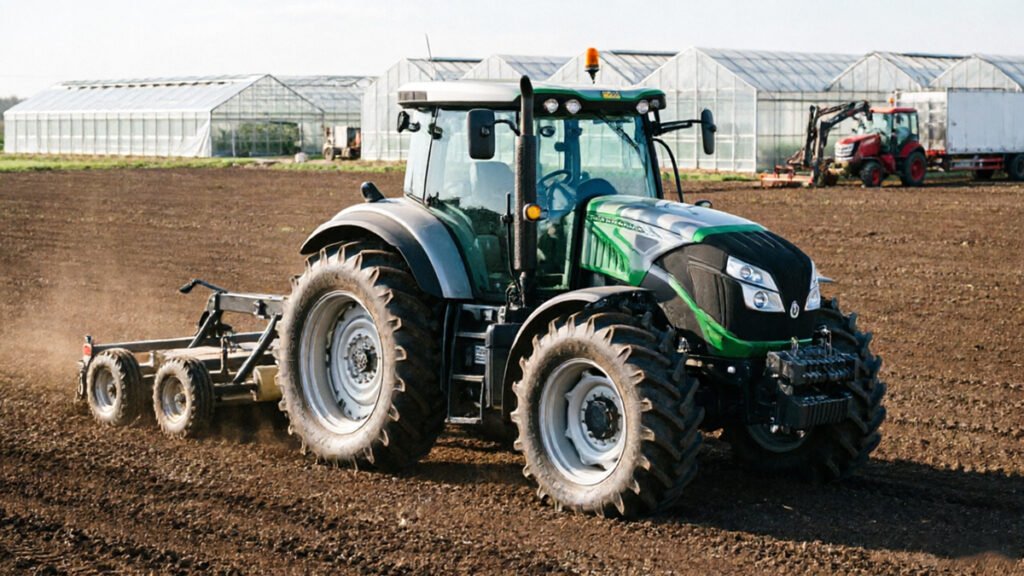
Row-crop work separates functional 90HP tractors from every other class — delivering the torque for demanding tillage while staying narrow enough to work between established plants.
“The 90hp tractor is the primary workhorse for row-crop applications in diversified farming, offering the precision needed for planting and the torque required for secondary tillage.” — Successful Farming (Agriculture.com)
The inter-row challenge is where larger machines consistently fall short. A 150HP tractor carries a wide stance and a heavy footprint that becomes a liability the moment crop rows are established. Turning radii tighten, tire paths encroach on root zones, and the operator loses sight of the row line. A properly configured 90HP unit threads through those corridors cleanly, preserving stand integrity without sacrificing pulling power.
The versatility of 90 horsepower tractors truly shows during secondary tillage and seedbed preparation. Field cultivators, disk harrows, and finishing tools all demand consistent torque at variable depths — the kind of sustained, low-RPM output that 90HP powertrains deliver without lugging or overheating. In practice, operators running these machines report smoother depth control across uneven terrain compared to both underpowered compact units and oversized machines that require constant throttle compensation.
Three precision advantages define this class for row-crop work:
That 4WD capability also pays dividends in wet headlands where steering precision matters most. For operators curious about how smaller tractors compare on fundamentals, exploring compact horsepower tradeoffs underscores just how much capability this mid-range class adds. Next, that same machine needs to move serious weight — and the 90HP class has more to say there, too.
The 90HP tractor’s front-loader capability turns it into a genuine farm logistics hub — moving seed totes, palletized inputs, and large bales without calling in heavier iron.
According to the Nebraska Tractor Test Laboratory, tractors in the 80–100HP range typically deliver a lift capacity of 3,000 to 5,000 lbs — enough to handle a 2,000-lb seed tote, a pallet of bagged fertilizer, or a wrapped round bale in a single confident pass.
Hydraulic flow rate is the hidden multiplier. In practice, higher hydraulic output — often 20–30 GPM in this class — means faster loader cycles, less idle time between stacks, and more loads completed per hour during crunch periods like spring planting or harvest staging.
| Task | 90HP Capability | Benefit |
|---|---|---|
| Seed tote handling | Up to 2,200 lbs | Eliminates manual bag labor |
| Fertilizer pallets | Full standard pallet weight | Direct depot-to-field logistics |
| Round bale transport | 1,500–2,000 lb bales | One-pass efficiency |
| Gravel/amendment buckets | ~0.75–1 yd³ bucket | Covers yard and field surface work |
Palletized logistics represent a growing need as farms bring in more pre-packaged inputs. Operators regularly ask what can a 90HP tractor pull and lift in this context — and the honest answer is: nearly everything a mid-scale operation ships in.
Soil compaction is a real cost. Compared to 130HP-and-above alternatives, the lighter footprint of a 90HP machine — often 8,000–10,000 lbs operating weight versus 15,000+ lbs — measurably reduces ground pressure in sensitive field approaches and staging areas. For farms where larger horsepower machines are reserved for primary field work, the 90HP handles yard logistics without the compaction penalty.
That logistical agility translates directly into the barnyard — which is where the 90HP class earns its keep in livestock operations, too.
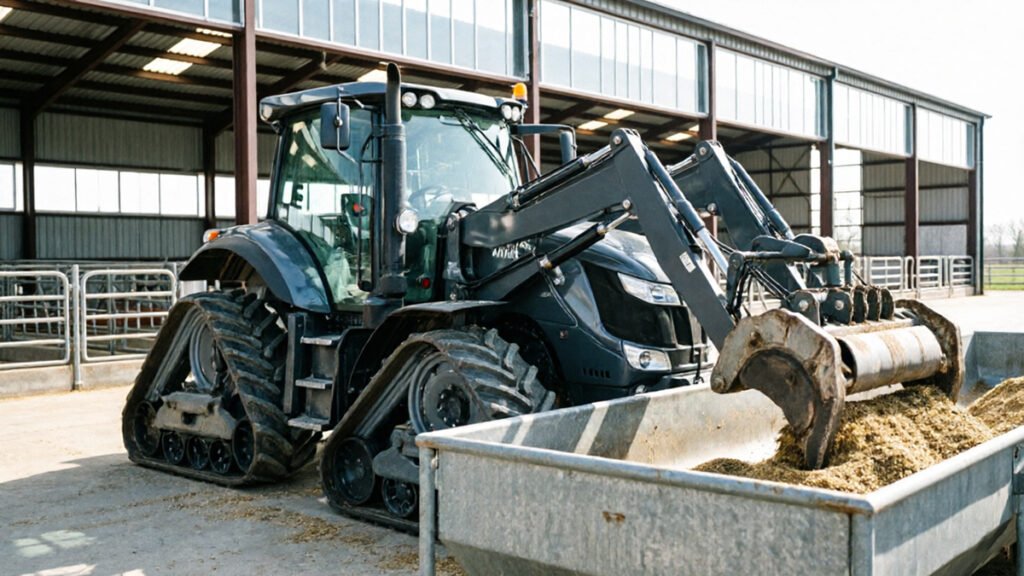
A 90HP tractor earns its keep on livestock operations by combining raw scraping power with the maneuverability that confined barn environments demand every single day.
On a working feedlot, the 90HP machine is essentially always moving. A typical morning starts with scraping pens — pushing accumulated manure toward collection points before the day’s first feeding. This is punishing, repetitive work that smaller utility tractors simply can’t sustain at pace. The combination of a compact wheelbase and high hydraulic flow rates allows these machines to outperform smaller utility tractors in heavy-duty scraping and loading cycles, as noted by Progressing Farmer / DTN — a critical advantage when cycle times directly affect labor costs.
Synchronized transmissions are particularly valuable during loader work. In practice, a driver transitions repeatedly between forward and reverse throughout a loading cycle — filling a bucket, backing out, repositioning, dumping. Clutchless synchronized shuttle shifts eliminate the jerkiness that slows throughput and fatigues operators during multi-hour sessions. On a 500-head beef operation, those saved seconds compound into meaningful daily efficiency gains.
Compact wheelbase matters equally inside structures. Dairy barns, heifer sheds, and covered feedlot alleys rarely accommodate a long-frame machine turning tightly without risking contact with feed bunks or support posts. A well-proportioned 4WD 90HP unit navigates these spaces cleanly where larger platforms struggle.
Silage distribution adds another dimension. Pulling a mixer wagon through tight alleys or positioning accurately at bunk ends requires consistent low-speed torque — exactly what this horsepower class delivers without lugging.
Operators often ask how many acres can a 90HP tractor handle before a second unit becomes necessary — a question the next section addresses directly through implement capacity and acreage math.
The 90HP tractor doesn’t have a single acreage ceiling — its productive range shifts dramatically based on implement width, crop type, and whether it functions as a primary or support machine.
Implement width is the real multiplier. A 90HP unit can pull a 15-foot disc harrow efficiently, covering roughly 10–12 acres per hour under good conditions. Scale up to a 20-foot toolbar and that figure climbs further — meaning a single operator running a full day can realistically work 100–150 acres before fatigue and field logistics become limiting factors, not the tractor itself.
Breaking it down by operation size:
According to the Nebraska Tractor Test Laboratory, mid-sized 90HP machines deliver the hydraulic capacity for intensive implements without the soil compaction risks that 150HP+ tractors create — a meaningful advantage for long-term soil health.
Fleet expansion strategy matters too. Sourcing factory-direct from manufacturers like the SM-904B platform significantly reduces per-unit acquisition costs, making a two-tractor deployment achievable for operations that dealer pricing would price out. Understanding those underlying technical capabilities — hydraulics, 4WD systems, transmission options — is what separates a smart purchase from an expensive mistake.
The 90HP class earns its versatility not just from raw horsepower, but from the engineering stack underneath — 4WD, advanced hydraulics, and configurable transmissions that transform it into a precision tool.
4WD is no longer a premium add-on — it’s the baseline expectation for commercial 90HP units. As Progressive Farmer / DTN notes, modern 90HP tractors equipped with 4WD and synchronized transmissions are increasingly deployed for front-loader tasks in livestock management — environments where traction and low-speed torque management are non-negotiable. On wet or sloped terrain, 4WD prevents wheel slip that would otherwise rob efficiency from every implement pass.
Key technical specs driving 90HP versatility:
CE certification matters beyond compliance. For farms sourcing units directly from manufacturers, CE-certified components signal consistent manufacturing tolerances — a critical quality floor when buying without a dealership intermediary. This also opens the door to export-ready configurations that meet multi-market regulatory standards.
OEM/ODM customization is where the 90HP class truly separates itself. Specialized row configurations, cab comfort packages, and implement-specific hydraulic circuits can be factory-specified rather than retrofitted. As mid-scale operations diversify — a trend covered in the connected tractor technology space — customization flexibility becomes a long-term asset.
Taken together, these specs form a coherent engineering case — one that ties directly into the broader utility argument worth summarizing next.
The 90HP tractor sits at the utility sweet spot for mid-scale commercial farming — capable enough for serious work, efficient enough to stay profitable.
Here’s what this class consistently delivers across the board:
For operators still weighing specific use-case questions — from what implements this class can pull to whether it replaces a larger machine — the answers are more straightforward than you might expect.
The 90HP tractor answers more operational questions than almost any other size class — making it the default starting point for mid-scale farm planning.
What can a 90HP tractor pull?
In practice, a 90HP machine handles implements up to 15–18 feet wide comfortably, including disc harrows, finishing mowers, and multi-shank subsoilers. Drawbar pull typically ranges between 8,000–12,000 lbs depending on ballasting and terrain, giving operators enough capacity to run serious tillage equipment without oversizing their investment.
Is 90HP enough for a round baler?
Yes — a 90HP tractor meets and exceeds the 60–80 PTO HP threshold most mid-size round balers require. With net engine power typically delivering 75–80 PTO horsepower at the shaft, operators can run standard 4×5 or 5×6 bales across hay and straw crops without straining the drivetrain.
How many acres is a 90HP tractor ideal for?
According to Successful Farming, the 90HP class is the primary workhorse for row-crop applications in diversified farming. As a primary tractor, it performs best on operations between 50–200 acres — large enough to justify the investment, efficient enough to remain the right tool rather than an undersized compromise. Farmers curious about the broader sub-100HP market will find this range dominates modern purchase decisions for exactly that reason.
Why choose a 90HP over a 120HP machine?
Two practical reasons: fuel consumption and soil compaction. A 120HP tractor burns roughly 20–30% more fuel per hour on tasks that don’t require the added power. Heavier chassis weight also increases ground pressure, compacting soil structure over multiple seasons — a real yield cost. The 90HP machine delivers sufficient power without the long-term agronomic penalty.