Telephone/WhatsApp:+86 156 2656 0610
Telephone/WhatsApp:+86 156 2656 0610
Email:info@seekmach.com

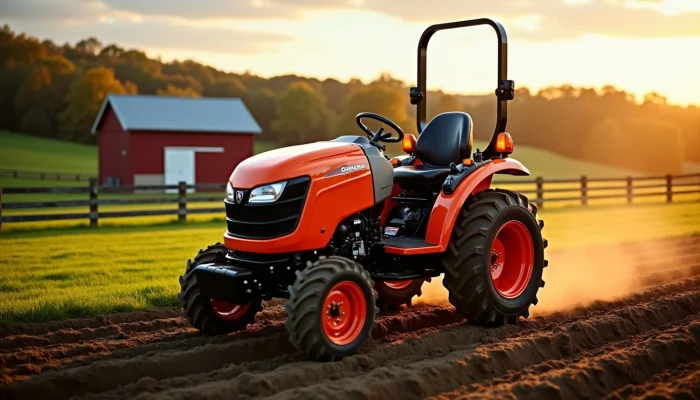
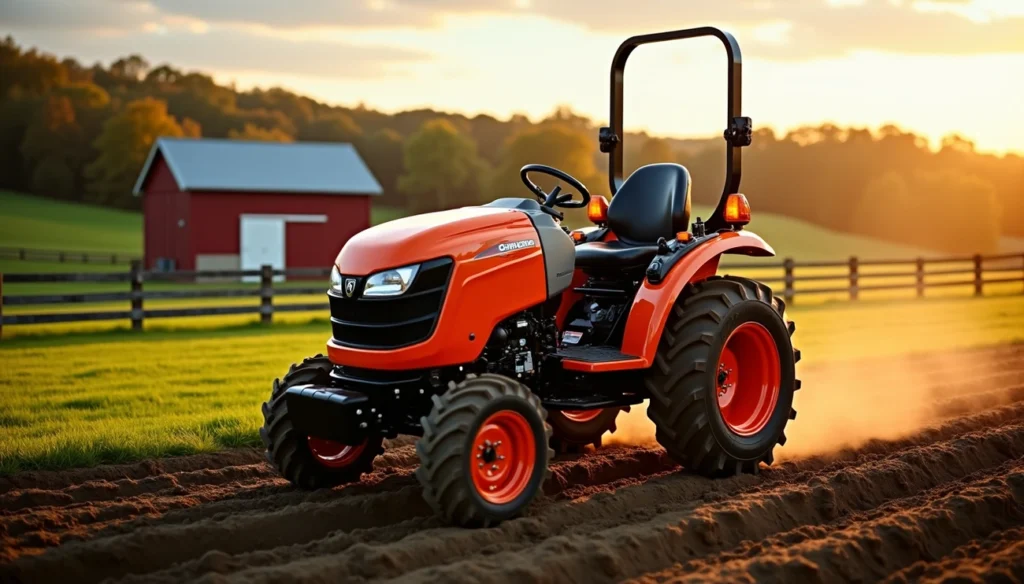
Understanding essential tractor features helps small and mid-sized farm operations maximize productivity while controlling costs. Here are the critical insights for making informed equipment decisions:
• Choose transmission type based on your primary tasks: Hydrostatic for loader work and frequent direction changes, gear drive for heavy pulling power and fuel efficiency
• Match hydraulic flow rates to implement needs: Most operations need 11-13 GPM for basic tasks, but loader work requires 20+ GPM for optimal performance
• Prioritize three-point hitch compatibility: Category 1 (20-45 HP) and Category 2 (40-100 HP) cover most small to mid-sized operations with proper lift capacity
• Consider 4WD only when terrain demands it: 2WD tractors cost less, consume less fuel, and offer better maneuverability for flat terrain operations
• Factor in total ownership costs beyond purchase price: Include fuel consumption, maintenance expenses, parts availability, and dealer support when comparing options
The right tractor features depend on your specific crops, terrain, and operational priorities. Focus on versatility and reliability over unnecessary power to optimize your investment.

Choosing the right farm tractor features can directly impact your operation’s work efficiency and energy consumption. Horsepower, in particular, influences how well you handle different tasks. Different crops have distinctly different farming demands, from grain crops to fruits and vegetables, which means your tractor needs the right capabilities to match your specific operation.
Whether you’re exploring options at a farm and tractor supply outlet, comparing farm tractor prices, or evaluating the best small farm tractor for your needs, understanding essential features is critical. From hydraulic systems to farm tractor attachments compatibility, we’ll guide you through the mechanical, versatility, and productivity features that matter most. Moreover, we’ll help you navigate farm tractor suppliers and find quality options for sale that fit your budget and operational requirements.
Transmission selection shapes daily operation more than most operators realize. Hydrostatic transmissions use hydraulic fluid to adjust speed without shifting gears, controlled by forward and reverse pedals with no clutch required. This design excels for front-end loader work and tasks requiring frequent direction changes. In contrast, gear drive transmissions deliver more pulling power and transfer engine horsepower to PTO horsepower more efficiently, making them suitable for heavy-duty tasks like plowing and tilling.
Shuttle transmissions offer a middle ground, providing the same number of speeds in both forward and reverse directions. An 8×8 shuttle configuration, for instance, delivers eight forward gears and eight reverse gears at matching ratios. Power shuttle variants use hydraulic clutch packs with electronic controls for clutch-less direction changes, combining mechanical transmission strength without constant manual input.
Drive configuration affects traction and operational costs significantly. 2WD farm tractors direct power exclusively to rear wheels, making them more affordable to purchase and maintain due to fewer drivetrain components. Their lighter weight renders them more maneuverable in tight spaces and more fuel-efficient on flat terrain.
4WD tractors distribute power to all four wheels, providing superior traction on slopes, muddy fields, or rocky ground. This configuration allows them to pull heavier loads and work with larger implements without losing traction. The trade-off comes in higher purchase costs and increased maintenance expenses due to additional drivetrain components.
Small and mid-sized operations often work in confined spaces where turning radius becomes critical. 2WD tractors typically offer smaller turning radii compared to 4WD models, benefiting headland turns and row crop work. Advanced steering technologies now enable steering angles up to 76° through synchronized front wheel and axle rotation. Some systems reduce turning radius by 18-20% compared to traditional designs.
Tire selection directly impacts traction and soil protection. R1 agricultural tires feature deep bar treads with widely spaced aggressive patterns for maximum traction in loose or muddy soil. R3 turf tires use smaller, flatter lugs to minimize ground disturbance for landscaping work. R4 industrial tires provide wider treads and deeper lugs for hard surfaces and rough terrain. R14 hybrid tires combine R1 and R4 features for versatile applications.
Ballasting improves traction and reduces tire slippage. Liquid ballast options include water, calcium chloride (resistant to freezing down to -50°F), and antifreeze solutions. Experts recommend filling tires to 75% capacity for optimal performance.
The three-point hitch system determines which farm tractor attachments work with your machine. Categories range from 0 through 4, each defined by lift arm pin diameter and horsepower compatibility. Category 0 suits tractors up to 20 HP with 5/8-inch pins, while Category 1 handles 20-45 HP machines with 7/8-inch lift arm pins. Category 2 accommodates 40-100 HP tractors, Category 3 serves 80-225 HP units, and Category 4 fits tractors exceeding 180 HP.
Lift capacity varies accordingly. Category 1 hitches lift between 1,500 to 2,500 lbs, Category 2 manages 3,500 to 5,500 lbs, and Category 3 handles 6,000 to 9,000 lbs. Some sub-compact models feature limited Category 1 hitches that sit lower to the ground with reduced lift range.
Hydraulic systems power your tractor’s implement versatility. Flow rate, measured in gallons per minute (GPM), determines response speed. Pressure in pounds per square inch (PSI) affects lifting capacity. Selective control valves (SCVs) dictate how many hydraulic implements connect simultaneously.
Most hydraulic valves handle 11 to 13 GPM. For loader work, operators typically want 20+ GPM for reasonable performance. Complex implements with multiple hydraulic motors may require 35 GPM or more. The three-point linkage uses hydraulics to lift, lower, and adjust implements like plows and cultivators. Modern systems include position control for height adjustment and draft control for automatic depth sensing based on soil resistance.
Proper ballasting keeps wheels grounded during loader operations and heavy implement work. Ground-engaging tasks require a 60/40 rear-to-front weight ratio, while loader work needs 50/50 distribution.
Three main ballast methods exist. Ballast boxes attach to the three-point hitch and accept sand, concrete, or scrap metal. Wheel weights bolt directly to rims for permanent added mass. Liquid fill using calcium chloride resists freezing and adds substantial weight. Rear counterweight prevents front-end tipping when using loaders, while front ballast stabilizes heavy rear implements during transport.
Small farms typically require fuel tanks ranging from 100 to 500 gallons, while medium operations need 500 to 1,000 gallons. Larger farms with extensive machinery exceed 1,000 gallons. Fuel consumption gets measured two ways: gallons per hour for scheduling refueling activities and gallons per acre for comparing operational efficiency. Soil type affects fuel requirements significantly. In particular, low-draft soils like sands require 35-40% less fuel for primary tillage compared to loams.
Quick hitch systems eliminate the need to leave your tractor seat when changing farm tractor attachments. Pat’s Quick Hitches reduce lifting effort during hookup. The Jiffy Hitch System allows you to switch implements, including PTO implements, without assistance. Most systems use spring-loaded handles for fast attachment and release of three-point hitch implements. Skid-steer style quick attach has become the industry standard, opening compatibility across multiple brands.
Standard PTO speeds are 540 RPM and 1000 RPM. Operating at 540 RPM consumes less fuel and reduces maintenance costs compared to 1000 RPM. Most small farm tractor operations find 540 RPM provides sufficient power for common tasks like hay baling and tilling.
High clearance tractors offer minimum ground clearance of 635mm at the front axle for tall vegetables and specialty crops. Standard 2WD tractors typically provide approximately 18 inches of clearance, adequate for cultivating crops while still short.
Finding the right farm tractor supplier requires evaluating several factors beyond initial farm tractor price. Production capacity indicates a supplier’s ability to meet demand without delays during peak farming seasons. Material quality directly affects performance and longevity, with high-grade steel construction ensuring durability.
Dealer reputation serves as a strong indicator of reliability and service quality. Look for suppliers with consistently positive customer feedback and factory-trained technicians. Certifications from manufacturers like John Deere, Case IH, or New Holland prove dealers meet higher standards and receive proper training. Transparent pricing without hidden fees separates trustworthy dealers from questionable ones.
Used farm tractors offer savings ranging from 10% to 30% compared to new models. You can often leave with equipment the same day rather than waiting for manufacturing delays. However, used equipment may require additional servicing depending on hours and condition.
New tractors provide full warranty coverage and eliminate concerns about previous maintenance issues. John Deere OEM parts installed by authorized dealers receive 12 months of unlimited hours coverage for agriculture parts.
Dealer support extends beyond the initial purchase. Choose dealers with well-stocked parts inventory to reduce equipment downtime. Local dealers often provide personalized service and understand regional farming needs better than national chains.
Selecting the best small farm tractor starts with matching mechanical features to your operation’s needs. Whether you prioritize hydraulic flow rates for loader work or implement compatibility for versatility, each feature we’ve covered directly impacts your daily productivity.
Start by comparing farm tractor prices from local suppliers and evaluating their parts availability. The right choice now will serve your operation for years, so take time to assess which features matter most for your specific tasks.
Q1. What horsepower range is suitable for small to mid-sized farm operations?
Sub-compact tractors with 15-25 HP work well for properties of 2-5 acres handling light-duty tasks. Compact tractors ranging from 25-50 HP are ideal for 5-10 acres and small farms with moderate workloads. For operations spanning 10+ acres requiring heavier-duty work, utility tractors with 50-100+ HP provide the necessary power for demanding agricultural tasks.
Q2. Should I choose a hydrostatic or gear drive transmission for my farm tractor?
Hydrostatic transmissions use hydraulic fluid for speed control without gear shifting, making them excellent for loader work and tasks requiring frequent direction changes. Gear drive transmissions deliver superior pulling power and more efficient horsepower transfer, making them better suited for heavy-duty operations like plowing and tilling. Your choice depends on whether you prioritize ease of operation or maximum pulling capacity.
Q3. What’s the difference between 2WD and 4WD tractors for farm use?
2WD tractors are more affordable, fuel-efficient, and maneuverable in tight spaces since they only power the rear wheels. 4WD tractors distribute power to all four wheels, providing better traction on slopes, muddy fields, or rocky terrain, and can handle heavier loads and larger implements. The trade-off is higher purchase and maintenance costs for the 4WD configuration.
Q4. How do I determine the right three-point hitch category for my tractor?
Three-point hitch categories match your tractor’s horsepower. Category 0 fits tractors up to 20 HP, Category 1 handles 20-45 HP machines, Category 2 accommodates 40-100 HP tractors, and Category 3 serves 80-225 HP units. Each category has different lift capacities, ranging from 1,500-2,500 lbs for Category 1 up to 6,000-9,000 lbs for Category 3.
Q5. Is it better to buy a new or used farm tractor?
Used tractors offer cost savings of 10-30% compared to new models and provide immediate availability. However, they may require additional servicing depending on their condition and usage history. New tractors come with full warranty coverage, eliminate concerns about previous maintenance issues, and typically include 12 months of unlimited hours coverage for parts, though at a higher initial investment.