















































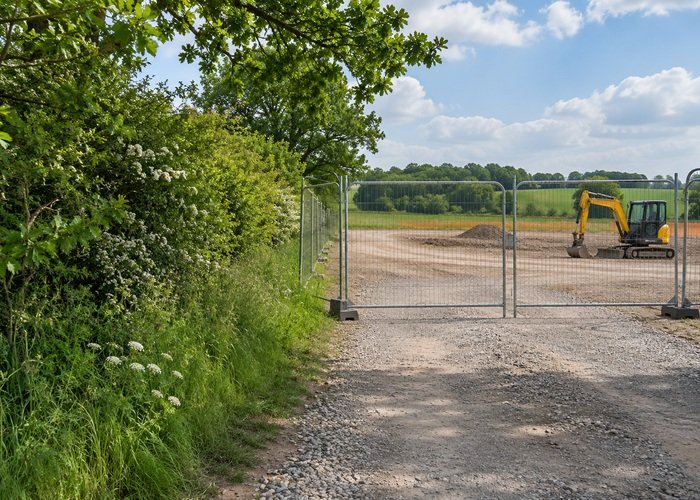
Plan mini excavator wildlife checks around the actual work area, access route and current ecological advice before releasing the machine to work. A small excavator can still disturb vegetation, ground or habitat. The useful question for the operator is which activity is permitted in which location, under what conditions, and who must be contacted if the situation changes.
This guide concerns ecological work boundaries and handover. It does not teach wildlife identification, nest searches, animal handling or habitat removal. Legal protection and the approvals needed vary with location and species. The England guidance cited below provides a clear planning example; obtain competent local advice for the actual site.
Ask for ecological information before dispatch
Include ecology in the job enquiry alongside access, ground conditions and underground services. Ask whether the proposed excavation, vegetation clearance, unloading point or travel route could affect protected species or habitats. Request the project’s relevant ecological information and the contact responsible for interpreting it. An operator should not have to infer permission from a marked-up drawing that nobody has explained.
Natural England and Defra’s guidance on construction near protected areas and wildlife explains the developer’s responsibility to consider protected sites and species in England. It also points to ecological advice, avoidance and the licensing arrangements that may apply. Treat this as an early project planning question, rather than an issue to resolve after the machine has arrived beside the affected area.
Describe the full proposed activity to the project lead. A narrow trench may require a wider working area for spoil, attachment changes, deliveries and turning. Moving the unloading point can place a different part of the site inside the operation. Ask for those activities to be considered when the ecological constraints are reviewed, so a nominally permitted trench does not lead to an unassessed access route.
Turn ecological advice into a usable work boundary
The crew needs a current instruction that relates to features they can recognise on site. Ask the responsible project team to identify the permitted area, restricted areas, access arrangements and any conditions relevant to the task. The instruction should explain what the team may do, not merely record that an ecological report exists. Where physical markers are used, their meaning and maintenance should be included in the briefing.
Do not invent a standard distance between a machine and wildlife. The appropriate arrangement depends on the species, activity, conditions and competent advice. Likewise, a barrier shown in an illustration is not evidence of an approved exclusion distance. The operator’s responsibility is to understand and follow the actual project instruction, and to report uncertainty before proceeding into an area whose status is unclear.
Tree protection can overlap with ecology without replacing it. The root-barrier trench and tree-protection guide concerns a different decision about the excavation and tree interface. A tree-related work method does not establish that wildlife issues have been assessed. Ask the project lead to reconcile the requirements where the proposed route, trench or spoil area is affected by both.

Keep survey evidence separate from operator observation
A visual check by the machine crew can reveal a changed condition, but it is not a substitute for a survey or assessment that requires specialist competence. Avoid asking an operator to certify that no protected species are present. The useful record is what information the crew received, which area it covered, what limitations applied and whom the crew should contact if their observations differ from the instruction.
The protected-species planning advice describes how survey requirements and evidence depend on the affected habitat and species in England. The practical implication is to ask whether the information supplied is suitable for the proposed work and present conditions. Do not assume a document remains applicable after the project area or activity changes.
Keep the scope and limitations with the active work pack. If the report concerns one area, do not silently extend its conclusion to another. If an instruction depends on a stated condition, have that condition explained in terms the crew can use. Questions about survey timing, completeness or whether a change requires another assessment belong with the competent ecological adviser and responsible project lead.
Do not rely on a universal nesting calendar
Seasonal planning can help a project organise ecological work, but a calendar entry alone should not be treated as permission to disturb vegetation or ground. Natural England’s wild-bird planning advice explains the protection of birds and nests in England and the assessment considerations for development. Use current, site-specific advice rather than a general claim that a particular month is always clear.
A site briefing should also avoid implying that wildlife considerations concern trees alone. The proposed work may involve other features and habitats. The machine crew does not need a list of identification techniques; it needs an instruction to report relevant uncertainty and avoid expanding the activity while the responsible people assess it. Do not encourage close investigation, probing or moving material to find out what is present.
Use a short release record
A concise record makes the decision easier to hand over than a collection of informal messages. It should identify the current drawing or instruction, the activity and area covered, the responsible contact, and the conditions that require another decision. Record who issued the instruction and when, so the next shift can distinguish the current arrangement from an earlier proposal.
| Handover item | Useful information | Unresolved question |
|---|---|---|
| Work scope | Specific activity, area and access route | Does the instruction cover spoil and unloading? |
| Constraints | Recognisable boundaries and applicable conditions | Who explains an unclear or missing marker? |
| Evidence | Current ecological document or instruction reference | Does changed work need another assessment? |
| Notification | Named project contact and agreed communication route | What happens if that contact is unavailable? |
| Restart | Recorded revised scope and responsible authorisation | Has the machine crew received the new instruction? |
This is a communication checklist, not an ecological approval form. Completing its boxes cannot establish that legal duties or licence conditions have been met. Keep any required professional reports, project permissions and specialist instructions in the system used by the project. The short record should point the crew to the correct information without pretending to replace it.
Pause when the actual situation differs
Agree the changed-condition procedure before work begins. If the crew encounters possible wildlife activity or a situation inconsistent with the instruction, pause the affected activity and notify the responsible contact through the agreed route. Avoid approaching, handling, moving or trying to identify an animal or nest as part of the machine task. The competent project team must decide the appropriate assessment and response.
Describe the location and the operational change accurately from a suitable position. Record what was observed without turning an observation into a diagnosis. For example, a report can identify the affected work area and explain that the agreed route cannot be followed. Photographs or records should only be made where the project procedure permits and without creating disturbance. Do not publish sensitive location information as an informal site update.

Release a revised scope and brief the next shift
Resuming work requires a clear instruction for the actual activity after the issue has been assessed. A message that somebody has visited the site does not explain where the excavator may travel, what material may be disturbed or which restrictions remain. Ask for the revised scope and any conditions to be communicated to the people who will carry out the work.
Consider an illustrative landscaping job whose proposed access crosses an area later placed on hold. Redirecting the machine is a change to the plan. The alternative could introduce another ecological constraint, unsuitable ground or a different service interface. Have the project team review the proposed change before treating it as an easy workaround. Keep the earlier instruction as history and replace it in the active briefing pack.
Cleanliness and heritage requirements can remain separate workstreams. The site-to-site biosecurity cleaning guide addresses transfer records, while the unexpected archaeological finds guide addresses another kind of discovery. Neither record provides ecological release. For reliable mini excavator wildlife checks, keep each responsibility visible and ensure the project lead resolves overlapping restrictions before giving the operator an updated task.
Before a replacement operator takes over, walk through the current instruction without turning the handover into a wildlife search. Confirm that the crew can identify the permitted route and knows how to report a missing boundary marker or an unexpected change. Check that the radio or other agreed contact method is usable and that the named contact is available under the project arrangements. If the work pack contains conflicting versions, ask the responsible project lead to resolve them before the affected task begins. This closes a practical gap between an ecological decision being made and the machine crew actually receiving a usable instruction.
Wildlife handover questions
Does a small excavation need ecological consideration?
Machine size alone cannot answer that question. Ask the project lead whether the actual work, route and affected habitats need ecological assessment or other arrangements. Use competent local advice and the requirements applicable to the location and species.
Can the operator declare that a site has no active nests?
An operator’s observation does not replace a competent assessment or survey where one is needed. Give the crew a defined work boundary, current information and a contact for changed conditions. Do not make wildlife identification or close investigation part of the excavation task.
Who can authorise the excavator to restart?
The responsible project arrangements must establish that decision, including any necessary specialist advice or permissions. Obtain a clear revised work scope and brief the crew before the affected activity resumes. An informal assumption that the area looks quiet is insufficient for a reliable handover.