Telephone/WhatsApp:+86 156 2656 0610

Telephone/WhatsApp:+86 156 2656 0610
Email:seekmach@gmail.com

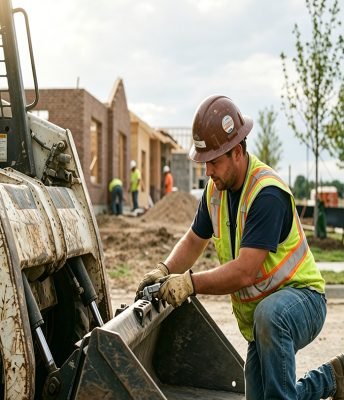
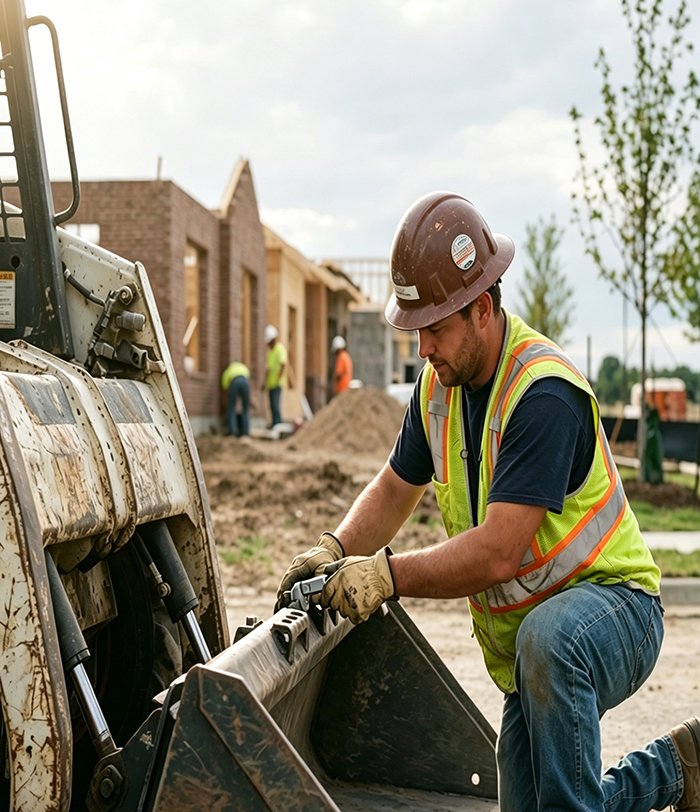
The modern skid steer is no longer just a bucket-and-boom machine — it’s the most versatile piece of compact equipment on any jobsite, capable of replacing a half-dozen specialized tools in a single rental or purchase decision.
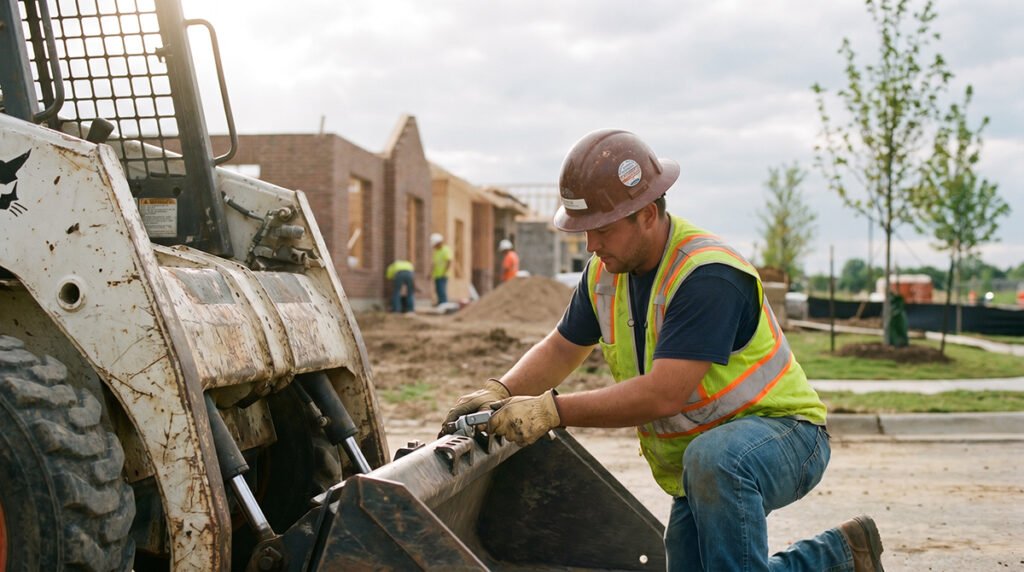
The range of skid steer uses has expanded dramatically over the past two decades. What once meant pushing dirt, clearing debris, or moving pallets has evolved into what the industry now calls micro-construction: precision grading, hydraulic breaking, trenching, milling, and even landscaping — all from the same compact chassis. In tight urban environments where full-size equipment simply can’t operate, this shift has made the skid steer indispensable.
“The integration of smart attachments via ‘plug-and-play’ hydraulic systems has transformed the skid steer from a loader into a multi-purpose tool carrier capable of over 50 distinct tasks.” — Construction Equipment Magazine
The engine behind this transformation is the auxiliary hydraulic system. Modern machines ship with standardized high-flow and standard-flow hydraulic circuits that accept attachments from virtually any manufacturer. Swap a bucket for a cold planer, a grapple, or a stump grinder in minutes — no rewiring, no adapters, no downtime. This plug-and-play architecture is what earns the skid steer its “Swiss Army Knife” reputation on jobsites from residential landscaping to large-scale infrastructure work. Understanding how to maximize your machine’s attachment range is where ROI strategies start to separate good operators from exceptional ones.
CE certification adds another layer of strategic value, particularly for contractors sourcing equipment for international projects or importing machines manufactured abroad. CE-marked skid steers meet the European Union’s Machinery Directive safety and performance standards, opening access to global export markets and reducing liability exposure. For fleet managers thinking beyond domestic borders, certification status belongs in the spec sheet conversation — not as an afterthought. A thorough import checklist and spec review can prevent costly compliance surprises.
Understanding what this machine is sets the foundation for the next critical decision: how its lift path — radial or vertical — determines what it can actually do for your specific application.
Choosing the wrong lift geometry doesn’t just limit performance — it directly erodes your skid steer lifting capacity and costs you time on every cycle.
Lift path geometry is one of the most overlooked purchase decisions in compact equipment, yet it shapes nearly every productivity outcome on the jobsite.
Radial lift moves the boom in an arc, bringing the load closest to the machine at mid-range height. That arc makes radial models inherently well-suited for ground-level work — trenching, backfilling, grading, and general digging. The geometry naturally keeps material low and forward during travel, reducing the risk of tipping during dynamic movement. In practice, operators working demolition cleanup or site prep will find radial arms more intuitive and efficient for repetitive, low-height dumping cycles.
Vertical lift, by contrast, drives the load nearly straight up with minimal forward travel. According to the Association of Equipment Manufacturers (AEM), vertical lift machines provide significantly higher reach and stability when handling palletized material or loading high-sided trucks — exactly the scenario where a radial arm would push the load dangerously outward at full height. That stability difference becomes critical when you’re consistently working at or near rated operating capacity.
Callout: At full extension, vertical lift geometry keeps the load path tighter to the machine’s center of gravity — reducing the effective moment arm and maintaining stability under heavy, elevated loads.
The industry split maps closely to application type:
If you’re still deciding between machine configurations at the spec stage, this lift path comparison for compact machines offers useful context on how geometry interacts with power ratings.
The right choice here directly feeds into attachment performance — something that becomes even more apparent when we look at precision landscaping and forestry applications next.
Skid steers equipped with the right attachments are reshaping how contractors approach land clearing, brush management, and urban landscaping — delivering measurable ROI that manual methods simply can’t match.
Forestry mulching is one of the highest-impact applications in the skid steer’s attachment arsenal. According to ForConstructionPros, deploying a skid steer with a specialized forestry mulcher can reduce land clearing time by up to 40% compared to traditional manual methods. That’s not a marginal gain — it’s a project schedule transformation.
Key ROI benefits in forestry applications:
In dense urban environments, precision grading isn’t optional — it’s the difference between a profitable bid and a costly rework. Modern skid steers paired with laser or GPS grade-control systems can achieve tolerances that were previously reserved for much larger equipment.
Key ROI benefits in precision landscaping:
This demand isn’t slowing down. The global skid steer loader market is projected to reach $3.36 billion by 2030, driven by a 7.5% CAGR in landscaping and ground maintenance. Understanding how to maximize attachment-driven output is increasingly critical to staying competitive. Of course, attachment performance depends heavily on the platform itself — which raises an important question about whether wheels or tracks better serve your terrain.
Choosing between a wheeled skid steer and a compact track loader is one of the highest-stakes procurement decisions a fleet manager will make — and terrain is only part of the equation.
The surface you work on most should drive your configuration choice, not the other way around.
Hard-Surface Performance. Wheeled skid steers hold a clear edge on asphalt and concrete. According to Heavy Equipment Guide, wheeled units deliver higher travel speeds and lower operating costs on hard surfaces compared to compact track loaders. For contractors cycling between parking lots, warehouse slabs, and urban job sites — including those using a skid steer for landscaping in hardscape-heavy environments — wheels translate directly to lower cost-per-hour.
Soft-Ground Traction. Track loaders redistribute machine weight across a larger footprint, reducing ground pressure significantly. On mud, sand, or loose fill, this prevents sinking and maintains consistent pushing or grading force. However, that advantage carries a steep price tag: rubber track replacement can run $3,000–$6,000 per set, versus solid or foam-filled tires that typically cost $400–$900 each.
Speed and Maneuverability. Wheeled machines commonly reach travel speeds of 7–12 mph, while most track loaders cap out around 7 mph. On sprawling commercial sites where repositioning happens frequently, that speed differential compounds into measurable time savings across a full season.
Общая стоимость владения is where the decision becomes less intuitive. Tracks wear faster on abrasive surfaces and require more frequent tension checks. Tires, while cheaper to replace, are vulnerable to punctures on demolition or debris-heavy sites.
| Фактор | Wheeled Skid Steer | Компактный гусеничный погрузчик |
|---|---|---|
| Hard-surface cost | Ниже | Higher (track wear) |
| Soft-ground capability | Ограниченное | Сильный |
| Travel speed | До 12 миль в час | ~7 mph |
| Track/Tire replacement cost | $400–$900/tire | $3,000–$6,000/set |
| Best application | Urban, paved, mixed | Mud, turf, loose fill |
With terrain suitability and ownership costs mapped, the next frontier worth examining is how these machines perform when temperatures drop — and whether your investment keeps generating returns through winter months.
A skid steer that sits idle from November through March is a liability, not an asset — and smart fleet managers refuse to let that happen. By deploying purpose-built winter attachments, contractors can transform their machines into year-round revenue generators, offsetting ownership costs across every season.
A skid steer equipped for snow removal is one of the most profitable configurations a municipal or commercial contractor can own.
The three core winter attachment categories each serve a distinct role:
Attachment Spotlight — Snow Blower: High-flow hydraulic systems are essential for operating heavy-duty snow blowers effectively in wet, packed snow conditions. According to Skid Pro, machines without adequate hydraulic output simply can’t sustain the rotor speeds needed to chew through heavy, saturated snow.
Attachment Spotlight — Snow Pusher: A box-style pusher paired with a standard-flow machine handles lighter commercial work efficiently. However, for large municipal lots with compacted snow, high-flow output makes the difference between one pass and three.
Attachment Spotlight — Angled Broom: A hydraulically angled power broom excels at post-storm cleanup and salt distribution prep, extending the machine’s utility well beyond the initial clearing phase.
Rapid attachment changes are a critical operational advantage in sub-zero conditions. Universal quick-attach systems allow operators to swap between a pusher, blower, or broom in minutes — without leaving the cab in some configurations — keeping downtime minimal when temperatures and client expectations are both unforgiving.
When weighing a wheeled skid steer vs compact track loader for winter contracts, traction on icy surfaces often tips the decision. Either way, reviewing available loader configurations before committing helps match the machine spec to the terrain.
The same versatility that serves snow removal translates seamlessly into the next demanding environment: the agricultural setting.
Skid steers deliver some of their strongest ROI in agricultural settings, where tight spaces, heavy loads, and corrosive conditions demand purpose-built skid steer application solutions rather than oversized equipment.
Compact footprint is a decisive advantage in barn work. As noted by Carter Machinery, the compact radius of a skid steer allows efficient cleaning of livestock stalls that are completely inaccessible to standard tractors. A zero-turn radius lets operators spin in place inside a 10-foot stall aisle — a maneuver no full-size loader can replicate.
Manure management is one of the highest-frequency agricultural tasks, and a heavy-duty cleanup bucket or grapple bucket handles it without secondary equipment. In practice, farms running twice-daily stall cleaning cycles report dramatically reduced labor hours when a skid steer replaces manual or tractor-based removal workflows. Paired with a manure spreader attachment, the same machine handles removal and field distribution in a single shift.
Bale handling and feed distribution round out the daily agricultural workload. A bale spear attachment lets operators move round or square bales from storage to feeding stations with precision, while bucket attachments distribute grain, silage, or bedding material along feed lines. One machine, two tasks, zero repositioning of separate equipment.
Durability in corrosive environments is non-negotiable. Manure, urine, and cleaning chemicals aggressively attack hydraulic seals, cylinder rods, and paint. Operators working in these conditions should prioritize machines with sealed electrical connectors, corrosion-resistant hydraulic fittings, and powder-coated or galvanized boom components — and schedule more frequent greasing intervals than standard jobsite work would require. If stability when handling heavy wet material is a concern, this practical breakdown on wet-load handling applies equally to skid steer operations.
Five essential ag attachments for skid steers:
The same machine specs that make skid steers indispensable in the barn — hydraulic flow, lift capacity, and machine weight — deserve equal scrutiny when matching equipment to attachment demands, a topic the next section addresses in depth.
Procurement decisions that ignore lifting capacity and hydraulic specs lead to underperforming machines — or worse, dangerous ones.
Номинальная рабочая мощность (ROC) is the single most important safety metric on a skid steer’s spec sheet. It represents 50% of the machine’s tipping load and defines the maximum weight the loader arms should carry during normal operation. According to the Association of Equipment Manufacturers, operating beyond ROC significantly increases the risk of tipping and hydraulic system failure — a hard limit, not a guideline. Match the ROC to your heaviest anticipated attachment-plus-material combination, then build in a conservative buffer.
Hydraulic flow is where performance separates on the jobsite. Standard-flow systems typically deliver 18–24 GPM, sufficient for buckets, pallet forks, and basic augers. High-flow systems push 30–45 GPM, unlocking full performance from cold planers, mulchers, and high-torque sweepers. The pattern in practice: buyers underestimate hydraulic demand, invest in a premium attachment, and discover the base machine can’t run it efficiently. As explored in this breakdown of hydraulic flow and attachment performance, working pressure and flow rate must align — not just one or the other.
Engine horsepower fuels the hydraulic pump, but it isn’t a direct proxy for hydraulic output. A high-horsepower engine paired with a low-capacity pump still produces limited flow. When evaluating specs, look at the hydraulic pump rating alongside horsepower — the two must be sized proportionally for the machine to deliver usable power to attachments under load.
Machine weight and transport logistics complete the picture. Many compact skid steers fall in the 6,000–10,000 lb range, but heavier models can exceed standard trailer limits. Confirm your transport rig’s rated capacity before purchasing, or factor in added hauling costs.
Pro-Tip: Always spec hydraulic flow before horsepower when attachment performance is your primary use case. Flow runs the tools; horsepower just feeds the system.
Getting these four variables right forms the foundation for smarter procurement — the kind of disciplined evaluation that leads directly to the key takeaways worth carrying into every future machine decision.
Smart skid steer procurement isn’t about buying the biggest machine — it’s about matching the right specs to the right workload and maximizing every dollar across the full year.
With the technical groundwork laid in previous sections — from hydraulic flow requirements to agricultural stall management — here’s how to consolidate those insights into a decision-ready framework:
The skid steer’s value proposition only holds when procurement decisions are deliberate. Questions about specific model comparisons, maintenance priorities, and application fit? The next section addresses the most common operator questions