Telephone/WhatsApp:+86 156 2656 0610

Telephone/WhatsApp:+86 156 2656 0610
Email:info@seekmach.com

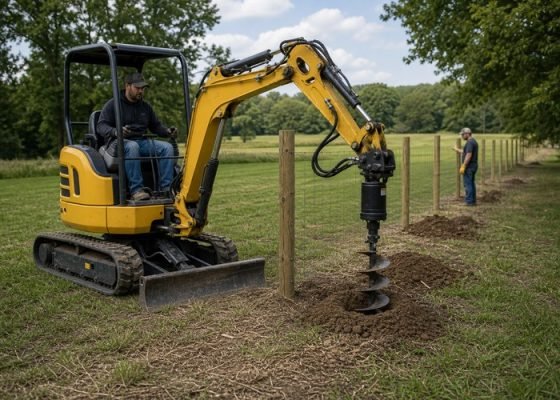
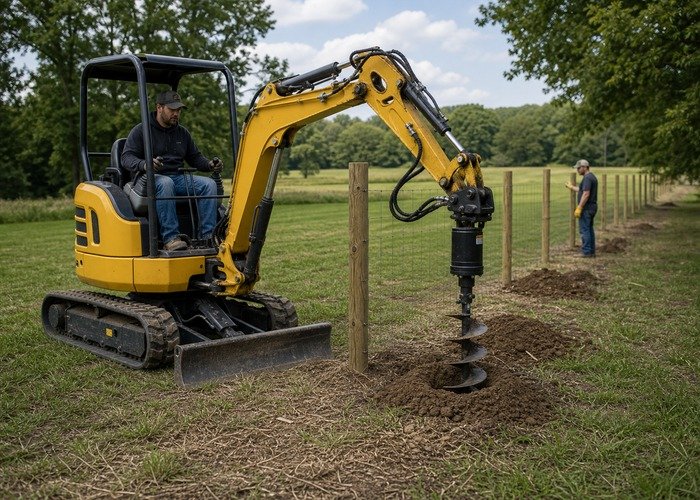
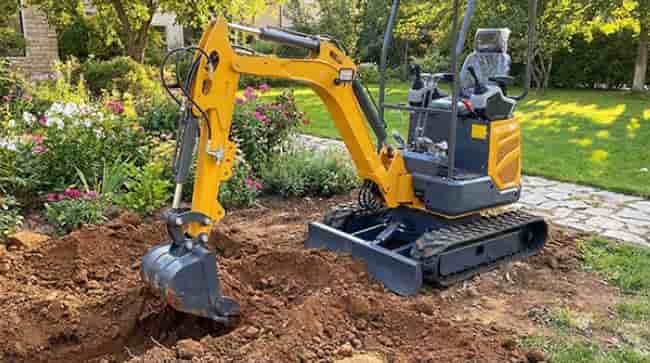
A mini excavator auger attachment can turn slow hand digging into a controlled drilling job, especially for fence posts, deck footings, small signs, planting holes, and light foundation work. If you are considering compact machines through the SeekMach excavator category, an auger is one of the attachments that makes the excavator feel far more useful on property projects.
The real question is not only whether the auger can drill. It is whether the soil, utilities, bit size, hydraulic flow, access, and spoil plan make sense. A clean hole needs more than downward pressure. It needs the right speed, a sharp bit, vertical alignment, and a plan for what happens when the auger meets rock, roots, wet clay, or old debris.
Before drilling any hole, utility location comes first. The Call 811 before digging exists for a reason: underground lines are not always where people expect them. A small post hole is still digging, and an auger can reach a hazard quickly.
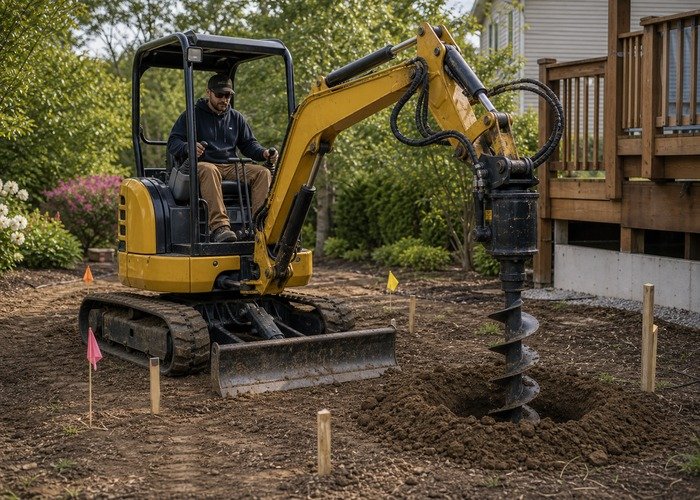
A mini excavator auger is useful when the machine can sit safely, reach the hole location, and keep the bit vertical. It works well for repeated holes along a fence line, footings near a landscape area, or holes where the excavator can position without tearing up the site. Compared with a handheld auger, the excavator adds reach, hydraulic power, and operator comfort.
Use the SeekMach excavator application solutions to connect auger work with digging, grading, and backfilling tasks on the same site. A drilled hole often leads to cleanup, leveling, or material handling. The OSHA trenching and excavation guidance is also useful because excavation safety applies even when the hole is narrow.
| Field condition | What to check | Better decision |
| — | — | — |
| Fence posts | Are utilities marked? | Lay out holes after location confirmation |
| Deck footings | Is depth controlled? | Mark bit or use a depth reference |
| Wet clay | Will spoil stick to the bit? | Drill slowly and clear often |
| Rocky soil | Are teeth suited to conditions? | Expect slower progress and inspect teeth |
| Tight yards | Can the excavator swing safely? | Plan entry, exit, and spoil piles |
| Repeated holes | Is alignment consistent? | Use stringline, marks, and steady machine setup |
Bigger is not automatically better. A larger hole removes more soil, needs more torque, creates more spoil, and may require more concrete or backfill. For fence posts, the hole must suit the post, local practice, soil, frost considerations, and expected load. For footings, follow the plan or local requirements instead of guessing.
The SeekMach product overview page helps compare the auger job against other equipment needs. If the site also requires grading a driveway or moving heavy material, the SeekMach tractor category may support a different part of the same project. The CCOHS hydraulic systems safety guidance is worth reviewing before handling hydraulic hoses or couplers.
Dry sandy soil may collapse back into the hole. Wet clay can stick to the flighting and make the bit heavy. Rocky soil can bounce the bit, damage teeth, or shift the hole off line. Roots can wrap or stop progress suddenly. Good auger operation means drilling in short controlled bites, lifting to clear spoil, and checking alignment before the hole wanders.
Construction safety resources such as NIOSH construction safety resources are helpful because they treat small-job hazards seriously. Repeated holes can make operators rush, especially when the first few go well.
A crooked hole wastes time during post setting. Set the machine stable, keep the boom movement smooth, and check the bit from more than one angle if possible. Do not rely only on the operator seat view. On slopes, take extra time with positioning because the machine may sit level enough to feel comfortable while the bit is still angled.
If material movement becomes the bottleneck after drilling, compare the work with the SeekMach skid steer loader category. A loader can move pallets, gravel, or concrete bags while the excavator handles accurate drilling.
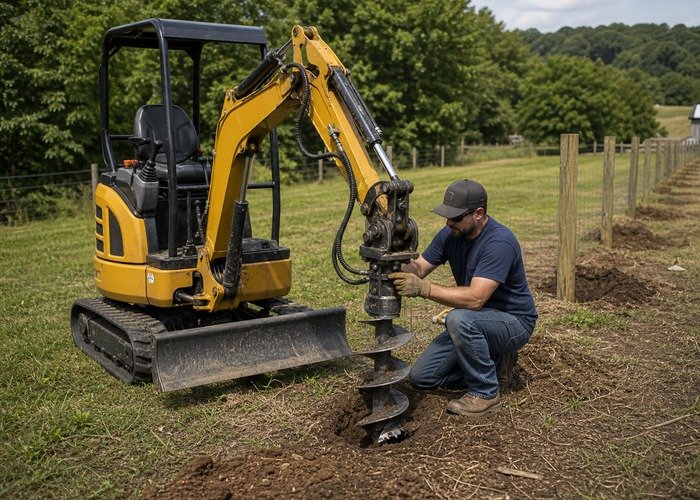
Check auger teeth, pins, couplers, hoses, guards, and bit condition before work. After hitting rock or debris, stop and inspect. Damaged teeth reduce drilling quality and increase stress on the attachment. Clear people from the swing area and never let anyone guide the bit by hand while it is powered.
Use the SeekMach application solutions for planning equipment around the whole job, not just the hole. Mobile equipment guidance from CCOHS mobile equipment guidance is useful when the excavator, materials, and crew share tight space.
A crew marks a straight fence line after utilities are located. The excavator drills every third hole first as a control check, then fills in the remaining locations. The operator clears spoil after each short bite, checks the bit from the side, and stops after one rocky hole to inspect teeth before continuing.
This careful sequence fits the SeekMach excavator application solutions: the excavator is not just digging holes, it is keeping the rest of the fence job cleaner and easier to finish.
Yes, if the attachment matches the machine’s hydraulic flow, weight limits, coupler and job conditions.
Yes. Utility location is important even for small holes because underground lines may be shallow or unexpected.
The bit may be angled, soil may be rocky, or the operator may be applying uneven pressure. Recheck setup and drill in short bites.
Match the post or footing requirement, soil condition and local practice. Oversized holes cost more material and time.
No. Keep hands and people away from a powered auger. Stop the machine before any inspection or adjustment.
A compact excavator rewards small movements. With mini excavator auger attachment, the best operators do not simply push harder when the soil resists. They pause, clear material, change angle, and check what the machine is telling them. That habit protects the attachment and usually leaves a cleaner finish.
Spoil placement is part of the work, not an afterthought. Piling soil where it blocks drainage, falls back into a trench, or forces the machine to drive over finished ground creates extra cleanup. Put material where it can be reused, loaded, or spread without crossing the same delicate area again.
The blade is more than a parking brake. It can stabilize the excavator, set a working reference, and reduce machine movement during precise work. On soft soil, however, the blade can also leave marks or sink unevenly. Watch the blade as carefully as the bucket or attachment.
If people are working nearby, create a simple communication rule before the engine starts. No one enters the swing radius without eye contact and a full stop. Small excavators feel approachable, but the swing, bucket, and attachment still move with enough force to cause serious injury.
| Work stage | What to record | Why it matters |
| — | — | — |
| Before work | Locate utilities, inspect attachment pins, and plan spoil placement | Avoids avoidable hazards and rework |
| During work | Use short controlled movements rather than force | Keeps the hole, trench, or grade accurate |
| When conditions change | Stop after rock, roots, wet clay, or sudden resistance | Prevents attachment damage and crooked results |
| Final check | Confirm drainage, alignment, or depth before cleanup | Catches problems while correction is still easy |
Most rework comes from skipping a small observation at the start. Check the surface, listen to the machine, and stop when the result changes. If the machine begins leaving ridges, clumps, crooked holes, tire marks, or uneven finish, the correct move is not always more power. Often it is a slower pass, a cleaner setup, sharper cutting edge, better moisture timing, or a different machine for that part of the job.
Think of the job as a sequence instead of a single pass. Plan where material will go, how water will move, how the operator will turn, and what the finished surface should look like from ground level. The relevant SeekMach pages, including SeekMach excavator category and SeekMach excavator application solutions, are helpful starting points because equipment choice should come from the work pattern, not from the product name alone.
The last check should happen before tools are put away. Walk the work area, look at the surface from several angles, and note what changed. If the result will be exposed to rain, traffic, or repeated use, the first inspection after real conditions is even more valuable. That feedback is what turns one finished job into a better next job.
The first mistake is treating the machine as if it can overcome the wrong conditions. Wet turf, dry hardpack, loose gravel, rocky soil, sharp debris, or poor drainage each asks for a different pace. Forcing the same setting through every condition usually creates more work. When the result changes, stop and identify the condition that changed.
The second mistake is ignoring the edge of the work area. Edges are where water collects, tires drop, tools catch, decks scalp, and attachments swing close to objects. A clean center line with damaged edges is not a good finish. Make the turn area, shoulder, outlet, fence line, or discharge path part of the original plan.
The third mistake is using the final pass to hide earlier problems. A finish pass should refine good work, not cover up poor setup. If the base is uneven, the hole is crooked, the deck is clogged, or the tire path is full of debris, the final pass will only make the problem look smoother for a short time.
A fourth mistake is skipping the operator’s pause. A useful pause takes less than a minute: lower the attachment safely, look at the last ten meters of work, inspect the pattern, and decide whether to change speed, height, angle, route, or timing. That pause is often the difference between a clean article-worthy result and a job that needs to be redone tomorrow.
Stopping early is sometimes the professional choice. If soil starts smearing, grass begins clumping heavily, gravel turns to dust, tires start spinning, or the machine feels unstable, pushing ahead can damage the surface and the equipment. A short delay, a cleaning break, a different attachment, or a second machine may protect the job.
Another reason to stop is uncertainty. If an underground mark is unclear, a slope feels uncomfortable, a hydraulic connection leaks, a blade or tooth looks damaged, or the operator cannot see the work clearly, do not continue by habit. Clear the uncertainty first. Small machines are still powerful enough to turn a small question into a large repair.
Weather also decides timing. Rain can help settle dust and reveal drainage, but wet conditions can create ruts, clumps, and smeared finish. Heat can stress turf and operators. Cold or frozen ground can make digging and grading unpredictable. The schedule should serve the result, not the other way around.
After the job, write down one thing that worked and one thing to change next time. This habit sounds small, but it builds a local playbook for your soil, lawn, driveway, yard, crew, and machine. The best equipment advice is always improved by local experience because every site has its own weak spots.
A better next job starts faster because the operator already knows the first setting to try, the area to inspect, and the mistake to avoid. Over time, that means fewer wasted passes, less surface damage, cleaner finish, and more confidence when conditions are not perfect.
Watch a related excavator auger video here: https://www.youtube.com/watch?v=4xsTWzSLG1c. A mini excavator auger attachment is most valuable when utility checks, bit choice, soil reading, and steady operation all happen before the first hole gets deep.