Telephone/WhatsApp:+86 156 2656 0610
Telephone/WhatsApp:+86 156 2656 0610
Email:info@seekmach.com

Compact Tractor Snow Removal Setup: Loader, Blade, or Snowblower? gives buyers and operators a structured way to verify condition, fit, and safety before money or machinery moves.
Continue through the SeekMach equipment range, compare the tractor range, review escavadeiras compactas, see carregadeiras compactas, and browse lawn mowers.
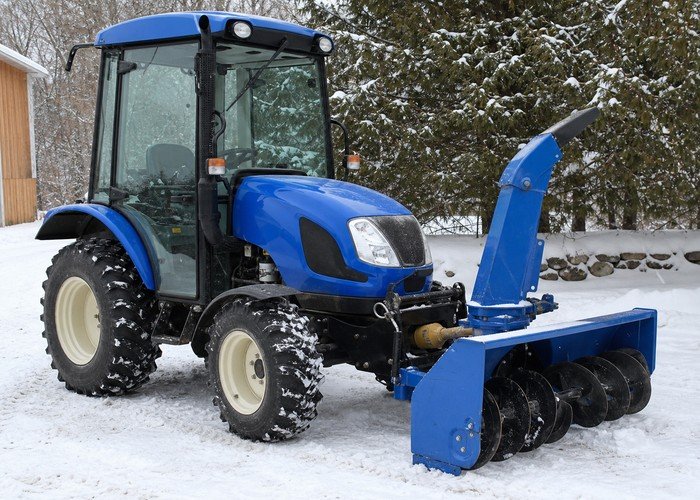
Start with records, ratings, and the exact machine: Choose a loader bucket, snow blade, or snowblower by matching snowfall depth, driveway length, stacking space, surface type, tractor hydraulic flow, hitch, PTO, ballast, and traction. The best attachment is the one the tractor can carry, power, steer, stop, and store safely through the whole storm.
Start with records, ratings, and the exact machine: A loader bucket is versatile and can stack snow, but repeated scooping is slower and the raised load can reduce stability and visibility. Keep the bucket low while travelling, use rear ballast specified for the loader, and avoid pushing with one corner where hidden curbs can twist the loader frame.
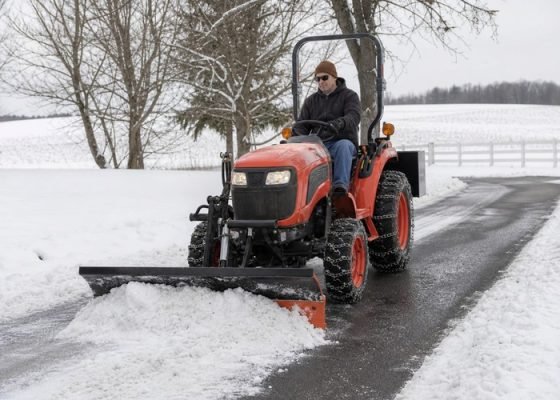
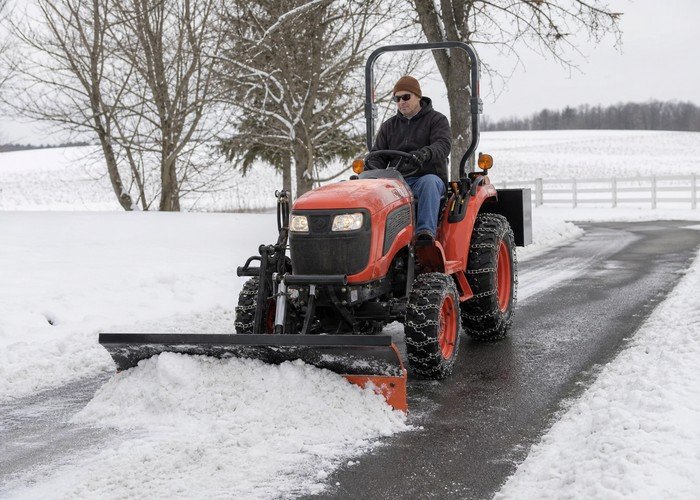
Start with records, ratings, and the exact machine: A blade clears long open drives quickly and places snow to one side. Confirm mount type, trip protection, angle control, edge material, and room for later storms. Start with banks well back from the usable lane so the next snowfall does not force snow into roads, doors, drainage, or visibility triangles.
Start with records, ratings, and the exact machine: A snowblower moves deep or accumulated snow without building large banks, but it needs correct PTO speed, guarding, shear protection, chute control, and a strict stop-and-isolate procedure before clearing plugs. Never reach into an auger or fan, even when the tractor appears stopped.
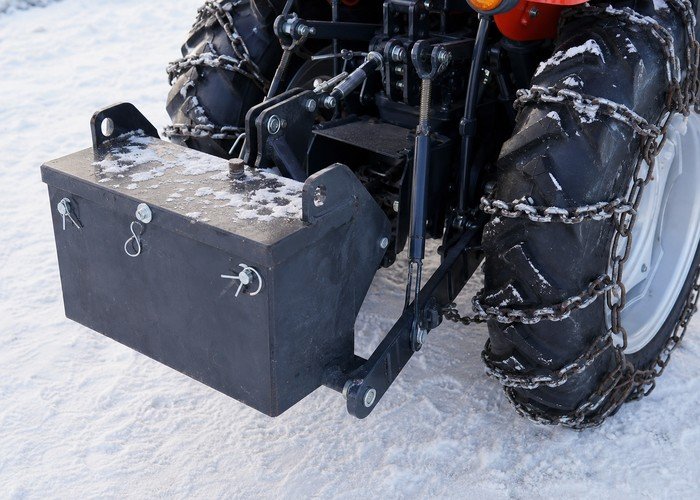
Start with records, ratings, and the exact machine: Traction and balance matter as much as attachment capacity. Check tire type, chains allowed by the manual, four-wheel-drive use, rear or front ballast, lighting, cab visibility, and braking on the actual slope. Test at low speed and revise the plan when ice, pedestrians, parked vehicles, or poor sightlines increase risk.
Safety-first walk-around before operation: Choose a loader bucket, snow blade, or snowblower by matching snowfall depth, driveway length, stacking space, surface type, tractor hydraulic flow, hitch, PTO, ballast, and traction. The best attachment is the one the tractor can carry, power, steer, stop, and store safely through the whole storm.
Safety-first walk-around before operation: A loader bucket is versatile and can stack snow, but repeated scooping is slower and the raised load can reduce stability and visibility. Keep the bucket low while travelling, use rear ballast specified for the loader, and avoid pushing with one corner where hidden curbs can twist the loader frame.
Safety-first walk-around before operation: A blade clears long open drives quickly and places snow to one side. Confirm mount type, trip protection, angle control, edge material, and room for later storms. Start with banks well back from the usable lane so the next snowfall does not force snow into roads, doors, drainage, or visibility triangles.
Safety-first walk-around before operation: A snowblower moves deep or accumulated snow without building large banks, but it needs correct PTO speed, guarding, shear protection, chute control, and a strict stop-and-isolate procedure before clearing plugs. Never reach into an auger or fan, even when the tractor appears stopped.
Safety-first walk-around before operation: Traction and balance matter as much as attachment capacity. Check tire type, chains allowed by the manual, four-wheel-drive use, rear or front ballast, lighting, cab visibility, and braking on the actual slope. Test at low speed and revise the plan when ice, pedestrians, parked vehicles, or poor sightlines increase risk.
Engine, fluids, cooling, and leak checks: Choose a loader bucket, snow blade, or snowblower by matching snowfall depth, driveway length, stacking space, surface type, tractor hydraulic flow, hitch, PTO, ballast, and traction. The best attachment is the one the tractor can carry, power, steer, stop, and store safely through the whole storm.
Engine, fluids, cooling, and leak checks: A loader bucket is versatile and can stack snow, but repeated scooping is slower and the raised load can reduce stability and visibility. Keep the bucket low while travelling, use rear ballast specified for the loader, and avoid pushing with one corner where hidden curbs can twist the loader frame.
Engine, fluids, cooling, and leak checks: A blade clears long open drives quickly and places snow to one side. Confirm mount type, trip protection, angle control, edge material, and room for later storms. Start with banks well back from the usable lane so the next snowfall does not force snow into roads, doors, drainage, or visibility triangles.
Engine, fluids, cooling, and leak checks: A snowblower moves deep or accumulated snow without building large banks, but it needs correct PTO speed, guarding, shear protection, chute control, and a strict stop-and-isolate procedure before clearing plugs. Never reach into an auger or fan, even when the tractor appears stopped.
Engine, fluids, cooling, and leak checks: Traction and balance matter as much as attachment capacity. Check tire type, chains allowed by the manual, four-wheel-drive use, rear or front ballast, lighting, cab visibility, and braking on the actual slope. Test at low speed and revise the plan when ice, pedestrians, parked vehicles, or poor sightlines increase risk.
Hydraulics, structure, and working components: Choose a loader bucket, snow blade, or snowblower by matching snowfall depth, driveway length, stacking space, surface type, tractor hydraulic flow, hitch, PTO, ballast, and traction. The best attachment is the one the tractor can carry, power, steer, stop, and store safely through the whole storm.
Hydraulics, structure, and working components: A loader bucket is versatile and can stack snow, but repeated scooping is slower and the raised load can reduce stability and visibility. Keep the bucket low while travelling, use rear ballast specified for the loader, and avoid pushing with one corner where hidden curbs can twist the loader frame.
Hydraulics, structure, and working components: A blade clears long open drives quickly and places snow to one side. Confirm mount type, trip protection, angle control, edge material, and room for later storms. Start with banks well back from the usable lane so the next snowfall does not force snow into roads, doors, drainage, or visibility triangles.
Hydraulics, structure, and working components: A snowblower moves deep or accumulated snow without building large banks, but it needs correct PTO speed, guarding, shear protection, chute control, and a strict stop-and-isolate procedure before clearing plugs. Never reach into an auger or fan, even when the tractor appears stopped.
Hydraulics, structure, and working components: Traction and balance matter as much as attachment capacity. Check tire type, chains allowed by the manual, four-wheel-drive use, rear or front ballast, lighting, cab visibility, and braking on the actual slope. Test at low speed and revise the plan when ice, pedestrians, parked vehicles, or poor sightlines increase risk.
Functional test under realistic load: Choose a loader bucket, snow blade, or snowblower by matching snowfall depth, driveway length, stacking space, surface type, tractor hydraulic flow, hitch, PTO, ballast, and traction. The best attachment is the one the tractor can carry, power, steer, stop, and store safely through the whole storm.
Functional test under realistic load: A loader bucket is versatile and can stack snow, but repeated scooping is slower and the raised load can reduce stability and visibility. Keep the bucket low while travelling, use rear ballast specified for the loader, and avoid pushing with one corner where hidden curbs can twist the loader frame.
Functional test under realistic load: A blade clears long open drives quickly and places snow to one side. Confirm mount type, trip protection, angle control, edge material, and room for later storms. Start with banks well back from the usable lane so the next snowfall does not force snow into roads, doors, drainage, or visibility triangles.
Functional test under realistic load: A snowblower moves deep or accumulated snow without building large banks, but it needs correct PTO speed, guarding, shear protection, chute control, and a strict stop-and-isolate procedure before clearing plugs. Never reach into an auger or fan, even when the tractor appears stopped.
Functional test under realistic load: Traction and balance matter as much as attachment capacity. Check tire type, chains allowed by the manual, four-wheel-drive use, rear or front ballast, lighting, cab visibility, and braking on the actual slope. Test at low speed and revise the plan when ice, pedestrians, parked vehicles, or poor sightlines increase risk.
Decision table: pass, negotiate, or stop: Choose a loader bucket, snow blade, or snowblower by matching snowfall depth, driveway length, stacking space, surface type, tractor hydraulic flow, hitch, PTO, ballast, and traction. The best attachment is the one the tractor can carry, power, steer, stop, and store safely through the whole storm.
Decision table: pass, negotiate, or stop: A loader bucket is versatile and can stack snow, but repeated scooping is slower and the raised load can reduce stability and visibility. Keep the bucket low while travelling, use rear ballast specified for the loader, and avoid pushing with one corner where hidden curbs can twist the loader frame.
Decision table: pass, negotiate, or stop: A blade clears long open drives quickly and places snow to one side. Confirm mount type, trip protection, angle control, edge material, and room for later storms. Start with banks well back from the usable lane so the next snowfall does not force snow into roads, doors, drainage, or visibility triangles.
Decision table: pass, negotiate, or stop: A snowblower moves deep or accumulated snow without building large banks, but it needs correct PTO speed, guarding, shear protection, chute control, and a strict stop-and-isolate procedure before clearing plugs. Never reach into an auger or fan, even when the tractor appears stopped.
Decision table: pass, negotiate, or stop: Traction and balance matter as much as attachment capacity. Check tire type, chains allowed by the manual, four-wheel-drive use, rear or front ballast, lighting, cab visibility, and braking on the actual slope. Test at low speed and revise the plan when ice, pedestrians, parked vehicles, or poor sightlines increase risk.
Questions to ask the seller or operator: Choose a loader bucket, snow blade, or snowblower by matching snowfall depth, driveway length, stacking space, surface type, tractor hydraulic flow, hitch, PTO, ballast, and traction. The best attachment is the one the tractor can carry, power, steer, stop, and store safely through the whole storm.
Questions to ask the seller or operator: A loader bucket is versatile and can stack snow, but repeated scooping is slower and the raised load can reduce stability and visibility. Keep the bucket low while travelling, use rear ballast specified for the loader, and avoid pushing with one corner where hidden curbs can twist the loader frame.
Questions to ask the seller or operator: A blade clears long open drives quickly and places snow to one side. Confirm mount type, trip protection, angle control, edge material, and room for later storms. Start with banks well back from the usable lane so the next snowfall does not force snow into roads, doors, drainage, or visibility triangles.
Questions to ask the seller or operator: A snowblower moves deep or accumulated snow without building large banks, but it needs correct PTO speed, guarding, shear protection, chute control, and a strict stop-and-isolate procedure before clearing plugs. Never reach into an auger or fan, even when the tractor appears stopped.
Questions to ask the seller or operator: Traction and balance matter as much as attachment capacity. Check tire type, chains allowed by the manual, four-wheel-drive use, rear or front ballast, lighting, cab visibility, and braking on the actual slope. Test at low speed and revise the plan when ice, pedestrians, parked vehicles, or poor sightlines increase risk.
A repeatable field checklist: Choose a loader bucket, snow blade, or snowblower by matching snowfall depth, driveway length, stacking space, surface type, tractor hydraulic flow, hitch, PTO, ballast, and traction. The best attachment is the one the tractor can carry, power, steer, stop, and store safely through the whole storm.
A repeatable field checklist: A loader bucket is versatile and can stack snow, but repeated scooping is slower and the raised load can reduce stability and visibility. Keep the bucket low while travelling, use rear ballast specified for the loader, and avoid pushing with one corner where hidden curbs can twist the loader frame.
A repeatable field checklist: A blade clears long open drives quickly and places snow to one side. Confirm mount type, trip protection, angle control, edge material, and room for later storms. Start with banks well back from the usable lane so the next snowfall does not force snow into roads, doors, drainage, or visibility triangles.
A repeatable field checklist: A snowblower moves deep or accumulated snow without building large banks, but it needs correct PTO speed, guarding, shear protection, chute control, and a strict stop-and-isolate procedure before clearing plugs. Never reach into an auger or fan, even when the tractor appears stopped.
A repeatable field checklist: Traction and balance matter as much as attachment capacity. Check tire type, chains allowed by the manual, four-wheel-drive use, rear or front ballast, lighting, cab visibility, and braking on the actual slope. Test at low speed and revise the plan when ice, pedestrians, parked vehicles, or poor sightlines increase risk.
Common mistakes that create expensive surprises: Choose a loader bucket, snow blade, or snowblower by matching snowfall depth, driveway length, stacking space, surface type, tractor hydraulic flow, hitch, PTO, ballast, and traction. The best attachment is the one the tractor can carry, power, steer, stop, and store safely through the whole storm.
Common mistakes that create expensive surprises: A loader bucket is versatile and can stack snow, but repeated scooping is slower and the raised load can reduce stability and visibility. Keep the bucket low while travelling, use rear ballast specified for the loader, and avoid pushing with one corner where hidden curbs can twist the loader frame.
Common mistakes that create expensive surprises: A blade clears long open drives quickly and places snow to one side. Confirm mount type, trip protection, angle control, edge material, and room for later storms. Start with banks well back from the usable lane so the next snowfall does not force snow into roads, doors, drainage, or visibility triangles.
Common mistakes that create expensive surprises: A snowblower moves deep or accumulated snow without building large banks, but it needs correct PTO speed, guarding, shear protection, chute control, and a strict stop-and-isolate procedure before clearing plugs. Never reach into an auger or fan, even when the tractor appears stopped.
Common mistakes that create expensive surprises: Traction and balance matter as much as attachment capacity. Check tire type, chains allowed by the manual, four-wheel-drive use, rear or front ballast, lighting, cab visibility, and braking on the actual slope. Test at low speed and revise the plan when ice, pedestrians, parked vehicles, or poor sightlines increase risk.
Final verification before transport or purchase: Choose a loader bucket, snow blade, or snowblower by matching snowfall depth, driveway length, stacking space, surface type, tractor hydraulic flow, hitch, PTO, ballast, and traction. The best attachment is the one the tractor can carry, power, steer, stop, and store safely through the whole storm.
Final verification before transport or purchase: A loader bucket is versatile and can stack snow, but repeated scooping is slower and the raised load can reduce stability and visibility. Keep the bucket low while travelling, use rear ballast specified for the loader, and avoid pushing with one corner where hidden curbs can twist the loader frame.
Final verification before transport or purchase: A blade clears long open drives quickly and places snow to one side. Confirm mount type, trip protection, angle control, edge material, and room for later storms. Start with banks well back from the usable lane so the next snowfall does not force snow into roads, doors, drainage, or visibility triangles.
Final verification before transport or purchase: A snowblower moves deep or accumulated snow without building large banks, but it needs correct PTO speed, guarding, shear protection, chute control, and a strict stop-and-isolate procedure before clearing plugs. Never reach into an auger or fan, even when the tractor appears stopped.
Final verification before transport or purchase: Traction and balance matter as much as attachment capacity. Check tire type, chains allowed by the manual, four-wheel-drive use, rear or front ballast, lighting, cab visibility, and braking on the actual slope. Test at low speed and revise the plan when ice, pedestrians, parked vehicles, or poor sightlines increase risk.
No. Use this workflow to organize the inspection, then apply the exact limits and procedures in the model manual.
Use a qualified technician when records are incomplete, safety structures are altered, fluids are contaminated, structural cracks appear, or the functional test is inconsistent.
Record serial number, hours, cold-start condition, leaks, wear, measured settings, attachments, faults, photographs, and the person who performed the check.