Telephone/WhatsApp:+86 156 2656 0610
Telephone/WhatsApp:+86 156 2656 0610
Email:info@seekmach.com

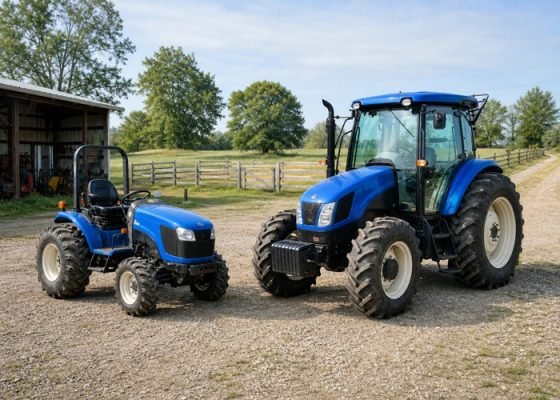
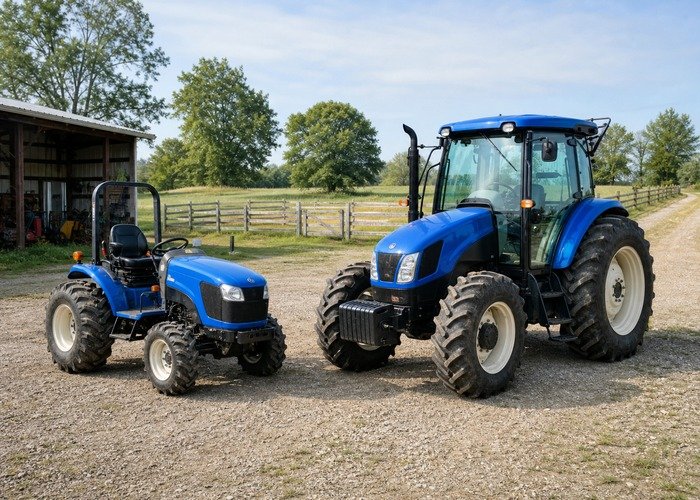
A compact tractor and a utility tractor can share the same basic shape yet behave like very different tools once a loader is full, a mower enters tall grass, or a trailer has to cross a narrow gate. The useful question is not which class is better. It is which class completes your recurring jobs with enough stability, hydraulic capacity, PTO output, clearance, and operator comfort without creating unnecessary transport, storage, or ground-impact problems. Start with the actual work list, then compare machines through the SeekMach tractor category rather than shopping by horsepower alone.
This guide uses “compact” for smaller property-oriented tractors and “utility” for the larger, heavier machines commonly chosen for sustained field work, heavier material handling, and wider implements. Those labels are not universal engineering standards. Model families overlap, and specifications vary. Treat the class name as a starting point, then verify operating weight, wheelbase, rated loader figures, PTO power, hydraulic flow, tire options, three-point-hitch capacity, and the limitations in the operator manual.
Before comparing brochures, write down ten jobs you expect during a normal year. Include mowing, grading, lifting, snow work, tilling, feeding, post-hole work, brush control, road repair, and trailer movement. Mark each job as weekly, monthly, seasonal, or rare. The high-frequency jobs should decide the tractor. A rare heavy project can often be rented or contracted; buying a large tractor for one future task may leave you with a machine that is awkward for every ordinary day.
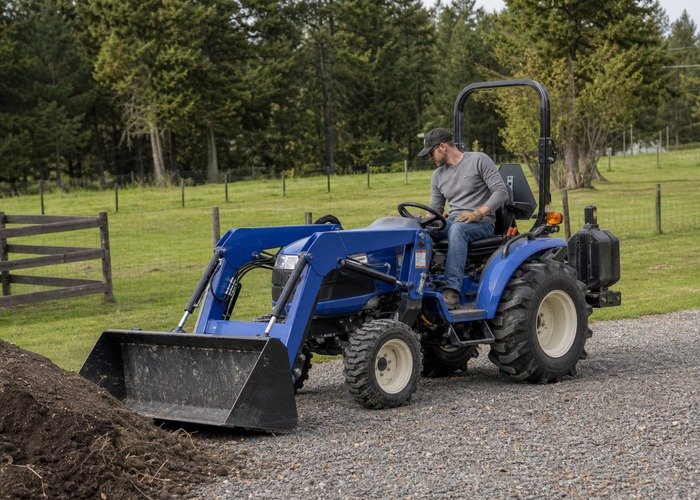
| Decision factor | Compact tractor usually fits | Utility tractor usually fits |
|---|---|---|
| Property access | Narrow gates, barns, landscaping, tighter turns | Open fields, wider lanes, larger working areas |
| Loader work | Mulch, gravel, light pallets, routine property handling | Heavier repeated loading, larger bales, greater stability needs |
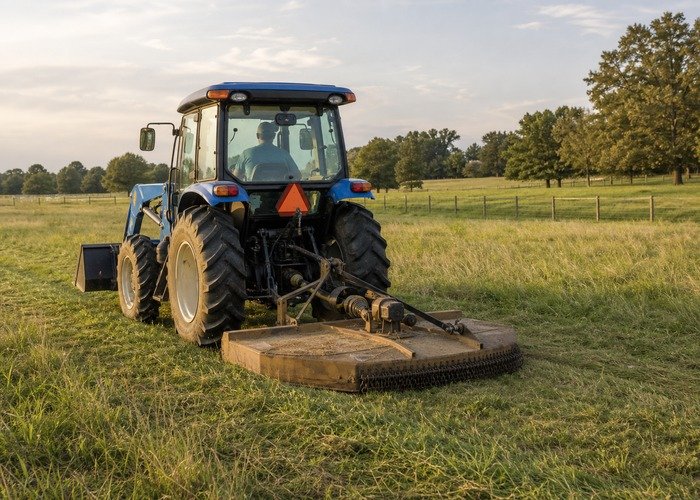
| PTO tasks | Finish mowing, light rotary cutting, tilling, post holes | Wider cutters, heavier tillage, sustained PTO demand |
| Ground impact | Lower weight can be easier on lawns and small drives | More traction and mass, but more compaction and surface impact |
| Transport and storage | Easier to store and commonly simpler to haul | Requires more space and a carefully matched transport plan |
| Operator day | Good for shorter mixed tasks and frequent maneuvering | Better suited to long field cycles and higher daily workload |
The table is a screening tool, not a purchase rule. A well-ballasted compact tractor can be more useful than an under-equipped utility tractor, and a light utility tractor may turn more tightly than expected. Compare exact specifications with the implements installed. Loader, cab, ballast, tire fill, wheel weights, and front attachments change total weight and handling.
Acreage is easy to quote but often misleading. Ten acres of open pasture create a different workload from ten acres divided among woods, gardens, buildings, slopes, drainage, and a long gravel driveway. A compact tractor can maintain a surprisingly large property when jobs are light and access is tight. A utility tractor can be justified on fewer acres when it repeatedly handles dense bales, heavy materials, wide cutters, or demanding ground-engaging implements.
Use the SeekMach product overview to compare equipment categories when the task list includes excavation or high-cycle material handling. A tractor is versatile, but it is not automatically the best carrier for every job. If most of the work is trenching, the excavator category may be more efficient. If the day is dominated by loading and tight turning, the skid steer loader category may fit better. Buying the correct category matters before choosing the correct tractor class.
Map each property zone. Record the narrowest gate, lowest branch, steepest practical route, softest ground, tightest barn corner, and smallest turning area. Measure storage doors and implement parking space. A tractor that cannot reach a task safely has zero useful capacity there, regardless of engine output.
Loader comparisons cause more confusion than almost any other tractor specification. Lift capacity may be stated at the pivot pins, at a point forward of the pins, or at full height. Those numbers are not interchangeable. The real load center moves forward when using pallet forks, a grapple, or a bulky object. As the load moves away from the tractor, available capacity and stability change. Always compare figures measured at the same location and verify the loader manual.
Rear ballast is part of the loader system, not an optional decoration. Proper ballast helps keep the rear axle loaded and improves stability, steering, and braking. The correct amount and placement depend on the tractor, loader, tires, terrain, and load. Follow the manufacturer’s instructions rather than copying another owner’s setup. The NIOSH agricultural safety resources provide useful context for treating farm machinery hazards as a system rather than a single component.
A utility tractor’s extra mass and wheelbase often make repeated loader work feel more settled, but size does not eliminate rollover or crush risk. Keep loads low during travel, avoid abrupt turns, slow down before slopes or rough ground, and use the seat belt when the rollover protective structure is in its operating position. Review the OSHA agricultural operations guidance and the specific operator manual before assigning loader work.
Engine horsepower is not the same as PTO horsepower. Attachments driven by the power take-off need the PTO figure and the correct shaft speed, hitch category, driveline length, and guarding. A compact tractor may have enough engine power for a task but not enough PTO output for a wider or heavier implement. A utility tractor may supply more power, yet the implement can still be unsafe or ineffective if the hitch geometry, driveline, weight, or ballast is wrong.
Match the implement’s stated requirements to the tractor’s actual specifications. Do not assume a wider cutter saves time if the tractor must crawl, overheats, or cannot control the implement on slopes. The Penn State Extension farm safety collection is a practical reference for machinery and PTO safety. Keep guards in place, stop the engine, remove the key, and wait for all motion to cease before approaching a driveline or clearing material.
For mowing and tillage, sustained output matters more than a brief demonstration. Ask how the tractor behaves after an hour in thick grass, dry soil, or warm weather. Cooling-system condition, radiator-screen cleanliness, proper gearing, and implement sharpness all affect the result. Bigger power numbers do not compensate for poor setup.
Weight can improve traction and stability, especially when pulling or carrying, but it also increases compaction and the damage caused by turning on soft ground. Compact tractors are often easier to place on lawns, paths, and smaller driveways. Utility tractors tend to perform better when the work requires sustained drawbar pull, heavier implements, or larger loads. Neither class is gentle when the soil is saturated.
Tire choice changes the comparison. Agricultural tread, industrial tread, and turf-oriented tires behave differently on mud, grass, gravel, pavement, and slopes. Tire pressure also affects traction, ride, and soil contact. Use approved tire sizes and pressures; mismatched tire circumference on four-wheel-drive tractors can damage driveline components. University resources such as the University of Minnesota Extension machinery pages help explain how machinery setup connects to field performance.
Walk the ground after rain. Look for rutting, springs, septic areas, buried drainage, and slopes with limited recovery space. A utility tractor may have the traction to enter a soft area and still cause unacceptable damage. A compact tractor may reduce impact but run out of traction. Sometimes the best answer is to wait for better conditions.
Hydrostatic transmissions are common in compact tractors because they make direction changes and fine speed control convenient during loader work, mowing around obstacles, and property chores. Gear or power-shuttle arrangements are common where steady pulling and long field cycles matter. Transmission type alone does not define compact versus utility, but it should match the way the operator spends the day.
Test the tractor with the expected footwear and controls. Check pedal position, clutch effort, shuttle response, visibility to the loader edge, steering effort, and the ability to enter and exit without contacting levers. Long work sessions magnify small ergonomic problems. A machine that fits the operator encourages slower, more deliberate work.
o SeekMach application solutions page can help organize jobs by workflow. Consider how often the tractor changes direction, how far it travels, how frequently implements change, and whether the operator needs precise inching or steady ground speed.
A utility tractor can carry wider and heavier implements, but width must suit gates, transport routes, field shape, and storage. A compact tractor with a narrower cutter may finish an obstacle-heavy property faster because it spends less time backing and trimming. Compare productive width only after accounting for turns, overlap, travel speed, and cleanup.
Hitch category and lift capacity must match the implement. Check capacity through the full lift arc, not just at the hitch points. Heavy rear implements can unload the front axle and reduce steering. Front ballast may be required when the loader is removed. With a front loader installed, the combination still needs evaluation as a complete machine.
Use the SeekMach tractor application guide as a starting point, then confirm every attachment against the tractor and implement manuals. Quick hitches, top links, stabilizers, driveline guards, hydraulic remotes, and couplers all affect compatibility.
Compact tractors are generally easier to store and may fit transport combinations that would not safely carry a utility tractor. Do not guess. Add the tractor’s real operating weight, loader, bucket, ballast, fuel, cab, implements, chains, and trailer equipment. Verify vehicle ratings, trailer ratings, axle loads, hitch limits, brakes, tires, and applicable laws.
A utility tractor may remain on one property and avoid frequent hauling, but it still needs hard, level storage with space for implements. Service access matters too. Open the hood, find filters and grease points, check battery access, and imagine performing routine work in your actual shop. A tractor that is difficult to service will be serviced less consistently.
Plan attachment storage before delivery. Buckets, forks, cutters, tillers, and blades need stable parking surfaces. Improvised storage creates pinch points and makes connection harder. The Farm Bureau rural road safety overview also reinforces the visibility and speed differences that matter when tractors travel near public roads.
This process often reveals that a compact tractor is right for mixed property work, close maneuvering, finish mowing, light grading, and moderate loader cycles. It also shows when a utility tractor is justified: repeated heavy lifting, larger PTO implements, sustained field work, greater drawbar demand, and long operator days.
The first mistake is using acreage as the only sizing input. The second is comparing loader numbers measured at different points. The third is ignoring ballast and tire selection. The fourth is buying implements before confirming PTO, hitch, hydraulic, and weight compatibility. The fifth is forgetting that total operating weight controls transport and ground impact.
Another mistake is choosing for the hardest imaginable job instead of the work that fills the calendar. Oversizing can make a tractor harder to store, haul, and maneuver. Undersizing can create slow cycles, poor control, excessive wear, and temptation to exceed limits. A good choice leaves a margin for routine work without turning every small task into a large-machine operation.
It is usually larger and heavier, with more capacity, but model ranges overlap. Compare exact engine, PTO, hydraulic, hitch, loader, and weight specifications rather than relying on the label.
Some can handle certain bales with the correct loader, ballast, attachment, and load center, while others cannot. Bale size and density vary. Verify the complete setup in the manuals and never assume that a successful lift near the ground means safe transport.
Either can work. A compact tractor is often maneuverable and easier on smaller drives; a utility tractor may pull a wider or heavier grading implement. Drainage, material moisture, operator technique, and attachment choice matter as much as tractor class.
Choose enough capacity for realistic recurring work plus a sensible margin. If the future task also requires more weight, hitch capacity, hydraulics, or transport capability, horsepower alone will not solve it.
Watch this direct comparison before making a shortlist: compact tractors versus utility tractors. Then bring your measurements and task list to the machine. A compact tractor is the better fit when access, maneuverability, storage, and mixed property chores dominate. A utility tractor earns its size when heavier repeated work, wider implements, and long field cycles dominate. The decision is defensible when the entire setup—not one headline number—matches the jobs you actually perform.