Telephone/WhatsApp:+86 156 2656 0610

Telephone/WhatsApp:+86 156 2656 0610
Email:info@seekmach.com

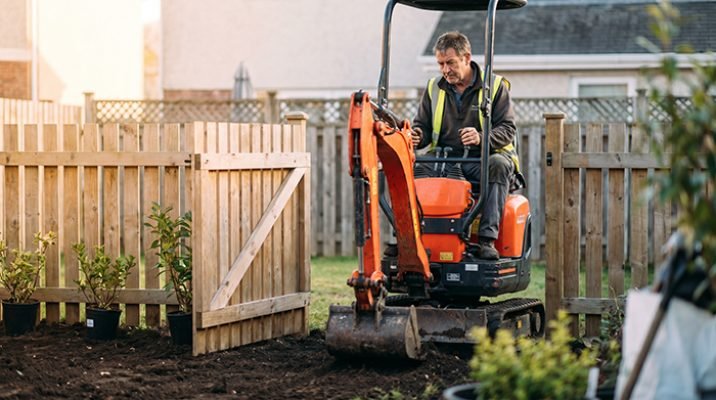
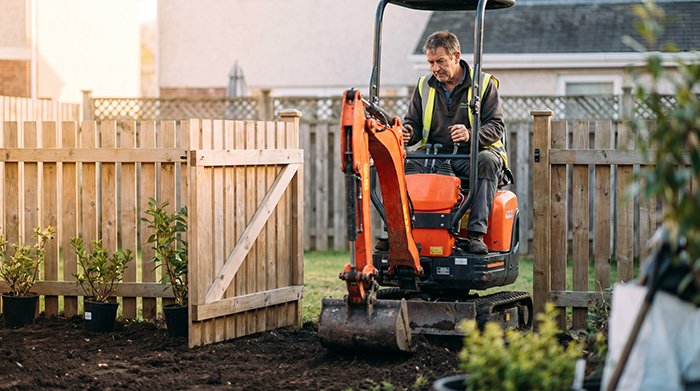
The single biggest obstacle in residential landscaping isn’t soil hardness or tree roots — it’s a gate. Specifically, the standard backyard gate that stands between a landscaper’s equipment and the job site, forcing crews to choose between manual labor and leaving their machines on the street.
o escavadeira de 1 tonelada exists precisely because that gate problem has no other mechanical solution.
Modern residential properties — particularly townhomes, walled courtyards, and postwar suburban lots — were never designed with machinery access in mind. A typical wooden or aluminum gate spans 36 inches at most, and many older properties narrow further to 30 inches or less. Larger compact excavators in the 3-to-5-ton range carry transport widths of 1,500mm to 1,800mm (roughly 59–71 inches), making them physically incompatible with enclosed rear yards without removing fencing or demolishing gate posts. That’s a project cost and timeline multiplier that most clients will simply reject outright.
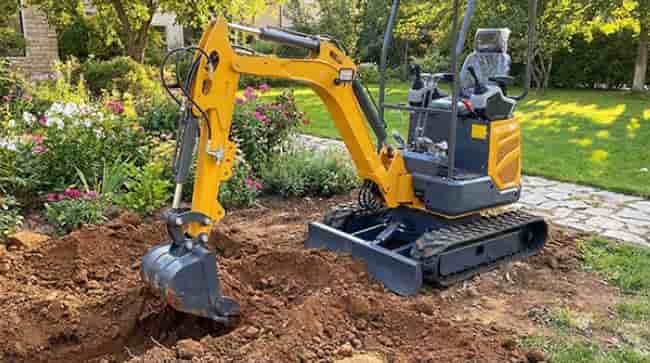
This is where micro-class machines redefine what’s possible. According to Equipment World, a 1-ton excavator typically features a width of approximately 30 inches (760mm–800mm), allowing it to pass cleanly through a standard backyard gate. That single specification — one number — determines whether a landscaping company can bid mechanical excavation on a job or must quote days of hand-digging instead.
The dimensional gap between a 1-ton and a 2.5-ton machine is significant enough that the design priorities are entirely different — weight, tail swing, and track width are all engineered toward different use cases. For contractors serious about this micro-class, factory-direct sourcing is increasingly the practical path to securing machines built to precise residential specs, rather than adapting general-purpose compact units that compromise on the dimensions that matter most.
That access advantage is just the starting point. The more nuanced question is how a machine this small delivers the hydraulic precision needed for demanding site work — which is exactly where the engineering story gets interesting.
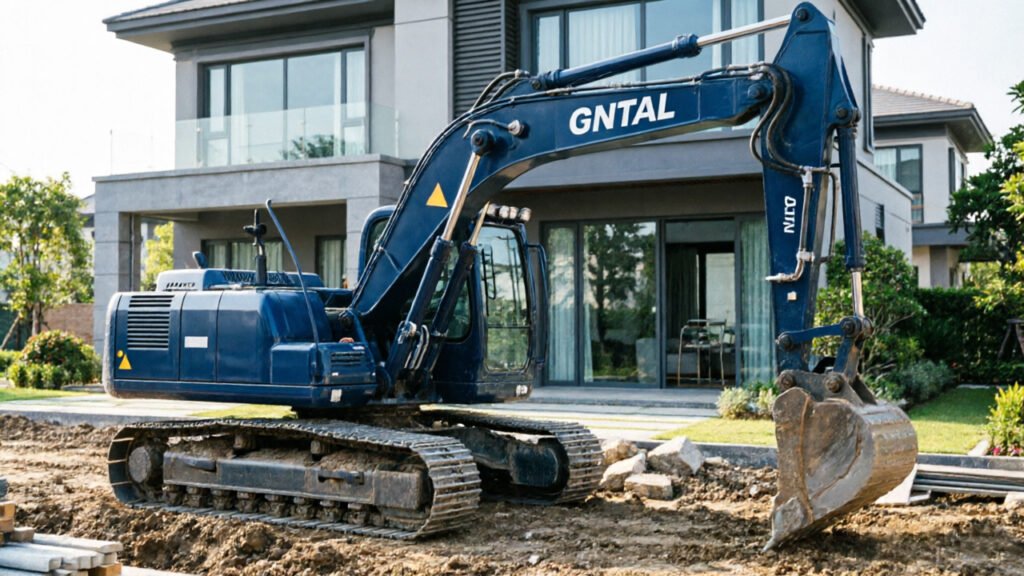
Choosing a mini excavator for landscaping means choosing a machine where hydraulic finesse matters as much as raw digging force — often more.
The core challenge in 1-ton class machines is balancing breakout force with flow-rate precision. Breakout force is what splits root balls and cuts through compacted clay. But push the hydraulics too hard during shallow utility trenching, and you risk crushing a fiber optic line that sits just inches below a decorative garden path. Optimization of hydraulic excavator working requires calibrating flow rates so the boom responds to feather-light inputs near fragile infrastructure while still delivering full force the moment conditions demand it.
In practice, the best 1-ton models achieve this through proportional control valves — components that modulate oil pressure incrementally rather than switching between full-on and full-off states. The result is a machine that feels almost organic in its response. Operators working near irrigation lines, low-voltage conduit, or buried fiber optics describe the control as the difference between writing with a pen and swinging a hammer.
The hydraulic benefits of modern 1-ton micro-excavators compound across a project:
Integrated production systems — where the pump, control valves, and swing motor share a unified pressure circuit — underpin this reliability. Machines built around this architecture maintain consistent performance across an eight-hour shift rather than degrading as hydraulic fluid temperature climbs. For contractors running compact equipment on complex residential sites, that consistency is directly tied to bid accuracy and client satisfaction.
Of course, hydraulic precision only tells part of the story. Even the smoothest control system becomes a liability the moment the machine’s rotating body threatens a fence post or a foundation wall — which is exactly why the next design consideration deserves its own conversation.
Zero-Tail-Swing (ZTS) technology is the single most important safety feature separating a capable compact excavator for residential projects from a liability waiting to happen.
ZTS means the machine’s rear counterweight stays within — or flush with — the track width during a full 360-degree rotation. On a 1-ton micro-excavator, that translates directly to zero risk of the counterweight sweeping into a fence panel, clipping a house foundation, or destroying an ornamental planter during a pivot. According to For Construction Pros, ZTS technology ensures that the rear of the machine does not collide with walls or fences during a 360-degree turn — a guarantee that conventional tail-swing machines simply cannot offer in confined backyards.
Tail-swing damage is a real, underreported cost on residential jobs. A standard swing excavator — even a compact one — can extend its counterweight 12–18 inches beyond the track edge. In a yard bounded by a cedar fence, a masonry retaining wall, or a neighbor’s property line, that arc becomes a collision zone. The financial exposure includes fence repairs, foundation crack assessments, and the harder-to-quantify cost of a client relationship gone cold. ZTS eliminates that exposure entirely.
Operator confidence shifts noticeably when that variable disappears. Rather than mentally tracking a danger zone behind the machine, the operator focuses entirely on bucket placement and grade accuracy — which directly improves work quality and reduces cycle times on detailed tasks like pool surrounds or tiered garden installations.
For contractors bidding on municipal streetscaping or high-end residential renovations, ZTS has quietly become a baseline expectation rather than a differentiator. Many project specifications now mandate it explicitly. Understanding how machine size intersects with swing geometry is increasingly central to winning those bids — and equally important is appreciating how a machine behaves once it’s on the ground, which is where track pressure becomes the next critical variable.
Low ground pressure is the unsung competitive advantage that makes 1-ton micro-excavators the right tool for high-end residential work — where a single cracked paver or rutted lawn can cost a contractor their reputation.
A 1-ton micro-excavator exerts just 3.5 to 4.0 psi of ground pressure — comparable to an adult human walking across a surface, and dramatically lower than larger equipment, according to Lawn & Landscape. To put that in perspective, the optimization of hydraulic systems principles at this weight class is specifically engineered around protecting surfaces, not just moving material. The contrast becomes stark when you lay the numbers side by side:
| Tipo de máquina | Ground Pressure (PSI) | Surface Impact |
|---|---|---|
| 1-ton micro-excavator | 3.5 – 4.0 psi | Minimal — safe on turf and soft soil |
| Adult human footprint | ~8 – 11 psi | Moderate — visible on saturated ground |
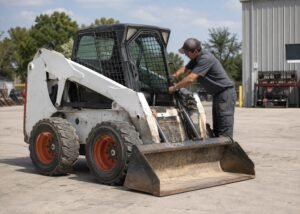
| Skid steer loader | 20 – 35 psi | High — compacts soil and damages hardscape |
| Tracked compact loader | 14 – 22 psi | Moderate-high — risks subsurface damage |
Soil compaction is the silent enemy of any landscaping project. When heavier machines drive across a yard, they compress the soil profile, reduce pore space, and inhibit root growth for years afterward. A 1-ton unit sidesteps this problem almost entirely. In practice, contractors working on irrigation installs or drainage projects near established plantings can operate with confidence that the machine won’t undo the client’s existing investment.
Rubber tracks amplify this advantage further. Unlike steel tracks that concentrate force and can gouge hardscape, rubber tracks distribute weight evenly and leave minimal surface marks — critical when working near patios, driveways, or pool decks. For contractors building a premium residential brand, this matters. Arriving with a low-impact machine signals professionalism, reduces liability risk, and becomes a genuine selling point in client proposals. Pairing low ground pressure with the safety profile of zero-tail-swing design creates a machine that earns trust before the first bucket is cut.
That technical edge over manual alternatives becomes even clearer once you factor in what the machine can accomplish per hour — which is exactly where the labor cost conversation begins.
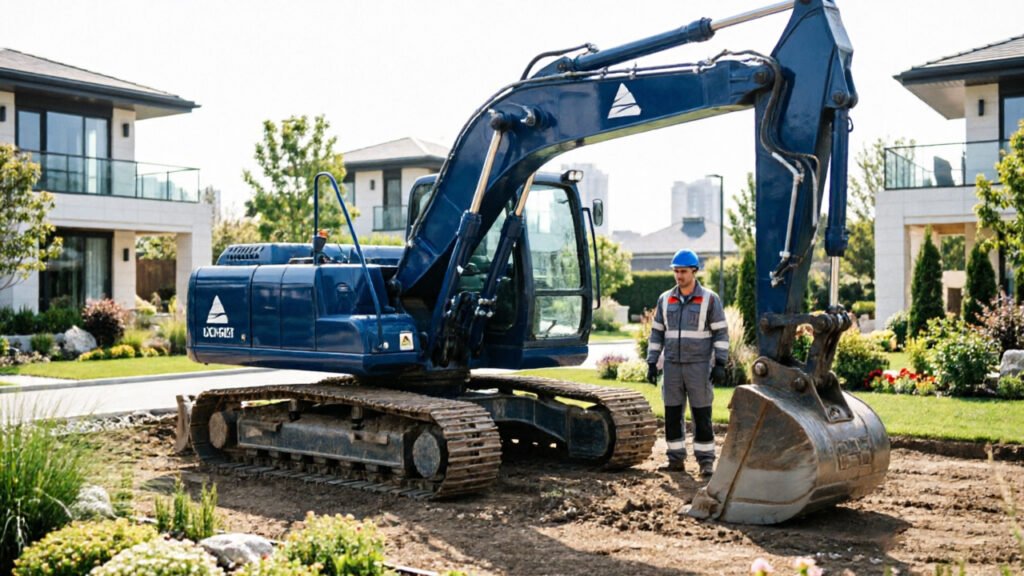
A single 1-ton micro-excavator can replace the output of an entire landscaping crew — and the math makes that swap increasingly hard to ignore.
According to Compact Equipment Magazine, the 1-ton excavator now performs the work of five laborers in a fraction of the time, specifically for installing irrigation lines. That’s not a marginal efficiency gain — it’s a structural change in how residential landscaping crews operate.
Rising labor costs are accelerating this shift. The US Bureau of Labor Statistics consistently tracks landscaping wages trending upward, and when you factor in payroll taxes, workers’ compensation insurance, and the chronic difficulty of retaining skilled seasonal workers, a five-person hand-digging crew carries significant hidden overhead. A micro-excavator eliminates most of that burden in a single capital purchase.
Worker fatigue and injury risk compound the cost problem. Repetitive hand-shoveling generates high rates of musculoskeletal injuries — one of the leading workers’ comp claim categories in outdoor labor. Fewer bodies in the trench means fewer incidents, lower insurance premiums, and a more consistent output rate across a full workday. In practice, a machine doesn’t slow down after hour six the way a tired crew does.
The ROI case for factory-direct heavy machinery is straightforward when you model it honestly. A quality 1-ton unit purchased direct from the manufacturer typically lands in the $18,000–$28,000 range. Against a five-person crew billing even $150 per day each, the machine pays for itself within a single busy season. As detailed in guides covering how compact models compare by size and capability, the upfront investment scales predictably against ongoing labor savings.
The bottom line: the payback window is measured in months, not years — and that calculation only improves as labor markets tighten. But raw digging power is just the beginning of what makes these machines financially compelling. The real multiplier comes from what you can attach to them.
A 1-ton micro-excavator isn’t a single-purpose machine — it’s a compact platform that can drill, demolish, and lift depending on which attachment is locked in.
The real competitive edge isn’t the bucket; it’s the ecosystem of tools that plug into the same machine. As covered in previous sections, labor savings and low ground pressure already justify the investment. But the attachment system is what makes this class of equipment genuinely transformative on complex residential sites. According to Boom and Bucket’s landscaping guide, 1-ton excavators can accept augers and hydraulic hammers that shift the machine from a digging tool into a demolition and planting platform — dramatically expanding what one operator can accomplish in a single day.
Auger attachments unlock precision planting and post installation. Rather than manual post-hole digging, an auger drives fence posts, installs lighting bollards, or bores tree pits to exact depth — consistently and without the physical strain on crew. Bite diameter and depth are adjustable, meaning the same attachment handles a 6-inch fence post hole and a 24-inch root ball pocket.
Martelos hidráulicos handle patio demolition and hardscape removal without renting separate equipment. Contractors breaking up concrete pavers or flagstone before a landscape renovation can complete that phase with the same machine they’ll use to grade afterward — no equipment swap, no delivery window, no added cost.
Quick-change couplers are what make this versatility practical on a real job site. A trained operator can swap attachments in under two minutes, meaning a morning of augering tree pits flows directly into an afternoon of grading without downtime. For contractors managing compact machines in tight residential spaces, that flexibility often eliminates the need to mobilize a second piece of equipment entirely.
OEM/ODM capabilities add another layer of customization. Manufacturers that support custom attachment development let contractors specify tooling optimized for recurring job types — whether that’s a narrower bucket profile for tight garden beds or a modified thumb design for ornamental stone work. That kind of tailored production capability points directly to the importance of partnering with the right manufacturer, which is where sourcing strategy becomes the next critical decision.
Buying machinery directly from a certified manufacturer eliminates middleman markups, ensures traceability, and gives procurement teams direct access to engineering expertise that dealers simply can’t replicate.
Going factory-direct isn’t just a cost play — it’s a quality assurance decision.
When evaluating global machinery suppliers, certification credentials are the first filter worth applying. CE marking confirms that a machine meets European safety and environmental directives, while ISO 9001 certification signals that a manufacturer operates under a documented, audited quality management system. According to SeekMach’s industrial overview, integrated production systems backed by ISO 9001 standards are central to consistent output quality in heavy machinery exports — a detail that matters enormously when you’re evaluating machines that will log thousands of operating hours in demanding field conditions.
Manufacturing tenure is another underrated variable. A supplier with 15 or more years of production history has cycled through multiple design iterations, resolved common failure points, and developed supplier relationships that protect component quality. In practice, that accumulated knowledge shows up in tighter weld tolerances, more reliable hydraulic seals, and attachment interfaces that hold up season after season. Newer entrants to the market may offer attractive pricing, but the absence of long-run durability data is a real risk when the machine is expected to anchor your labor model.
The contrast with traditional dealership channels is stark. Dealer networks typically add 15–30% to the base price to cover inventory carrying costs, floor plan financing, and sales margins. Factory-direct purchasing compresses that gap significantly, and it also opens a direct line to technical support, spare parts logistics, and custom configuration options. For landscaping businesses scaling their fleet, that relationship has compounding value over time.
Integrated production — where fabrication, assembly, and quality inspection happen under one roof — reduces the tolerance stacking that occurs when components are outsourced across multiple vendors.
When all of these elements come together — certification rigor, manufacturing depth, and direct procurement — the result is a machine acquisition strategy that holds up under scrutiny. That convergence of access, protection, and return on investment is exactly what separates a sound equipment decision from an expensive lesson.
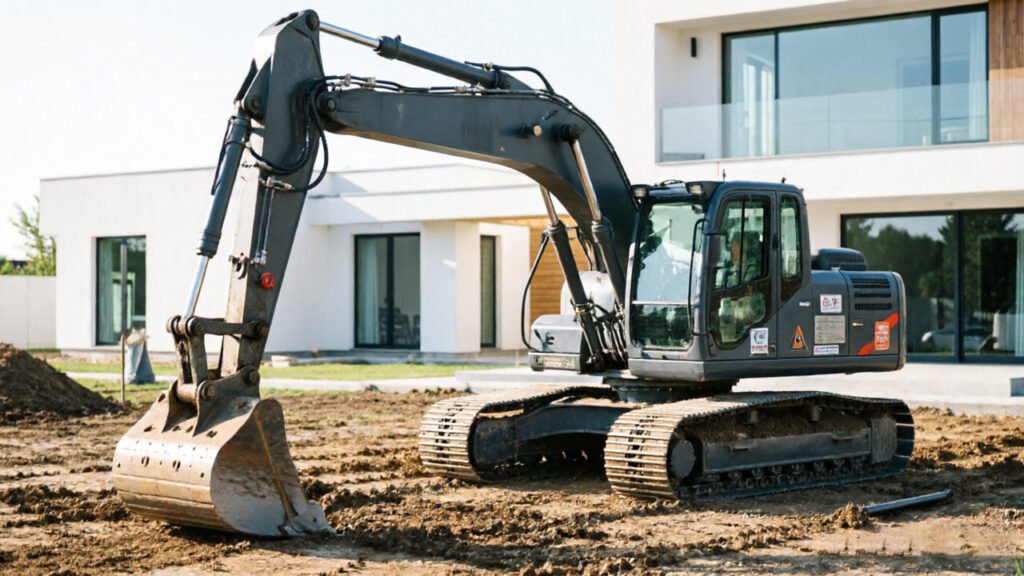
The 1-ton micro-excavator isn’t a niche tool — it’s a procurement decision that reshapes labor costs, site access, and project timelines in one move.
As Compact Equipment Magazine notes, the shift toward micro-excavators is driven by the dual pressure of precision requirements in utility trenching and steadily rising labor costs. For procurement managers and independent contractors alike, that convergence makes the business case unusually clear. Before the next section addresses the specific questions that come up most during the buying process, here’s a concise summary of everything covered so far.
Access is non-negotiable on residential jobs. A 1-ton unit is the only class of powered excavator that reliably fits through a 30-inch gate — the standard opening on the vast majority of residential fences. No other machine in this category can reach a backyard utility trench without dismantling a fence panel or staging a lengthy manual workaround.
Ground preservation is built into the weight class. Operating at just 3.5–4.0 PSI of ground pressure, these machines protect finished lawns, pavers, and soft soils that would be churned up by heavier equipment. That single spec is often the deciding factor on high-end residential landscaping contracts.
Zero-tail-swing design eliminates costly contact damage. In tight courtyards, narrow side yards, and enclosed garden spaces, the ability to rotate without the counterweight swinging past the tracks prevents structural damage — and the liability that comes with it.
One machine replaces roughly five manual laborers for trenching, demolition, and material relocation tasks, making the return on investment for compact machinery surprisingly fast even for smaller operations.
Factory-direct sourcing with CE certification delivers the strongest value-to-performance ratio. Verified manufacturing provenance, consistent tolerances, and direct parts access reduce total cost of ownership over the machine’s service life.
If these takeaways have raised practical questions about specifications, site suitability, or what certifications actually mean in real-world procurement, the next section addresses the most common ones directly.
The right answers at the buying stage save costly mistakes on the jobsite. These five questions come up consistently among landscapers, contractors, and procurement managers evaluating 1-ton machines for the first time.
Can a 1-ton excavator fit through a standard door?
Most 1-ton models measure between 27 and 32 inches wide in their narrowest transport configuration. A standard residential doorway runs 32–36 inches, so access is tight but achievable — confirm exact blade-off width with your supplier before assuming clearance.
What is the maximum digging depth for a micro-excavator?
Typical digging depth for a 1-ton class machine sits between 5.5 and 7.5 feet depending on boom and arm configuration. That range covers the majority of residential landscaping tasks, from irrigation trenches to shallow footing prep. For a practical look at how these specs play out on real terrain, this compact machine breakdown compares hydraulic reach across the leading 0.8–1.0 ton models.
Are 1-ton excavators safe for use on septic fields?
In practice, ground pressure is the critical variable. A 1-ton machine typically exerts 3.5–4.0 psi of ground pressure — significantly less than a full-size excavator and even comparable to a loaded wheelbarrow. Always verify soil compaction limits with a site engineer before operating near drain fields.
How do I maintain hydraulic efficiency in small machines?
Change hydraulic fluid at manufacturer-specified intervals, inspect hose fittings for micro-leaks monthly, and monitor oil temperature during extended cycles. Consistent maintenance keeps cycle times fast and extends component life — a point explored further in this honest field comparison between manual methods and machine ownership costs.
What certifications should I look for when buying factory-direct?
CE and ISO 9001 certifications are the industry standard for safety and quality assurance on imported heavy machinery — they confirm that design, manufacturing process, and materials meet internationally recognized benchmarks. Demand documentation before any purchase order is signed.
The 1-ton micro-excavator has earned its place as a genuine productivity tool — not a compromise. If your next project involves confined access, sensitive ground, or a tight labor budget, the right machine decision starts here.