Telephone/WhatsApp:+86 156 2656 0610

Telephone/WhatsApp:+86 156 2656 0610
Email:info@seekmach.com

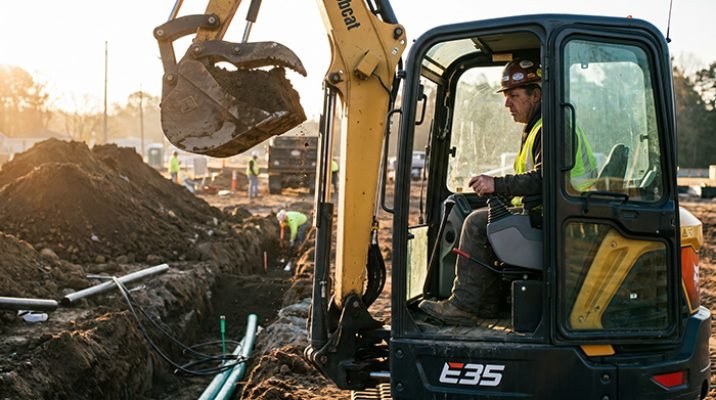
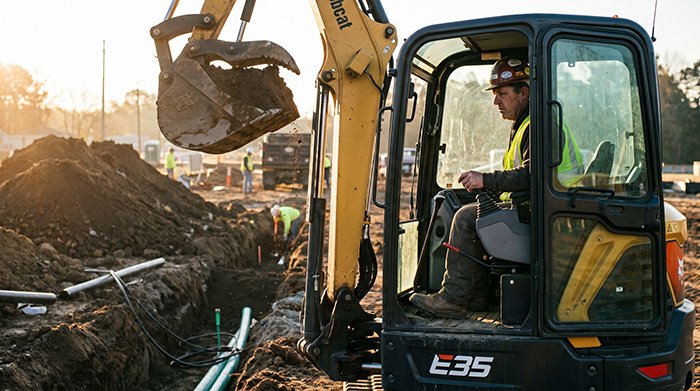
Throwing more horsepower at a trench is the most expensive mistake a contractor can make — precision geometry is what actually separates profitable jobs from margin-eating ones.
The angle of bucket entry determines everything downstream: cycle time, fuel burn, hydraulic wear, and ultimately, your daily output. Most operators instinctively dig straight down, treating raw breakout force as the primary variable. In reality, the geometry of each pass matters far more than the machine’s rated power.
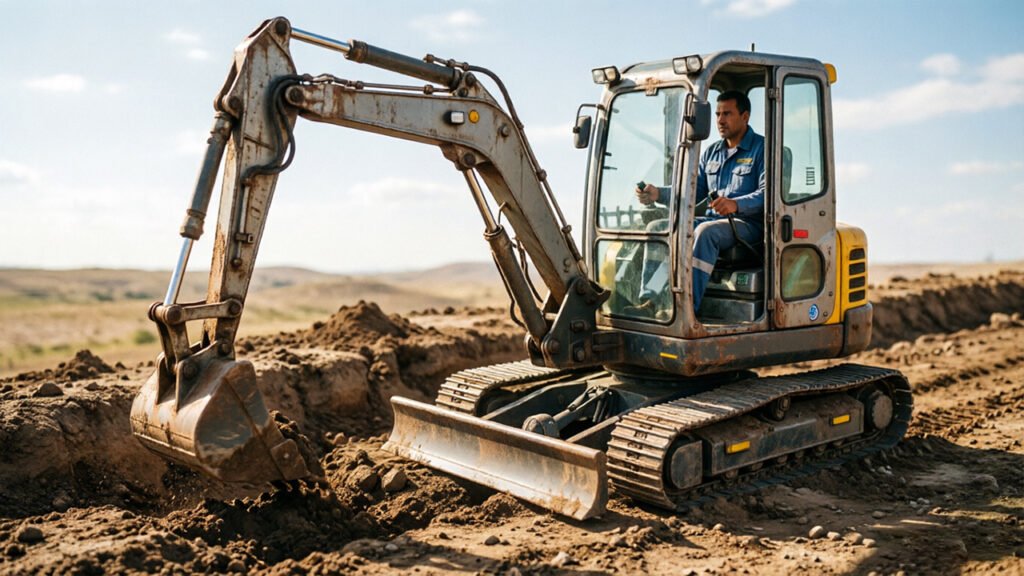
Hydraulic resistance and bucket entry angles share a direct relationship that most operators underestimate. When a bucket enters soil at a steep, near-vertical angle, the hydraulic system fights the full shear resistance of undisturbed ground across the entire cutting edge simultaneously. Shallower entry — typically in the 35 to 45-degree range — allows the bucket to slice progressively through the material, distributing load across the curl cycle rather than spiking demand at the point of entry. That load-spike reduction is precisely why industry data suggests fuel consumption drops by up to 10–15% when operators maintain that optimal digging angle — a meaningful saving across an eight-hour shift.
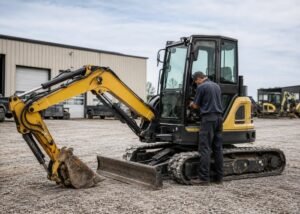
Compact machines in the 5.58t, 36.5kW class are particularly sensitive to this principle. Their weight-to-breakout-force ratio is carefully balanced by design — enough mass to resist bucket reaction forces, but not so much that repositioning becomes a time sink. Exploiting that balance requires working com the geometry rather than demanding brute force the machine was never meant to deliver.
Soil density compounds every geometric error. Dense clay or compacted fill can double cycle times compared to loamy soil if the bucket angle isn’t adjusted accordingly. Operators who adapt their entry angle to soil conditions — rather than holding a fixed attack position — consistently outpace those who don’t.
Mastering these physics is only half the equation. Knowing how to stay safe while trenching is the other half. Once the fundamentals of force and angle are understood, the next step is applying proven mini excavator trenching techniques at the strategic level — starting with how you position and align the machine before the first bucket ever enters the ground.
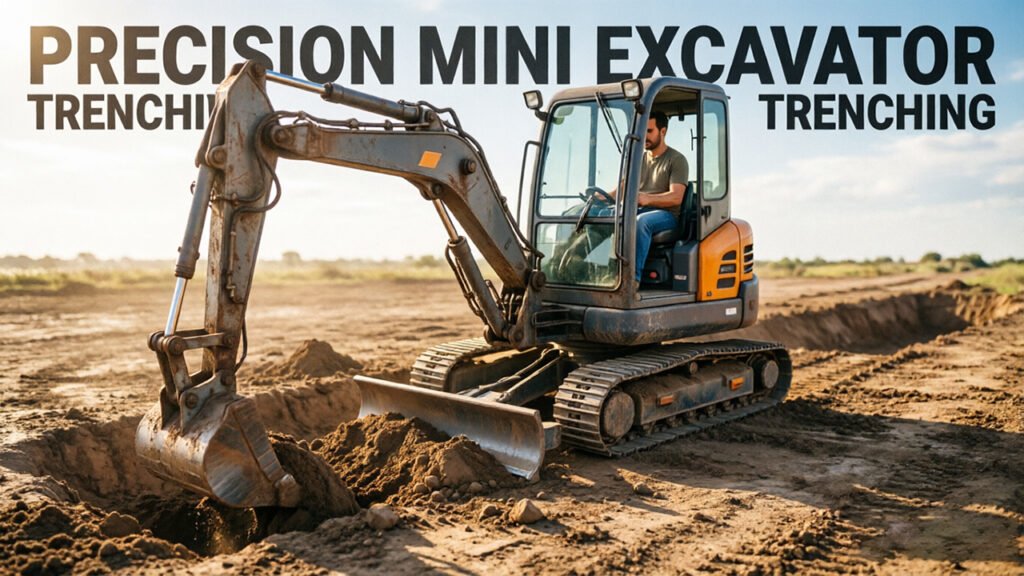
Straight trenches aren’t a product of slow, careful digging — they’re a product of deliberate machine positioning before the first bucket breaks ground. Compact excavator digging efficiency lives or dies in the setup, not the swing. Once you understand that the machine itself is your most reliable measuring tool, the way you approach every utility run changes fundamentally.
Track alignment as your sightline. The undercarriage of a mini excavator isn’t just a mobility system — it’s a built-in ruler. Before digging, align both tracks parallel to your string line or chalk mark and keep them there for the entire run. When your tracks drift, your trench drifts. A common pattern is to drive the tracks directly alongside the intended centerline, giving the operator a continuous visual reference that no handheld guide can match. For long utility runs, this single habit eliminates the gradual wander that forces expensive rework.
Planned machine positioning is what separates a two-hour job from a four-hour one. Position the machine far enough back that the arm can complete four to six feet of trench before a travel move is needed. Repositioning every three feet resets your alignment and introduces micro-deviations that compound over a 100-foot run. Operators who build this habit early consistently report faster completion times and tighter tolerances.
The Pull, Lift, Release method is the floor-leveling technique most experienced operators rely on. Pull the bucket through the cut to the desired depth, lift slightly to clear loose material, then release the curl before the next pass. This three-step rhythm prevents the bucket from riding up at the end of each stroke — the primary cause of an uneven trench floor that creates drainage headaches downstream.
Offset boom utility for tight spaces deserves particular attention. For Construction Pros notes that off-set boom swing capabilities allow mini excavators to dig trenches flush against walls or existing structures where larger machines simply cannot operate. This means a well-positioned compact machine can complete foundation-adjacent utility work that would otherwise require expensive hand-digging or structural risk. It’s a capability that directly expands the types of contracts a crew can bid on — a point worth keeping in mind as we examine which machine weight class best supports sustained, deep utility work.
Selecting the right power class is what separates profitable utility contracts from costly overruns — and the 5.58t 36.5kW specification has emerged as the benchmark for serious municipal trenching work.
Weight class determines access, cycle time, and haul cost before a single bucket cuts soil. The 5.58t range hits a specific sweet spot for municipal utility work: heavy enough to generate the breakout force required for consistent 6–8 foot drainage trenches, yet light enough to transport on a standard dual-axle trailer without a specialized permit. That transportability factor alone reduces mobilization costs on multi-site contracts, which is where margins are often won or lost. According to relatórios do setor, this specification tier represents a high-efficiency class that balances transportability with heavy-duty digging depth — a combination that smaller 1-ton units structurally cannot replicate.
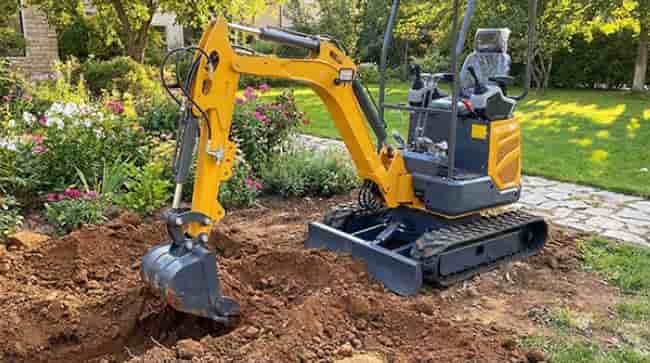
The 36.5kW power output is the real story behind sustained performance. At depth, hydraulic demand spikes — the swing motor, boom cylinder, and bucket curl are all competing for flow simultaneously. A 36.5kW engine sustains that hydraulic load without the power dip that causes operators to slow their cycle, which is exactly what breaks rhythm when learning how to dig a straight trench with a mini excavator in dense clay or compacted subsoil. Smaller machines in the 1-ton category, while excellent for shallow landscape work — as detailed in this breakdown of compact 1-ton mini excavator performance — simply lack the hydraulic reserve to maintain wall geometry at depth without repeated repositioning.
ISO 9001 certification is a procurement-level specification. For machines operating under sustained high-torque digging conditions, ISO 9001-certified manufacturing processes ensure dimensional consistency in critical wear components — cylinder bores, pin tolerances, and pivot bushings. In practice, this translates directly to longer service intervals and predictable resale value, both of which matter to fleet managers evaluating total cost of ownership over a five-year horizon.
Choosing the right power class is only half the equation. Once the machine is matched to the job, the real technical challenge shifts to excavation depth and the wall stability protocols that keep crews safe — which is exactly where benching and sloping techniques become non-negotiable.
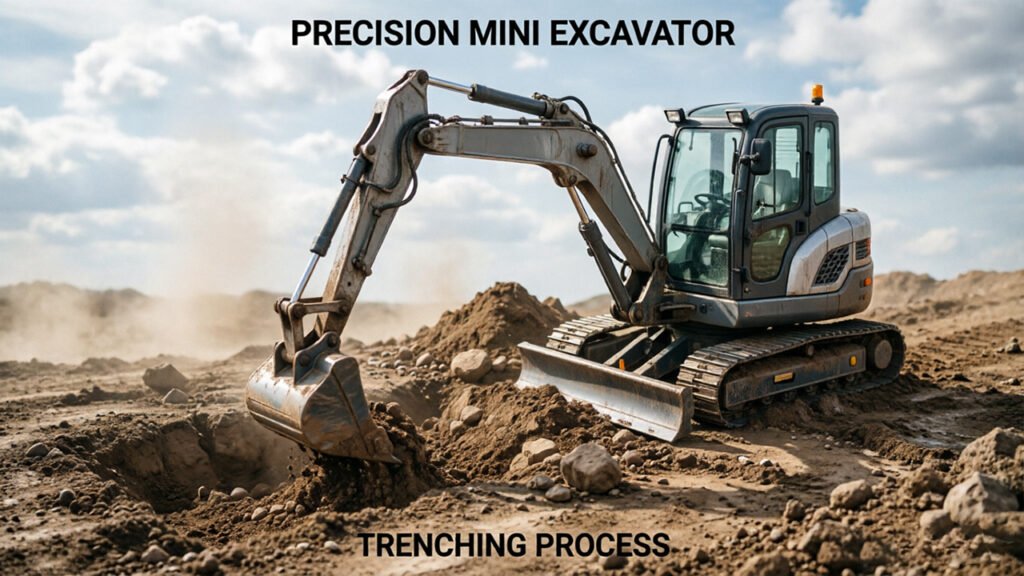
Deep trench work is where precision trenching for utility lines meets its most serious safety challenge — and where operational discipline directly protects both your crew and your timeline.
Trench wall collapse is not a gradual process. Soil that appears stable can fail in seconds, and the physics are unforgiving: even 18 inches of soil weighing roughly 100 lbs per cubic foot can pin an operator or fatally injure a ground worker with no warning. Compact equipment actually reduces some of this risk by minimizing ground disturbance, but it doesn’t eliminate it. Understanding soil behavior is non-negotiable for any excavation exceeding 5 feet in depth.
Trench geometry is your first line of defense. OSHA identifies two primary protective systems relevant to compact machine operators:
“Utilizing the ‘V-shape’ or ‘Step’ benching technique is critical for trench stability and operator safety in deep excavations.” — OSHA
Spoil pile placement is equally critical. Surcharge loading — the pressure added to trench walls by material piled too close to the edge — accelerates collapse risk significantly. The Association of Equipment Manufacturers (AEM) is direct on this point:
“The key to high-production trenching with a compact machine is ‘benching’ your spoils at least two feet away from the edge of the excavation.”
On soft or uneven terrain, operators should also lower the machine’s center of gravity by reducing boom extension and working the bucket in shorter, controlled passes. Uneven ground shifts the machine’s weight distribution unpredictably — a concern worth reviewing alongside attachment safety fundamentals that apply broadly across compact equipment classes.
These safety protocols aren’t separate from productivity — they’re built into it. Properly benched excavations and well-managed spoil placement also make the trench site cleaner and more accessible, which matters greatly once you move into the precision work that utility line and drainage system installation demands.
Utility and drainage work demands a level of precision that general excavation simply doesn’t require — grade control, conflict avoidance, and material placement all happen in a compressed, high-stakes workspace.
The best practices for drainage pipe installation with excavators start with managing grade before the first bucket cuts soil. Gravity-fed systems are unforgiving: even a 0.1% error in slope can cause pooling, backflow, or pipe failure down the line. In practice, operators use laser grade references or digital slope indicators mounted to the boom to maintain consistent fall — typically 1/8 inch per foot for standard drain pipe — across the entire trench run. Any deviation gets corrected immediately rather than averaged out later.
Conflict avoidance is the next critical layer. Within the “hand-dig zone” — generally 18 to 24 inches around any marked utility — mechanical digging stops. Operators transition to manual excavation to expose existing lines before resuming machine work. Tight urban corridors compound this challenge; swing boom geometry becomes especially valuable when working parallel to buried infrastructure without repositioning the entire machine.
The attachment transitions that follow are where modern equipment pays dividends. According to SeekMach Industrial Data, quick-change couplers allow operators to swap from a trenching bucket to a compaction plate in under 120 seconds. For utility runs, that capability supports a clean workflow across all phases:
Bedding material placement is where operator technique separates acceptable work from engineered installations. The bucket’s curl and crowd functions are used in slow, controlled passes to deposit screened gravel evenly beneath and around the pipe without disturbing its set grade. Dropping material in one motion risks pipe movement; feathering it in layers preserves alignment.
As utility contracts grow more technically demanding, the tools and workflows covered here are only part of the picture — the machines themselves are evolving to meet that demand, which shapes what fleet decisions will look like heading into 2025 and beyond.
Fleet procurement decisions made today will define your competitive position for the next five to seven years — and the 2025 market signals are too clear to ignore.
The most significant shift in compact excavator sourcing is the rise of CE-certified Chinese manufacturing built explicitly for global markets. o 2025 MechLink report highlights a growing preference for factory-direct models that integrate international quality certifications with localized serviceability — a combination that was nearly impossible to source cost-effectively just a decade ago. CE certification isn’t a paperwork formality; it confirms compliance with noise, emission, and structural safety standards that open doors to municipal contracts and regulated job sites. Much like emission and safety compliance separates bankable agricultural equipment from liability risks, certified compact excavators command higher project eligibility and lower insurance exposure.
OEM/ODM capability is becoming equally critical, particularly for contractors pursuing specialized municipal work. Drainage authorities, utility co-ops, and public works departments increasingly issue specs that require custom boom geometry, specific hydraulic flow rates, or proprietary attachment interfaces. Manufacturers offering OEM/ODM programs allow procurement managers to configure machines to those specs at the factory level — rather than retrofitting after delivery.
On the technology side, telematics integration is moving from premium add-on to baseline expectation. GPS-linked depth sensors, real-time fuel efficiency monitoring, and remote diagnostic platforms reduce downtime and give project managers precise data for billing and compliance documentation. Contractors using mini excavators for specialized project bids report that telematics data directly strengthens contract proposals.
Finally, the push toward high-efficiency engines — Perkins and Kubota powerplants in particular — in mid-tier frames is closing the performance gap between entry-level and premium machines. Understanding precisely how these mechanical advantages translate into real-world technique is where operational efficiency becomes visible — which is exactly what professional demonstrations make tangible.
Watching a skilled operator work is one of the fastest ways to close the gap between knowing the theory and executing it on the job site. The three mechanical principles covered in previous sections — breakout force, positioning, and hydraulic efficiency — come together visibly when you observe professional trenching technique in real time. As noted in the Operator Training Guide, visual cues for bucket depth are often more reliable than digital sensors in varied soil conditions, which is exactly why video study remains a core learning tool for experienced operators.
[YouTube Video Placeholder — Professional Trenching Alignment and Depth Control]
Here’s what to watch for carefully:
These visual cues build the muscle memory that separates efficient operators from average ones. For contractors managing tight-clearance or specialized terrain, the fundamentals shown here apply across machine classes. With the technique solidly understood, the next step is distilling these insights into a practical field checklist.
Precision trenching isn’t a single skill — it’s a system of interlocking decisions that compound into measurable profit or measurable loss over a season. According to SeekMach Operational Research, precision operation reduces secondary finishing work by up to 30% on drainage projects, which translates directly to lower labor costs and faster job turnover. The five principles below distill everything covered in this article into a reference-ready framework you can act on immediately.
Bucket angle is your fuel and power governor. Maintaining a 35–45 degree bucket angle throughout the dig cycle keeps hydraulic demand balanced and prevents the stalling, slippage, and over-cycling that drain fuel and add wear hours. Operators who let bucket angle drift outside this window routinely spend 15–20% more machine time per linear foot of trench.
Spoil placement is a structural decision, not an afterthought. Always bench excavated material at least 2 feet from the trench edge. Spoil piled closer than that creates surcharge loading — lateral soil pressure that stresses trench walls and dramatically increases cave-in risk. This is non-negotiable on any project where personnel enter or work adjacent to the excavation.
Track alignment sets the entire cut. Before the first bucket stroke, position tracks parallel to the intended trench line. As covered earlier in the video technique section, this single setup step prevents the angular drift that forces corrective passes and widens the trench beyond spec.
Machine class determines project range. The 5.58-tonne class sits at a proven sweet spot: enough dig depth and breakout force for municipal utility work, yet light enough to transport on a standard trailer without a CDL in most US states. As Wickham Tractor notes, machine selection upstream of the job determines site access and productivity downstream.
Offset boom swing unlocks urban work. For tight municipal corridors or utility easements flanked by fencing or infrastructure, offset boom capability lets operators position the house away from the trench while keeping the bucket on line — eliminating the need for additional hand excavation along walls or curbs.
If these principles raise deeper questions about specific depths, certification requirements, or field-level technique, the next section addresses the most common operator questions directly.
Precise trenching answers start with precise questions — here are the four most common queries operators ask when pushing mini excavator performance to its limit.
How do I keep my trench floor level without a laser?
Use a series of depth-reference stakes driven at consistent intervals along your planned trench line before you break ground. As the bucket cuts, rotate the stick inward at a repeatable angle and count hydraulic-lever pressure by feel to maintain a consistent dig depth. With practice, this muscle-memory method keeps variance to under an inch on straightforward runs.
What is the maximum safe depth for a 5.58t mini excavator?
Safe maximum depth depends on soil classification, not just machine weight, but a 5.58t machine typically reaches 10–12 feet of digging depth on manufacturer spec sheets. OSHA requires protective systems — sloping, shoring, or trench boxes — for any excavation deeper than 5 feet. Always cross-reference your machine’s rated dig depth against site-specific soil conditions before committing to deeper cuts, as compact excavator specifications vary meaningfully by model.
Can I use a mini excavator for V-trenching in agricultural drainage?
Yes — a mini excavator fitted with a narrow V-profile bucket is well-suited to agricultural drainage work. The machine offers far more depth control and spoil-placement flexibility than a dedicated trencher, particularly on irregular terrain or around established crops.
How does factory-direct sourcing affect machine certification?
Factory-direct machines sourced from compliant manufacturers should carry CE and ISO 9001 certifications — the global gold standard established by the ISO and CE standards for verifying that machinery meets international safety requirements. Purchasing outside certified channels risks acquiring equipment without traceable quality documentation, which creates liability exposure and can void insurance coverage on job sites.