Telephone/WhatsApp:+86 156 2656 0610

Telephone/WhatsApp:+86 156 2656 0610
Email:info@seekmach.com

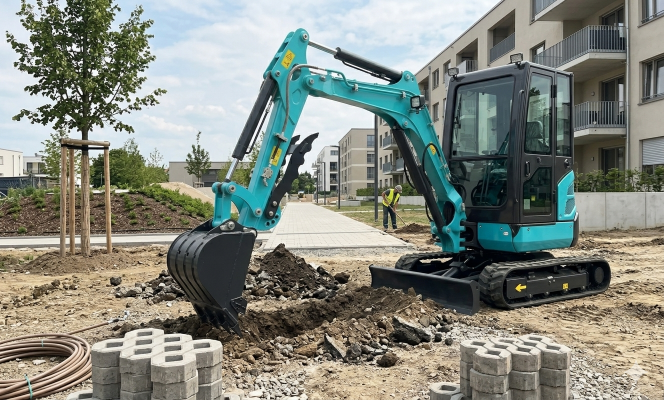

Master these essential fundamentals to operate your 3.5 ton excavator safely and efficiently from day one:
• Complete daily 10-15 minute pre-operation inspections to prevent costly breakdowns and avoid OSHA fines starting at $16,550 per violation
• Master the control patterns early – ISO controls use right joystick for boom/bucket, left for stick/swing; practice combining movements for smooth operation
• Position strategically for maximum efficiency – dig front/rear, dump sideways, and maintain 35-45 degree digging angles to reduce fuel consumption
• Never exceed 75% lifting capacity and always work within 30-degree slope limits while keeping loads close to the machine for stability
• Reduce idle time and use eco mode to save 0.5-1 gallon per hour and improve fuel efficiency by 15-20% without sacrificing productivity
Proper training on these fundamentals will maximize your investment while ensuring safe, productive operations that extend your excavator’s lifespan and protect your bottom line.
Operando um escavadeira de 3,5 toneladas efficiently requires proper training and understanding of the machine’s capabilities. For instance, professional models like the SeekMach 35PRO deliver impressive performance with a bucket digging force of 13.8 KN and a maximum digging depth of 2880 mm, making them powerful tools for construction and landscaping projects.
Whether you’re considering a 3.5 ton mini excavator for sale or already own one, mastering the controls and techniques is essential for safety and productivity. Before you start searching for the best 3.5 ton excavator or comparing 3.5 ton excavator prices, understanding proper operation will help you maximize your investment.
In this guide, we’ll walk you through everything from pre-operation checks to advanced techniques, helping you operate your 3.5 ton mini excavator with confidence.
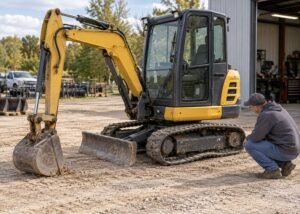
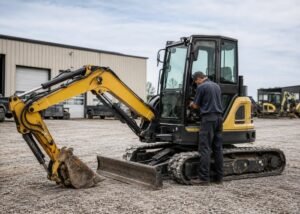
A thorough daily pre-operation inspection should take 10-15 minutes. This covers walk-around checks, fluid levels, hydraulic inspection, undercarriage review, boom-stick-bucket examination, cab safety items, and operational function tests. OSHA requires pre-shift inspections for all construction equipment under 29 CFR 1926.20 and 1926.600, performed by a competent person.
Furthermore, inadequate equipment inspection documentation remains the most common finding on construction safety audits. OSHA fines start at $16,550 per serious violation and reach $165,514 for willful or repeated offenses. Daily inspections catch hydraulic leaks before they become boom failures, track wear before it becomes a thrown track, and electrical issues before they strand your machine.
When selecting the best 3.5 ton excavator, consider your project type and scope first. For small residential projects such as digging trenches or backyard work, a 3.5 ton mini excavator provides ideal maneuverability. Ground conditions matter equally. The weight of the machine relates directly to ground pressure it exerts. On delicate or soft soils, lighter machines work better without causing damage.
Reach and depth requirements determine your machine’s suitability. Besides basic digging, evaluate whether you need extended reach for lifting or deeper excavation capabilities.
All operators must wear necessary PPE when using a 3.5 ton mini excavator:
Each piece provides protection from specific hazards while minimizing injuries if accidents occur.
At the heart of stability sits the center of gravity, the point where the machine’s entire weight balances. When this point stays low and centered, the machine remains stable. Compact excavators should never travel across slopes steeper than 25 degrees. Working on slopes requires slow movement with the blade facing downhill and positioned close to the ground.
New elongated undercarriage designs improve weight balance by providing longer contact between tracks and ground. The adjusted center of gravity reduces the rocking chair effect other compact excavators create. In essence, track width directly affects over-the-side stability, especially with minimal or zero tail swing designs.
Your 3.5 ton excavator uses either ISO or SAE control patterns. ISO controls, the most common setup, assign the right-hand lever to boom and bucket functions, while the left-hand lever manages the dipper (stick) and swing. Pulling the right joystick toward you raises the boom; pushing away lowers it. Moving left curls the bucket in, moving right dumps materials.
SAE controls swap these assignments. The left joystick controls boom and swing, while the right joystick operates the dipper and bucket. Both patterns use the left joystick for swing functions. Check your machine’s control card to identify which pattern your 3.5 ton mini excavator uses.
Two track pedals, one for each track, control forward and backward movement. Pushing both pedals forward moves your 3.5 ton mini excavator forward; pulling both back reverses it. Operating one pedal independently creates turns. Some models include a boom swing pedal on the right side, allowing the boom to swing independently of the cab for precise positioning near obstacles.
Smooth operation requires combining multiple controls simultaneously. For instance, lower the boom while extending the stick and curling the bucket to scoop efficiently. Start by practicing each movement separately, then gradually combine them. Avoid jerking the joysticks, as this stresses the hydraulic system and reduces precision.
Most excavators offer different travel speeds for various tasks. Select high-speed mode for moving between work areas and low-speed for precise operations. Square your cab to the tracks before traveling to maintain clear orientation.
Operating in confined areas demands controlled speed and careful path planning. Maintain safe distances from surrounding objects and avoid sharp turns. Control your excavator’s speed deliberately, using the boom swing pedal to work near walls without repositioning the entire machine.
Position your 3.5 ton excavator to dig front or rear, then dump sideways. This setup allows trucks or spoil piles close to your sides, reducing fuel consumption. Place spoil piles at least 2 feet from trench edges per OSHA requirements. For loading trucks, position them on your left side, cab-to-cab, with the truck bed headboard aligned to your excavator’s rear cab.
The optimal digging range starts 35 to 45 degrees from vertical back to vertical position. When trenching, work from the top downward in layers, not bottom-up. Keep your bucket loaded by the time your stick returns to vertical. Move the undercarriage forward between passes to maintain this efficient angle.
Never exceed 75% of your excavator’s maximum lifting capacity. Position your 3.5 ton mini excavator on firm, level ground before lifting. Keep loads close to the machine, extending only when placing. Always lift over the idler end of tracks for maximum stability.
Most compact excavators safely operate on slopes up to 30 degrees. Travel with track ends facing uphill, never diagonally. Keep the boom low when moving across inclines. For digging, work from the top downward using benching techniques.
Call your local One Call System at least 48 hours before digging to mark underground utilities. Maintain an 18 to 36-inch tolerance zone around markings.
Lower the bucket to ground level, then idle the engine for 5 minutes at low throttle before shutdown. This prevents turbocharger damage and allows hydraulic systems to cool properly.
Battery problems cause approximately 60% of starting failures in excavators. Check battery voltage first, as readings below 12.4V indicate trouble. Similarly, loose connections or corroded terminals prevent proper power delivery. Overheating stems from low coolant levels, blocked radiators, or debris buildup around components. Hydraulic issues manifest as slow movement, strange sounds, or fluid leaks, often caused by contaminated systems or worn seals.
Reducing idle time saves 0.5 to 1 gallon per hour. Regular maintenance improves fuel efficiency by 5 to 10%. Using eco mode optimizes engine RPM, reducing consumption by 15 to 20% without sacrificing productivity. Fresh oil reduces engine friction, while clean air filters ensure proper combustion.
Position bucket cylinders and linkage at 90-degree angles for maximum digging force. Maintain bucket floor angles at approximately 30 degrees when digging ground surfaces. Start digging at 80% of arm operating radius rather than full extension. Optimize swing angles between 30 to 45 degrees during loading operations.
Red warning lights signal critical failures requiring immediate shutdown. Engine oil pressure warnings indicate lubrication problems that cause catastrophic damage within minutes. Yellow lights serve as pre-warnings, allowing continued operation while requiring attention. Monitor coolant temperature, hydraulic pressure, and fuel levels through dashboard indicators.
You now have all the knowledge needed to operate your 3.5 ton excavator safely and efficiently. Start with thorough pre-operation checks, master the basic controls, and practice proper techniques before tackling complex projects.
Remember, consistency in maintenance and adherence to safety protocols will extend your machine’s lifespan while keeping you protected. Keep practicing these fundamentals, and your confidence and productivity will improve with each operating hour.
Q1. What are the two main control patterns for excavators and how do they differ?
Excavators use either ISO or SAE control patterns. In ISO mode, the right joystick controls the boom and bucket, while the left joystick manages the stick and swing. SAE mode reverses these assignments, with the left joystick controlling the boom and swing, and the right joystick operating the stick and bucket. It’s recommended to learn and stick with one pattern consistently.
Q2. Is operating an excavator difficult for beginners?
Operating an excavator isn’t inherently difficult as long as you receive proper training and maintain careful attention to your work. Like any skill, it requires practice to perform efficiently and safely. Starting with basic movements and gradually progressing to more complex operations will help build confidence and competence.
Q3. Why is it dangerous to load an excavator bucket at a 90-degree angle across the tracks?
Loading at a 90-degree angle across the tracks is extremely hazardous because it can cause the machine to rock and potentially flip over, particularly when working on inclines. This positioning creates instability that can lead to serious accidents. Always position your excavator to dig front or rear and dump sideways for maximum stability.
Q4. What should you do before shutting down your excavator?
Before shutting down, lower the bucket to ground level and let the engine idle for 5 minutes at low throttle. This cooling period prevents turbocharger damage and allows the hydraulic systems to cool properly, protecting your equipment from premature wear.
Q5. How can you maximize fuel efficiency when operating an excavator?
Reduce idle time to save 0.5 to 1 gallon per hour, and use eco mode to optimize engine RPM, which can reduce fuel consumption by 15 to 20%. Regular maintenance improves efficiency by 5 to 10%, while keeping oil fresh and air filters clean ensures proper engine performance and combustion.