Telephone/WhatsApp:+86 156 2656 0610

Telephone/WhatsApp:+86 156 2656 0610
Email:info@seekmach.com

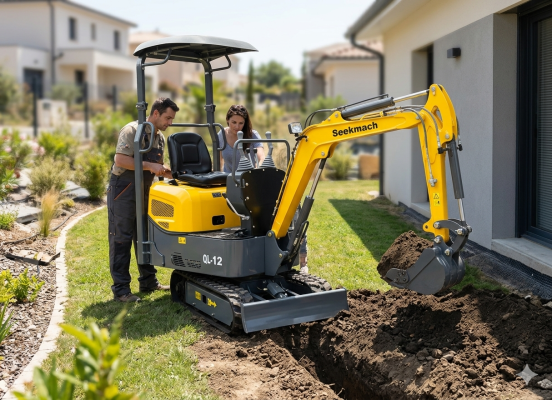

There is a particular frustration that comes with a machine faltering mid-task, its power diminishing precisely when you need it most. If your mini excavator has been struggling to start, emitting dark exhaust, or consuming fuel at an alarming rate, the culprit is often far simpler than you might expect. Knowing how to change the engine air filter on a mini excavator is one of the most valuable maintenance skills an operator can possess. According to newdiggerforsale.com, a clogged air filter can increase fuel consumption by as much as 10 to 20 percent, placing unnecessary strain on both your engine and your operating budget. As AHM Corp notes, neglecting this single component can lead to reduced power, difficult starts, and long-term internal engine damage. This guide will walk you through every essential detail, from recognizing the warning signs to executing a precise, confident replacement.
Consistent mini excavator engine maintenance begins with understanding what the air filter actually does. This component is the first line of defense for your engine, ensuring that only clean, unobstructed air reaches the combustion chamber. When that defense is compromised, every subsequent system suffers.
A clogged filter restricts the volume of air available for combustion. As AHM Corp explains, this restriction directly diminishes engine output, leaving you with a machine that feels sluggish and unresponsive. On a demanding job site, that loss of power is not a minor inconvenience. It is a meaningful productivity setback.
When airflow is limited, your engine compensates by working harder, consuming more fuel to produce the same result. According to newdiggerforsale.com, this inefficiency can translate to a 10 to 20 percent increase in fuel consumption. Over weeks and months of operation, that figure compounds into a significant and entirely avoidable expense.
Beyond performance and economy, there is a more serious consequence to consider. When filtration fails entirely, fine particulates of dust and debris bypass the filter and enter the engine’s internal components. AHM Corp cautions that this ingress causes progressive wear and tear, the kind that leads to costly repairs or premature engine failure. Preventive care is always more economical than corrective action.
Key Takeaway: A clean air filter protects your engine’s power, fuel economy, and long-term mechanical integrity. It is a small component with a disproportionately large influence on overall machine health.
Attentive operators learn to read their machines with a discerning eye. The signs of a clogged air filter are rarely subtle once you know what to observe. Identifying these indicators early allows you to intervene before minor degradation becomes serious damage.
The most immediate symptom is a noticeable reduction in power during operation. If your machine feels less responsive under load, or if tasks that once felt effortless now seem labored, the air filter deserves your attention first. As americanexcavator.org notes, declining engine performance is a clear signal that maintenance is overdue.
Black smoke from the exhaust is a particularly telling sign. According to newdiggerforsale.com, black smoke occurs when a rich fuel-air mixture forms because insufficient air is entering the combustion chamber. The engine burns excess fuel, and that incomplete combustion exits as dark, visible exhaust. This symptom also raises concerns about exceeding emissions standards.
A restricted air supply disrupts the consistency of the fuel-air mixture, which in turn produces an uneven, erratic idle. As newdiggerforsale.com explains, a heavily blocked filter prevents the engine from maintaining a steady idling speed. Hard starts, where the engine turns over reluctantly or fails to catch on the first attempt, are another dependable indicator that the filter requires immediate attention.
Dica profissional: If you notice a fine layer of dust coating the exterior of your air filter housing, inspect the filter element itself without delay. Surface dust accumulation often signals a filter that has reached its service limit.
Preparation is the foundation of any well-executed maintenance task. Gathering the correct air filter replacement tools for your mini excavator before you begin ensures the process remains smooth, precise, and free from unnecessary delays.
The most critical material you need is a compatible replacement filter. Different excavator models use different engines, each requiring a specific filter. For example, the HT-15/AX-15 uses a 13.8 HP Kubota D722 engine, while the HT-16/AX-16 uses a 23 HP Briggs & Stratton Vanguard 3864 engine. Confirm your engine model before ordering. Americanexcavator.org recommends Donaldson e Wix as reliable brands for quality and fit.
One of the more reassuring aspects of this task is its accessibility. According to AHM Corp, most mini excavator air filter replacements require no specialized tools whatsoever. Depending on your model, you may need only your hands to release clip mechanisms. For models with bolted housings, a basic socket wrench set ou flathead screwdriver is sufficient. Safety gloves and protective goggles are strongly advisable.
Before installation, take a deliberate moment to compare your new filter against the old one. As Fortis HD’s mechanic guide advises, you should verify that the lengths, diameters, and sealing surfaces are identical. A mismatched filter that fails to seal properly will allow unfiltered air to bypass the element entirely, introducing contaminants directly into the engine and causing severe internal damage over time.
| Check Point | What to Verify |
|---|---|
| Filter Length | New and old filters must match exactly |
| Diameter | Outer and inner dimensions must align |
| Sealing Surface | Gasket or seal must sit flush and uniform |
| Engine Compatibility | Confirm against your excavator’s engine model |
With your materials confirmed and your workspace prepared, you are ready to execute the replacement. This walkthrough draws from the John Deere 35G procedure documented by mechanic Keith on the Tekamo HD YouTube channel, as detailed by Fortis HD, alongside guidance from AHM Corp and newdiggerforsale.com.
Begin by parking your mini excavator on a flat, stable surface. Switch off the engine, remove the key, and allow the engine to cool completely before proceeding. Lift the operator’s seat to access the engine compartment. The air filter is housed inside a dedicated canister located within the engine bay. Its precise position will vary slightly by model, but it is generally prominent and accessible without obstruction.
Once you have located the canister, undo the two clips holding the housing cap in place and carefully remove it. Inside, you will find two filters, one nested within the other. As Fortis HD describes, simply wiggle and pull to release them. For Briggs & Stratton 25T2 engines, rotate the lid counterclockwise. For Kubota D722 e Briggs & Stratton Vanguard 3864 engines, press the release lock to disengage the cap.
With the housing empty, wipe away any accumulated dust and debris from the interior surfaces using a clean cloth. Take your inner replacement filter, align it carefully with the housing, and push it in gently. Then fit the outer filter using the same deliberate approach. As the Fortis HD mechanic guide recommends, apply a slight twist while pushing to seat the outer filter firmly and ensure a complete, airtight seal.
This final detail is critical and frequently overlooked. When reattaching the housing cap, orient it so that the dust valve points downward. According to Fortis HD, this valve serves as the escape route for particles that shake free from the primary filter during engine operation. If the valve faces upward, debris accumulates inside the housing rather than being expelled. Secure the clips, start the engine, and allow it to idle briefly to confirm smooth, consistent operation.
Understanding the correct mini excavator air filter service interval is as important as knowing the replacement procedure itself. Adhering to a disciplined schedule protects your investment and eliminates the guesswork that leads to deferred, costly repairs.
The first tier of air filter care involves regular cleaning rather than full replacement. Both AHM Corp and newdiggerforsale.com specify that the air filter element should be cleaned at every 100 hours of operation. This interval keeps the filter functioning within acceptable parameters between full replacements and prevents the gradual buildup that reduces airflow over time.
Full replacement should occur at every 400 hours of operation, or sooner if operating conditions demand it. Fortis HD’s documentation of the John Deere 35G places air filter replacement within the 500-hour periodic maintenance task framework, alongside other essential service work. Always defer to your specific manufacturer’s guidelines, as service intervals vary between engine models such as the Kubota D722 e Briggs & Stratton variants.
Standard intervals assume moderate operating conditions. If your machine works consistently in dusty quarries, demolition sites, or dry agricultural environments, both AHM Corp and newdiggerforsale.com recommend shortening your service intervals considerably. In such environments, inspect the filter at every 50 hours and be prepared to replace it well before the 400-hour mark.
Key Takeaway: A structured maintenance schedule, adapted to your actual working conditions, is far more effective than rigid adherence to generic intervals. Let the environment guide your frequency.
| Service Task | Standard Interval | Demanding Conditions |
|---|---|---|
| Filter Inspection | A cada 100 horas | Every 50 hours |
| Filter Cleaning | A cada 100 horas | Every 50 hours |
| Full Replacement | Every 400 hours | Before 400 hours |
| Housing Wipe-Down | At each replacement | At each replacement |
The benefits of regular air filter changes for your escavadora extend well beyond the immediate task at hand. Each timely replacement is an investment in performance, efficiency, and the sustained working life of a machine that represents considerable capital.
A fresh filter restores the engine’s access to clean, unrestricted airflow, allowing it to burn fuel precisely and efficiently. The fuel economy gains are measurable. Given that a blocked filter can degrade consumption by 10 to 20 percent as documented by newdiggerforsale.com, a timely replacement effectively returns that margin to your operational budget. Over a full season of work, this is a meaningful financial recovery.
Preventive maintenance is the discipline that separates machines that endure from those that deteriorate prematurely. Americanexcavator.org emphasizes that consistent air filter care directly extends equipment lifespan. A mini excavator that receives attentive, scheduled maintenance operates with less internal stress, fewer unplanned breakdowns, and a significantly longer service horizon than one left to work through degraded filtration.
Every particle of dust or debris that the air filter captures is one that does not reach your engine’s cylinders, pistons, or valves. AHM Corp notes that over time, contamination entering through a failing filter causes wear that accumulates silently until it manifests as expensive mechanical failure. Maintaining clean air intake is, in essence, maintaining the integrity of every internal component that depends on that air.

Mastering how to change the engine air filter on a mini excavator is one of the simplest and most rewarding maintenance skills available to any operator. You began this guide understanding the frustration of a machine working below its potential. Now you possess the knowledge to ensure that never becomes your experience again. Begin by identifying your engine model, whether a Kubota D722, Briggs & Stratton 25T2, or Vanguard 3864, and source a compatible replacement filter. Establish your cleaning schedule at every 100 hours and your full replacement interval at 400 hours, adjusting sooner for demanding environments. Follow the step-by-step process with care, particularly the detail of orienting the dust valve downward upon reassembly. Do not attempt to address every maintenance task simultaneously. Start with the air filter. It is the most accessible intervention with the most immediate return. Your machine, your fuel budget, and your schedule will all reflect the investment.
For most miniescavadeiras, you should clean the air filter every 100 hours of operation and perform a full replacement every 400 hours. If your machine operates in dusty or high-debris environments, such as demolition or dry earthworks sites, inspect and service the filter more frequently, potentially as often as every 50 hours, to prevent airflow restriction and engine strain.
Operating with a clogged filter leads to a cascade of problems. Fuel consumption can increase by 10 to 20 percent, engine power declines noticeably, and hard starts become common. Over time, if the filter fails entirely, fine debris enters the engine and causes internal wear that can result in costly mechanical repairs or premature engine failure.
In most cases, no specialized tools are required. Models with Briggs & Stratton 25T2, Kubota D722, and Vanguard 3864 engines use simple clip or twist-release housings that can be operated by hand. For models with bolted housings, a basic socket wrench or flathead screwdriver is sufficient. Always wear safety gloves and protective eyewear during the process.
Before installation, compare the new filter against the old one directly. Verify that the length, outer diameter, and sealing surfaces are identical. If these dimensions do not match precisely, the filter will not seal properly, allowing unfiltered air to bypass the element and enter the engine. When in doubt, consult your manufacturer’s parts guide or contact your equipment supplier for confirmation.