Telephone/WhatsApp:+86 156 2656 0610

Telephone/WhatsApp:+86 156 2656 0610
Email:info@seekmach.com

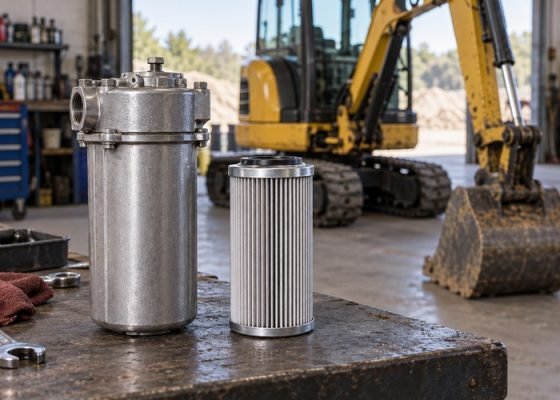
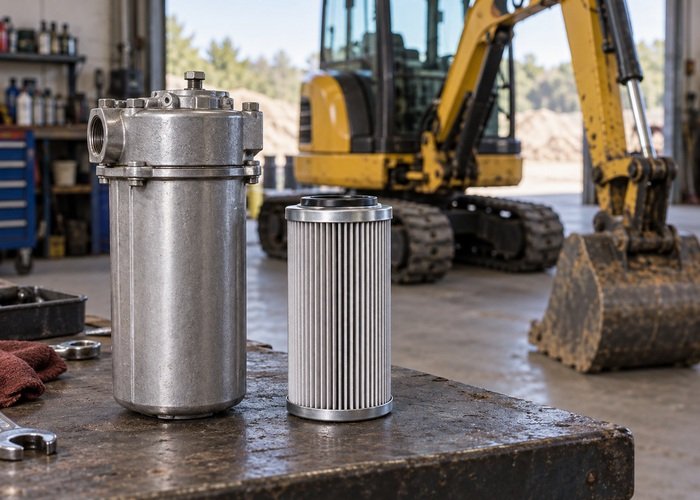
Plan mini excavator hydraulic filter replacement by identifying the fitted filter, interpreting any warning according to the exact manual and confirming the approved replacement element. Match more than the thread or external dimensions. Filtration performance, pressure class, seals and bypass arrangement can matter. A restriction indicator is a service signal to interpret, not permission to bypass the filter or assume that every hydraulic problem is caused by it.
This guide supports an owner preparing a maintenance or parts request. It does not provide an unsupervised filter-changing procedure, a universal pressure threshold or an interval for every excavator. Safe isolation, access, replacement and return-to-service checks must follow the machine and filter-assembly instructions.
Use the machine’s hydraulic diagram, parts list and service instructions to identify the relevant component. A return-line element, suction strainer, pressure filter and reservoir breather perform different roles. Do not identify one only because it resembles a filter changed on another machine.
Record the machine model and serial number, assembly reference and element number. Include a photograph of the housing and any accessible identification plate. Some information belongs to the filter head or housing rather than the removable element, so collect both where available.
Donaldson’s hydraulic assembly information shows that filter assemblies have different designs and configurations. It provides technical context, not proof that a particular assembly is fitted to a SeekMach model. The installed equipment documentation remains the identification source.
Photograph the display, indicator or warning text and record when it appeared. Distinguish a filter restriction indication from an oil-level, temperature or other hydraulic warning. An unfamiliar symbol should be identified from the correct manual rather than interpreted from its colour alone.
Record the operating condition, including whether the indication occurred at startup, during normal work or after recent service. Do not create a test by loading the machine or increasing engine speed to force the warning to recur. The service provider should determine which controlled checks are appropriate.
Donaldson’s hydraulic accessories overview illustrates mechanical and other monitoring options. Their settings and behaviour are assembly-specific. A supplier’s indicator example does not establish the meaning or threshold of a warning on your machine.
| Reported condition | Useful record | Decision to request |
|---|---|---|
| Indication at cold startup | Conditions, duration and the manual’s required response | Interpretation under the specified inspection conditions |
| Persistent indication during approved operating checks | Exact warning and recent filter history | Service assessment and replacement decision |
| Warning after a filter change | Installed part, assembly and work record | Review of fit, installation and unresolved system conditions |
| Low performance without a filter warning | Affected function and operating pattern | Broader diagnosis rather than assumed filter failure |
| Leakage at the housing | Safe photographs and recent service | Isolation and qualified assessment |
A bypass arrangement may protect flow under specified conditions, but it does not make an overdue or incorrect element acceptable. Donaldson’s hydraulic filter replacement guidance describes bypass operation and the importance of matching the original design, including where the bypass is located. Use that guidance to ask the right procurement questions.
Do not assume that an illuminated indicator proves the system is continuously bypassing. The relationship between an indicator and bypass depends on the installed design and settings. Have the technician interpret the actual assembly instead of converting a generic explanation into a diagnosis.
Never defeat, block or alter a bypass or warning device to keep the excavator working. If the correct element is unavailable, request an approved alternative or keep the equipment out of the affected duty until the service decision is resolved. A physically fitting substitute is not sufficient evidence.
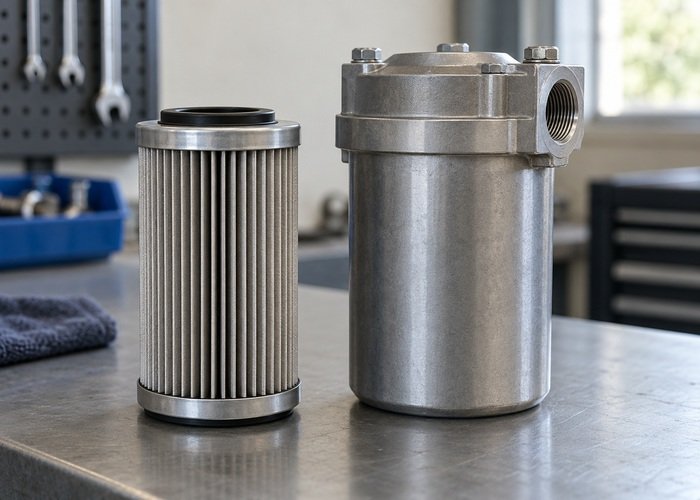
Send the confirmed original reference and assembly identification to the supplier. Ask it to verify the required filtration performance, working-pressure class, flow suitability, seal materials and bypass arrangement against the equipment requirements. Keep the answer attached to the quotation.
A micron number alone can be misleading without its stated efficiency and test basis. Ask what the quoted performance means and whether it meets the original specification. Avoid selecting the smallest advertised number on the assumption that finer always means suitable for the circuit.
Confirm which components are replaced and which remain in the assembly. A cartridge, seal kit and complete housing are different items. Ask whether any seals or additional parts are supplied separately and whether they must be renewed during the specified service.
IL mini excavator parts ordering guide explains how serial numbers and clear references support accurate enquiries. For a SeekMach request, include the installed filter assembly rather than assuming the machine’s marketing name uniquely identifies every service part.
Read the full service procedure and organise the required clean workspace, tools, replacement parts and collection equipment. Identify how the machine is isolated and how stored pressure is controlled. A stopped engine is not proof that every part of the hydraulic system is safe to open.
Keep exposed openings protected by the approved method while the service is performed. Do not leave replacement elements uncovered in a dirty work area. Packaging should be checked for damage and parts identity before the element is accepted into the job.
Avoid improvised cleaning methods or unapproved fluid used to wash a housing. The service provider should follow the assembly instructions, including how removed material is examined and disposed of. Clean handling is part of the job plan, not an optional step after the new filter has been fitted.
Do not approach suspected pressurised leakage with a hand. HSE’s hydraulic injection alert describes the risk of fluid entering skin and the need for urgent professional medical attention if injection is suspected. The fluid type does not remove the pressure hazard.
If removed components show unusual material, have the technician record it using the approved examination method. Keep the element associated with the machine and service date if further investigation is required. A photograph of debris does not establish its source or prove which component failed.
Do not cut open an element casually on site or reuse a damaged housing. Ask what laboratory, inspection or service action is appropriate. Preserve evidence without exposing people to fluid, sharp material or contamination risks.
Replacing a filter may be required maintenance, but it does not automatically resolve a contamination source, overheating condition or poor hydraulic performance. Record those symptoms separately and request the appropriate diagnostic review. The job report should explain which question was answered by the replacement.
IL hydraulic oil analysis guide focuses on repeatable samples and interpreting trends. A filter examination and an oil report can provide complementary information when the service provider specifies the method. Neither should be treated as a complete diagnosis in isolation.
Tell the laboratory about recent changes, including filter replacement, oil top-up or a fluid conversion. Those events can affect the context of a result. Keep the sampling record tied to the same machine identification used for the filter job.
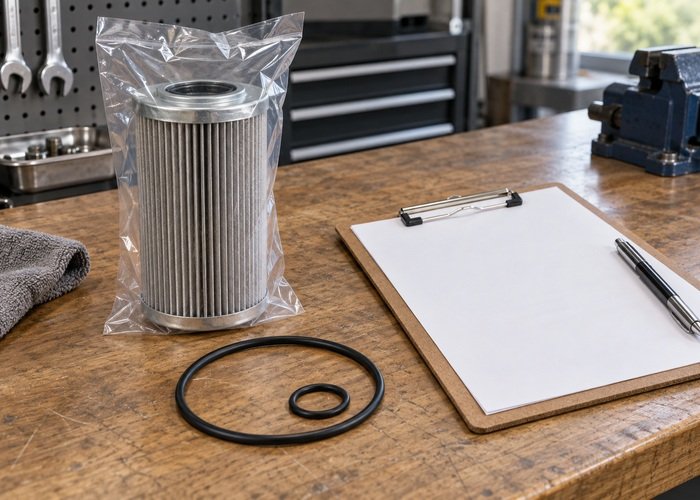
The service record should identify the installed element, assembly, seals, date and hour-meter reading. Note the procedure used and who performed the work. Record any warning interpretation or unresolved condition rather than marking the entire hydraulic system healthy merely because a part was changed.
Have the qualified provider complete the specified checks before return to service. These may differ between assemblies and machines, so do not substitute a generic leak check or an owner-created operating test. Record any remaining restriction and the person who authorised release.
Include the required inspection in the mini excavator maintenance checklist, while keeping the actual interval and method controlled by the machine instructions. A general checklist organises attention; it does not set an undocumented service schedule.
Keep confirmed part references with the machine’s service history and maintain separate stock for different assemblies. Where a supplier proposes a superseded part, request the documented replacement relationship and any associated changes. Do not rely on an old handwritten cross-reference indefinitely.
Review recurring warnings before simply increasing the stock of replacement elements. Repeated service may indicate an unresolved condition, an incorrect match or another issue that needs assessment. A reliable parts plan includes the information needed to identify the correct item and recognise when replacement alone is insufficient.
No. Verify the complete performance and assembly requirements, including seals and bypass arrangement, against the approved specification.
No universal interpretation applies. Follow the exact manual’s response and have the indication assessed under its specified conditions.
Follow the assembly’s procedure and required checks. A cleared indication alone does not prove that an unresolved problem has been corrected.
It cannot be assumed. Record those symptoms separately and obtain the appropriate diagnosis rather than using replacement as proof of the cause.