Telephone/WhatsApp:+86 156 2656 0610
Telephone/WhatsApp:+86 156 2656 0610
Email:info@seekmach.com

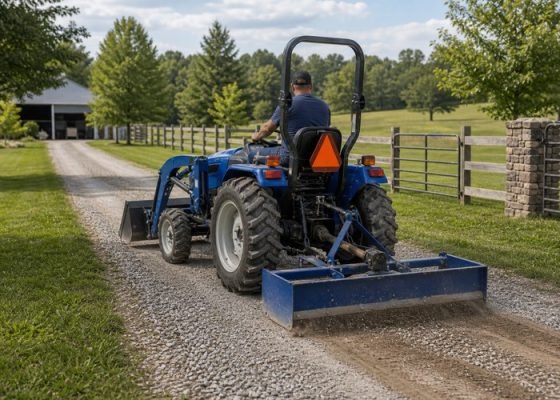
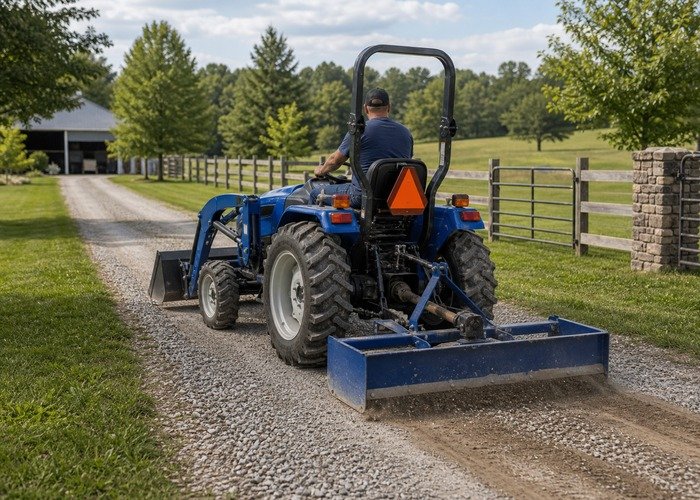
Box blade vs land plane is a practical decision for any owner using a tractor on a gravel driveway. Both tools can improve a lane, but they solve different problems. A box blade cuts, carries, and reshapes material; a land plane is better at smoothing, blending, and maintaining an existing surface. If you are choosing implements through the SeekMach tractor category, start with the driveway problem rather than the tool name.
A long rural lane with potholes, washboard, a weak crown, and shoulders that trap water needs more than one quick pass. Gravel driveways fail when water sits in the wheel tracks, traffic pushes material to the edges, or the surface gets sealed into hard ridges. The right implement helps, but the operator still has to work with moisture, speed, top link angle, scarifier depth, and where the loosened material will move.
Good gravel maintenance is not just cosmetic. Road agencies and rural maintenance guides consistently point back to drainage, crown, and regular reshaping. The FHWA gravel road maintenance guidance is a useful reference because it treats gravel roads as water-management systems, not just loose stone surfaces.
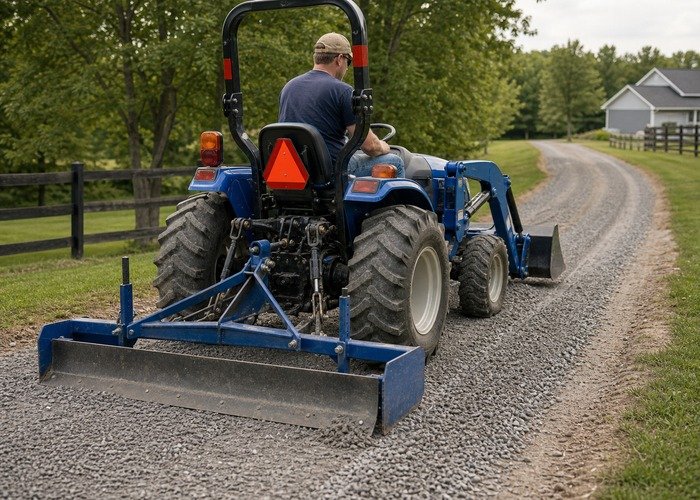
A box blade has side plates and often scarifiers. It can cut high spots, loosen packed gravel, drag material forward, and help fill potholes. It is useful when the driveway has a shape problem, not just a surface texture problem. The operator can shorten or lengthen the top link to change how aggressively the blade cuts. Scarifiers can break hard washboard or loosen a pothole before new material is pulled in.
A land plane usually has two blades set inside a frame. It rides over the surface and redistributes loose material without carrying a large pile like a box blade. That makes it forgiving for routine maintenance. For owners comparing several property machines through the SeekMach product overview, the land plane is often the maintenance tool, while the box blade is the repair and reshaping tool. Review safe tractor operation with Penn State Extension tractor safety resources before working near slopes, ditches, or traffic.
| Field condition | What to check | Better decision |
| — | — | — |
| Fresh potholes | Is the bottom loosened? | Scarify and fill with a box blade |
| Light washboard | Is loose gravel available? | Land plane in repeated light passes |
| Lost crown | Is water staying in wheel tracks? | Box blade to reshape, land plane to finish |
| Loose new gravel | Is material piled unevenly? | Land plane to blend without overcutting |
| Shoulder buildup | Is water trapped at the edge? | Box blade or rear blade to pull material inward |
| Hard packed lane | Can scarifiers penetrate? | Moisten if needed and cut lightly |
A smooth driveway that holds water will fail again. Crown lets water move to the sides instead of sitting in wheel tracks. The amount of crown depends on driveway width, material, traffic, and local conditions, but the principle is simple: the center should not become a flat trough. Before grading, walk after a rain and mark where water sits. Those low spots guide the first passes.
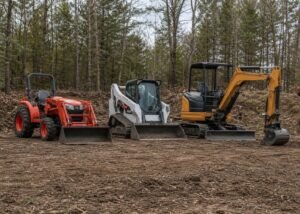
IL tractor application solutions page is useful when driveway work is part of a larger rural-property plan. A tractor may grade the lane, a skid steer may move piles, and an excavator may repair drainage. The University of Minnesota farm machinery resources also helps frame implement work as part of machine setup, not just dragging steel down the road.
Start with light cuts. Beginners often drop the box blade too aggressively, fill it with material, and create waves. Shorten the top link when you need the front blade to bite; lengthen it when you want a smoother drag. Use scarifiers only deep enough to loosen the problem. If potholes are not broken at the bottom, they can reappear because loose gravel simply bridges over the compacted bowl.
Use low gear or a controlled hydrostatic speed, keep people away from the implement, and avoid sudden backing near ditches or buildings. The OSHA agricultural operations guidance is a good reminder that routine agricultural and property equipment work still needs deliberate controls.
A land plane works best when the surface has loose material to redistribute. Make multiple light passes instead of one heavy pass. Travel in the same direction at first, then cross or offset passes if the driveway is wide enough. Watch the rear edge of the tool. If it starts carrying too much gravel, raise slightly or slow down. If it does nothing, the lane may be too hard or too dry.
If your work turns from driveway smoothing into frequent bulk material handling, compare the tractor plan with the SeekMach skid steer loader category. A loader-focused machine may be more efficient for short cycle loading, while the tractor remains valuable for long steady implement passes.
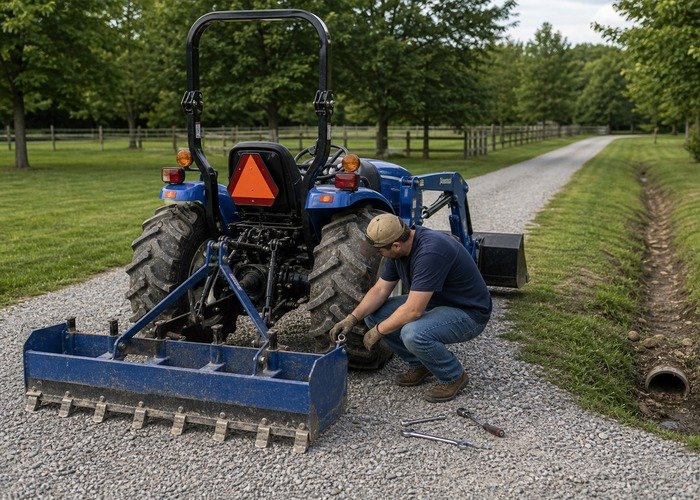
A tractor implement can reshape the surface, but it cannot fix every drainage issue. If water is coming from a blocked ditch, a collapsed culvert, or a low yard edge, grading the top may only hide the problem. In those cases, a compact excavator can open or repair drainage before the driveway is finished. The right sequence is drainage, base support, crown, then routine smoothing.
Use the SeekMach excavator category when trenching, ditch work, or culvert cleanup becomes part of the project. When equipment must be hauled, review Federal cargo securement rules and include implement, loader, ballast, and fuel in the transport plan.
On a neglected lane, begin with the box blade to loosen potholes and pull shoulder material back inward. Do not chase a perfect finish on the first pass. Once the surface is loose and shaped, switch to the land plane for blending. After the next rain, inspect water flow. If puddles remain, the driveway is telling you where the next correction belongs.
For properties with mixed needs, connect driveway work to the broader SeekMach application solutions. The same tractor may maintain the lane, move a trailer, and support mowing, but drainage and material handling may still need other machines.
It is better for cutting, loosening, and reshaping. A land plane is often better for routine smoothing and blending when the driveway already has a reasonable shape.
It can help with shallow surface problems, but deeper potholes should be opened and filled from the bottom. Otherwise the pothole may come back quickly.
Grade when water starts sitting, washboard becomes noticeable, or loose material migrates to the edges. Light maintenance before severe damage is easier than major repair.
If the driveway has lost material or the base is exposed, grading alone may not be enough. Add suitable gravel only after drainage and shape are addressed.
A loader bucket can move gravel, but it is not the best finishing tool for a long lane. Box blades and land planes give more consistent driveway control.
One detail that separates good box blade vs land plane work from rough scraping is patience with the first pass. The first pass should show what the driveway will allow. If the tool fills too quickly, the surface is either too loose, the top link is too aggressive, or the operator is trying to move more material than the tractor can control cleanly. A slow correction at this point saves the rest of the job.
Material should not be pulled endlessly from one problem spot to another. If the driveway is thin, exposed, or full of fines, the tool may make it look better for a few days while leaving the base weaker. A practical test is to look at the color and size of the material being moved. If mostly dust and dirt are being pulled, reshaping alone will not replace missing stone.
Ballast also matters. A tractor that feels light in front with a rear implement can steer poorly, especially near ditches or on a crowned lane. Before long driveway passes, check loader position, rear implement pins, tire pressure, and whether the tractor feels settled. Smooth grading is easier when the machine is balanced and predictable.
For a longer rural driveway, divide the work into zones instead of grading the whole lane the same way. The entrance, shaded low spots, steep sections, and turning areas often fail for different reasons. Treating all of them with one fixed tool angle can create a driveway that looks uniform but still drains badly.
| Work stage | What to record | Why it matters |
| — | — | — |
| First pass | Use low speed, light bite, and watch whether material rolls or digs | Prevents the implement from making waves |
| Middle passes | Move loosened gravel back toward the working crown | Keeps water from sitting in tire tracks |
| Finish pass | Raise the tool slightly and smooth without aggressive cutting | Leaves a surface that sheds water |
| After rain | Walk the lane and mark puddles before grading again | Shows whether the work solved the real drainage problem |
Most rework comes from skipping a small observation at the start. Check the surface, listen to the machine, and stop when the result changes. If the machine begins leaving ridges, clumps, crooked holes, tire marks, or uneven finish, the correct move is not always more power. Often it is a slower pass, a cleaner setup, sharper cutting edge, better moisture timing, or a different machine for that part of the job.
Think of the job as a sequence instead of a single pass. Plan where material will go, how water will move, how the operator will turn, and what the finished surface should look like from ground level. The relevant SeekMach pages, including SeekMach tractor category and SeekMach product overview, are helpful starting points because equipment choice should come from the work pattern, not from the product name alone.
The last check should happen before tools are put away. Walk the work area, look at the surface from several angles, and note what changed. If the result will be exposed to rain, traffic, or repeated use, the first inspection after real conditions is even more valuable. That feedback is what turns one finished job into a better next job.
The first mistake is treating the machine as if it can overcome the wrong conditions. Wet turf, dry hardpack, loose gravel, rocky soil, sharp debris, or poor drainage each asks for a different pace. Forcing the same setting through every condition usually creates more work. When the result changes, stop and identify the condition that changed.
The second mistake is ignoring the edge of the work area. Edges are where water collects, tires drop, tools catch, decks scalp, and attachments swing close to objects. A clean center line with damaged edges is not a good finish. Make the turn area, shoulder, outlet, fence line, or discharge path part of the original plan.
The third mistake is using the final pass to hide earlier problems. A finish pass should refine good work, not cover up poor setup. If the base is uneven, the hole is crooked, the deck is clogged, or the tire path is full of debris, the final pass will only make the problem look smoother for a short time.
A fourth mistake is skipping the operator’s pause. A useful pause takes less than a minute: lower the attachment safely, look at the last ten meters of work, inspect the pattern, and decide whether to change speed, height, angle, route, or timing. That pause is often the difference between a clean article-worthy result and a job that needs to be redone tomorrow.
Stopping early is sometimes the professional choice. If soil starts smearing, grass begins clumping heavily, gravel turns to dust, tires start spinning, or the machine feels unstable, pushing ahead can damage the surface and the equipment. A short delay, a cleaning break, a different attachment, or a second machine may protect the job.
Another reason to stop is uncertainty. If an underground mark is unclear, a slope feels uncomfortable, a hydraulic connection leaks, a blade or tooth looks damaged, or the operator cannot see the work clearly, do not continue by habit. Clear the uncertainty first. Small machines are still powerful enough to turn a small question into a large repair.
Weather also decides timing. Rain can help settle dust and reveal drainage, but wet conditions can create ruts, clumps, and smeared finish. Heat can stress turf and operators. Cold or frozen ground can make digging and grading unpredictable. The schedule should serve the result, not the other way around.
After the job, write down one thing that worked and one thing to change next time. This habit sounds small, but it builds a local playbook for your soil, lawn, driveway, yard, crew, and machine. The best equipment advice is always improved by local experience because every site has its own weak spots.
A better next job starts faster because the operator already knows the first setting to try, the area to inspect, and the mistake to avoid. Over time, that means fewer wasted passes, less surface damage, cleaner finish, and more confidence when conditions are not perfect.
Watch a practical gravel driveway grading video here: https://www.youtube.com/watch?v=Lg5oOYdvPRo. The best answer to box blade vs land plane is often both, used in the right order: cut and reshape first, then blend and maintain.