Telephone/WhatsApp:+86 156 2656 0610

Telephone/WhatsApp:+86 156 2656 0610
Email:info@seekmach.com

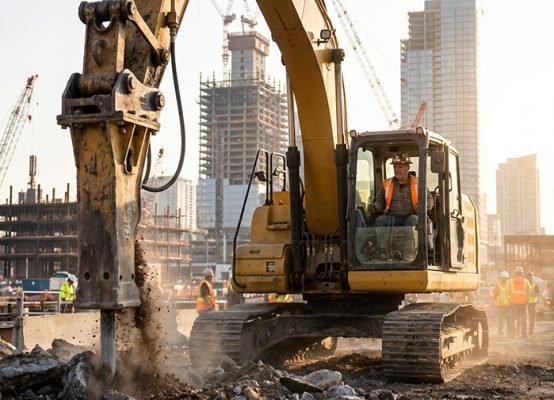
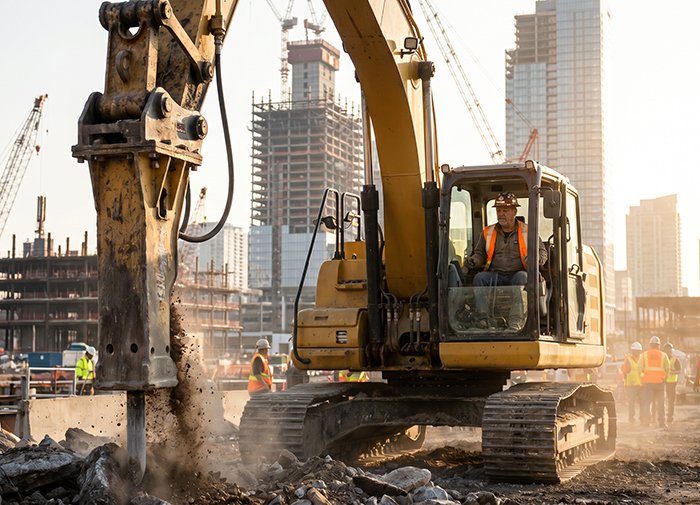
Project margins are thinner than ever. Material costs are up, labor is scarce, and site windows in dense urban corridors are shrinking by the year. Contractors who once relied on a specialized fleet for every task are now asking a harder question: what if one machine could do most of it?
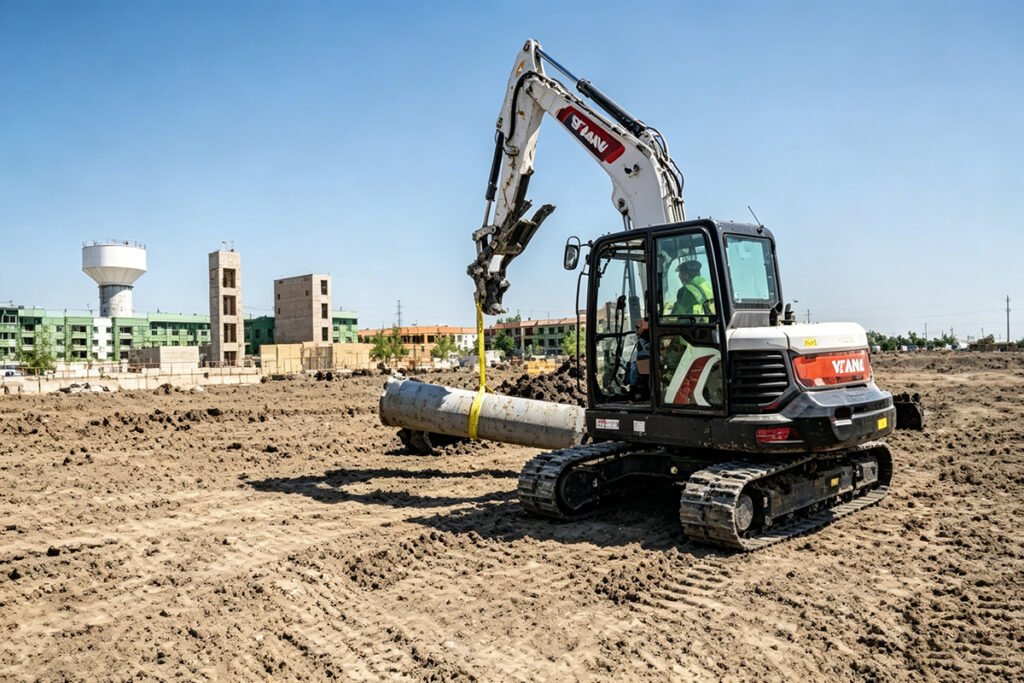
That shift in thinking is reshaping procurement decisions across the industry. Excavator versatility in urban infrastructure projects has moved from a nice-to-have feature to a core business requirement — and the numbers back it up. According to Persistence Market Research, excavators now command a 51.2% share of the global earthmoving equipment market in 2025, a dominance driven largely by their adaptability across task types and project phases.
The economic logic is straightforward. Owning or renting five purpose-built machines to complete a single municipal job ties up capital and creates logistical headaches. A single platform that accepts hydraulic attachments — from augers and compactors to grapples and tiltrotators — delivers a dramatically higher utilization rate per unit of investment. As Stefan le Roux of Wacker Neuson puts it, “compact excavators are becoming the go-to choice for operators, as a single machine with multiple attachments can handle a wide range of tasks.”
Urban density compounds the pressure further. Road closures, underground utility conflicts, and strict noise ordinances mean that machines built for tight spaces aren’t just preferable — they’re often the only legal option on site.
The result is a market-wide pivot toward compact, multi-functional tool carriers. Understanding how that plays out across a full project lifecycle — from bulk earthmoving to precision utility work — reveals just how far the modern excavator has evolved.
Municipal projects rarely follow a straight line. A single contract might demand bulk excavation on Monday, millimeter-accurate utility trenching by Wednesday, and careful grading around established tree roots before the week is out. Understanding how modern equipment handles each phase — and transitions between them — is where real project efficiency is won or lost.
The opening phase is what most people picture when they think of excavation: moving large volumes of soil quickly. Here, raw bucket capacity and breakout force matter most. The goal is establishing the site footprint as efficiently as possible, minimizing labor hours before the more demanding work begins.
This is where the spectrum gets demanding. Trenching for water mains, gas lines, and fiber-optic conduit requires tight dimensional tolerances — often within inches of existing infrastructure. Utility corridors in older cities are densely layered, meaning a careless pass can sever a live cable or crack a century-old clay pipe. The shift from bulk digging to precision work isn’t just mechanical; it’s a change in operational mindset. The right compact machine specs become critical at this stage, where tail swing and chassis width directly affect how close you can work to curbs and existing structures.
The closing phase may be the most visibility-sensitive of all. Restoration grading in urban environments demands fine motor control, not brute force. Crews are re-establishing sidewalk slopes, reseeding verges, and blending disturbed areas back into surrounding hardscape — often under public scrutiny.
Tiltrotator technology is the throughline connecting all three phases. By allowing the bucket or attachment to rotate 360° and tilt up to 45°, operators achieve complex angles without repositioning the machine. What traditionally required multiple setups now happens in a single pass. As the World Bank increasingly recognizes in development-sector procurement, multi-purpose excavator attachments for municipal engineering optimize cost per phase — a principle now driving equipment decisions far beyond emerging economies.
| Project Phase | Traditional Method | Multi-Functional Excavator Method |
|---|---|---|
| Bulk earthmoving | Dedicated large excavator + separate dozer | Single machine with high-flow bucket |
| Utility trenching | Specialized trencher + hand crew | Precision bucket or chain attachment with tiltrotator control |
| Final grading | Motor grader or hand labor | Grading blade attachment with fine hydraulic modulation |
That versatility across phases is only half the story. The other half lies in what happens when you bolt on the right tool — and that’s where the attachment ecosystem becomes the real force multiplier.
The real multiplier behind heavy machinery efficiency in earthmoving and landscaping isn’t engine size or dig depth — it’s the attachment ecosystem that transforms a single compact excavator into a purpose-built tool for whatever the job demands next. According to Persistence Market Research, the mini excavator segment under 6 metric tons is the fastest-growing category in the attachment market, expanding at a 6.4% CAGR through 2033. That growth reflects a fundamental shift: contractors aren’t buying more machines, they’re buying smarter ones.
The five attachments defining modern municipal work:
The key enabler across all of these is the quick-coupler system. A hydraulic quick-coupler allows a trained operator to swap attachments in under two minutes without leaving the cab. Understanding your machine’s auxiliary hydraulic flow is essential before investing in any attachment — hydraulic specs that drive attachment planning are often the deciding factor between a smooth swap and an incompatible mismatch.
Watch a quick-coupler change in action:
The machine that wins the next municipal contract won’t necessarily be the biggest — it’ll be the one that arrives on site already capable of doing ten different jobs.
Of course, attachment versatility only delivers full value when the machine can actually reach the work. That brings the conversation to a critical — and often underestimated — factor in dense urban environments: how and where the machine can move without damaging what’s already there.
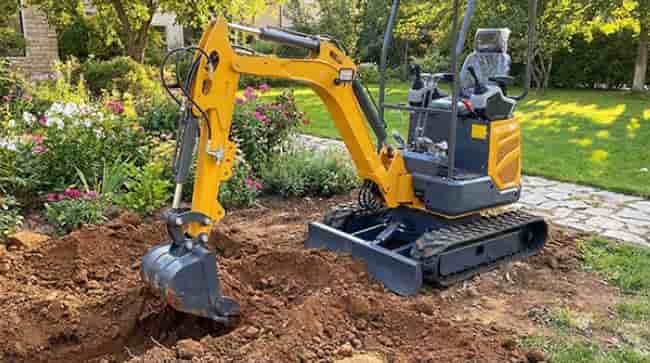
When working in finished municipal environments, ground pressure matters far more than raw horsepower. A machine that can’t cross a paved plaza without cracking it — or squeeze between a utility corridor and a heritage tree root zone — creates more problems than it solves. This is where compact excavators genuinely outshine heavier alternatives.
Compact excavators exert ground pressure as low as 3.5 to 5.0 PSI — less than the pressure of a human footprint — according to 4Rivers Equipment, making them the only realistic option for finished hardscapes, irrigated parks, and sensitive utility corridors.
That single number reframes the entire equipment selection conversation. It’s not about what a machine can dig. It’s about what it won’t destroy getting there.
Rubber tracks reinforce this advantage significantly. Unlike steel tracks, rubber distributes load evenly and won’t score asphalt, scratch decorative concrete, or damage brick pavers. In practice, a rubber-tracked compact excavator can complete utility work on a city block in the morning and leave behind a surface ready for foot traffic by afternoon — no remediation required.
Zero-tail-swing design adds another dimension. In narrow city streets, utility corridors, and gated residential entries, a machine’s rear overhang can be the deciding factor between a job that proceeds and one that stalls. Zero-tail-swing models rotate within their own footprint, allowing operators to work safely alongside parked vehicles, fencing, or live traffic lanes without repositioning barriers. Understanding how tail swing radius affects clearance in tight corridors is essential before any urban site assessment.
This is also where understanding how to use one excavator for multiple construction phases pays off practically. A compact machine that can trench, grade, and backfill without leaving the site — or damaging it — compresses timelines and reduces total equipment cost per project.
The machines that perform best in these constrained environments don’t just fit the space. They’re engineered for it. The next section examines how those engineering principles translate into real-world outcomes across diverse global projects.
Having explored how ground pressure and accessibility shape machine selection, it’s worth zooming out to see how these principles play out across real-world projects — from remote rural corridors to dense urban cores and large-scale international developments.
In developing regions, infrastructure connectivity is often the single biggest barrier to economic growth. Compact excavators have become essential tools for road-building crews working in tight mountain passes, flood-prone lowlands, and communities with no heavy haul access. What typically happens in these environments is a single versatile machine — paired with the right attachment suite — handles clearing, trenching, grading, and utility placement across a project lifecycle.
For operators working on farm-adjacent infrastructure, machines built around tight-space agility prove especially valuable, where minimizing soil disturbance while maintaining dig productivity is a daily challenge.
Modern cities are demanding more from their construction partners. Green building mandates, low-emission zones, and noise ordinances are reshaping how urban infrastructure projects are executed. Integrated tiltrotator technology for complex municipal grading is one of the clearest expressions of this shift — allowing a single machine to reposition and regrade without the repositioning passes that traditionally inflate fuel consumption and ground disturbance.
Precision attachment control reduces unnecessary machine movement, cutting fuel burn and carbon output on projects where every pass counts. As Roads & Bridges reports, technology-driven excavator platforms are increasingly central to sustainable urban construction workflows.
At the largest scale, multi-machine fleet coordination defines success. According to Jingji Daokan, large-scale overseas operations utilize multi-functional equipment to maintain “Big Synergy” — a coordinated approach where compact, mid-size, and full-size excavators operate as an integrated system rather than isolated assets. This philosophy eliminates redundancy, maximizes uptime, and keeps complex projects on schedule regardless of terrain or regulatory environment.
Still have questions about which machine fits your specific application? The next section tackles the most common decisions head-on.
How do I choose the right excavator size for both earthmoving and municipal work?
Start by mapping your most restrictive job site constraints — gate widths, weight limits, and surface sensitivity — then work outward to match machine tonnage. In practice, contractors handling mixed portfolios often find that a compact machine in the 3–6 ton range covers the widest range of tasks without sacrificing dig depth or lift capacity. If tight-access jobs dominate your workload, exploring compact options built for confined sites can help you quantify exactly what you’ll gain — or give up — by sizing down.
What are the maintenance requirements for high-flow hydraulic attachments?
High-flow systems demand consistent attention to fluid cleanliness, coupler seals, and flow-rate calibration. Contaminated hydraulic fluid is the leading cause of premature attachment failure, so monitoring filter intervals and using only manufacturer-specified fluid grades is non-negotiable. Checking auxiliary circuit pressure against OEM specs after every 250 operating hours keeps performance predictable and avoids costly mid-project downtime.
Can a mini excavator truly replace a backhoe in urban settings?
For the majority of urban utility and municipal tasks, yes — modern compact machines have closed the capability gap significantly. Reduced tail swing, lower ground pressure, and broad attachment compatibility make them genuinely competitive on jobs that once required a full-size backhoe. However, for heavy material loading or extended reach applications, a backhoe still holds a functional edge.
How does OEM customization help in specialized municipal tasks?
OEM-level customization allows contractors to spec hydraulic flow rates, boom configurations, and attachment interfaces precisely around their workflow — rather than adapting tasks to a generic machine. The right factory configuration eliminates compromise and turns a versatile machine into a purpose-built productivity tool. As technology continues reshaping excavator capabilities, investing in a machine built to your operational spec from day one delivers measurable long-term returns in efficiency and reduced retrofit costs.