Telephone/WhatsApp:+86 156 2656 0610
Telephone/WhatsApp:+86 156 2656 0610
Email:seekmach@gmail.com

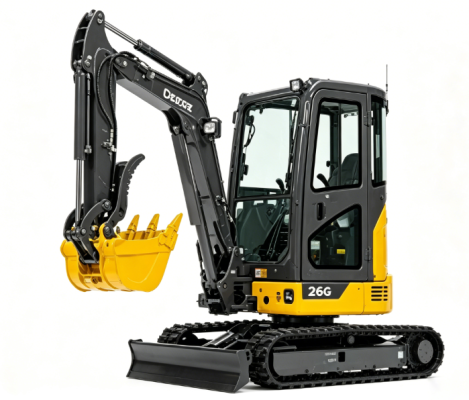
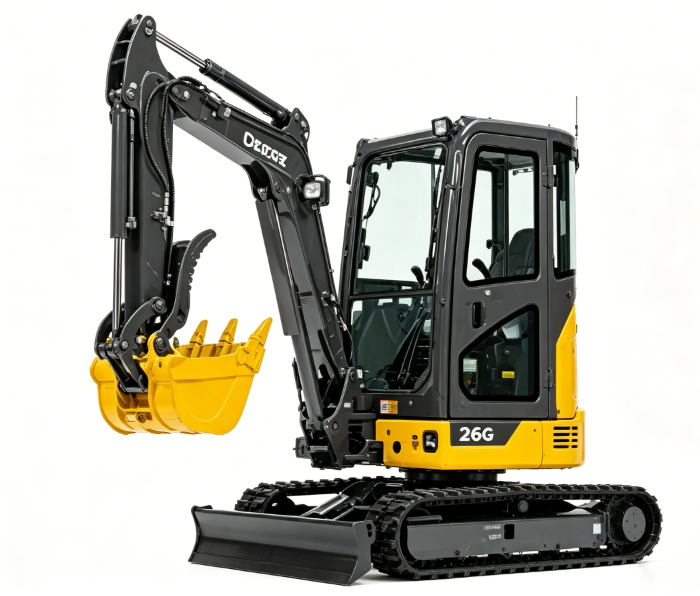
The excavator market isn’t just growing — it’s transforming. What once defined success on a job site (raw digging power, maximum machine size) is giving way to something far more sophisticated: precision, adaptability, and measurable return on every dollar invested.
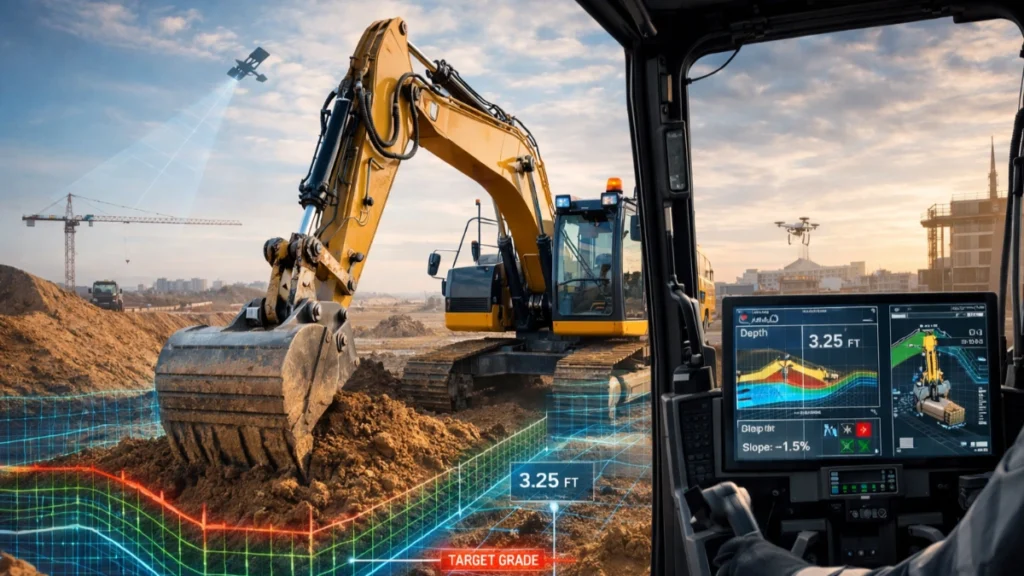
The global mini excavator market is projected to surge from $7.26 billion in 2023 to $10.32 billion by 2030, signaling that contractors aren’t simply buying more machines — they’re demanding smarter ones.
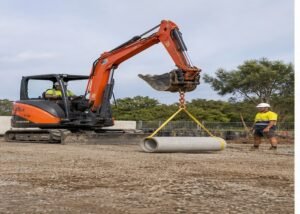
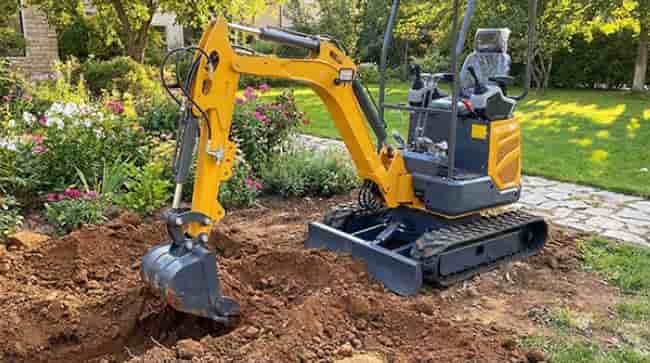
Urban infrastructure is the primary engine behind this shift. Tighter city permits, narrower trenching corridors, and noise ordinances have made the compact escavatore cingolato the go-to workhorse for municipal projects, utility upgrades, and commercial builds alike. Bigger iron simply can’t fit where modern contracts require it to go.
The result is a “Swiss Army Knife” mentality reshaping how operators evaluate equipment. A single machine is now expected to dig, break, auger, and grade — all within the same shift. Versatility isn’t a bonus feature; it’s a baseline requirement.
This pressure has forced a reckoning across the supply chain. Factory-direct engineering is rapidly closing the gap between cost and performance, delivering compact, professional-grade capability at price points that once seemed impossible. That convergence — smart design meeting accessible pricing — is exactly what the next section unpacks through the lens of hydraulic innovation.
The foundation of the 2026 excavator’s “Swiss Army Knife” identity isn’t just its physical design — it’s what’s happening inside the hydraulic circuit. According to the Association of Equipment Manufacturers, advanced hydraulic systems now allow for smart attachment recognition, automatically adjusting flow rates to prevent tool damage. That single capability is quietly rewriting the economics of machine ownership.
“The shift toward compact equipment is not just about size; it’s about the ‘Swiss Army Knife’ mentality where one machine must perform five different roles.” — Equipment World Magazine
In a modern hydraulic excavator, the control system reads incoming attachment signals and calibrates output pressure and flow accordingly — without operator input. A hydraulic breaker demands high-frequency, controlled bursts. An auger requires steady rotational torque. A grading bucket needs smooth, variable response. Getting any of these wrong wastes energy, accelerates wear, and can void equipment warranties.
Attachments that benefit from smart flow management typically include:
What operators gain most is time on task. Eliminating manual recalibration between attachment swaps can recover 20–40 minutes per shift — compounding significantly across a multi-week project schedule. For operators managing tight-margin excavation jobs, you can see how precise hydraulic control translates directly into competitive pricing.
CE-certified hydraulic components reinforce this further. Certified seals, valves, and pumps are validated to consistent performance tolerances, reducing unexpected failure intervals and supporting longer service life — a critical consideration when evaluating total cost of ownership.
That ownership equation becomes even more compelling when you factor in what’s happening at the engine level — where fuel consumption represents the next major frontier.
Smart hydraulics give modern excavators their versatility — but none of that capability matters if fuel costs are quietly draining project margins. According to Construction Equipment Magazine, fuel typically accounts for nearly 30% to 40% of total operating costs for heavy earthmoving machinery. On long-duration infrastructure contracts, that figure becomes a make-or-break variable in competitive bidding.
Fuel efficiency isn’t just an operating preference — it’s a strategic financial lever that determines whether a project is won or lost.
The most significant trend reshaping 2026 excavator engines is precision engine-to-pump matching — calibrating the power output curve of the engine directly to the hydraulic pump’s demand cycle. Rather than running at a fixed RPM regardless of load, matched systems detect workload in real time and modulate accordingly. In practice, this means an excavator running light grading work consumes dramatically less fuel than one operating at full dig cycle — without operator intervention.
Factory-direct manufacturers are building this logic directly into the machine’s ECU, removing the efficiency gap that previously existed between what an engine could do and what the application actually needed.
Tier 4 Final and Stage V emissions standards aren’t just regulatory checkboxes. Compliance increasingly influences which contractors can bid on federally funded or urban infrastructure projects — especially where air quality restrictions apply. Machines that meet these standards also tend to run cleaner combustion cycles, which contributes indirectly to fuel economy.
For distributors and fleet operators evaluating mini excavator safety and efficiency profiles across machine classes, emissions compliance should be treated as a long-term revenue qualification, not simply a spec-sheet detail.
As fuel efficiency becomes a baseline expectation rather than a premium feature, the next frontier for excavator optimization is shifting toward something even more consequential: machine intelligence and autonomous operation.
Fuel savings and smart hydraulics define today’s competitive edge — but the excavators commanding the most attention heading into 2026 are those pushing toward autonomous operation altogether.
Autonomous excavation is no longer a lab experiment. Machines have already demonstrated the ability to move 65,000 yards of material with minimal human intervention, establishing a concrete performance benchmark that’s reshaping expectations across large-scale earthmoving projects. AI systems now interpret ground resistance data in real time, adjusting bucket angles and arm force automatically — reducing cycle times without burning extra fuel.
The most capable machines don’t wait for operator input; they anticipate the next move.
Modern sensor arrays do more than guide digging depth. Proximity detection systems establish virtual fences around active work zones, automatically limiting swing radius when workers or equipment enter restricted areas. This matters especially on congested urban sites. It’s worth noting that safety risks don’t disappear with machine size — even compact units carry serious hazards, as outlined in this guide to working safely at elevation.
For distributors evaluating inventory, machines with pre-installed sensor mount points represent a forward-thinking investment. These dedicated excavator parts allow seamless upgrades — LiDAR modules, 360-degree cameras, and tilt sensors — without costly retrofitting. On the other hand, machines lacking integrated mounts quickly become obsolete as jobsite autonomy standards tighten.
[Embed video: autonomous excavator earthmoving demonstration — search “autonomous excavator 65000 yards” on YouTube]
The sourcing decisions behind these technology-ready machines are equally important — and that’s where the factory-direct model is changing everything.
The efficiency gains from smart hydraulics and autonomous safety systems only deliver full ROI if procurement strategy doesn’t quietly undercut them. For many operators, excavator rental still feels like the path of least resistance — but the numbers tell a different story.
Rental agreements rarely show their true price upfront. Delivery fees, mandatory insurance riders, and “dead time” billing — charges that accrue while equipment sits idle between jobs — can inflate the effective daily rate by 30–50% above the base figure. For extended municipal or agricultural projects running weeks, not days, those costs compound fast.
| Cost Factor | Traditional Rental | Factory-Direct Ownership |
|---|---|---|
| Delivery charges | Per trip, both ways | One-time import freight |
| Middleman markup | 20–40% added margin | Eliminated |
| Customization options | None | Full OEM/ODM configuration |
| Insurance control | Rental company terms | Owner-controlled policy |
| Long-term cost | Recurring, no equity | Depreciating asset, resale value |
The middleman tax is real. Every distributor layer between the factory floor and your job site adds margin without adding machine value. Seekmach’s 50,000m² manufacturing facility, backed by 15+ years of OEM/ODM expertise and exports to over 50 countries, cuts that chain entirely.
ISO 9001 and CE certifications aren’t just paperwork — they’re the verification layer that makes cross-border purchasing viable without quality risk. For municipalities specifying compliance requirements or agricultural buyers needing purpose-built attachments, OEM customization at the source means getting exactly the machine the job demands.
Still weighing the finer details of ownership decisions? The next section tackles the most common questions operators are asking heading into 2026.
What are the most important excavator safety features in 2026?
The most critical safety features heading into 2026 center on proximity detection, automatic load limiting, E 360-degree camera systems. Among the excavator trending technologies gaining rapid adoption, AI-assisted object recognition — which alerts operators to personnel or obstacles in the swing path — is quickly moving from premium option to baseline expectation on new machine specifications.
How do I choose between a crawler excavator and a wheeled model?
Terrain stability is the deciding factor. Crawler excavators deliver superior ground pressure distribution on soft, uneven, or sloped sites, making them the default choice for most civil and utility work. Wheeled models make sense when frequent road travel between sites is required and surface conditions are consistent. For confined urban environments, compact zero-tail-swing options offer a practical middle ground worth evaluating.
What excavator parts should I keep in stock for preventative maintenance?
Prioritize hydraulic filters, track components, bucket teeth, E seal kits for the boom and arm cylinders. These represent the highest-frequency consumables across most operating environments and are the parts most likely to cause unplanned downtime when unavailable on short notice.
How does hydraulic efficiency impact my project timeline?
Directly and measurably. Smart hydraulic systems reduce cycle times by optimizing flow to active circuits in real time, which means more passes per shift and fewer fuel stops. On a demanding multi-week dig, even a 10–15% cycle-time improvement compounds into days of recovered schedule — a ROI argument no project manager should overlook.