Telephone/WhatsApp:+86 156 2656 0610
Telephone/WhatsApp:+86 156 2656 0610
Email:seekmach@gmail.com

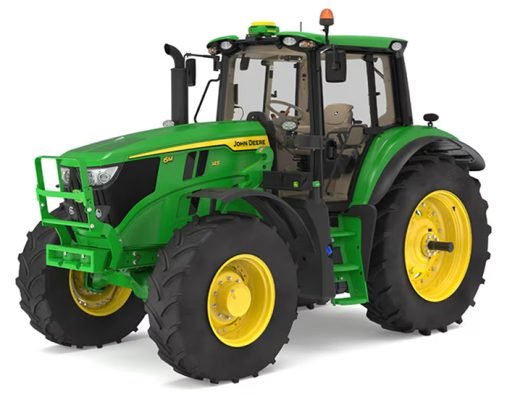
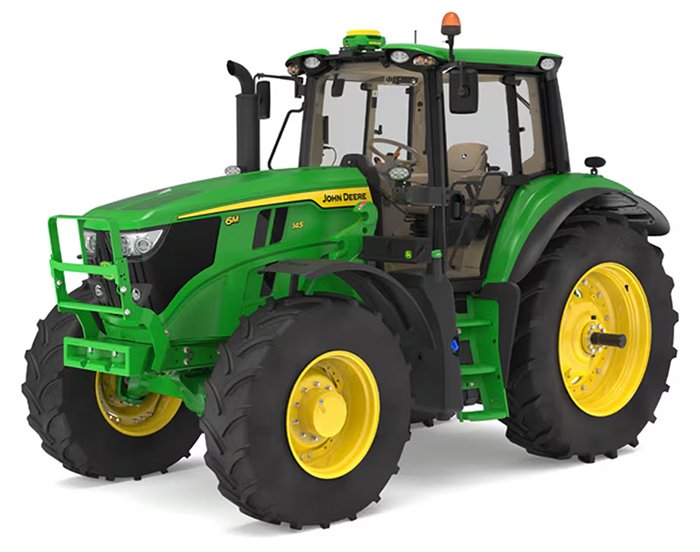
The compact tractor isn’t a compromise anymore — it’s a calculated advantage. Across hobby farms, municipal grounds, landscaping operations, and light construction sites, a fundamental shift is underway. Operators aren’t asking “how much machine can I afford?” They’re asking “how much machine do I actually need?” That distinction is reshaping an entire industry.
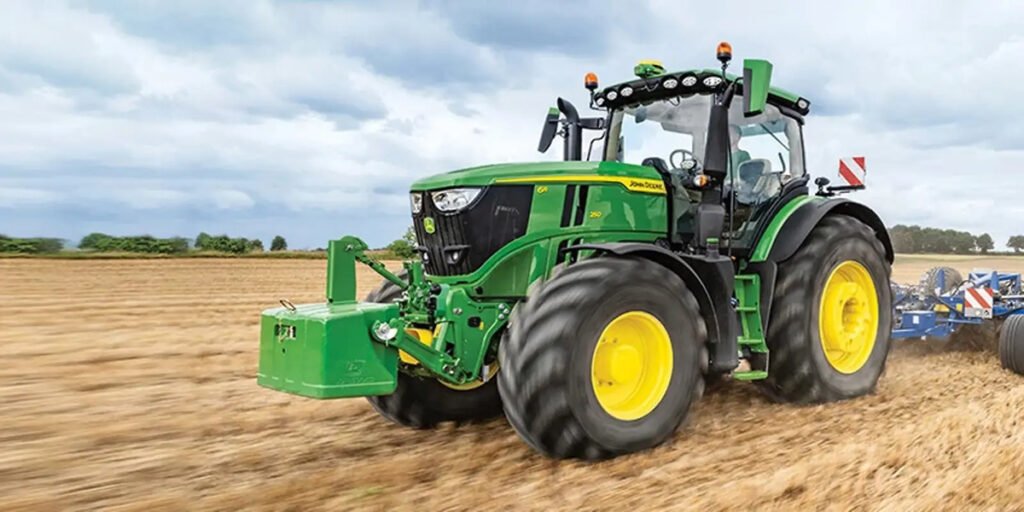
“The shift toward compact utility tractors is fueled by the ‘hobby farm’ explosion and the need for versatile machines that can handle both landscaping and light construction.” — Successful Farming (Agriculture.com)
The numbers back this up. The global compact tractor market is projected to reach $23.4 billion by 2030, driven by a 5.3% CAGR in the sub-100 HP segment, according to Allied Market Research. That’s not incremental growth — that’s a structural realignment of demand.
Itu 35HP–90HP sweet spot has emerged as the workhorse range for modern operators who need genuine versatility without the overhead of heavy-duty iron. A right-sized machine handles loader work, PTO-driven implements, and tight maneuvering — often at a fraction of the operating cost. For buyers sourcing industrial-grade compact equipment directly from manufacturers, this efficiency translates into real margin.
Understanding what’s driving this demand is the first step. The next critical question is matching the right horsepower and configuration to your specific workload.
Memilih yang tepat traktor kompak isn’t about picking the biggest machine your budget allows — it’s about matching the tool to the task. Get this wrong, and you’re either overpowered and overpaying or underpowered and frustrated. A clear technical framework, based on your actual application, cuts through the noise fast.
The table below provides a practical starting point. Real-world requirements vary, but these ranges reflect common industry patterns:
| Aplikasi | Recommended HP | Key Attachment |
|---|---|---|
| Hobby farm / garden (under 5 acres) | 20–35 HP | Mid-mount mower deck |
| Small-scale agriculture (5–50 acres) | 35–60 HP | 3-point hitch tiller or baler |
| Persiapan lokasi konstruksi | 50–75 HP | Front loader with bucket |
| Municipal grounds maintenance | 25–45 HP | Rotary cutter or boom mower |
| Nursery / greenhouse | 20–30 HP | Pallet fork or sprayer |
One of the most overlooked sizing factors is Power Take-Off (PTO) demand. Attachments like rotary cutters, balers, and finish mowers draw directly from the engine’s rated output. A 40 HP tractor running a PTO-hungry implement at full draw leaves almost nothing for traction or hydraulics. As a rule of thumb, size your HP ceiling to your heaviest attachment first, then verify lift capacity. If you’re comparing options at the lower end, this breakdown of real-world HP trade-offs is worth reviewing before you commit.
Precision technology is rapidly reshaping buyer priorities — according to the Association of Equipment Manufacturers, GPS-guided steering is now a primary decision factor for 70% of modern tractor buyers, making software compatibility as critical as raw horsepower.
For municipal and landscaping applications, tight turning radius and low ground pressure often matter more than peak torque. A heavier, high-torque machine can churn turf and struggle around obstacles. However, going too small sacrifices the front loader capacity needed for material handling. Balance is everything.
The right sizing decision sets the foundation for long-term value — and that value extends well beyond purchase price into maintenance, parts availability, and total lifecycle costs.
Once you’ve sized the right machine — whether that’s a nimble subcompact or a purpose-built tractor with front loader for heavy material handling — the purchase price stops being the most important number. What matters next is what you’ll spend keeping it running.
According to EquipmentWatch, maintenance and unplanned downtime account for nearly 25% of total cost of ownership for heavy machinery over its lifespan. That’s a significant drain that most buyers don’t factor into their initial budget.
Sourcing from a factory that holds recognized certifications isn’t optional — it’s the baseline for protecting your investment. CE marking confirms machinery meets European safety and performance directives, while ISO 9001 certification validates that quality management systems are consistent and auditable at every production stage.
Eliminating the dealer layer from your parts supply chain has measurable advantages that compound over time.
What separates a reliable factory-direct supplier from a basic assembler, however, runs deeper than certifications and catalogs. It starts on the production floor itself — which is exactly where the next consideration begins.
Not every tractor comes from the same kind of facility — and that distinction matters far more than most buyers realize. There’s a fundamental difference between a fully integrated manufacturing facility spanning 50,000m² or more and a simple assembly plant that bolts together components sourced from a dozen different suppliers. One controls quality at every stage. The other crosses its fingers.
In an integrated facility, the engineering team oversees everything from raw material processing to final inspection under one roof. Integrated production systems like this allow manufacturers to meet rigorous ISO 9001 quality standards in ways that fragmented assembly models structurally cannot — because quality is built in, not inspected in afterward.
A manufacturer that controls its entire supply chain delivers a fundamentally more reliable machine than one that depends on outside vendors for critical components.
This matters enormously for OEM/ODM customization. When a buyer needs a machine configured for specific regional conditions — whether that’s a different power tier, modified hydraulic capacity, or climate-adapted components — an integrated manufacturer can engineer those changes from the ground up. An assembly plant can only swap out parts it already stocks.
The same principle applies to longevity. Fifteen-plus years of dedicated manufacturing expertise means a team that has already solved the hard problems: metal fatigue points, hydraulic seal failures, PTO stress at high load cycles. Just as understanding equipment sizing across categories reveals how specs translate to real-world performance, understanding who built your machine tells you how long it will actually last.
And if you’ve already worked through the question of what size tractor do I need, the next logical question is equally important: where does it come from, and who stands behind it? That question opens a broader conversation about sourcing strategy — and how to evaluate manufacturers operating across global markets.