Telephone/WhatsApp:+86 156 2656 0610

Telephone/WhatsApp:+86 156 2656 0610
Email:seekmach@gmail.com

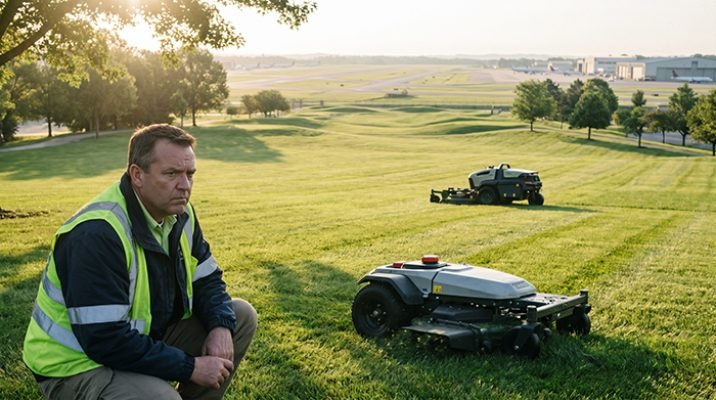
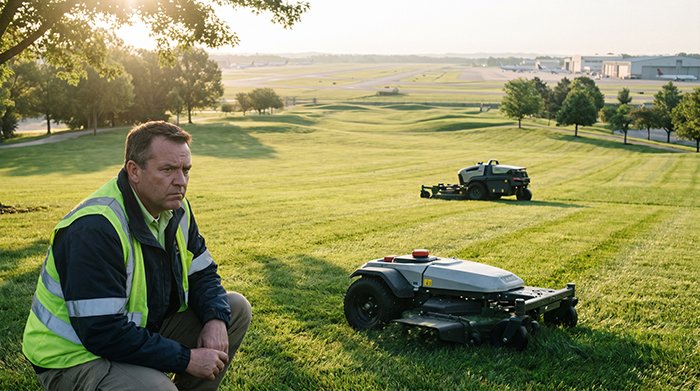
The rules of land management have changed — and most equipment fleets haven’t kept up. What once passed as routine landscaping work has evolved into a precision-driven, high-volume operation where under-powered equipment doesn’t just slow you down; it quietly drains your budget every single season.
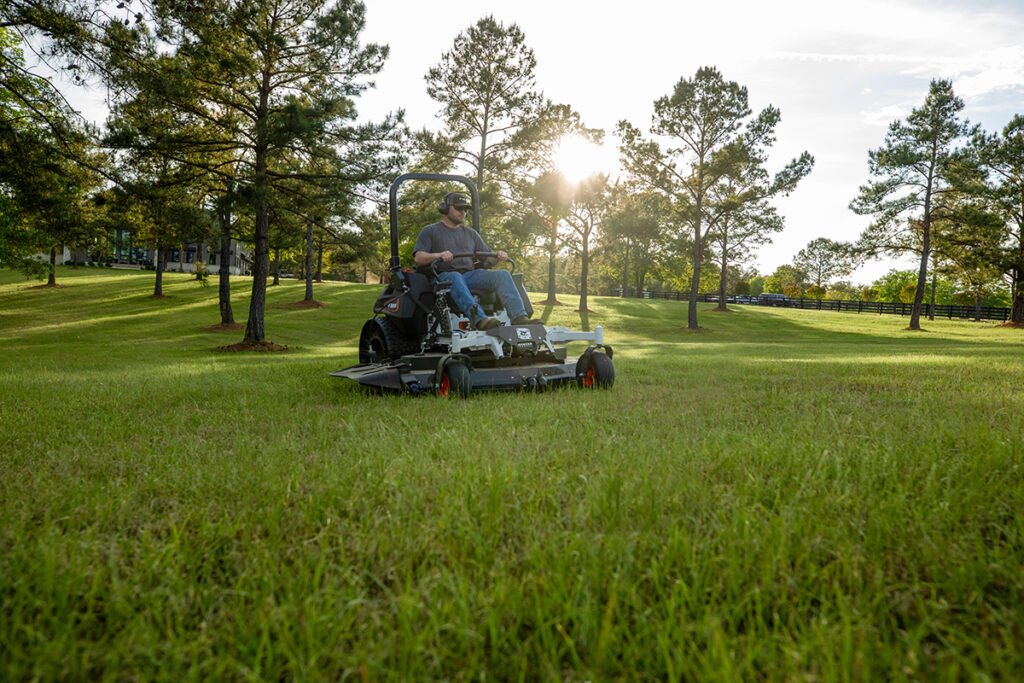
Robotic and autonomous mowing equipment is projected to grow at a CAGR of over 10% through 2030, according to Grand View Research — a number that tells the real story of a workforce under pressure. Labor shortages aren’t a temporary inconvenience. They’re a structural shift forcing land managers, municipalities, and large-scale contractors to rethink how they cover acreage, how fast, and at what cost.
The hidden expense of mismatched equipment runs deeper than fuel bills. Slower cycle times, increased wear, more frequent breakdowns — every hour a machine operates below its optimal capacity translates directly into lost revenue. The demand for industrial grade zero turn mowers for large acreage isn’t a trend; it’s the new baseline.
This emerging benchmark — call it the Industrial Standard for 2026 — prioritizes engineering durability, operational throughput, and total-cost accountability over sticker price alone. Understanding what separates commercial-grade from truly industrial-grade equipment starts with what’s built beneath the deck.
The gap between a commercial-grade mower and a truly industrial machine isn’t just about cutting width. For procurement managers sourcing heavy-duty commercial mowing equipment for municipalities, that distinction directly determines operational costs, liability exposure, and long-term fleet viability.
Deck size is the headline spec, but the real engineering story lives in the frame. Industrial-grade zero turns are built around reinforced steel chassis — typically 7- to 10-gauge fabricated decks — paired with high-torque hydrostatic drivetrains designed to handle ground irregularities that would stress a commercial unit past its limits. Where standard commercial mowers prioritize speed and maneuverability on flat turf, industrial machines are engineered for sustained, high-load operation across varied terrain. Buyers evaluating horsepower ratings on compact equipment will recognize a familiar pattern: raw numbers don’t tell the whole story — real-world torque delivery under load does. That’s equally true when sizing mowers for large-acreage applications.
Fuel costs and routine maintenance account for approximately 60% to 80% of total cost of ownership for industrial mowing equipment, according to the Association of Equipment Management Professionals.
That figure reframes the entire purchase decision. A lower sticker price can easily translate into higher long-term spend if the machine demands frequent hydraulic servicing, blade replacements, or downtime-driven labor costs. TCO analysis should lead any fleet procurement conversation, not follow it.
For municipal procurement, CE and ISO certifications, aren’t optional — they’re contractual requirements in most public bidding frameworks. These standards validate structural integrity, operator safety, and emissions compliance.
On the other hand, sourcing factory-direct eliminates distributor markups on both units and replacement parts, while creating a direct line to engineering support when field issues arise. That responsiveness matters significantly during peak mowing seasons when downtime is expensive.
As land management operations grow more complex, equipment specifications are only part of the equation — the technology integrated into these machines is evolving just as rapidly.
The industrial mowing landscape looks dramatically different heading into 2026. Beyond raw cutting power and deck engineering — covered in the previous section — the most consequential shift is happening in navigation, autonomy, and operator safety. As TechRadar’s CES 2026 analysis put it directly: “The shift toward perimeter-wire-free navigation and AI Vision is no longer optional for high-efficiency operations.”
For procurement teams managing large portfolios of turf, that statement carries real budget implications.
Traditional boundary-wire systems were an acceptable workaround — until operators started managing irregular parcels, multi-zone campuses,, and complex municipal sites. RTK-GPS navigation has replaced that limitation with centimeter-level positioning accuracy, allowing high-efficiency wide area mowers for agricultural use to execute repeating cut patterns across dozens of acres without drift or overlap. No buried wire. No re-installation after landscape changes. Just satellite-guided precision.
Slope maintenance is where traditional operator-driven equipment creates genuine liability exposure. Embankments steeper than 20 degrees represent a documented rollover risk — something any operator managing uneven terrain understands immediately. Remote control slope mowers eliminate the operator-on-machine risk entirely on hazardous grades.
AI Vision obstacle avoidance moves machines beyond pre-programmed routes into genuinely responsive operation. Cameras and sensor arrays identify irregular objects, adjust paths in real time, and resume scheduled patterns — what engineers increasingly call senseless intelligence: the machine responds intelligently without requiring human input for every variable.
Understanding how these machines navigate the landscape is only half the equation, though. How they cut — and whether that cut supports long-term turf health — is where the agronomic science becomes equally critical.
Smart equipment decisions don’t happen in isolation. Understanding the agronomic science behind cutting practices is what separates reactive land management from a genuinely strategic operation — and it directly influences which machines belong in your fleet.
The One-Third Rule is the foundational principle every turf manager should internalize: never remove more than one-third of the grass blade in a single pass. Violating this threshold stresses the plant, exposes the crown to heat and disease, and triggers shallow root development. According to University of Minnesota Extension, maintaining a consistent cutting height of 3 to 4 inches promotes deeper root systems and measurably increases drought resistance — a critical factor for large municipal properties managing water budgets under climate pressure.
“Maintaining a consistent cutting height of 3 to 4 inches promotes deeper root systems and increases drought resistance.” — University of Minnesota Extension
Blade condition is equally consequential. Dull blades tear rather than cut, leaving ragged tissue that acts as an open pathway for fungal pathogens. On high-traffic municipal turf, this accelerates disease spread across thousands of square feet before a maintenance crew can respond.
“The shift toward high-efficiency internal combustion engines is no longer optional as municipal emissions regulations tighten.” — Landscape Management Magazine
This pressure makes engine efficiency a procurement variable, not just a performance metric. The same operational thinking applies when deploying remote-control slope mowers for highway maintenance — precision cutting on hazardous gradients demands engines that meet evolving emissions standards without sacrificing torque. Sustainable land management, at scale, requires every component working in concert: height, blade sharpness, and powertrain efficiency aligned to agronomic outcomes.
That alignment starts much earlier than the job site — it starts at the sourcing stage.
Now that you understand what the right machine needs to do agronomically and operationally, the next challenge is finding where to source it — without paying a premium for a logo.
The 2026 procurement shift is clear: more municipalities and land management contractors are bypassing distributors and going straight to the source. Factory-direct supply chains eliminate middleman markups and enable integrated production quality control — meaning you get a better-spec’d machine at a lower price point.
| Faktor | Retail/Distributor | Factory-Direct OEM |
|---|---|---|
| Unit Price | Inflated by 20–40% margins | Manufacturer’s base cost |
| Kustomisasi | Limited, off-the-shelf only | Full OEM/ODM options |
| Quality Oversight | Third-party dependent | In-house at production level |
| CE/Global Compliance | Brand-premium pricing | Built into standard spec |
| Lead Time | Stock-dependent | Production-scheduled |
Knowing how to choose a mower for steep-embankment maintenance starts well before you select a model — it starts with evaluating the facility producing it. Key indicators include ISO 9001 certification, documented production capacity (a 50,000m²+ facility signals serious industrial output), and verifiable CE compliance for global deployment. Request factory audit reports and ask specifically about weld inspection protocols on slope-rated frames.
OEM/ODM customization is where factory-direct procurement genuinely pays off. Municipal buyers managing varied terrain — from highway embankments to irrigation canal edges — can configure deck width, blade torque ratings, and even remote-control integration to match their exact operational profile. Seekmach’s manufacturing model, which also covers multi-purpose ground equipment, reflects this integrated-production approach across equipment categories.
Getting sourcing right sets the foundation for everything that follows — including keeping that equipment running at peak performance season after season.
Investing in industrial-grade equipment only pays off when that equipment is properly maintained. The operational habits you build around your machines are just as important as the machines themselves.
Corrosion is the silent budget killer for any fleet manager. After each use — especially on wet or fertilized turf — rinse the under-deck thoroughly and allow it to dry before storage. Debris buildup traps moisture against metal surfaces, accelerating rust in ways that void warranties and compress service life.
For hybrid and electric industrial mowers, battery storage protocol is non-negotiable. Store battery packs at 40–60% charge in a climate-controlled environment. Extreme heat or cold degrades cell chemistry permanently. In practice, a poorly stored battery pack can lose 20–30% of its capacity within a single off-season.
Can I mow in wet conditions? Avoid cutting saturated turf. Wet grass clogs discharge chutes and compacts soil — a concern equally relevant to heavy ground-working equipment operating in muddy conditions.
How often should blades be sharpened? Every 20–25 operating hours under normal conditions.
What does white or blue smoke indicate? White smoke typically signals water or coolant intrusion; blue smoke points to oil burning. Both warrant immediate diagnostics.
For step-by-step guidance, the following walkthrough covers essential industrial mower maintenance procedures:
[Placeholder for Industrial Mower Maintenance Guide — 8 Best Riding Lawn Mowers and Tractors For 2026]
Consistent maintenance transforms a capital expense into a long-term competitive asset — and that’s the standard industrial land management demands in 2026.