Telephone/WhatsApp:+86 156 2656 0610
Telephone/WhatsApp:+86 156 2656 0610
Email:info@seekmach.com

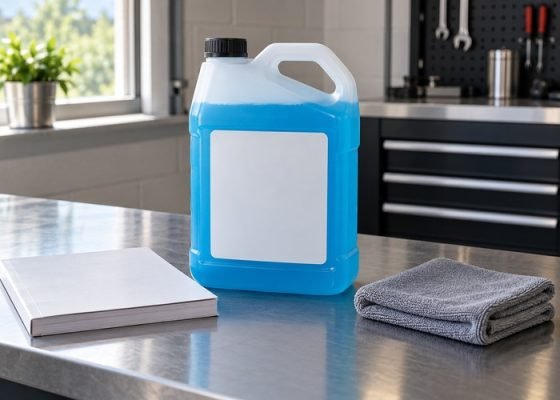
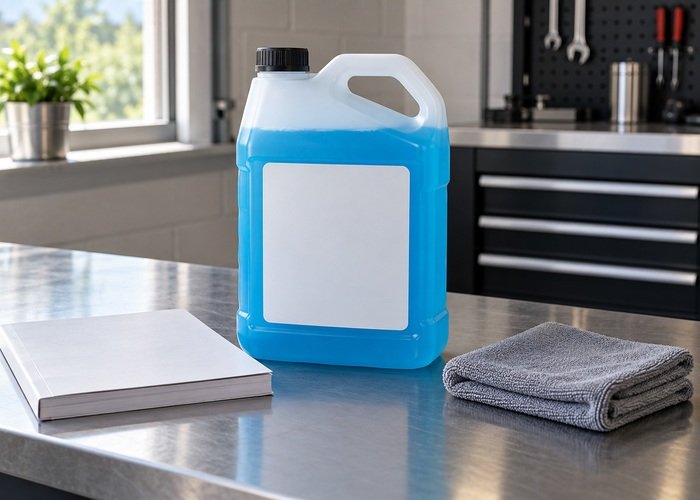
Select mini excavator coolant from the requirements for the installed engine and cooling system, then confirm what is already in the machine. Do not choose a top-up product from colour alone. The product specification, formulation, concentration and service history need to support the decision before any fluid is added.
This guide helps prepare a purchase or qualified service enquiry. It does not prescribe one coolant, mixing ratio, capacity or change interval for every excavator. It also does not provide a draining, flushing or pressure-release procedure. Use the exact engine and machine instructions and arrange safe service when the current fill cannot be verified.
Record the excavator model and serial number together with the engine identification. The machine manufacturer and engine manufacturer may both provide relevant cooling-system information. Ask the responsible service provider which documents govern the complete installation, including any change made after the machine left the factory.
A previous engine replacement, cooling-system repair or undocumented refill can change the questions that need answering. Tell the service provider what is known. Do not treat a badge, a seller’s generic listing or a similar-looking engine as adequate evidence of the fluid requirement.
Ask for the actual specification or approved product reference and retain it with the machine record. If a document cannot be matched to the engine serial or installation, leave the requirement unconfirmed until it can be resolved. An unrelated manufacturer’s maintenance chart is useful context, not approval for the machine in front of you.
Coolant colour is a visible observation, while compatibility is a technical question. A similar colour does not establish that two containers contain the same formulation or that either meets the engine requirement. Photographing the existing fluid can document appearance, but it cannot replace identification of the product used.
Valvoline’s guide to choosing coolant cautions against relying on colour coding. Its automotive context does not identify an excavator-approved product. Use the lesson to ask for the documented specification, not to transfer a car application recommendation to a different engine.
Marketing descriptions also need interpretation. “Long life,” “heavy duty” and “universal” are not complete application approvals. Ask how the exact proposed product meets the documented requirement and whether the supplier is confirming it for the identified engine and cooling system. Keep the response with the quotation rather than relying on a broad claim on the shelf.
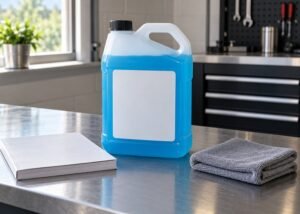
Check the product label and technical information before ordering. Record whether the supplied product is ready to use or requires preparation, together with the applicable instructions. Do not infer this from container size or from how a different product was supplied on a previous job.
If preparation is required, obtain the approved concentration and water-quality requirements from the governing instructions. Arrange the task with the responsible service provider. This article deliberately supplies no universal dilution recipe: the correct decision depends on the actual product, system and documented operating requirement.
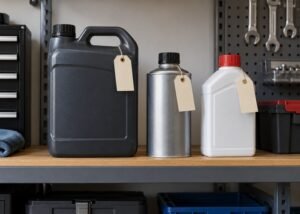
Keep a prepared mixture identified and traceable under the service plan. Avoid unlabelled containers and do not assume that a leftover jug contains the product shown on its original label. An uncertain container should be treated as uncertain evidence, not used to resolve an uncertain machine fill.
Gather previous invoices, service entries and any retained container details. Note whether a refill was complete or partial, when it occurred and who performed it. A receipt for coolant purchased by a fleet does not prove that the same product was used in this particular excavator.
If the records cannot establish the fill, ask a qualified technician what assessment and service plan are appropriate. State the uncertainty clearly. Do not use a claim that “the colours match” to justify mixing, and do not assume that adding a small quantity avoids the compatibility question.
Itu Cummins motorhome engine quick-reference guide warns that mixing formulations can reduce protection and notes that coolant types can vary in colour. It applies to the listed X15, ISX15 and ISX engines. Its specifications, intervals and test recommendations are not mini excavator requirements; they illustrate why the actual application must be identified.
Do not prescribe a generic flush merely because the history is missing. A service provider needs to consider the approved method, condition of the system, fluid handling and the checks needed afterwards. Keep the decision and its basis in the service record, including any remaining limitation.
Where testing is appropriate, ask the provider which questions the proposed tests answer for the actual coolant. Concentration, freeze protection and chemical condition are different questions. A single reading should not be described as proving the entire fluid specification or confirming every aspect of cooling-system health.
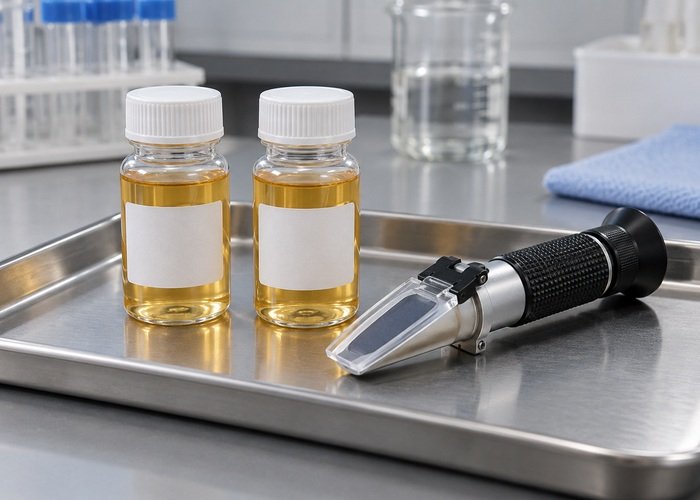
Use the approved test method and an appropriate instrument or laboratory service. Retain sample identity, machine identity, collection date and the interpretation supplied by the responsible person. Do not invent a universal pass number or use a photograph of a measuring instrument as proof that a valid test was completed.
If a sample is taken, the service plan should address access and safe collection. Never open a hot or potentially pressurized cooling system to obtain a picture or sample for an enquiry. The exact instructions determine when and how the task can be done safely by the authorized person.
| Information | Evidence to collect | Decision it supports |
|---|---|---|
| Engine and machine identity | Model, serial and applicable manuals | Which specification governs the installation? |
| Existing fill | Product reference and documented service history | Can compatibility be confirmed? |
| Proposed product | Technical data and application confirmation | Does it meet the required specification? |
| Supplied form | Premix or concentrate and approved preparation requirements | What service work is needed before use? |
| Condition or history concern | Observations, appropriate tests and qualified interpretation | Is additional investigation or service required? |
A useful quotation answers the unresolved question rather than just listing a fluid quantity. Ask what is included in the service, what is excluded and which checks will support the return-to-work decision. The order should not imply that a coolant purchase corrects a leak or an overheating complaint.
If there is an overheating warning, visible leakage or an abnormal fluid observation, follow the machine’s stop and service instructions. Record the circumstances and obtain the appropriate assessment. Do not continue operation to see whether adding a different coolant changes the symptom.
Itu mini excavator overheating guide addresses that separate complaint. A fluid may need attention while another fault remains unresolved. Keep the technician’s findings distinct from the product selection so that a new container does not become an unsupported diagnosis.
Seasonal preparation is another related but separate task. Use the excavator winter preparation guide alongside the actual engine instructions. Local conditions can inform the service enquiry without authorizing a generic concentration change or assuming that colour establishes freeze protection.

Record the complete product reference, supplied form, service date and responsible provider. Keep the governing specification and any preparation or test information with the work record. Distinguish what was purchased from what was actually used, and distinguish a top-up from a complete service.
Have the service work planned competently. The HSE maintenance guidance supports planning work around the hazards involved. Agree fluid handling and disposal responsibilities under the applicable instructions and local arrangements. A general article cannot approve a disposal route for every location.
Carry any unresolved issue into the machine’s maintenance planning record. If the machine changes owner or service provider, pass on the confirmed fluid identity and outstanding questions. That avoids restarting the next enquiry with nothing more than a colour description.
For a fleet, keep each machine’s fluid record distinct even when several machines use the same approved product. Similar equipment can have different engine or repair histories. A clear machine-specific record supports the next decision without implying a fleet-wide approval that was never obtained.
Compare the delivered product reference and supplied form with the approved order before it enters the service area. Keep any substitute separate until the responsible provider confirms its suitability. Retain the batch or container identification with the job record where available, so a later question can be traced to the product actually supplied.
No. Confirm the product identity, specification and compatibility for the installed engine and system.
Do not assume so. Follow the actual product and engine requirements, including whether the product is premixed.
No. Ask what the test establishes and what additional specification or condition evidence is required.
Keep that uncertainty explicit and obtain a qualified assessment before adding or changing fluid. Do not invent a universal mixing or flushing solution.