Telephone/WhatsApp:+86 156 2656 0610

Telephone/WhatsApp:+86 156 2656 0610
Email:info@seekmach.com

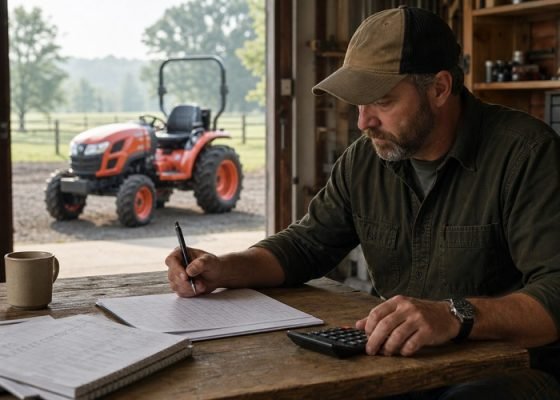
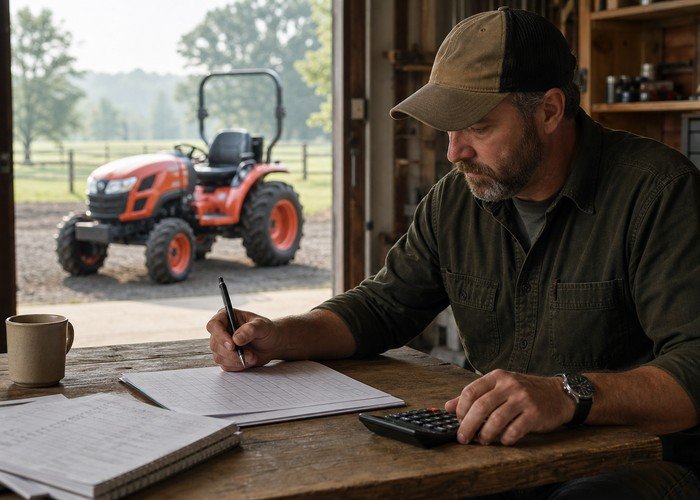
Compact Tractor Financing vs Cash: Compare Total Cost, Flexibility, and Farm Cash Flow gives buyers and operators a structured way to verify condition, fit, and safety before money or machinery moves.
Continue through the SeekMach equipment range, compare the tractor range, review ekskavator kompak, see pemuat kemudi selip, and browse lawn mowers.
Start with records, ratings, and the exact machine: Compare cash and finance on the same delivered tractor, attachments, taxes, fees, insurance, warranty, and payment date. A low advertised rate is not the complete cost: request the cash price and the financed total in writing, including every documentation, origination, and early-settlement condition.
Start with records, ratings, and the exact machine: Cash avoids scheduled debt payments and interest, but it can weaken the farm buffer needed for seed, feed, repairs, labour, or a poor season. Financing preserves liquidity, yet creates a fixed obligation even when the tractor is idle. Model the choice against conservative monthly cash flow, not the best harvest scenario.
Start with records, ratings, and the exact machine: Calculate the present value and total nominal outflow for each option, then include opportunity cost. Dealer discounts may differ between cash and promotional credit. Compare the annual percentage rate, term, down payment, balloon amount, collateral, insurance requirements, and whether attachments are included.
Start with records, ratings, and the exact machine: Match the repayment term to realistic useful service, not simply the smallest monthly payment. A long term may leave debt on a machine with rising repair costs or low resale value. Confirm warranty length, expected hours, maintenance reserve, and a downside resale estimate before signing.
Start with records, ratings, and the exact machine: Ask an accountant or qualified adviser how ownership, depreciation, interest, tax treatment, and business structure apply in the buyer’s jurisdiction. Keep the commercial decision separate from tax assumptions: the tractor must first fit the work, dealer support, and operating budget.
Safety-first walk-around before operation: Compare cash and finance on the same delivered tractor, attachments, taxes, fees, insurance, warranty, and payment date. A low advertised rate is not the complete cost: request the cash price and the financed total in writing, including every documentation, origination, and early-settlement condition.
Safety-first walk-around before operation: Cash avoids scheduled debt payments and interest, but it can weaken the farm buffer needed for seed, feed, repairs, labour, or a poor season. Financing preserves liquidity, yet creates a fixed obligation even when the tractor is idle. Model the choice against conservative monthly cash flow, not the best harvest scenario.
Safety-first walk-around before operation: Calculate the present value and total nominal outflow for each option, then include opportunity cost. Dealer discounts may differ between cash and promotional credit. Compare the annual percentage rate, term, down payment, balloon amount, collateral, insurance requirements, and whether attachments are included.
Safety-first walk-around before operation: Match the repayment term to realistic useful service, not simply the smallest monthly payment. A long term may leave debt on a machine with rising repair costs or low resale value. Confirm warranty length, expected hours, maintenance reserve, and a downside resale estimate before signing.
Safety-first walk-around before operation: Ask an accountant or qualified adviser how ownership, depreciation, interest, tax treatment, and business structure apply in the buyer’s jurisdiction. Keep the commercial decision separate from tax assumptions: the tractor must first fit the work, dealer support, and operating budget.
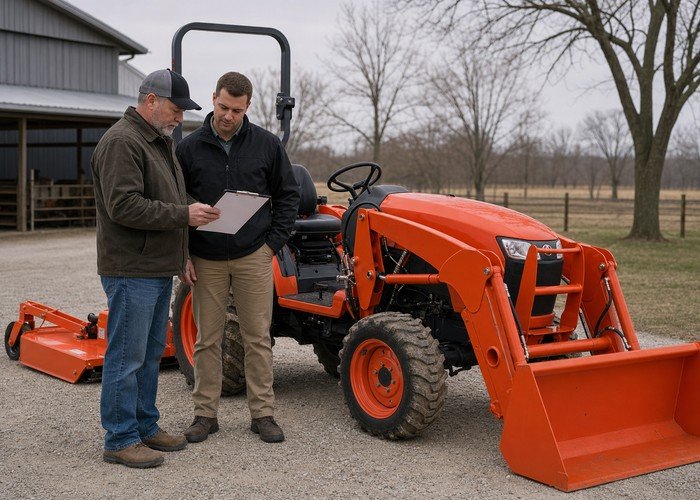
Engine, fluids, cooling, and leak checks: Compare cash and finance on the same delivered tractor, attachments, taxes, fees, insurance, warranty, and payment date. A low advertised rate is not the complete cost: request the cash price and the financed total in writing, including every documentation, origination, and early-settlement condition.
Engine, fluids, cooling, and leak checks: Cash avoids scheduled debt payments and interest, but it can weaken the farm buffer needed for seed, feed, repairs, labour, or a poor season. Financing preserves liquidity, yet creates a fixed obligation even when the tractor is idle. Model the choice against conservative monthly cash flow, not the best harvest scenario.
Engine, fluids, cooling, and leak checks: Calculate the present value and total nominal outflow for each option, then include opportunity cost. Dealer discounts may differ between cash and promotional credit. Compare the annual percentage rate, term, down payment, balloon amount, collateral, insurance requirements, and whether attachments are included.
Engine, fluids, cooling, and leak checks: Match the repayment term to realistic useful service, not simply the smallest monthly payment. A long term may leave debt on a machine with rising repair costs or low resale value. Confirm warranty length, expected hours, maintenance reserve, and a downside resale estimate before signing.
Engine, fluids, cooling, and leak checks: Ask an accountant or qualified adviser how ownership, depreciation, interest, tax treatment, and business structure apply in the buyer’s jurisdiction. Keep the commercial decision separate from tax assumptions: the tractor must first fit the work, dealer support, and operating budget.
Hydraulics, structure, and working components: Compare cash and finance on the same delivered tractor, attachments, taxes, fees, insurance, warranty, and payment date. A low advertised rate is not the complete cost: request the cash price and the financed total in writing, including every documentation, origination, and early-settlement condition.
Hydraulics, structure, and working components: Cash avoids scheduled debt payments and interest, but it can weaken the farm buffer needed for seed, feed, repairs, labour, or a poor season. Financing preserves liquidity, yet creates a fixed obligation even when the tractor is idle. Model the choice against conservative monthly cash flow, not the best harvest scenario.
Hydraulics, structure, and working components: Calculate the present value and total nominal outflow for each option, then include opportunity cost. Dealer discounts may differ between cash and promotional credit. Compare the annual percentage rate, term, down payment, balloon amount, collateral, insurance requirements, and whether attachments are included.
Hydraulics, structure, and working components: Match the repayment term to realistic useful service, not simply the smallest monthly payment. A long term may leave debt on a machine with rising repair costs or low resale value. Confirm warranty length, expected hours, maintenance reserve, and a downside resale estimate before signing.
Hydraulics, structure, and working components: Ask an accountant or qualified adviser how ownership, depreciation, interest, tax treatment, and business structure apply in the buyer’s jurisdiction. Keep the commercial decision separate from tax assumptions: the tractor must first fit the work, dealer support, and operating budget.
Functional test under realistic load: Compare cash and finance on the same delivered tractor, attachments, taxes, fees, insurance, warranty, and payment date. A low advertised rate is not the complete cost: request the cash price and the financed total in writing, including every documentation, origination, and early-settlement condition.
Functional test under realistic load: Cash avoids scheduled debt payments and interest, but it can weaken the farm buffer needed for seed, feed, repairs, labour, or a poor season. Financing preserves liquidity, yet creates a fixed obligation even when the tractor is idle. Model the choice against conservative monthly cash flow, not the best harvest scenario.
Functional test under realistic load: Calculate the present value and total nominal outflow for each option, then include opportunity cost. Dealer discounts may differ between cash and promotional credit. Compare the annual percentage rate, term, down payment, balloon amount, collateral, insurance requirements, and whether attachments are included.
Functional test under realistic load: Match the repayment term to realistic useful service, not simply the smallest monthly payment. A long term may leave debt on a machine with rising repair costs or low resale value. Confirm warranty length, expected hours, maintenance reserve, and a downside resale estimate before signing.
Functional test under realistic load: Ask an accountant or qualified adviser how ownership, depreciation, interest, tax treatment, and business structure apply in the buyer’s jurisdiction. Keep the commercial decision separate from tax assumptions: the tractor must first fit the work, dealer support, and operating budget.
Decision table: pass, negotiate, or stop: Compare cash and finance on the same delivered tractor, attachments, taxes, fees, insurance, warranty, and payment date. A low advertised rate is not the complete cost: request the cash price and the financed total in writing, including every documentation, origination, and early-settlement condition.
Decision table: pass, negotiate, or stop: Cash avoids scheduled debt payments and interest, but it can weaken the farm buffer needed for seed, feed, repairs, labour, or a poor season. Financing preserves liquidity, yet creates a fixed obligation even when the tractor is idle. Model the choice against conservative monthly cash flow, not the best harvest scenario.
Decision table: pass, negotiate, or stop: Calculate the present value and total nominal outflow for each option, then include opportunity cost. Dealer discounts may differ between cash and promotional credit. Compare the annual percentage rate, term, down payment, balloon amount, collateral, insurance requirements, and whether attachments are included.
Decision table: pass, negotiate, or stop: Match the repayment term to realistic useful service, not simply the smallest monthly payment. A long term may leave debt on a machine with rising repair costs or low resale value. Confirm warranty length, expected hours, maintenance reserve, and a downside resale estimate before signing.
Decision table: pass, negotiate, or stop: Ask an accountant or qualified adviser how ownership, depreciation, interest, tax treatment, and business structure apply in the buyer’s jurisdiction. Keep the commercial decision separate from tax assumptions: the tractor must first fit the work, dealer support, and operating budget.
Questions to ask the seller or operator: Compare cash and finance on the same delivered tractor, attachments, taxes, fees, insurance, warranty, and payment date. A low advertised rate is not the complete cost: request the cash price and the financed total in writing, including every documentation, origination, and early-settlement condition.
Questions to ask the seller or operator: Cash avoids scheduled debt payments and interest, but it can weaken the farm buffer needed for seed, feed, repairs, labour, or a poor season. Financing preserves liquidity, yet creates a fixed obligation even when the tractor is idle. Model the choice against conservative monthly cash flow, not the best harvest scenario.
Questions to ask the seller or operator: Calculate the present value and total nominal outflow for each option, then include opportunity cost. Dealer discounts may differ between cash and promotional credit. Compare the annual percentage rate, term, down payment, balloon amount, collateral, insurance requirements, and whether attachments are included.
Questions to ask the seller or operator: Match the repayment term to realistic useful service, not simply the smallest monthly payment. A long term may leave debt on a machine with rising repair costs or low resale value. Confirm warranty length, expected hours, maintenance reserve, and a downside resale estimate before signing.
Questions to ask the seller or operator: Ask an accountant or qualified adviser how ownership, depreciation, interest, tax treatment, and business structure apply in the buyer’s jurisdiction. Keep the commercial decision separate from tax assumptions: the tractor must first fit the work, dealer support, and operating budget.
A repeatable field checklist: Compare cash and finance on the same delivered tractor, attachments, taxes, fees, insurance, warranty, and payment date. A low advertised rate is not the complete cost: request the cash price and the financed total in writing, including every documentation, origination, and early-settlement condition.
A repeatable field checklist: Cash avoids scheduled debt payments and interest, but it can weaken the farm buffer needed for seed, feed, repairs, labour, or a poor season. Financing preserves liquidity, yet creates a fixed obligation even when the tractor is idle. Model the choice against conservative monthly cash flow, not the best harvest scenario.
A repeatable field checklist: Calculate the present value and total nominal outflow for each option, then include opportunity cost. Dealer discounts may differ between cash and promotional credit. Compare the annual percentage rate, term, down payment, balloon amount, collateral, insurance requirements, and whether attachments are included.
A repeatable field checklist: Match the repayment term to realistic useful service, not simply the smallest monthly payment. A long term may leave debt on a machine with rising repair costs or low resale value. Confirm warranty length, expected hours, maintenance reserve, and a downside resale estimate before signing.
A repeatable field checklist: Ask an accountant or qualified adviser how ownership, depreciation, interest, tax treatment, and business structure apply in the buyer’s jurisdiction. Keep the commercial decision separate from tax assumptions: the tractor must first fit the work, dealer support, and operating budget.
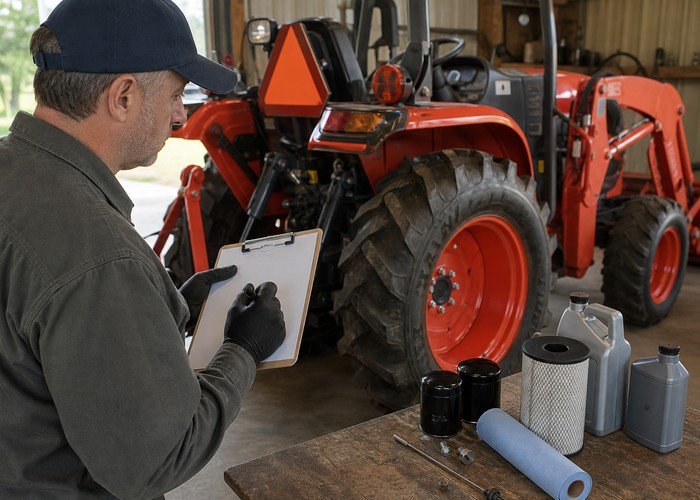
Common mistakes that create expensive surprises: Compare cash and finance on the same delivered tractor, attachments, taxes, fees, insurance, warranty, and payment date. A low advertised rate is not the complete cost: request the cash price and the financed total in writing, including every documentation, origination, and early-settlement condition.
Common mistakes that create expensive surprises: Cash avoids scheduled debt payments and interest, but it can weaken the farm buffer needed for seed, feed, repairs, labour, or a poor season. Financing preserves liquidity, yet creates a fixed obligation even when the tractor is idle. Model the choice against conservative monthly cash flow, not the best harvest scenario.
Common mistakes that create expensive surprises: Calculate the present value and total nominal outflow for each option, then include opportunity cost. Dealer discounts may differ between cash and promotional credit. Compare the annual percentage rate, term, down payment, balloon amount, collateral, insurance requirements, and whether attachments are included.
Common mistakes that create expensive surprises: Match the repayment term to realistic useful service, not simply the smallest monthly payment. A long term may leave debt on a machine with rising repair costs or low resale value. Confirm warranty length, expected hours, maintenance reserve, and a downside resale estimate before signing.
Common mistakes that create expensive surprises: Ask an accountant or qualified adviser how ownership, depreciation, interest, tax treatment, and business structure apply in the buyer’s jurisdiction. Keep the commercial decision separate from tax assumptions: the tractor must first fit the work, dealer support, and operating budget.
Final verification before transport or purchase: Compare cash and finance on the same delivered tractor, attachments, taxes, fees, insurance, warranty, and payment date. A low advertised rate is not the complete cost: request the cash price and the financed total in writing, including every documentation, origination, and early-settlement condition.
Final verification before transport or purchase: Cash avoids scheduled debt payments and interest, but it can weaken the farm buffer needed for seed, feed, repairs, labour, or a poor season. Financing preserves liquidity, yet creates a fixed obligation even when the tractor is idle. Model the choice against conservative monthly cash flow, not the best harvest scenario.
Final verification before transport or purchase: Calculate the present value and total nominal outflow for each option, then include opportunity cost. Dealer discounts may differ between cash and promotional credit. Compare the annual percentage rate, term, down payment, balloon amount, collateral, insurance requirements, and whether attachments are included.
Final verification before transport or purchase: Match the repayment term to realistic useful service, not simply the smallest monthly payment. A long term may leave debt on a machine with rising repair costs or low resale value. Confirm warranty length, expected hours, maintenance reserve, and a downside resale estimate before signing.
Final verification before transport or purchase: Ask an accountant or qualified adviser how ownership, depreciation, interest, tax treatment, and business structure apply in the buyer’s jurisdiction. Keep the commercial decision separate from tax assumptions: the tractor must first fit the work, dealer support, and operating budget.
No. Use this workflow to organize the inspection, then apply the exact limits and procedures in the model manual.
Use a qualified technician when records are incomplete, safety structures are altered, fluids are contaminated, structural cracks appear, or the functional test is inconsistent.
Record serial number, hours, cold-start condition, leaks, wear, measured settings, attachments, faults, photographs, and the person who performed the check.
Compact tractor buyer decision path: Compare tractor financing against cash and farm liquidity, review the compact tractor DPF operating guide, and use a compact tractor size and implement checklist before requesting a final delivered quote.