Telephone/WhatsApp:+86 156 2656 0610
Telephone/WhatsApp:+86 156 2656 0610
Email:info@seekmach.com

Most comparison posts in this size class talk about tonnage like it’s the whole story.
For US buyers, the regrets tend to be more specific:
This article is built around those three realities.
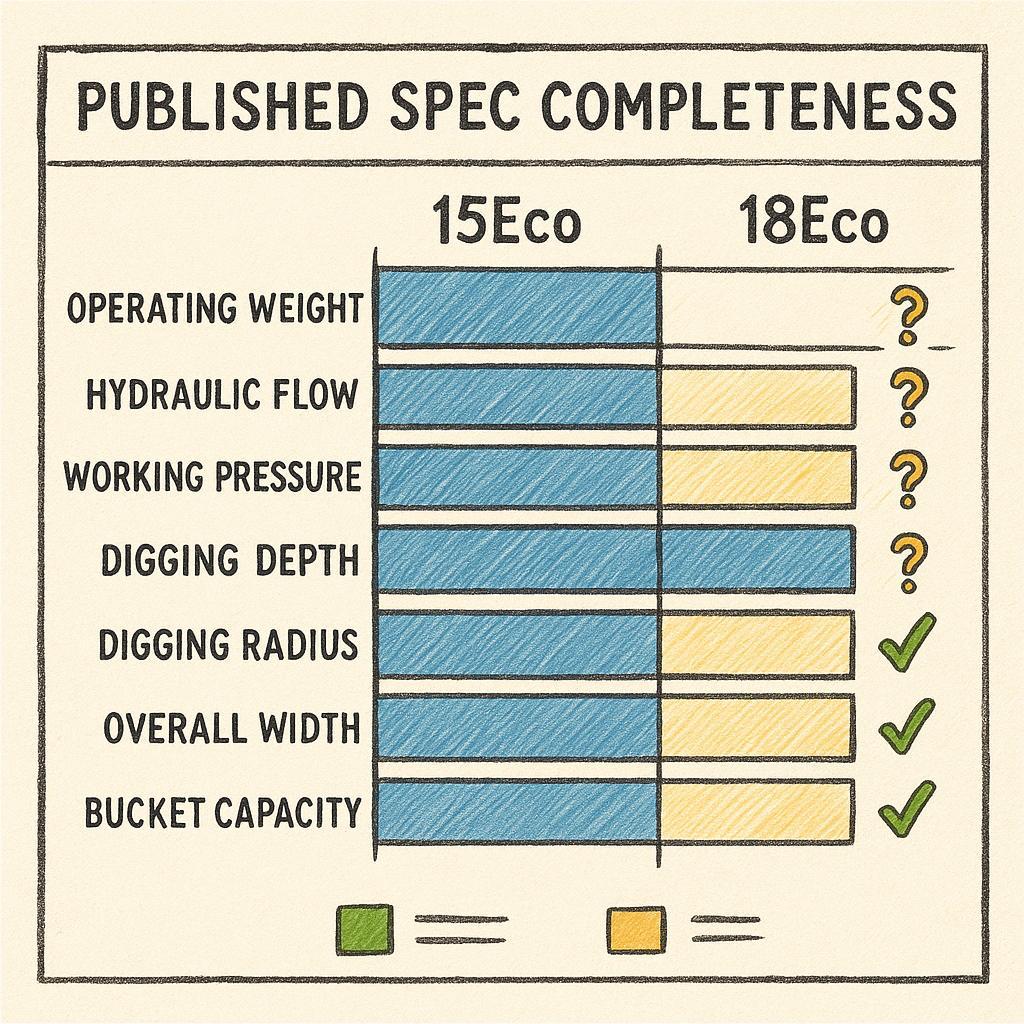
Points clés à retenir: Based on published specs, 15Eco is narrower (940 mm overall width) and lists auxiliary hydraulics (22 L/min, 20 MPa), which makes it easier to plan for attachments. 18Eco lists a larger bucket capacity (0.025 m³), but key hydraulic and operating-weight details aren’t clearly published on the product page, so you should confirm them before ordering powered attachments.
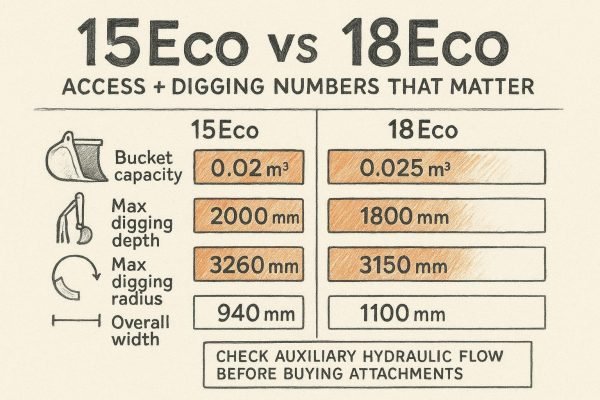
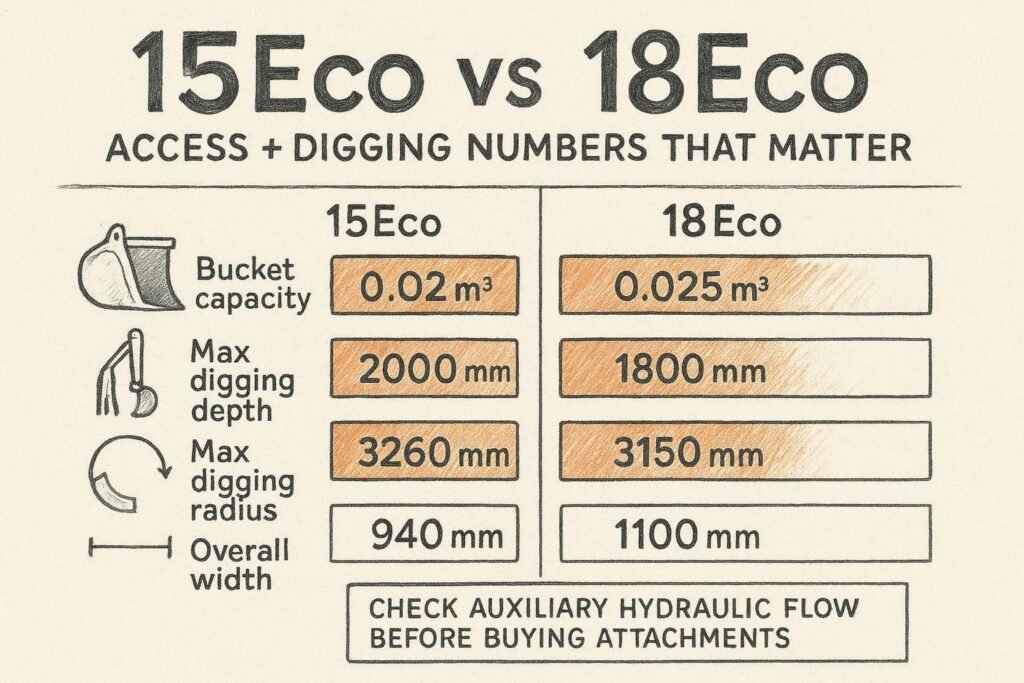
| What most buyers care about | 15Eco (published) | 18Eco (published) | What it means in practice |
|---|---|---|---|
| Poids opérationnel | 1500 kg | Not clearly listed | Weight affects trailering and stability planning. |
| Largeur hors tout | 940 mm | 1100 mm | This is your mini excavator gate width reality check. |
| Capacité du seau | 0.02 m³ | 0,025 m³ | Larger bucket can move more per scoop if access allows. |
| Profondeur de creusement maximale | 2000 millimètres | 1800 mm | Mini excavator digging depth should match your trench/drainage needs. |
| Max digging radius / reach | 3260 mm (listed as max digging distance) | 3150 mm | Reach affects repositioning and working from one setup. |
| Auxiliary hydraulic flow | 22 L/min | Not clearly listed | Mini excavator hydraulic flow drives powered attachment performance. |
| Working pressure | 20 MPa | Not clearly listed | Pressure matters for hydraulic tool force and response. |
Internal product references:
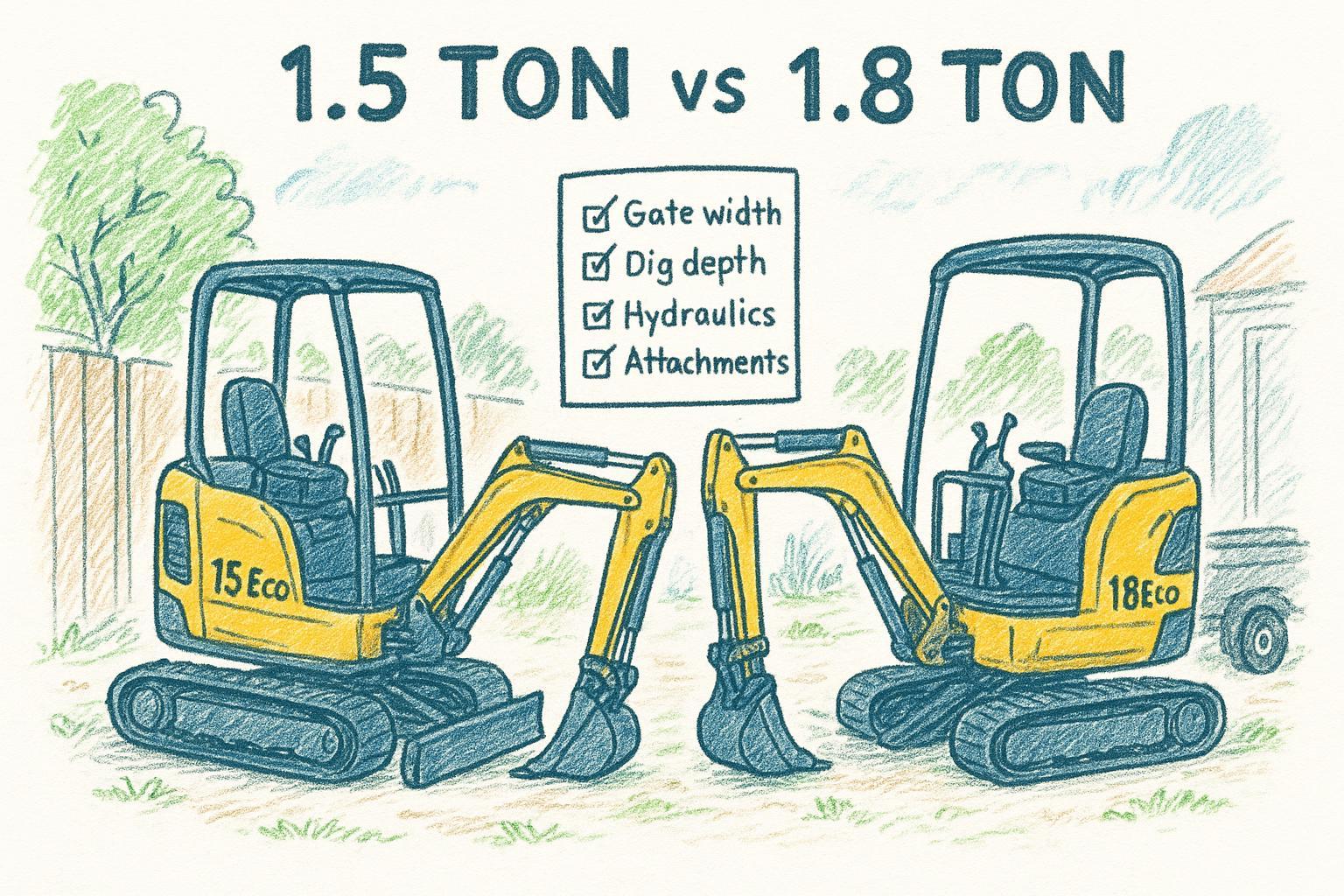
If you want one decision rule that works, use this order:
That’s how you avoid buying a capable machine that’s wrong for your jobs.
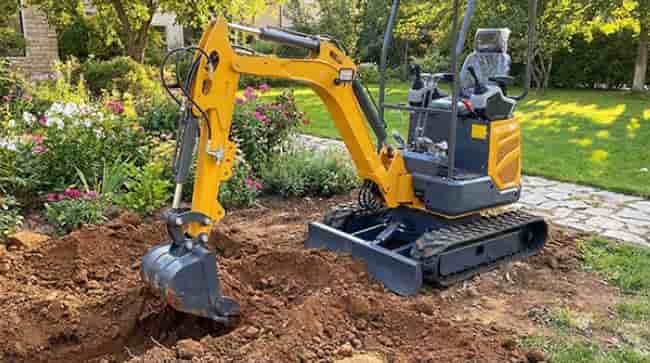
Mini excavators are often chosen because they can work where bigger machines can’t.
Based on published overall width:
That difference becomes real when you’re threading past a fence, a shed corner, or landscaping you don’t want to destroy.
Practical tip: measure the narrowest point on your access route and leave margin for uneven ground and steering corrections.
Want more context across sizes? Browse the lineup on SeekMach Eco Series mini excavators.
Published digging range:
For many property and light-construction jobs, both can be workable. The decision usually comes down to whether you’re already on the edge of your required depth.
If you’re often at the limit, the extra published depth on 15Eco is meaningful because it reduces “finish by hand” moments.
A lot of buyers plan to add powered tools. That’s where the auxiliary circuit matters.
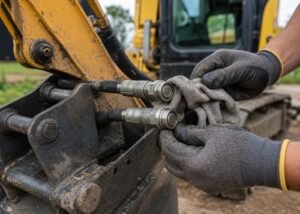
Auxiliary hydraulic flow and pressure are the numbers that determine whether powered mini excavator attachments run cleanly or run hot and frustrating.
Compact Equipment’s explainer on mini excavator hydraulic systems (2016) is a good plain-English overview of why some attachments demand both flow and pressure.
If your work involves frequent tool swaps, plan your coupler setup early. Start with SeekMach’s excavator quick coupler and decide whether fast swaps are a productivity requirement.
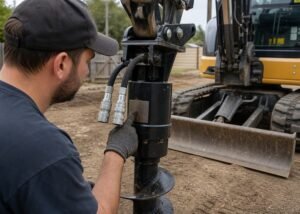
If augering is on your list (posts, trees, footings), use SeekMach’s excavator auger attachment as a reference point while you confirm auxiliary hydraulic numbers.
Pick 15Eco when:
Pick 18Eco when:
Mini excavators often get used for shallow trenching and utility work. The risk doesn’t scale down just because the machine is smaller.
OSHA’s Trenching and Excavation Safety fact sheet (PDF) is a practical, authoritative reference for hazards and protective-system basics.
If you want a comparison you can act on without guesswork, 15Eco is easier to evaluate because it publishes the hydraulic numbers that drive attachment planning, and it’s narrower on paper.
If you’re drawn to 18Eco’s larger published bucket capacity, make it a clean decision by confirming auxiliary hydraulic flow/pressure and operating weight before you commit to powered attachments.
If you tell us the top two mini excavator attachments you plan to run, we can turn the published specs into a short “confirm these numbers” checklist so you don’t buy the wrong setup.
No. In this size class, access and attachment compatibility often matter more than a small class jump.
Based on published overall width, 15Eco (940 mm) is narrower than 18Eco (1100 mm). Measure your narrowest access point before you buy.
Auxiliary hydraulic flow (and pressure). If those don’t match the attachment’s requirements, performance suffers and heat becomes a problem.
Not automatically. But you should confirm the exact auxiliary flow and pressure before buying powered tools.
15Eco lists 2000 mm max digging depth. 18Eco lists 1800 mm.
18Eco lists 0.025 m³ bucket capacity. 15Eco lists 0.02 m³.
OSHA’s Trenching and Excavation Safety fact sheet is a strong first read because it’s written for real jobsite hazards.
Confirm auxiliary hydraulic flow/pressure, coupler compatibility (pin/coupler setup), and operating weight for your trailering plan.