















































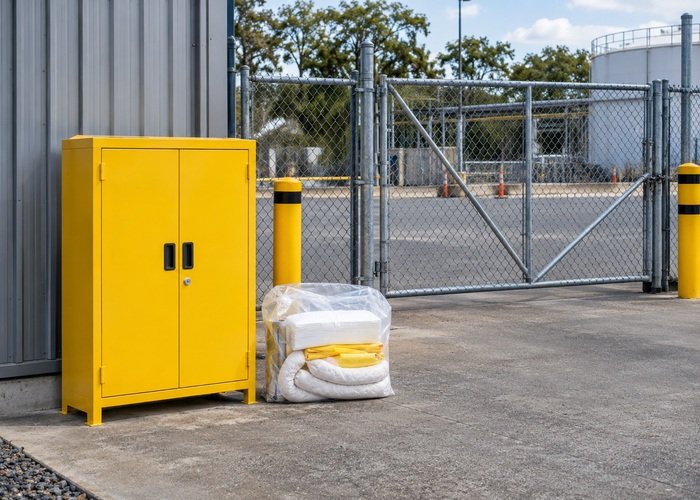
A mini excavator spill response plan should tell the team who takes charge, how to raise the alarm, what site information responders need and who can release the machine and work area afterwards. A hose repair or a surface that looks clean does not answer every question after fuel or oil escapes. People, drainage, contaminated materials, access routes and the original work activity may each require a separate decision.
This guide helps owners, hire customers and site supervisors organise those decisions. It is a planning and handover guide, not a spill-cleaning method, emergency-service procedure or hydraulic repair instruction. Use the actual site emergency arrangements, substance information and competent advice. Reporting duties depend on location and circumstances; the UK sources below are examples within their stated jurisdictions.
Define the incident roles before the machine arrives
A small machine can work across several areas in one day, while its operator may be employed by a different business from the site controller. Resolve the contact chain before mobilisation. Name the person who receives an incident alert, the person who coordinates the site response and the people who arrange specialist assistance. Include an alternative for absence and an out-of-hours arrangement where work extends beyond normal office hours.
The NetRegs pollution incident response planning guide describes the importance of site contacts, drainage information and substance details. It addresses businesses in Northern Ireland and Scotland. Use its planning structure as a prompt for discussion, while checking the requirements and reporting routes that apply to the actual project.
Make the first call achievable from the work area. A telephone number in an office folder is of little help if the operator cannot access it. Brief the team on the agreed alarm and communication arrangements, and confirm how visitors, delivery drivers and replacement operators receive the same information. Record who maintains the plan so contact changes have an owner.

Keep site and substance information usable
Identify the machine and the products involved in its work without relying on container colour or a guessed fluid name. The relevant product information and safety data sheets should be available to the people planning the response. Different substances and circumstances can demand different precautions. Do not assume a familiar-looking liquid can be handled using the response chosen for another material.
Show relevant drainage and sensitive locations on the current site information. The coordinator needs to know where water could travel, which access points responders can use and what nearby activities might be affected. A drawing that predates a temporary drain or a changed work compound can mislead the response. Keep revisions clear and ensure the copy used during the shift is current.
The planning record should also identify where suitable response resources are held and who is trained and authorised to use them. Possession of equipment does not establish competence or suitability for every incident. Resolve access, stock checks and replenishment responsibilities before work, rather than leaving the first person on scene to invent a method.
Set clear limits for the operator’s role
The operator should know the agreed safe stopping, warning and reporting arrangements for the machine and site. The response must account for people and the immediate circumstances. This article cannot supply a universal sequence for approaching a leak, touching components, moving the machine or dealing with ignition hazards. Those decisions belong in the assessed arrangements and manufacturer information used by competent people.
The HSE guide to safe use and handling of flammable liquids covers risk assessment and emergency arrangements for its UK scope. Its relevance here is the need to plan for the actual substance and hazards. It should not be read as a statement that every excavator fluid has the same classification, or as permission for an untrained person to carry out cleanup or firefighting.
Tell the team when to withdraw, warn others and obtain the appropriate emergency assistance under the site plan. A response should not depend on someone first proving the exact cause. Keep machine diagnosis separate from incident coordination. Attempts to establish a leak source must not expose people to hazards or delay the agreed notification.
Record observations without turning estimates into facts
A useful initial message identifies the location, time, machine and observed situation. Explain what is known about affected areas and nearby features, and distinguish that from uncertainty. If the material, quantity or route is unknown, say so. Do not convert an approximate impression into a precise measurement simply because an incident form includes a numerical box.
| Record | Useful information | Decision owner |
|---|---|---|
| Initial alert | Time, location, observed material and people at risk | Named site coordinator |
| Site context | Current drainage plan, access and nearby activities | Site management |
| Machine hold | Identity, restrictions and competent assessment required | Equipment owner or repair lead |
| Environmental follow-up | Specialist instructions, reports and retained references | Responsible environmental lead |
| Restart release | Permitted scope and outstanding restrictions | Authorised project decision makers |
Preserve observations and existing records through the agreed reporting process. Photographs can help explain a location when taken safely and appropriately; they should not require someone to enter an affected area. Keep personal information and sensitive site details within the responsible project system. Public sharing is not a substitute for notifying the people managing the incident.
Check the reporting route for the actual location
Internal notification and external reporting are different tasks. Assign responsibility for checking and making the required reports, including any permit or contractual conditions. The operator should know whom to alert, while the coordinator should know how to obtain the correct local advice. Do not wait for every detail to become certain before following the notification arrangements that apply.
The GOV.UK environmental reporting page distinguishes types of problems and points to separate routes for the UK nations. That distinction matters: an old contact sheet copied from a different project may direct a report to the wrong place. Verify current contacts for the site and keep any incident reference with the project record.
Record when notifications were made, by whom and what further information was requested. Keep subsequent instructions linked to the same event so the next shift can understand what remains open. An acknowledgement or reference number is evidence of contact, not automatic approval to resume excavation, move affected materials or return a machine to service.

Separate cleanup, repair and work-area release
After the initial response, several responsibilities may run in parallel. Competent specialists may assess environmental consequences and contaminated materials, while the equipment owner arranges machine inspection and repair. Site management controls access and affected work. Make those interfaces explicit so a message about one completed task is not mistaken for clearance of every other issue.
The used hydraulic oil handover guide addresses records for that separate material stream. A spill can involve additional materials and circumstances that need their own assessment. Do not automatically apply a routine used-oil collection arrangement to contaminated soil, absorbents or mixed waste from an incident.
Likewise, the clean hydraulic oil transfer guide concerns controlled handling during normal work. Its container and identification records can support understanding of what was present, but they do not establish a spill-cleaning method. Keep preventive maintenance, repair approval and environmental recovery decisions in their proper work packages.
Issue a specific restart handover
Before work resumes, obtain the assessments and authorisations required for both equipment and location. State the permitted activity, area, remaining restrictions and any follow-up observation or specialist presence. Replace superseded instructions in the active work pack while retaining the incident history. A vague message that the machine is fixed leaves too much room for assumptions about the site.
An illustrative example is an excavator whose leak has been repaired while the affected access route remains restricted. The repair may close the equipment defect, but the route decision still needs its own owner. Reassigning the machine elsewhere also requires checking the revised task and access arrangements. Changing the work location does not erase unresolved restrictions.
Use the rental condition and return-record guide to keep equipment identity and condition records clear. Add the incident reference and agreed restrictions through the appropriate project process. A signed rental return record is not a universal environmental release or a replacement for the site’s permission to restart.
Spill response questions
Does having a spill kit mean anyone can handle a leak?
No. The actual material, hazards, site conditions, training and authorised role determine the response. Make equipment availability and competence part of planning. Follow the site arrangements for warning, safe withdrawal and specialist assistance instead of improvising a cleanup procedure.
Can excavation restart as soon as the machine is repaired?
Only when the required equipment and site decisions have both been resolved. A repair does not establish that affected ground, drainage, access or materials have been assessed. Obtain a clear release for the actual activity and location.
Should an uncertain fluid quantity be entered as an exact figure?
No. Record what was observed and identify uncertainty. Let responsible responders obtain the information they need through suitable assessment. Accurate limits on the initial information help the next decision more than an unsupported precise number.