Telephone/WhatsApp:+86 156 2656 0610
Telephone/WhatsApp:+86 156 2656 0610
Email:seekmach@gmail.com

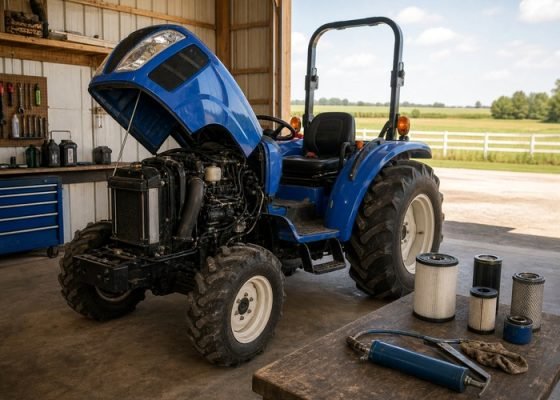

A compact tractor earns its keep through repeated ordinary jobs: mowing, loader work, grading, snow removal, tilling, hauling, and property cleanup. Those jobs are not extreme by themselves, but they create steady wear. Dust loads the air filter. Loader pins need grease. Hydraulic couplers collect dirt. Tires lose pressure. Batteries sit between jobs. Fluids age. A simple maintenance schedule keeps small issues from becoming expensive downtime.
This guide organizes compact tractor service by hours and seasons. Always follow the owner’s manual for your specific machine, because fluid types, filter intervals, torque values, break-in service, and safety procedures vary. The goal here is to give you a practical field rhythm. If you are still comparing machine types, the SeekMach tractor category y SeekMach product overview pages can help match maintenance expectations to the work you plan to do.
Tractors work in cycles rather than calendar days. A machine may run 20 hours during a spring project, sit for three weeks, then run hard again during mowing season. Hour-based maintenance keeps service tied to actual use. Calendar reminders still matter for batteries, fuel, tires, storage, and corrosion, but the hour meter is the backbone of routine service.
The first hours on a newer machine are especially important because components settle in, filters catch break-in material, fasteners may need inspection, and owners learn the machine’s normal sounds. The YouTube video linked in this article covers a first 50-hour tractor service; use it as a general visual companion, then verify every step against the manual for your tractor.
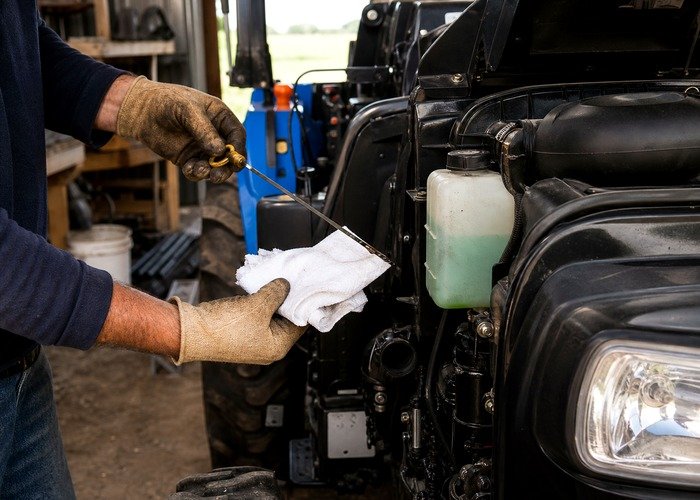
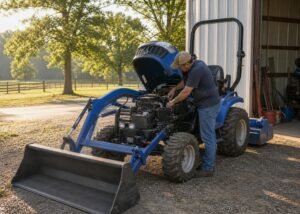
Daily checks should be short enough that you actually do them. Walk around the tractor before starting. Look under it for drips. Check tire condition, loose hardware, loader pins, hydraulic hoses, fuel level, engine oil, coolant, lights, mirrors if equipped, and the area around the machine. Clean steps and pedals. Make sure bystanders, tools, pets, and debris are clear before moving.
A daily check is also a safety habit. Many incidents begin with a rushed start: low tire pressure, a leaking hose, blocked radiator screen, loose implement pin, or a person standing where the operator cannot see. Penn State Extension’s tractor safety guidance is useful background for building routine habits around ordinary tractor work.
| Intervalo | Core checks | Why it matters |
|---|---|---|
| Before each use | Leaks, tires, oil, coolant, screens, pins, controls | Catches obvious problems before work |
| Every 10 hours | Grease loader and high-use pivot points | Reduces pin, bushing, and joint wear |
| Primeras 50 horas | Break-in service per manual | Removes early wear material and confirms setup |
| Cada 100 horas | Filters, belts, battery, wheel hardware, fluid condition | Prevents reliability drift |
| Estacional | Storage, fuel, battery, corrosion, implements | Protects the machine between work cycles |
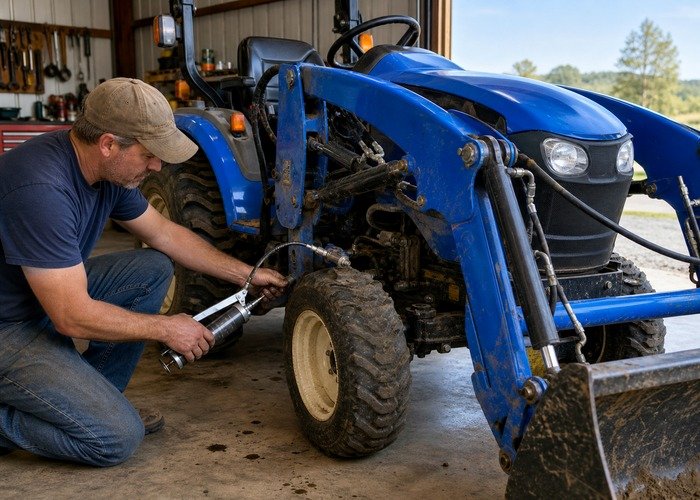
Loader work is convenient, but it is hard on pins and bushings when grease is skipped. Grease points may include loader pivots, bucket pivots, steering components, three-point hitch joints, mower deck points, front axle areas, and driveline parts depending on the machine and attachment. Wipe fittings before greasing so you do not push grit into the joint. Grease after washing if water may have entered a joint.
Do not treat grease as a cosmetic task. Dry pins wear metal, create slop, change bucket control, and eventually require repairs. If the loader begins to clunk, drift, bind, or move unevenly, inspect before continuing. The SeekMach application solutions page is useful for thinking about how repeated loader, mowing, grading, and utility tasks affect maintenance load.
The first 50-hour service is often the interval owners are most tempted to delay because the machine still feels new. That is exactly why it matters. New components can shed early wear particles, filters can load up, and small setup issues become visible. Depending on the manual, this interval may include engine oil and filter, hydraulic or transmission filters, front axle checks, wheel torque, belt inspection, lubrication, and general fastener checks.
Do not assume every compact tractor has the same 50-hour list. Some machines require hydraulic fluid replacement; others require filter-only service; some have front axle oil checks; some specify different fluids for climate and application. Keep receipts and notes. A simple service log helps with warranty discussions, resale, and your own memory after the busy season.
At 100 hours or mid-season, the tractor has usually worked enough to reveal patterns. Check filters, belts, hoses, battery terminals, coolant condition, tire pressure, wheel hardware, fuel filters, hydraulic couplers, PTO shaft guards, and implement wear. Dusty mowing may require more frequent air filter attention. Loader-heavy work may require more frequent greasing and pin inspection. Gravel grading may shake hardware loose.
Hydraulic cleanliness matters. Dirt around couplers can enter the system when attachments are changed. Wipe couplers before connecting, cap them when not used, and never ignore a damaged hose. Hydraulic injection injuries are serious; use safe inspection practices and never search for leaks with bare hands. The Canadian Centre for Occupational Health and Safety has a general hydraulic systems overview at CCOHS hydraulic systems.
Seasonal service is about preventing the machine from aging while parked. Clean the tractor, remove packed grass and mud, protect exposed metal, stabilize or manage fuel according to the manual, maintain the battery, park implements safely, and store attachments where pins, PTO shafts, and hoses are protected. Rodents, moisture, and old fuel can cause more trouble than a busy workday.
When the tractor returns to work, do not simply start and go. Inspect wiring, nests, leaks, tire pressure, lights, brakes, controls, and fluid levels. Let the tractor warm as the manual recommends. Recheck after the first short job. A careful return-to-work routine is especially important before mowing near people, carrying loader loads, or using PTO equipment.
A maintenance record does not need to be complicated. Record date, hour meter, task, fluid or filter type, notes, and anything to watch next time. If you notice a small seep, write it down. If a tire needs air every week, write it down. If the battery cranks slower after sitting, write it down. Patterns become obvious when they are tracked.
Records also help if you later sell the tractor. A buyer who sees regular oil, filter, grease, battery, tire, and hydraulic notes has more reason to trust the machine. A tractor with honest maintenance history can be more attractive than one with shiny paint and no evidence. The National Ag Safety Database at NASD Online also offers broad agricultural safety resources that pair well with maintenance planning.
The first mistake is using the wrong fluid because it was convenient. The second is blowing compressed air too aggressively into filters and damaging them. The third is skipping grease because the job is short. The fourth is ignoring tire pressure before loader work. The fifth is washing a tractor and then parking it with water trapped in joints, connectors, or radiator screens. The sixth is servicing the tractor but ignoring the implement.
Another common mistake is treating warning lights, abnormal sounds, and slow hydraulic response as annoyances rather than data. Stop early, inspect, and compare against normal behavior. OSHA’s agriculture page at OSHA agricultural operations and NIOSH agriculture resources at NIOSH agriculture safety are useful reminders that maintenance and safe operation belong together.
Keep common filters, grease, funnels, gloves, absorbent pads, tire gauge, manuals, and basic tools in one place. Label fluids clearly. Store used oil safely for proper recycling. Keep a printed checklist near the tractor if multiple people use it. The easier the routine is, the more likely it happens before a long day.
A compact tractor does not need a complicated maintenance culture. It needs consistent attention. If you check before use, grease on schedule, respect the 50-hour service, watch filters and fluids, and store the machine well, you reduce downtime and make the tractor more predictable. Use the SeekMach tractor category, SeekMach product overview, y SeekMach application solutions pages to connect your maintenance workload with the jobs you expect from the machine.
The manual gives the baseline, but the job tells you when to tighten the routine. Dusty mowing, loader work in gravel, muddy winter use, hot weather, frequent attachment changes, and short cold starts all add stress. A tractor used mostly for light mowing may need different attention than one moving stone, scraping driveways, and running PTO equipment every weekend. When conditions are severe, inspect more often instead of waiting for the next printed interval.
Airflow is a good example. A tractor mowing dry grass can collect chaff quickly in screens and radiator fins. Waiting for the temperature gauge to rise is a poor strategy because overheating can already be underway. Stop, clean screens, and check airflow during the job. Loader work creates a different pattern: watch hydraulic hoses, pivot pins, tire pressure, ballast, and front axle areas. PTO work shifts attention to guards, shafts, shear bolts, gearboxes, and driveline angles.
Many tractor problems are actually implement problems. A dull rotary cutter blade stresses the tractor. A neglected gearbox runs hot. A dry PTO shaft binds. A loose box blade shank falls out during grading. A mower deck packed with grass cuts poorly and loads the engine. Keep implement service in the same notebook as tractor service so the whole work system stays visible.
Before a busy season, park each implement on level ground and inspect it as if you were buying it used. Look at pins, blades, belts, chains, gearboxes, tires, hydraulic hoses, guards, and missing hardware. Replace damaged safety shields instead of working around them. The tractor can only work predictably when the attachment is ready too.
Scheduled service should not replace attention during work. Stop and inspect if the tractor develops new vibration, unusual smell, slow hydraulic response, steering changes, brake pull, overheating, warning lights, hard starting, visible smoke, or fresh leaks. Small changes often appear before major failures. A five-minute inspection in the field is better than finishing a job with a problem that damages the machine.
Teach every regular operator what normal looks and sounds like. If one person services the tractor and another uses it, share notes. A loose loader pin, clogged screen, or tire losing air should not wait until the next formal service interval just because the hour meter has not reached a round number.
Follow the manual. Loader and high-use pivot points often need frequent greasing, especially during dusty or wet work.
Yes. It is commonly a key break-in interval. The exact tasks vary by machine, but skipping it can create avoidable risk.
Use the manual’s hour and calendar guidance. Low-hour machines still need seasonal attention because fuel, batteries, rubber, and fluids age.
Check tire pressure, ballast, loader pins, hydraulic hoses, wheel hardware, brakes, steering, and the work area.
Use fluid that meets the tractor manual’s specification. Convenience is not worth compatibility risk.
– Penn State Extension tractor safety – CCOHS hydraulic systems – National Ag Safety Database – OSHA agricultural operations – NIOSH agriculture safety – Compact tractor 50-hour service video – Tractor definition