Telephone/WhatsApp:+86 156 2656 0610

Telephone/WhatsApp:+86 156 2656 0610
Email:info@seekmach.com

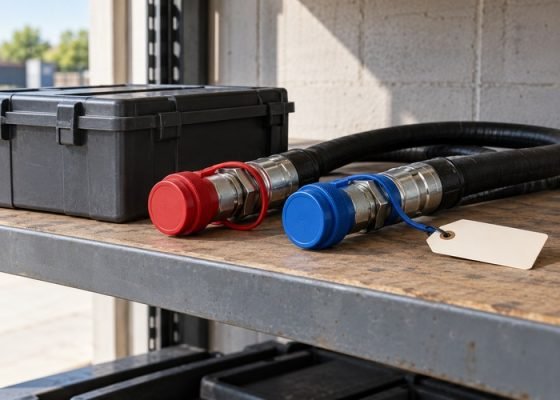
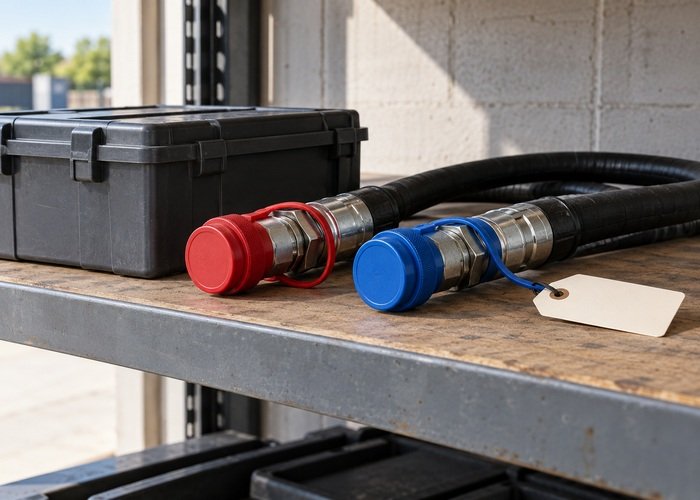
Store a mini excavator hydraulic breaker under the instructions for the actual attachment, with a stable arrangement that prevents the breaker and its working tool from falling or rolling. Confirm the approved storage position, support, preservation work and return-to-service requirements before the attachment is put away. A convenient corner of the yard is not a complete storage plan.
The useful starting point is an attachment-specific record: what is being stored, its condition, where it will remain and who must inspect it before reuse. This guide helps organize that record. It does not prescribe a universal stand, storage angle, depressurization method or internal preservation procedure.
Record the breaker manufacturer, model and serial number and locate its current instructions. The excavator identity alone may not identify an attachment that moves between machines. Include the installed working tool and any relevant adapter or hose arrangement in the record without assuming that every component shares one part reference.
Check whether the available instructions actually cover the attachment. A manual for a visually similar breaker can describe a different storage position or preservation requirement. If identity is uncertain, ask the responsible supplier to resolve it before someone chooses a storage arrangement by imitation.
Retain the last service information and any unresolved defect. An attachment put away after a complaint should remain distinguishable from one that completed service with no outstanding issue. Storage does not correct leakage, damaged retention parts or an unanswered operating concern.
los Epiroc SBU 160, 220 and 340 instructions, document 9800 0908 01 dated 2025-07-02, include a storage warning about heavy breakers and tools falling or rolling. They also address corrosion protection and professional attention after extended storage. Those are instructions for the listed attachments, not a universal service sequence for every breaker.
For your attachment, ask which actions the applicable manual requires, who may perform them and what records should be retained. Do not copy an internal disassembly or lubrication instruction from another model. An instruction that belongs to trained service remains a service task even when the attachment is no longer being used.
Similarly, do not adopt a published storage-duration threshold from an unrelated manual. Confirm the relevant conditions and elapsed-time requirements for the actual breaker. The purpose of reading another manufacturer’s example is to recognize the questions that need answers, not to transfer its numbers or repair scope.
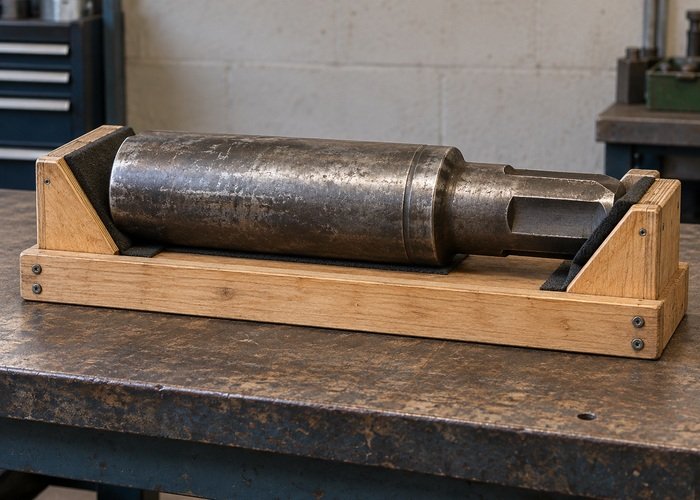
Have the responsible person confirm the approved support arrangement and its suitability for the attachment and location. The floor or ground, surrounding traffic and access for later handling all belong in the planning discussion. Do not improvise a support from loose materials merely because the attachment appears balanced at rest.
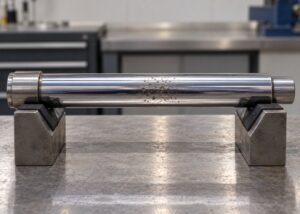
Include the working tool in the plan. A separate heavy cylindrical part can create its own rolling or falling hazard even when the breaker is secure. Identify where each component belongs and how it will remain controlled. Do not leave a tool leaning upright against a wall as an informal storage solution.
Keep the storage area clear enough for authorized handling and inspection. If another team may move the attachment to reach something else, communicate the storage arrangement and restrictions. The correct position is not preserved if an unbriefed person later changes it for convenience.
Before disconnection or preservation work, arrange the task under the exact carrier and attachment instructions. Stored energy and access conditions do not disappear because a job has finished. This article provides no instruction to loosen a fitting, release gas pressure or cycle controls as a generic remedy.
los HSE guidance on maintenance of work equipment emphasizes planning and safe arrangements for maintenance. Apply those principles to the actual disconnection and handling task. Confirm who is authorized to carry it out and how other people will know the equipment’s status.
Record the work actually completed, rather than marking a broad checklist item such as “ready for storage” without detail. If an action could not be completed or a defect prevented normal preparation, leave that exception visible in the attachment record and communicate it to the storage custodian.
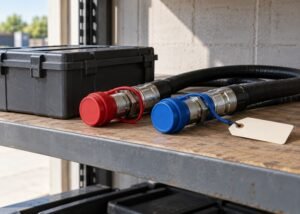
Ask which protection the manufacturer specifies for the attachment’s connections. Correct identification, cleanliness and suitable protection matter when the item will later be reconnected. Do not assume that a piece of cloth, an unidentified plug or a reused dirty cap is an approved substitute.
Donaldson’s hydraulic contamination guidance provides context for controlling contamination during maintenance and handling. It does not identify the required caps, preservation fluids or cleanliness target for this breaker. Obtain those details from the governing instructions and responsible service provider.
Keep any damaged connector or missing protective item on the defect list. Covering a component does not establish that it was inspected or found serviceable. The next technician needs to know whether the connection was confirmed, protected after approved work or left awaiting attention.
| Field | What to record | Why the next person needs it |
|---|---|---|
| Attachment identity | Breaker model, serial and working-tool reference | Locate the applicable instructions |
| Entry condition | Known defects, observations and last service | Avoid treating storage as a repair |
| Preparation | Approved actions completed and responsible person | Distinguish completed work from assumptions |
| Location and date | Storage start, designated place and custodian | Track elapsed time and subsequent movement |
| Release requirement | Checks or service needed before reuse | Prevent an unreviewed return to operation |
Keep the record with the attachment’s information, not only with the last carrier’s paperwork. If the breaker leaves one machine and returns on another, a carrier-only service log may lose the storage history. Use a stable attachment reference so photographs, quotations and service entries remain connected.
Record later moves and interventions as well. If a connection is opened, a component is exchanged or an environmental incident occurs, note the date and responsible person. That gives the return-to-service provider a reliable history rather than a single storage-start date that hides everything that happened afterwards.
Consider changes such as water entering the storage area, damage to the support, vehicle access changes or interference by another stored item. The responsible person should decide whether the arrangement remains suitable. Do not move an unstable or potentially damaged attachment without an appropriate handling plan.
Where the manual requires preservation or inspection during storage, assign responsibility and retain the completed work record. Avoid inventing a universal weekly or monthly interval. The relevant requirements depend on the actual attachment and the storage conditions, not a convenient calendar reminder copied from another machine.
A cover alone does not resolve every environmental question. Ask the service provider about the approved protection and inspection approach. Keep any materials used traceable so their suitability and any required removal before reuse can be checked later.

Before the breaker is assigned to a job, review elapsed storage time, preparation history, environmental events and unresolved defects. Ask the qualified provider what inspection or service is required by the actual instructions. Do not treat a dry exterior or the presence of protective caps as a complete release check.
Keep the breaker operating and maintenance information available for the next assignment. Storage release does not replace the carrier-matching and job-planning checks. A different carrier or task may require a separate suitability decision even if the attachment itself has been serviced.
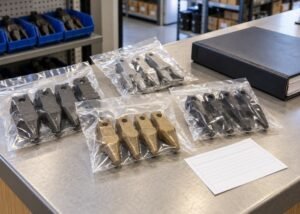
If the working tool changes, use the breaker tool selection guide for the separate shape and exact-fit enquiry. Record the approved part actually installed. Do not assume that a tool found next to the breaker in storage belongs to it.
For identity or replacement questions, retain the evidence described in the spare-parts ordering guide. The final handover should say what was checked, who released the attachment and what restrictions remain. It should not imply an unsupported overhaul or guarantee of future performance.
Ask the person receiving the attachment to confirm its identity against the release record. The record should identify the work completed, any conditions on use and the person to contact about remaining uncertainty. A storage tag should not be the only evidence carried to the next site.
If the attachment arrives with a different tool, damaged protection or an unexplained change in condition, report that discrepancy before it is assigned. Keep delivery acceptance and technical release distinct in the record. This helps the responsible people resolve a new concern without erasing the earlier storage history.
No. Obtain the applicable instructions and confirm the approved support and storage arrangement.
No. Use the prescribed isolation and service arrangements for the actual equipment.
No. Verify the requirements for the identified attachment and its storage history.
Arrange the required release checks and resolve outstanding defects before reuse under the applicable instructions.