Telephone/WhatsApp:+86 156 2656 0610
Telephone/WhatsApp:+86 156 2656 0610
Email:info@seekmach.com

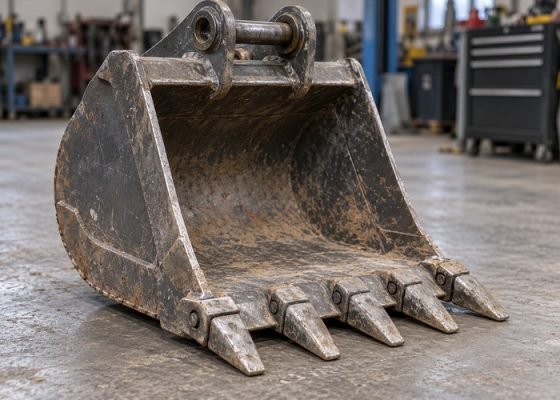
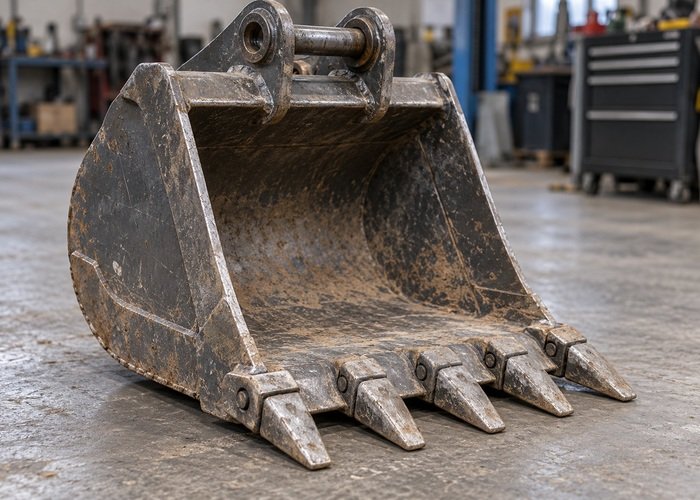
Replace mini excavator bucket teeth when the fitted system’s documented wear or damage criteria require it, or when a qualified assessment identifies an unsafe or unsuitable tooth assembly. Check the tooth, adapter and retainer together. A fresh tip cannot correct a damaged adapter, and a part that looks similar may not lock correctly. Do not choose a universal remaining length or replacement interval from a photograph.
This guide helps an owner identify the actual wear-part system, describe its condition and prepare a replacement enquiry. It does not provide a hammering, welding or torque procedure. The bucket manufacturer’s instructions and competent service assessment determine whether the job needs tooth replacement, retainer replacement or repair of the supporting assembly.
Start with the bucket identification, purchase record and parts drawing. Record the excavator model and serial number too, but recognise that an aftermarket bucket may have a different wear-part system from the original bucket. The machine’s identity alone may therefore be insufficient to identify the correct teeth.
Photograph the whole bucket, the cutting edge, an installed tooth and the retention arrangement from safe positions. Include legible markings without removing parts to find them. Ask the supplier to distinguish the replaceable tip, the adapter that supports it and the hardware that retains it. A seller’s description of a generic tooth size is not a complete matching method.
Weir’s ESCO construction tooth-system information describes teeth and adapters working as an assembly and illustrates multiple systems. It provides context for asking identification questions, not evidence that an ESCO part fits a SeekMach bucket. Keep any confirmed part numbers with the bucket record.
Use the machine’s prescribed parking, attachment lowering and energy-isolation procedure. Arrange the approved stable position for inspection or service. Nobody should work beneath an unsupported raised bucket or rely on a stopped engine as the only protection against movement. If access requires bucket removal or handling, have a competent person plan that work.
los HSE excavator safety overview discusses attachment security and separation from excavator movement. These UK principles are useful background, while local rules and the actual equipment instructions govern the task. Do not move the arm while a person is inspecting the cutting edge.
Cleanliness may help reveal markings and defects, but cleaning also needs an approved method and stable equipment. Do not strike, grind or loosen a retainer merely to improve visibility. Where identification remains uncertain, send the available information to the service provider and arrange a controlled examination.
Use a consistent description for each position along the cutting edge. Record missing or damaged retainers, cracks, unusual gaps, uneven wear and damage around the adapter or bucket lip. Avoid describing every condition as a worn tooth. Those distinctions help the technician decide whether a new tip can be installed properly.
| Finding | Question for the service provider | Information to retain |
|---|---|---|
| Rounded or shortened tip | Has the system’s specified replacement criterion been reached? | Position, comparable photographs and applicable wear guidance |
| Missing retainer or insecure tooth | What isolation and repair action is required before use? | Exact system identity and surrounding damage |
| Cracked tip or adapter | Does the supporting assembly require repair or replacement? | Wide and close photographs from safe access |
| Uneven wear across positions | Is the application, component selection or operating pattern relevant? | Material type, job history and previous replacements |
| Damaged cutting edge near an adapter | Can the bucket accept a replacement safely? | Bucket drawing and technician’s assessment |
Do not test an uncertain tooth by pulling on it while the machine is available for operation. Ask how security should be assessed for the identified retention system. A missing part should trigger investigation rather than an assumption that another tooth can simply be pushed into place.
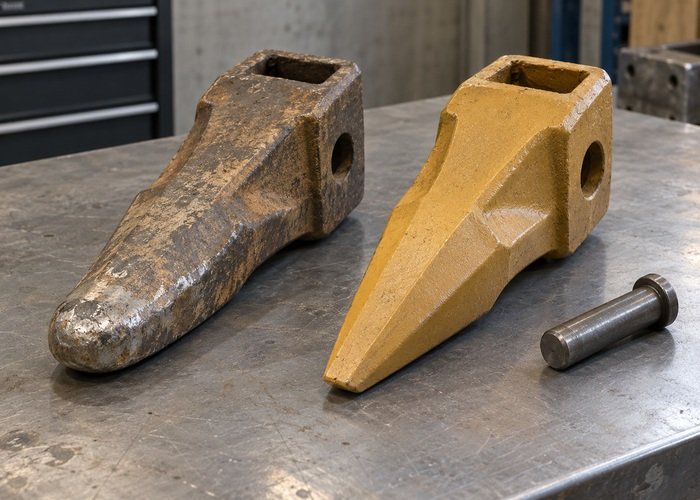
The replaceable tip is only one part of the assembly. Ask the technician to inspect the supporting adapter and retention interface before authorising a new tooth. If those features are damaged, the replacement may not seat or remain secure as intended. Repeated tooth loss needs a cause assessment.
Record whether the previous replacement involved only the tip or also its retainer. Include any repair to the adapter or cutting edge. Without that history, a recurring problem may be treated as ordinary consumption when the support has already changed. Keep service findings distinct from an operator’s interpretation.
Welding or rebuilding an adapter is specialist work governed by the relevant bucket design and repair instructions. Do not assume that any available weld restores the original geometry or material properties. Request a written repair decision, including any inspection or limitation that applies afterward.
Describe the material being excavated, the tasks performed and the wear pattern observed. A replacement enquiry for abrasive soil differs from one following impact damage. Ask the supplier why its proposed tooth profile suits the application and whether the original adapter accepts that profile.
Do not exchange compatibility for a claimed performance benefit. A more pointed or heavier-looking tooth is not automatically a better replacement. Confirm the exact system and approved alternatives before comparing service-life or digging claims. Any performance estimate should state the conditions behind it.
los excavator bucket sizes guide covers broader bucket selection, while the trenching bucket guide considers soil and excavation requirements. Neither identifies a tooth from its outline. Treat wear-part fit as its own procurement check.
Ask whether the quoted assembly includes the correct retainer, locking parts and any specified consumable items. Obtain the instructions that apply to those components. A quotation that lists only a tooth may leave the installer without the required new hardware or a clear installation method.
Keep confirmed references together: bucket identity, tooth-system name, tip number, retainer number and any approved adapter number. Check the delivered markings and packaging against that record before the parts enter general stock. Similar pieces stored together can create avoidable selection errors.
los mini excavator spare-parts ordering guide explains how identification records improve an enquiry. For a SeekMach request, include the bucket information as well as the machine serial number. This article does not establish availability or interchangeability for an unidentified assembly.
Have the competent service provider follow the exact removal and installation procedure. Retention systems differ, so a method shown for another bucket can be inappropriate. Do not substitute an improvised pin, reused damaged lock or a universal tightening value for the prescribed components and checks.
Ask what the installer will inspect before releasing the bucket. The record should distinguish successful seating and retention from an unresolved adapter defect. Where the bucket was repaired, include the approved repair details and any required restrictions. A new-looking tooth alone is not a release decision.
HSE guidance on work-equipment inspection explains the role of risk-based checks and records in identifying deterioration. Apply the relevant local framework to your operation. The supplier’s instructions should determine which checks are required after installation and during continued use.
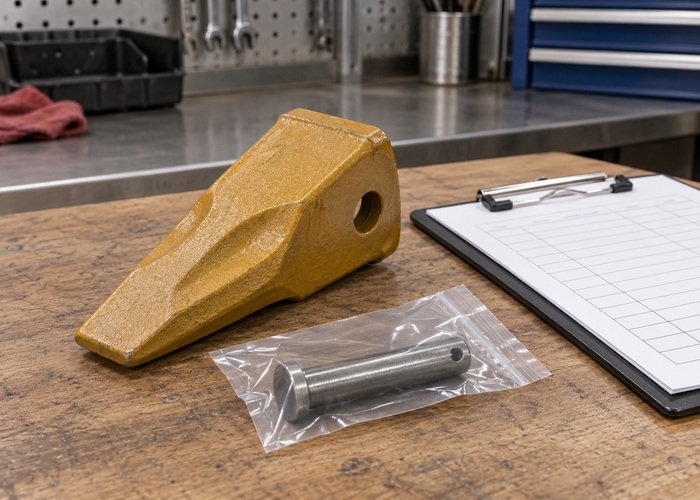
Record the installation date, hour-meter reading, bucket position and confirmed component references. Take comparable photographs when the bucket can be inspected safely. Include the kind of material and significant job changes, rather than recording hours as the only explanation for wear.
A pattern of faster wear on one position can justify a closer review, but it does not prove a particular cause. Ask the service provider to assess the assembly, application and operating conditions. Keep conclusions attributed to the person who made the assessment.
If a tooth is missing, follow the site’s incident and material-control process. Record where it was last known to be present and which material handling activities may be affected. Do not continue operating an insecure assembly while searching casually for the missing part.
Base stock on confirmed installed systems, actual consumption and dated supplier availability information. Separate parts for different buckets even when their shapes look similar. Keep installation instructions accessible alongside the stock record so that an urgent replacement does not depend on memory.
Review repeat failures before ordering a larger supply of the same tip. Extra stock can reduce waiting, but it cannot correct an unidentified mounting problem. A good parts plan makes the right assembly available and preserves the information needed to install it safely.
No. Use the wear criteria for the fitted system and qualified assessment. A photograph cannot establish the remaining safe service life.
Appearance is insufficient. Confirm the tip, adapter and retention system using documented references or supplier identification.
Follow that system’s instructions. Ask what hardware must be renewed and whether the existing supporting parts remain serviceable.
The fit, retainer or supporting assembly may need investigation. Record prior replacements and have the complete system assessed before further use.