Telephone/WhatsApp:+86 156 2656 0610

Telephone/WhatsApp:+86 156 2656 0610
Email:info@seekmach.com

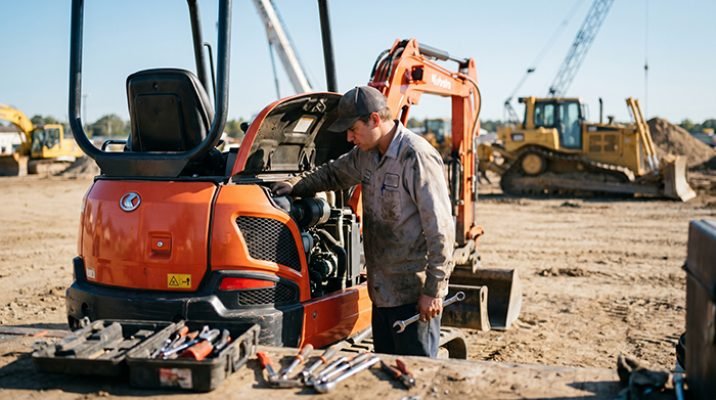
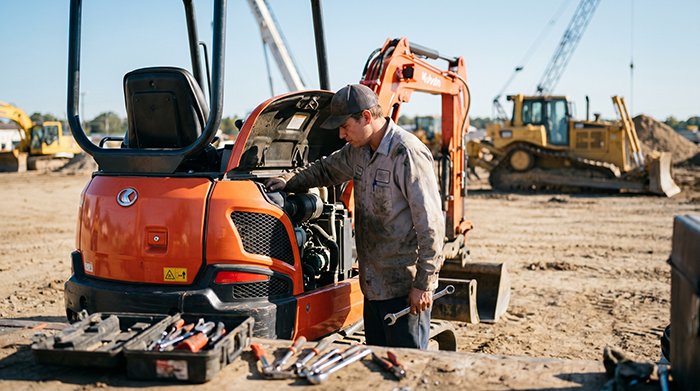
Urban construction has fundamentally shifted from a battle of raw power to a discipline of surgical precision — and the machine driving that change is the zero tail swing excavator.
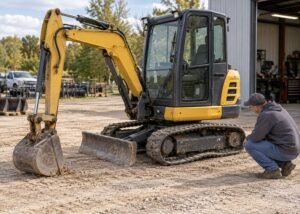
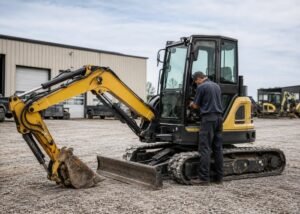
A zero tail swing (ZTS) excavator is defined by one critical design principle: the upper body rotates entirely within the width of the machine’s tracks, with zero rear overhang during slewing. According to the Association of Equipment Manufacturers (AEM), this allows the upper structure to pivot without ever breaching the track boundary — meaning no accidental contact with adjacent walls, fencing, or passing workers.
The risk of accidental contact is exactly what it sounds like — a conventional excavator swinging its counterweight into a structure it wasn’t supposed to touch. On a dense urban site, that risk isn’t theoretical. Tight alleys, basement excavations, and road-adjacent trenches leave almost no clearance buffer. A conventional machine’s rear counterweight can extend 3 to 5 feet beyond the tracks, turning every rotation into a potential collision with:
Conventional models demand safety buffers that urban sites simply can’t accommodate. Where a traditional unit might require 6 to 8 feet of clear swing radius, a ZTS machine reclaims that space entirely — a meaningful advantage when every square foot has a dollar value attached.
That dollar value matters enormously. Accidental structural damage on urban job sites routinely triggers costly delays, insurance claims, and liability disputes that can derail project timelines by weeks. The engineering decisions that make ZTS possible — repositioned counterweights, reconfigured cooling systems, and a recalculated center of gravity — are what we’ll unpack next.

Achieving zero tail swing isn’t a simple trim job — it demands a fundamental rethink of where every major component lives inside the machine.
Engine and cooling relocation is the first domino. Manufacturers reposition the engine longitudinally, often rotating it 90 degrees or tucking it lower and further forward within the chassis. Cooling systems, hydraulic tanks, and counterweights are similarly redistributed to pull mass away from the rear of the upper structure. The result: a tail radius that stays within — or barely exceeds — the width of the tracks during a full 360-degree slew.
That geometry creates an immediate tension with stability. As the International Construction Magazine (KHL Group) notes, the shift toward zero tail swing is driven by the increasing density of urban infrastructure and the need for multi-functional machines — meaning manufacturers can’t simply shrink the machine to solve the problem.
Center of gravity is where the engineering gets demanding.
Bold Technical Callout: On a ZTS machine, the center of gravity must remain within the polygon formed by the undercarriage tracks at all working angles — which is why ZTS excavators frequently require a wider undercarriage stance than equivalently-rated conventional units.
That wider footprint trades a slightly larger ground disturbance for the critical benefit of keeping the tail inside the work envelope. For operators choosing a compact excavator for tight spaces, understanding this balance matters directly for site planning and permit compliance.
Boom swing plays a complementary role. An offset or swing boom allows the attachment to work parallel to walls and obstacles without rotating the entire upper structure — reducing the need to slew at all in the tightest corridors.
Together, these engineering decisions explain why true ZTS performance isn’t just about what’s missing from the tail — it’s about everything that was redesigned to compensate for it. That same precision thinking extends directly into how these machines perform in the most demanding urban environments, particularly when the work zone narrows to a single lane of active traffic.
Municipal jobsites demand a level of spatial discipline that conventional excavators simply cannot deliver — and zero tail swing machines are closing that gap fast.
Road crews working in a single lane no longer need to commandeer the adjacent lane as a safety buffer. That’s a direct operational advantage when a permit restricts work to one lane of a two-lane street and traffic must keep moving. With a conventional machine swinging its counterweight into the adjacent lane on every rotation, the crew either shuts down a lane or accepts serious liability exposure. A ZTS machine eliminates that dilemma.
Utility corridors compound the challenge further. Beneath virtually every urban street lies a densely packed grid of fiber optic conduit, gas distribution lines, water mains, and storm drain infrastructure. Above grade, pedestrian walkways run parallel to the work zone. A boom swing excavator — one equipped with a side-shift or offset boom — adds lateral flexibility on top of the ZTS platform, letting operators trench precisely alongside existing utilities without repositioning the machine or endangering foot traffic on the adjacent sidewalk.
The permitting math matters here too. According to Equipment Today, zero tail swing machines can reduce the required safety buffer zone significantly compared to conventional tail swing models — a figure that translates directly into narrower permit footprints, lower traffic control costs, and faster municipal approvals.
For utility repair work where the sidewalk itself is the worksite, the benefits stack up quickly:
Those same dimensional advantages become even more critical when the work moves off the street entirely — and indoors.
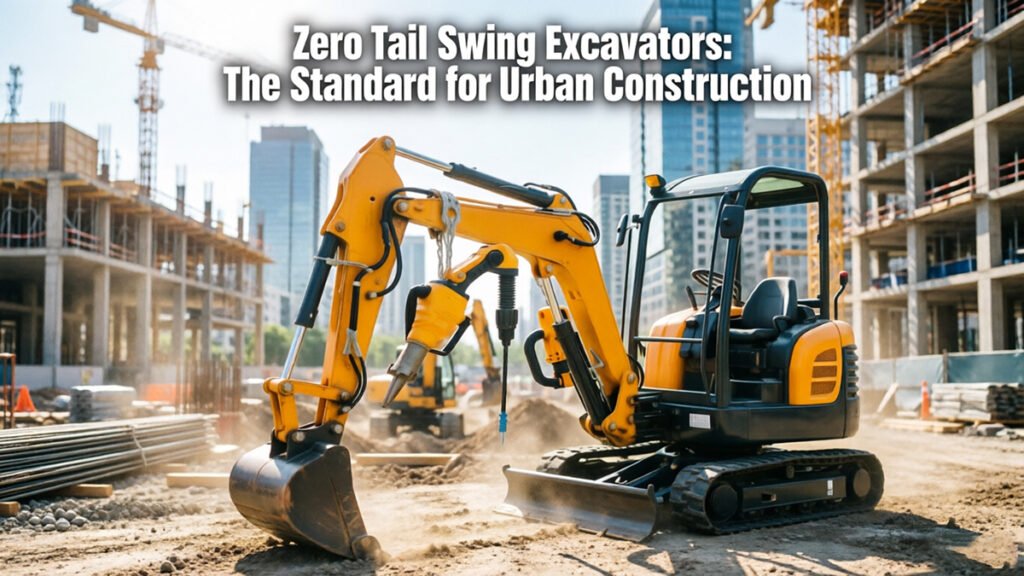
Interior structural work represents one of the most demanding environments any excavator can face — and it’s exactly where the ZTS versus conventional tail swing comparison reaches a clear verdict.
When working inside a building, zero tail swing isn’t a preference — it’s often the only viable configuration.
Getting the machine into position is the first challenge. In practice, contractors must either crane compact excavators through roof openings or drive them through standard double doors, which typically measure 8 to 10 feet wide. A conventional excavator’s tail swing extends well beyond that clearance envelope during rotation, ruling it out entirely before the first bucket swing.
Sub-basement access compounds the problem further. Once a machine is operating below grade inside a structure, 360-degree rotation is often operationally essential. Crews need to move spoil, reposition the boom, and clear debris without repositioning the tracks every few minutes. Ceiling height and wall proximity create a box-shaped operating zone where any overhang during slewing becomes a collision risk with structural elements.
According to Construction Equipment Guide, ZTS excavators are increasingly utilized in indoor demolition and sub-basement applications precisely because ceiling height and wall proximity demand machines that rotate entirely within their own footprint.
Load-bearing column avoidance is where interior work becomes genuinely technical. Crews executing floor slab removal or partition demolition must swing repeatedly near columns they cannot damage. A tail that sweeps outward — even 12 inches — puts that structural member at risk on every cycle.
Choosing the right configuration for interior work is straightforward. The harder question is whether ZTS makes equal sense for conventional outdoor jobsite conditions — and that tradeoff deserves a closer look.
Zero tail swing excels in tight urban environments, but procurement managers need an honest framework — because the right machine depends entirely on the job.
| Factor | ZTS Excavator | Conventional Excavator |
|---|---|---|
| Tail clearance | Minimal overhang | Extends beyond tracks |
| Lifting capacity | Moderado | Higher (larger counterweight) |
| Urban/indoor fit | Excelente | Limitado |
| Engine access | Tighter compartments | More open service areas |
| Operator cab space | Compacto | Roomier |
| Upfront cost | Más alto | Más bajo |
| Liability exposure | Reducido | Elevated in confined sites |
Lifting capacity is the clearest argument for conventional models. As Compact Equipment Magazine notes, conventional excavators often deliver higher lifting capacities because the extended counterweight provides greater leverage. For heavy lifts on open sites — bridge work, pipeline installation, large-scale grading — that counterweight advantage is real and shouldn’t be dismissed.
However, ZTS performance in other categories often offsets that single limitation. When evaluating indoor demolition equipment specifically, the tradeoff flips: a conventional swing radius that clips a structural column or overhead pipe creates far more operational cost than any lifting deficit ever would. The liability math typically favors ZTS whenever workers or structures are within 10 feet of the machine’s swing arc.
Maintenance access deserves honest acknowledgment too. Tighter engine compartments in ZTS models can extend service time, a factor worth building into total ownership cost calculations. Similarly, compact cabs prioritize site agility over operator ergonomics — relevant for crews logging long daily hours. For a closer look at how tonnage class affects these tradeoffs, this size comparison breakdown offers useful context.
Ultimately, open rural sites with heavy-lift requirements may still favor conventional configurations. Everywhere else, ZTS increasingly sets the standard — and how that standard is manufactured matters just as much as the design itself.
Precision ZTS engineering begins long before a machine reaches the jobsite — it starts with the scale and discipline of the facility that builds it.
Integrated production matters because zero tail swing geometry leaves no room for tolerance errors. The counterweight housing, swing bearing alignment, and undercarriage geometry must all work in concert. Operating within a 50,000m² integrated production facility — with over 15 years of global export experience — means critical components are engineered, machined, and assembled under one roof, eliminating the quality gaps that surface when subassemblies are outsourced across multiple vendors.
ISO 9001 certification is the baseline standard serious buyers should demand from any heavy machinery supplier. For export-grade ZTS units, certification signals that dimensional tolerances, weld quality, and hydraulic performance are validated through documented processes — not just visual inspection. It’s the difference between a machine that works in a controlled demo and one that holds up under daily urban construction loads.
Factory-direct heavy machinery procurement cuts the distributor chain entirely. In practice, that means buyers access high-spec ZTS technology at pricing that typically reflects manufacturing cost rather than stacked dealer margins. That delta can represent thousands of dollars per unit — meaningful whether you’re sourcing a single machine or a multi-unit fleet.
The factory-direct model also unlocks OEM/ODM customization — allowing contractors and rental companies to spec machines that meet regional compliance requirements, from emissions tiers to cab configurations and hydraulic flow ratings.
For teams evaluating compact ZTS units across different project profiles, the full range of excavator guides on the SeekMach platform breaks down specification tradeoffs by application. One example worth reviewing is this deep-dive on a 1.2-ton urban-spec model built to these exact production standards.
Of course, the long-term value of any factory-direct machine depends equally on how well it’s maintained — which is where ownership strategy becomes just as important as procurement.
A well-maintained ZTS excavator doesn’t just last longer — it pays back its purchase price through reduced downtime, stronger resale value, and fewer costly repairs.
Daily inspection discipline is the single biggest factor in long-term ZTS reliability. Because compact engine compartments pack more components into less space, debris and heat buildup accelerate wear faster than in conventional machines. Before each shift, operators should check:
Managing heat dissipation deserves particular attention. According to Equipment Today, proper maintenance of the cooling system is critical in ZTS models precisely because the densely packed engine configuration restricts natural airflow. In practice, operators working in summer heat or enclosed job sites should clean radiator fins weekly rather than monthly and verify that cooling fans run at full capacity.
Track and undercarriage care is equally non-negotiable for machines working urban surfaces. Concrete and asphalt accelerate track wear significantly compared to soil. Check track tension daily — a loose track on hard surfaces generates side-load stress on the undercarriage frame. Re-tension per manufacturer spec, and rotate work patterns when possible to distribute wear evenly.
Resale value is where ZTS models increasingly outperform conventional counterparts. Demand for compact urban excavators continues to grow, and ZTS-configured machines command a premium in the used equipment market due to their wider application range. Buyers shopping the secondary market prioritize ZTS configurations because they know urban project requirements aren’t going away.
Keeping a ZTS unit in peak condition ultimately shapes the total cost-of-ownership picture — a critical factor that the next section brings into full focus.
Zero tail swing isn’t a luxury feature — it’s a measurable safety and productivity standard that urban construction simply cannot afford to ignore.
Still have questions about how ZTS compares to related technologies — or whether it’s right for your specific application? The answers are straightforward once the terminology is clear.
Zero tail swing remains one of the most misunderstood — and most important — specifications in modern excavator selection. Here are the answers that matter most.
What is the difference between ZTS and RTS?
These two terms are often confused, but the distinction is measurable. ZTS (Zero Tail Swing) means the counterweight rotates entirely within the track width during a full 360° swing. RTS (Reduced Tail Swing) still allows a slight overhang — typically a few inches beyond the tracks — which can matter significantly in wall-adjacent or traffic-exposed worksites. In genuinely confined urban settings, those few inches are the difference between a safe pass and a collision.
Can a ZTS excavator lift as much as a standard machine?
Generally, yes — within the same weight class. However, because ZTS machines carry a more compact counterweight to stay within track width, there can be modest trade-offs in maximum lift capacity compared to conventional tail swing units of identical size. Always check the machine’s rated lift chart before spec’ing for heavy lifting tasks.
Is ZTS necessary for agricultural applications?
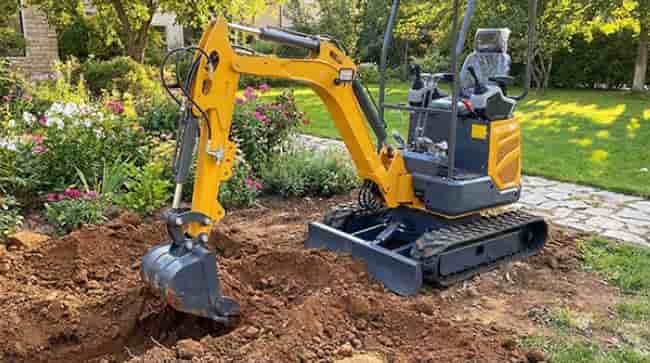
Not always. Open farmland offers the swing clearance that urban sites don’t. That said, ZTS compact machines remain practical for farm-scale trenching and utility work in tight paddocks, orchards, or near structures — versatility that adds long-term value beyond the construction site.
ZTS in Action — Video Resource
The bottom line: ZTS is not just a niche upgrade — it’s becoming a baseline standard any serious urban contractor should demand. Explore excavator options built for confined work to find the right fit for your next project.