Telephone/WhatsApp:+86 156 2656 0610
Telephone/WhatsApp:+86 156 2656 0610
Email:info@seekmach.com

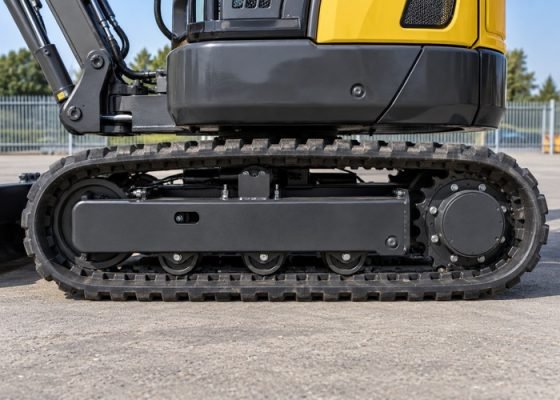
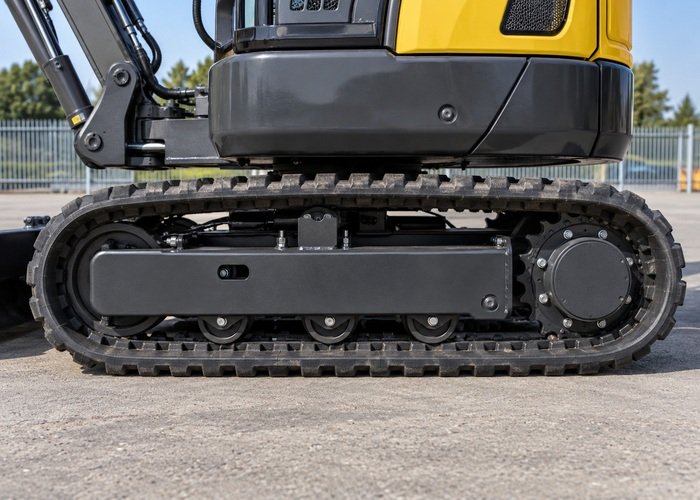
Choose the undercarriage option approved for the exact mini excavator and suited to its real surfaces, debris and travel pattern. Rubber tracks, steel tracks and rubber pads are different configurations, not interchangeable purchasing labels. Surface protection, ground support, traction and service requirements need separate review. Do not assume that a machine can be converted to another system because its track width appears similar.
This guide covers the buying decision between approved configurations. It does not identify replacement track dimensions or prescribe track installation. Confirm the manufacturer’s available options, the complete undercarriage arrangement and the site’s requirements before comparing quotations.
Describe the whole route, including unloading, travel, turns and working positions. Include finished paving, concrete, turf, gravel, exposed rock and any demolition debris. Record changes between surfaces rather than selecting a track for the easiest part of the job.
Ask the site contact what surface damage is unacceptable and how condition will be recorded. Protecting a finished driveway is a different requirement from working on rough ground. A general request for a track that works everywhere is unlikely to produce a useful technical answer.
Photograph access transitions and known obstacles from safe positions. Include sharp edges, kerbs and loose material where relevant. These observations help the supplier understand the application; they do not replace an assessment of whether the underlying ground supports the machine.
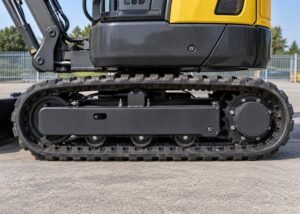
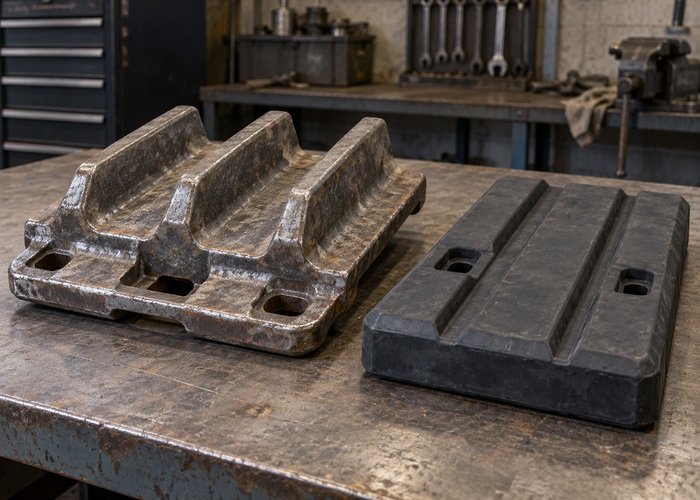
A continuous rubber track and a steel track fitted with rubber pads are distinct systems. Ask the supplier to identify the actual arrangement, including how any pad is attached and which components form part of the approved configuration. Avoid comparing a replacement rubber belt with a complete steel-track conversion as though they are equivalent items.
Bridgestone’s excavator pad information illustrates rubber-pad designs used on excavator track systems for paved or concrete surfaces. It provides context for identifying options, not approval for a retrofit on a SeekMach machine. A pad description also does not guarantee that every surface will remain unmarked.
| Option | Question to resolve | Evidence to request |
|---|---|---|
| Continuous rubber track | Is the exact belt approved for the machine and application? | Complete fit information and supplier limitations |
| Steel track configuration | Is it an approved option on this machine? | Manufacturer confirmation covering the undercarriage |
| Steel track with rubber pads | Which pad and attachment system are approved? | Configuration, mounting and inspection documentation |
| Temporary surface protection | Does the route require additional measures? | Ground assessment and suitable access plan |
| Mixed-site operation | Which conditions create restrictions? | Written application review and operating limits |
A surface that looks protected may still have an underlying support problem. Identify buried features, recent excavations and other ground constraints through the site’s process. The choice of rubber or steel does not itself approve access across an uncertain area.
Das ground protection mat guide separates surface protection from a reviewed ground-support arrangement. If mats are proposed, include the machine, track configuration, route and activity in that review. Do not assume that adding panels makes every track system suitable.
Keep responsibilities clear. The machine supplier confirms equipment options, while the responsible site specialist assesses the actual ground and access requirements. A track quotation should not leave either decision implied.
Describe the material likely to contact the tracks, including sharp fragments or edges identified on the route. Ask how those conditions affect the proposed product’s suitability. Do not substitute a general claim about durability for a written review of the actual job.
Bridgestone’s rubber-track technical brochure discusses damage mechanisms and cautions concerning sharp surfaces and edges. Its product tests and example machines are specific to that publication. They must not be turned into a universal service-life prediction or a tension setting for another excavator.
Record how much travel the job involves and where the machine turns or changes surfaces. Ask the supplier to identify relevant operating restrictions. The objective is to reveal application limits before purchase, not to derive an owner-created driving technique from a track advertisement.
Provide the exact model, serial number and current undercarriage information. Ask whether the proposed configuration is an original approved option, an authorised replacement or a conversion requiring further assessment. Keep those answers distinct.
A width measurement alone does not establish fit. The rubber track size guide focuses on dimensions and guide arrangements for replacement identification. This article addresses the earlier choice of configuration and application. Both decisions need appropriate documentation.
For steel or pad options, ask what other components, clearances or approvals are involved. Do not infer interchangeability from another machine in the same weight class. Where approval cannot be established, leave the proposal unresolved rather than ordering parts by resemblance.
Request the applicable inspection, maintenance and replacement information. Identify which components are supplied, which remain on the machine and which require assessment during replacement. A quotation for one visible wear item may omit work needed elsewhere in the undercarriage.
Das rubber track maintenance guide covers condition, tension and thrown-track questions. Use the exact manual for any setting or procedure. A purchasing comparison is not permission to adjust or install tracks without the specified equipment and competence.
Ask how parts will be identified later. Record belt references or pad-system identification with the machine history. Confirm dated availability information rather than accepting an unsupported promise that every component is always in stock.
Where a demonstration is appropriate, agree its configuration and site controls with competent people. Establish what the surface owner wants assessed and how the starting condition will be recorded. An uncontrolled test on valuable paving is not a sensible substitute for a technical review.
Photographs can support the comparison, but record limitations such as different weather, substrate or debris conditions. A clean demonstration surface does not establish behaviour on every driveway or job site. Keep the observed result tied to the conditions in which it was obtained.
Agree who accepts the result and what additional protection is needed. If the assessment cannot represent the intended work, preserve that uncertainty in the purchase record instead of calling the demonstration a universal approval.
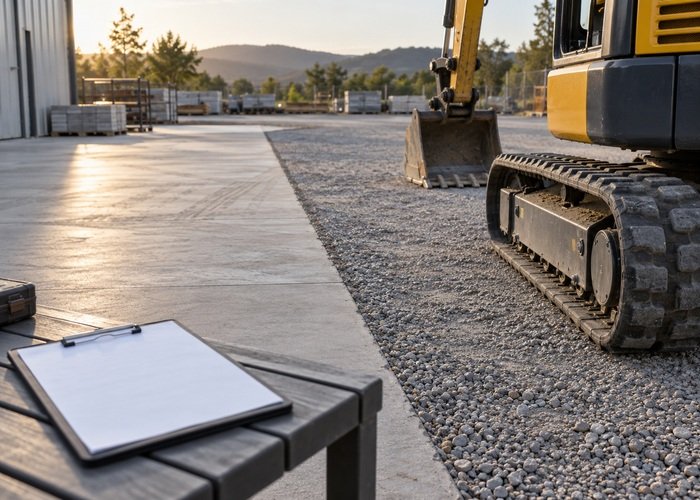
HSE work-equipment inspection guidance explains how inspection helps identify deterioration affecting safe use. Its UK framework is relevant background; local requirements and the equipment instructions determine the actual checks. This guide sets no universal inspection interval.
Record who checks the installed arrangement and who handles defects or uncertainty. If the machine moves to a significantly different application, revisit suitability. A configuration selected for finished surfaces may require another review when the next job introduces different debris or ground conditions.
Keep changed components and supplier approvals in the maintenance history. A future owner or hire customer should be able to identify the installed system without guessing from a photograph. Update records when parts are replaced or the approved configuration changes.
Compare the exact track or pad system, associated components, installation, inspection and support. Identify exclusions and unresolved approvals. A low price for an individual belt cannot be compared directly with a complete installed configuration without accounting for scope.
Include surface-protection and access requirements in the job estimate. The least expensive component may not address the site’s priorities. Equally, a more expensive option should not be justified by unverified claims about lifespan, productivity or the complete absence of surface marking.
For a SeekMach enquiry, describe the intended surfaces and work and ask which undercarriage options are documented for the proposed model. Confirm actual availability and approval. This article does not claim that every listed mini excavator supports steel tracks or aftermarket rubber pads.
Retain the application description, supplier responses, approved configuration and any trial record together. Explain the conditions that would require a new review. This is more useful than recording only a brand name or a general preference for rubber or steel.
When comparing future jobs, use that record to identify what has changed: surface, debris, travel, machine or task. Review the affected decision with the responsible supplier or site specialist. Do not treat an earlier acceptance as approval for all later work.
No. Identify the complete system and its approved mounting arrangement before comparing suitability or ordering parts.
Do not assume so. Obtain manufacturer confirmation covering the exact undercarriage and proposed configuration.
No universal guarantee is appropriate. Consider the actual surface, debris, activity and any required protection.
Service life depends on the product and application. Request relevant evidence and avoid universal hour or lifespan claims.