Telephone/WhatsApp:+86 156 2656 0610

Telephone/WhatsApp:+86 156 2656 0610
Email:info@seekmach.com

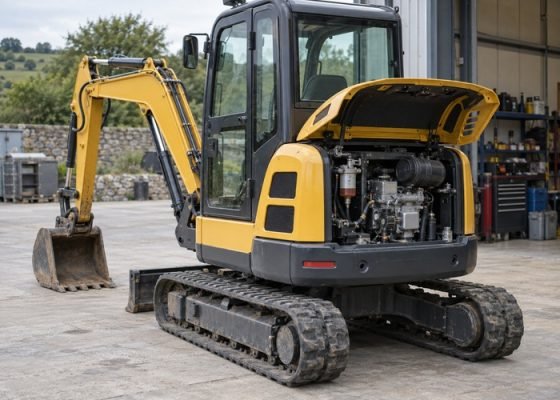
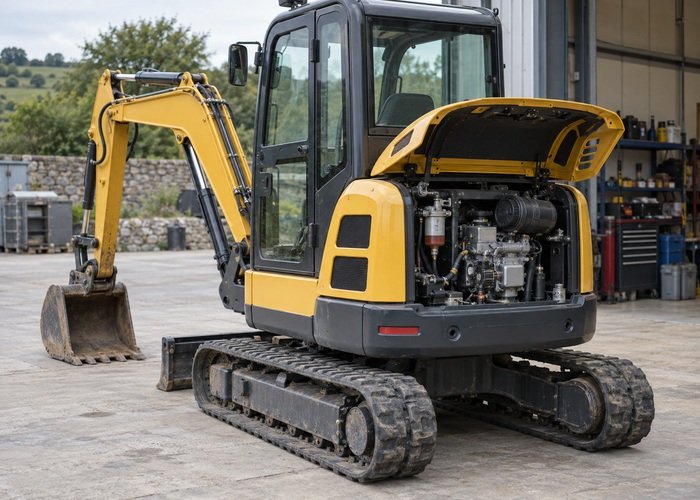
A mini excavator fuel-water separator needs inspection and service according to the exact diesel engine and separator instructions. First confirm that the machine has one, identify its drain and any water sensor, and check the meaning of the warning shown. Record visible findings and recent refuelling history. Do not apply a generic draining or priming procedure to an unidentified assembly.
This guide applies to diesel machines fitted with a fuel-water separating device. It does not assume that every mini excavator uses diesel, a transparent bowl or the same filter arrangement. It helps an owner recognise when a routine inspection has become a contamination investigation, and which information a service provider needs before giving model-specific advice.
Use the machine model and serial number together with the engine identification plate and parts information. Find the relevant operator or service manual section. Record the separator assembly and filter part numbers where available, and distinguish the primary separator from other fuel filters. Similar-looking housings can perform different functions.
Confirm whether the collection area is visible, whether the drain is manually operated and whether a sensor is fitted. A sensor connector should be identified from documentation rather than guessed from its position. Ask whether any service action requires a particular shutdown condition, fuel-valve position, priming method or authorised technician.
Das mini excavator spare parts ordering guide explains how to prepare identification information for a parts enquiry. Do not order a replacement only because its thread or exterior dimensions resemble the removed component. The complete assembly and specified filtration requirements need confirmation.
Water and solid contamination are related fuel-quality concerns, but they are not the same problem. A fuel-water separator is designed to separate water under its specified conditions; the exact media and system arrangement determine its capabilities. Donaldson’s fuel-quality overview describes water-related risks and the role of coalescing filtration. It also cautions that additives require care. Those principles do not establish the specification of your machine.
A device that collects water needs appropriate inspection and maintenance. It is not permission to keep filling the tank from a questionable supply. If water reappears after service, the owner needs to investigate the fuel source, storage and machine condition with the service provider. Repeated draining alone leaves the underlying question unanswered.
Do not treat a visually clean sample as a laboratory result. A photograph cannot establish the amount of dispersed water or other contamination. If a qualified technician recommends analysis, use the specified sampling and handling method and preserve the identity of the sample.
| Observation | What it tells you | Next question |
|---|---|---|
| Water warning appears | The system is reporting a condition requiring the manual’s response | What does this exact symbol mean on this engine? |
| Water visible in a collection bowl | Visible separated material is present | What inspection or drain instruction applies? |
| Warning returns after service | The issue is unresolved or recurring | Was the procedure correct, and does fuel or sensor diagnosis need escalation? |
| Hard starting or power loss | There is a performance complaint with several possible causes | What diagnosis is required instead of assuming the separator caused it? |
| Several machines affected after one delivery | A shared fuel event may be relevant | Should the supply be held for investigation? |
Photograph the warning display and record when it appeared. Note whether it followed refuelling, startup, operation or a recent filter change. Read the applicable manual instruction, including any requirement to stop, drain or request service. Do not continue because a similar light on another machine had a different meaning.
A water-in-fuel warning should not be dismissed as a nuisance. Equally, a persistent warning is not proof that a particular component has failed. A technician may need to assess water contamination, the fitted sensor or its circuit. Record what was done and whether the indication cleared, without claiming a diagnosis that has not been established.
If the warning is unfamiliar or the correct manual is unavailable, obtain guidance for the serial-numbered machine. Do not unplug the sensor to silence it or treat a disconnected warning as evidence that the fuel system is healthy. Keep the unresolved condition visible in the maintenance record.
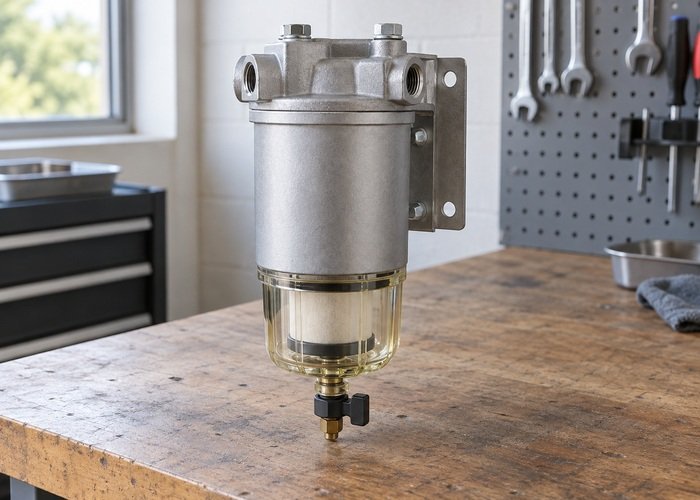
Follow the machine’s safe parking and shutdown instructions. Identify the assembly before touching a valve or connector. Look for external leakage, damaged housing, loose mounting or a compromised bowl using the inspection method the manual permits. A dark or dirty bowl can limit visibility; do not solve that by applying an unapproved cleaning chemical.
Where a clear collection area is fitted, describe the visible condition and use a photograph if it can be taken safely. Keep the photograph separate from any claim about fuel quality. Where there is no clear bowl, rely on the installed warning system and specified inspection procedure rather than improvising access.
A fuel system can also include pressurised components that are outside the scope of separator maintenance. Do not loosen injector lines or high-pressure connections to troubleshoot a warning or make the engine start. If access or component identification is uncertain, stop the task and contact the qualified service provider.
Read the complete procedure before beginning, including collection, spill control, closing the drain and any required priming or leak checks. Prepare the specified suitable container and keep ignition sources away. The amount, sequence and valve operation must come from the actual instructions. There is no single correct quantity to drain from every separator.
Donaldson’s fuel filtration guide explains that separating filters can have different collection and drain arrangements, and that retained water requires removal. It notes that drain frequency depends on fuel quality. Use your engine’s schedule and warning response rather than converting general supplier guidance into a universal interval.
Do not assume that a bowl unscrews for routine draining, that a valve opens in the same direction as another design or that the engine should run during the task. Any uncertainty about the procedure is a reason to request the right instruction. Forcing an unfamiliar component can create a leak or damage the assembly.
Dispose of collected fuel and water through the approved local route. Do not pour it onto the ground, into a drain or back into the tank. Record the observation and service action without turning an approximate visual estimate into a precise contamination measurement.
A filter change and a routine drain are different tasks. Confirm the service interval, correct element, seals and assembly instructions for the fitted system. Ask whether any bowl or sensor transfers to the new component and what checks are required. Do not reuse a seal simply because it appears intact unless the instructions permit it.
Priming methods vary. Some systems provide a hand primer; others use a specified alternative. Prefilling a replacement filter may be prohibited or require a particular method. Avoid importing instructions from an online video of another engine. An apparently convenient shortcut can bypass the intended contamination controls.
DAVCO’s fuel filtration education resources illustrate why guidance is organised around specific separator technologies and applications. Use such supplier information to understand the system, then follow the documentation for the component actually installed. No aftermarket substitution is approved by this article.
If water repeatedly returns, record recent fuel deliveries, storage containers, transfer equipment and the machines supplied from them. Preserve dates and delivery identifiers. Ask the service provider how to investigate the supply and whether additional equipment should be held out of use while the fuel is assessed.
Check the accessible condition of the filler cap and storage arrangements through the appropriate maintenance process. Look for a pattern rather than immediately blaming one component. A warning after a delivery is relevant evidence, but it does not prove which stage introduced contamination.
Keep any retained samples clearly associated with their origin and date, following the technician’s instructions. Do not mix samples from the separator, tank and bulk supply into one container. They answer different questions. Avoid adding a treatment before recording the findings unless the responsible professional has specified that action.
For a fleet, compare affected and unaffected machines without assuming they have identical fuel systems. The same delivery may be an important common factor, while different warnings or service histories still need individual interpretation. A shared fuel record makes that comparison easier.
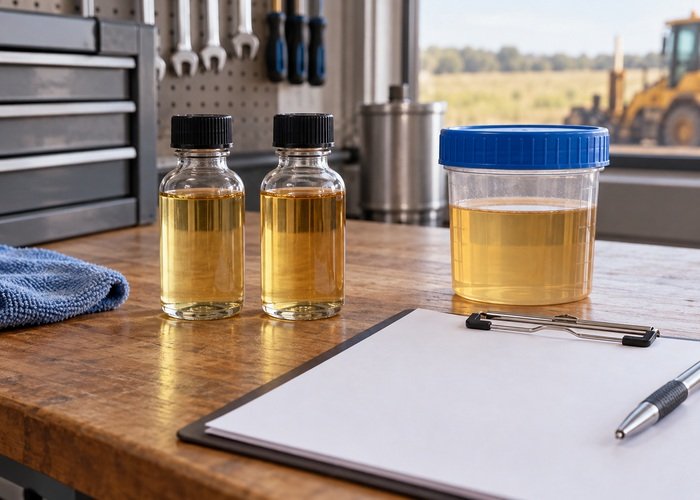
Use consistent fields: machine and engine identification, hour-meter reading, warning text, inspection findings, last refuelling event, assembly identification, action taken and the person responsible. Include the procedure or manual revision used where that information is available.
Record what happened after the approved service. Did the indication clear, recur or remain unchanged? Was the machine released, restricted or awaiting diagnosis? Those are useful operational facts. “Separator fixed” is too vague when no cause or follow-up check has been documented.
Add the fitted separator’s required inspection to the mini excavator daily inspection routine. Keep the interval and method controlled by the engine manual. General checklists organise work; they do not override the instructions for a specific fuel system.
Ask the supplier to identify the engine, installed fuel filters and separator arrangement, warning response and required maintenance documents. Include service access and replacement identification in the handover. The new excavator inspection checklist can help organise that discussion before the machine enters regular work.
For a SeekMach enquiry, provide the intended fuel supply conditions and ask what documentation is available for the proposed model. Confirm the actual engine configuration rather than assuming that another machine’s separator or service method applies. Keep the answers with the delivery record.
No universal assumption is appropriate. Confirm the engine type and installed fuel system from the serial-numbered machine’s documentation.
Follow the exact manual, warning response and service guidance for your fuel conditions. Do not use a universal interval or drain quantity from another engine.
It may be a required maintenance action, but recurrence needs investigation. Record the result and ask the technician to assess contamination and the fitted warning system.
No. Starting problems have several possible causes. Report the symptoms and visible findings separately, then obtain the appropriate diagnosis.