Telephone/WhatsApp:+86 156 2656 0610
Telephone/WhatsApp:+86 156 2656 0610
Email:info@seekmach.com

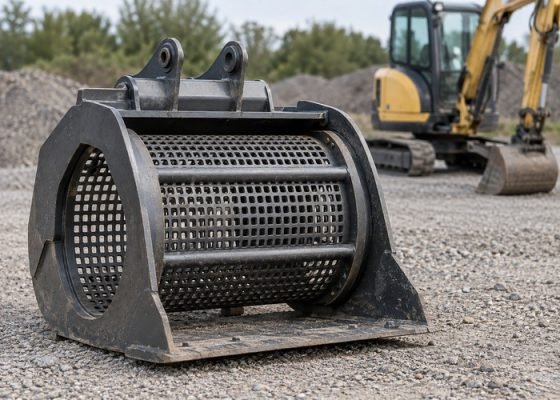
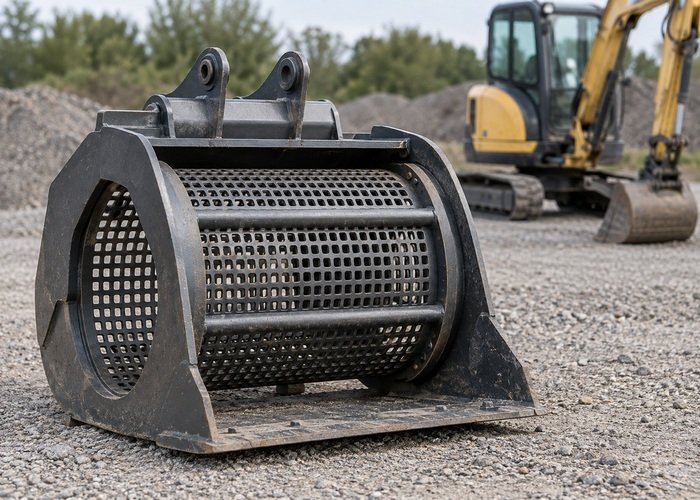
Choose a mini excavator screening bucket by the material you need to separate, the required output and the exact carrier configuration. Confirm the attachment’s loaded weight, mounting interface and hydraulic requirements before comparing mesh openings. Then request a trial using representative material. A bucket that passes a brochure compatibility check can still be a poor choice for sticky soil, inconsistent feed or a site that cannot accommodate separate stockpiles.
This guide is a purchasing checklist for owners and contractors comparing screening attachments. It does not establish that a particular SeekMach excavator accepts a particular bucket. Written approval from the carrier and attachment suppliers must cover the actual machine, coupler and hydraulic circuit. Begin with the SeekMach excavator range, but treat every attachment pairing as a separate technical enquiry.
Write down what will enter the bucket and what must leave it. Topsoil with occasional stones, demolition material with mixed debris and damp excavated clay are different feedstocks. Describe the largest objects, moisture condition, roots or fibres, and any contaminants that make reuse inappropriate. Screening changes particle separation; it does not certify material as clean, structurally suitable or compliant with a project specification.
Specify the desired result in terms the receiving job can accept. Is the aim to remove obvious stones from landscaping soil, produce an agreed particle-size fraction or reduce disposal volume? Ask the project supervisor how the output will be checked. An opening dimension alone is not a guarantee of finished grading, particularly when elongated particles, clumps or adhering fines can affect separation.
Prepare a short feed description with photographs taken from several locations in the stockpile. Include a sample from the wettest realistic condition rather than offering only dry, loose material. If the job involves demolition waste, establish an authorised handling and disposal plan before screening. The attachment supplier should identify exclusions and prohibited materials in writing.
Do not compare every device sold as a screening bucket as though its processing method were identical. A rotating basket separates material through its openings. A shaft system works material between moving elements; its configuration and intended feed determine what it can process. MB Crusher’s technical comparison describes different applications for its basket and shaft units, including damp material. Those examples apply to the named designs and are not universal performance promises.
| Decision | Evidence to request | Reason it matters |
|---|---|---|
| Separation versus material conditioning | Explanation of what the chosen mechanism actually does | Breaking a clump and separating a particle-size fraction are different outcomes |
| Opening or shaft configuration | Installed configuration and permissible alternatives | A demonstration may use different components from the quoted unit |
| Wet feed suitability | Trial with representative moisture and contaminants | Dry demonstration material can hide difficult feed behaviour |
| Carrier compatibility | Written approval for machine, coupler and circuit | A broad machine-weight class does not confirm the entire pairing |
| Serviceability | Wear-part list, access instructions and replacement availability | The purchase decision includes maintenance and downtime |
A useful supplier discussion begins with the proposed process, then checks the equipment needed to perform it. If the supplier recommends a different screening method, ask which feature of your feed led to that recommendation. Keep the response with the quotation so that a later substitution can be checked against the original requirement.
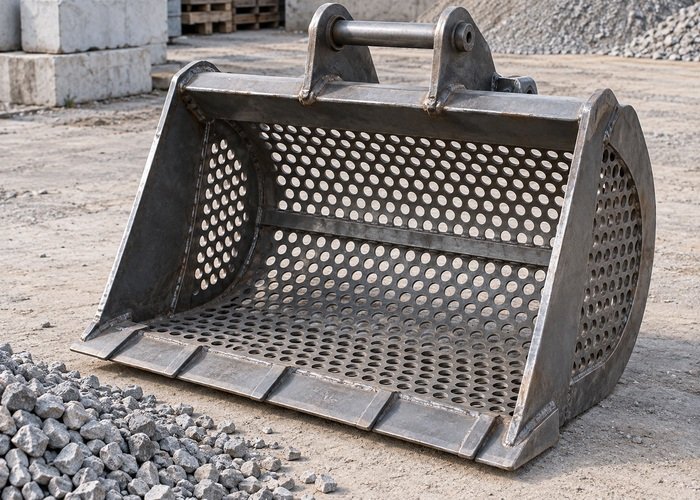
Ask whether the specified opening describes a nominal hole size, a complete screen panel or another manufacturer’s designation. Record the measurement convention. Request an output sample as well as the quoted size. For landscaping, appearance may matter alongside the removal of coarse pieces; for engineered fill, the responsible designer’s acceptance criteria control the decision.
Smaller openings may change handling and cleaning demands, but do not assume a fixed production reduction or a predictable finished fraction without evidence. Material shape and condition can change the result. Explain whether fines are welcome, whether oversize pieces will be recovered, and whether the output needs further treatment before use.
Compare the screening task with ordinary digging. The trenching bucket selection guide focuses on excavation width, depth and soil conditions. Those priorities remain useful for digging, but a screening attachment adds a processing requirement. Buying one tool to perform both jobs may involve compromises that should be demonstrated rather than assumed.
Provide the full carrier model, serial number, boom and arm arrangement, coupler type and any relevant modifications. Ask the attachment supplier for its empty mass and the information needed to assess the loaded configuration. The carrier supplier must evaluate the complete combination. Avoid treating a bucket’s empty mass as the whole load or a machine’s headline operating weight as approval to use it.
Check pin dimensions, mounting spacing, locking arrangements and the complete interface. A quick coupler can alter the geometry and add weight. It also needs an appropriate locking and checking procedure. The HSE excavator overview highlights bucket attachment, visibility and pedestrian separation as safety considerations. UK guidance provides useful principles; local requirements and the exact operating instructions still apply.
Do not invent a universal safe reach or load for this work. Ask which carrier chart and restrictions apply to the proposed assembly and operating conditions. Attachment installation or removal may also involve separate lifting activities. HSE guidance on lifting operations explains the need for planning and competent execution. A trained person should establish the applicable handling method, rather than improvising from the bucket’s appearance.
Where the attachment is hydraulically driven, collect the supplier’s required flow, working-pressure range, return requirements and any drain-line requirements. Obtain the carrier’s available circuit specification for the actual machine. Maximum brochure figures alone do not answer whether the installed circuit is suitable for sustained operation with that attachment.
Confirm the connector type, hose arrangement, control method and any adjustment or setting that must be performed by a qualified technician. Ask who is responsible for commissioning and recording the approved configuration. A mismatch should be resolved before purchase, not by experimenting with pressure settings after delivery.
Request a clear statement of the consequences of operating outside the permitted range. Do not assume that more flow improves output or that every small excavator has an interchangeable auxiliary circuit. Where a supplier cannot supply a written requirement, pause the compatibility decision until the missing information is available.
Agree the trial conditions before the demonstration. Record the attachment model and configuration, carrier, feed description, moisture condition and proposed acceptance method. Keep the starting material separate from the processed material so that the comparison remains meaningful. A polished video can show a process, but it cannot establish performance for your stockpile.
Measure the result you actually need. Record acceptable output, rejected material and interruptions over the observed period. Include handling and stockpile time if that time is part of your job. Do not convert a short favourable pass into an all-day production promise. If a second trial is needed in wet conditions, treat that as part of the evaluation rather than an inconvenience.
Agree who will judge the output. A contractor, site supervisor and supplier may focus on different details. Photograph the accepted and rejected fractions, keep any test results required by the project and record unresolved questions. If material cannot be supplied for a realistic trial, the quotation should state the resulting uncertainty.
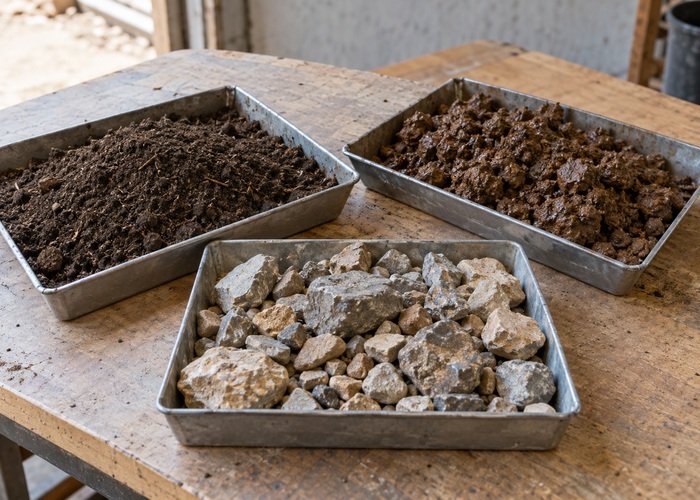
Sketch where feed, acceptable output and rejects will be placed. Include carrier travel, delivery vehicles and pedestrian routes. Even an appropriate attachment may offer limited value if the machine spends much of its time repositioning material or if the output pile blocks safe access. Make the layout part of the trial where possible.
Ask how the attachment is cleaned, inspected and stored according to its manual. Moving components create hazards, and clearing a blockage needs a defined isolation procedure. Nobody should approach or reach into a running screening mechanism. Any inspection involving access to the basket, shafts or drive requires the manufacturer’s shutdown and energy-control instructions.
Compare wear parts, replacement lead-time information and local service support using dated supplier answers. For broader capacity questions, the excavator bucket sizes guide provides a starting point. Screening suitability still needs its own verification because processing behaviour and mechanical compatibility are separate questions.
Send one compact enquiry containing the carrier identification, coupler information, circuit data, feed photographs, target output and expected site layout. Request the precise attachment configuration, compatibility approval, excluded materials, trial conditions and maintenance documents. Ask whether quoted components differ from those used in a demonstration.
For a SeekMach machine enquiry, supply the intended attachment as well as the excavation task. Ask which information is available to support a compatibility review. This guide does not claim that a screening bucket is included with any model or that a particular aftermarket attachment has been approved.
That depends on the exact mechanism, configuration and feed. Request a trial with representative damp material and obtain written suitability guidance. A dry-soil demonstration is insufficient evidence for sticky clay.
No. The receiving project’s material specification controls acceptance. Screening alone does not verify contamination, compaction behaviour or the complete particle-size distribution.
No. The complete mounting arrangement, loaded attachment, geometry and hydraulic circuit must be checked against the exact carrier and attachment documentation.
Keep the tested configuration, feed description, observed output, interruptions, acceptance method and supplier answers. These records allow the delivered attachment to be compared with what was actually evaluated.