Telephone/WhatsApp:+86 156 2656 0610

Telephone/WhatsApp:+86 156 2656 0610
Email:info@seekmach.com

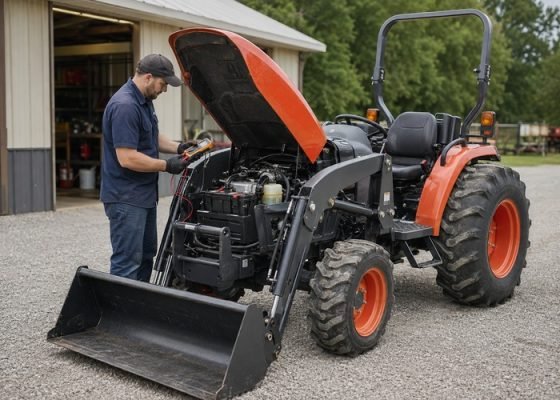
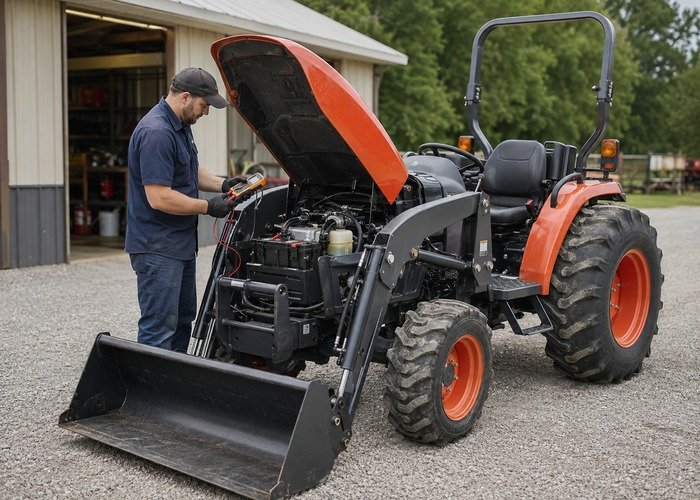
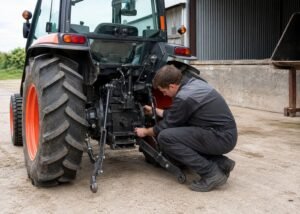
A compact tractor battery that is dead the next morning may have a worn battery, a charging system that never restores it, a key-off electrical draw, a poor cable connection, or a storage routine that leaves an accessory alive. The fastest route is not replacing the battery first. Fully charge it, record its condition, and separate what happens while the tractor is parked from what happens while it is running. Start with the tractor hydraulic attachment guide and compare the present condition with the machine’s own history.
Park level, lower the loader and implement, place all controls in neutral, set the brake, remove the key, and wait for hot components to cool. Keep rings, watches, tools, and loose clothing away from battery terminals. Battery gas and an accidental short can create a serious hazard; use eye protection and follow the model manual before disconnecting a cable. Consult manufacturer tractor electrical and starting procedures before selecting a test method.
Inspect for loose posts, green corrosion, damaged insulation, an unlatched battery cover, aftermarket lights, chargers, cab accessories, and a key that was left in an accessory position. Clean and tighten only after the negative cable is isolated by the approved procedure. A poor ground can mimic a weak battery because the starter sees voltage drop even if the battery was charged. Keep the inspection focused with the compact tractor warning-light guide.
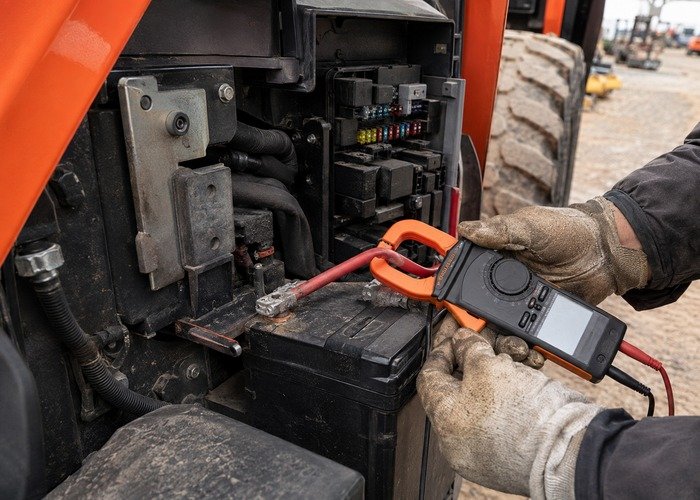
Charge the battery with a suitable charger and let it rest as the battery maker directs. Record open-circuit voltage and, when available, use a proper load or conductance test. If a charged battery loses condition while disconnected from the tractor, the battery itself is the primary suspect. If it stays healthy disconnected but fails when connected, move to a controlled key-off draw test. Work from a written observation, not from a parts hunch. Record the machine serial number, hour reading, temperature, exact control position, warning lamps, and whether the fault changes after warm-up. A short record keeps the next step tied to evidence and avoids turning a simple connection, switch, or adjustment into an expensive replacement job. Review compact-tractor electrical specification example where it applies.
Start only from the seat with the machine configured normally. Observe the charge indicator and measure at the battery using the model procedure. Compare readings at idle and specified operating speed, then inspect belt condition, alternator connections, ground path, and main fuse. Do not declare an alternator bad from one voltage reading when a corroded cable or weak battery can distort the result. Use the operator and service manual for the exact model as the controlling document. Connector locations, fuse names, diagnostic ports, permitted test values, and safety interlocks differ between machines. Generic advice can help organize the inspection, but it cannot replace the specified procedure, rated instrument, or lockout method for the equipment in front of you. Review energy-control safety requirements where it applies.
Use a meter and connection method rated for the expected current. Let modules time out, keep doors or service switches in the required state, and do not start the engine through an ammeter. If the manual does not specify a draw test, a qualified technician should perform it. Pulling a fuse one at a time can identify a circuit only after you have a stable draw and a safe procedure. A useful diagnostic separates a fault that is present all the time from one that appears only under load, vibration, heat, moisture, or after an operator moves a particular control. Reproduce the symptom only in a controlled area. If the symptom is intermittent, write down the sequence rather than cycling the machine until the evidence disappears. Review manufacturer booster-battery guidance where it applies.
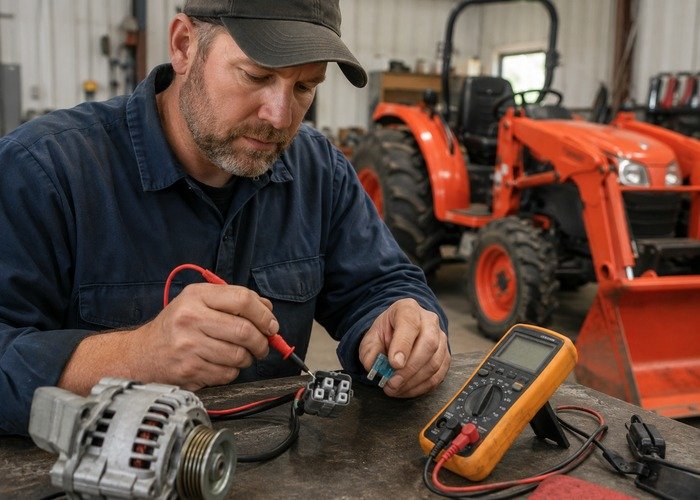
When draw falls after a fuse is removed, list every load on that circuit: hour meter, relay coil, ignition switch, lighting relay, charger lead, controller, or accessory. Look for moisture, rubbed harnesses, stuck relays, and modifications tied directly to battery power. Reinstall one item at a time and repeat the observation so you can prove the fault rather than leaving a required safety circuit disconnected. Use the operator and service manual for the exact model as the controlling document. Connector locations, fuse names, diagnostic ports, permitted test values, and safety interlocks differ between machines. Generic advice can help organize the inspection, but it cannot replace the specified procedure, rated instrument, or lockout method for the equipment in front of you. For related ownership checks, see the compact tractor seasonal setup guide.
For equipment that sits, keep terminals clean, use an appropriate maintainer only where the manual permits, and protect the tractor from moisture and rodent damage. A battery disconnect may be appropriate only when the manufacturer supports it and critical memory or safety systems are considered. Record the date, voltage, and any maintainer use so a later no-start has a meaningful history. A useful diagnostic separates a fault that is present all the time from one that appears only under load, vibration, heat, moisture, or after an operator moves a particular control. Reproduce the symptom only in a controlled area. If the symptom is intermittent, write down the sequence rather than cycling the machine until the evidence disappears. For related ownership checks, see the compact tractor seasonal setup guide.
| What you observe | What it can mean | Safe next step |
|---|---|---|
| Fault appears only after warm-up | Heat, resistance, oil condition, or a marginal connection | Repeat the specified test at the same temperature |
| Fault changes with load | Mechanical resistance, pressure loss, or an electrical supply problem | Use the model’s controlled test procedure |
| Fault is intermittent | Vibration, moisture, control or harness issue | Record the sequence and inspect connectors |
| Safety device does not behave normally | Potential serious hazard | Remove machine from service |
Work from a written observation, not from a parts hunch. Record the machine serial number, hour reading, temperature, exact control position, warning lamps, and whether the fault changes after warm-up. A short record keeps the next step tied to evidence and avoids turning a simple connection, switch, or adjustment into an expensive replacement job. This is an illustrative service-planning step, not a substitute for the machine-specific manual. Confirm the equipment model, serial range, and required values before making an adjustment or replacing a component.
Use the operator and service manual for the exact model as the controlling document. Connector locations, fuse names, diagnostic ports, permitted test values, and safety interlocks differ between machines. Generic advice can help organize the inspection, but it cannot replace the specified procedure, rated instrument, or lockout method for the equipment in front of you. This is an illustrative service-planning step, not a substitute for the machine-specific manual. Confirm the equipment model, serial range, and required values before making an adjustment or replacing a component.
A useful diagnostic separates a fault that is present all the time from one that appears only under load, vibration, heat, moisture, or after an operator moves a particular control. Reproduce the symptom only in a controlled area. If the symptom is intermittent, write down the sequence rather than cycling the machine until the evidence disappears. This is an illustrative service-planning step, not a substitute for the machine-specific manual. Confirm the equipment model, serial range, and required values before making an adjustment or replacing a component.
Before returning a machine to work, restore every guard, cover, connector lock, hose restraint, and fastener that was removed for inspection. Then run a low-risk functional check and look again for loose hardware, heat, leakage, abnormal noise, or a warning light. A repair is not complete because one test passed; it is complete when the normal safe configuration is back in place. This is an illustrative service-planning step, not a substitute for the machine-specific manual. Confirm the equipment model, serial range, and required values before making an adjustment or replacing a component.
Work from a written observation, not from a parts hunch. Record the machine serial number, hour reading, temperature, exact control position, warning lamps, and whether the fault changes after warm-up. A short record keeps the next step tied to evidence and avoids turning a simple connection, switch, or adjustment into an expensive replacement job. This is an illustrative service-planning step, not a substitute for the machine-specific manual. Confirm the equipment model, serial range, and required values before making an adjustment or replacing a component.
Use the operator and service manual for the exact model as the controlling document. Connector locations, fuse names, diagnostic ports, permitted test values, and safety interlocks differ between machines. Generic advice can help organize the inspection, but it cannot replace the specified procedure, rated instrument, or lockout method for the equipment in front of you. This is an illustrative service-planning step, not a substitute for the machine-specific manual. Confirm the equipment model, serial range, and required values before making an adjustment or replacing a component.
No. If a safety system, electrical circuit, hydraulic control, belt, guard, or holding function behaves abnormally, park the machine and follow the manufacturer’s instructions. Continuing to operate can turn a small defect into equipment damage or an injury risk. Use the tractor PTO troubleshooting guide for a related site-owned check, and compare the model procedure with manufacturer booster-battery guidance before authorizing service.
Provide the model and serial number, hour reading, the exact symptom, a short video from a safe distance if appropriate, warning lamps, recent maintenance, temperature, load condition, and the results of only the tests authorized by the manual.
Keep the final record with the machine. A dated note that lists the fault, the approved measurements, parts installed, fluid or electrical checks completed, and the final functional test prevents the same symptoms from being treated as a new mystery at the next service interval.
Keep the final record with the machine. A dated note that lists the fault, the approved measurements, parts installed, fluid or electrical checks completed, and the final functional test prevents the same symptoms from being treated as a new mystery at the next service interval.
Keep the final record with the machine. A dated note that lists the fault, the approved measurements, parts installed, fluid or electrical checks completed, and the final functional test prevents the same symptoms from being treated as a new mystery at the next service interval.