Telephone/WhatsApp:+86 156 2656 0610

Telephone/WhatsApp:+86 156 2656 0610
Email:info@seekmach.com

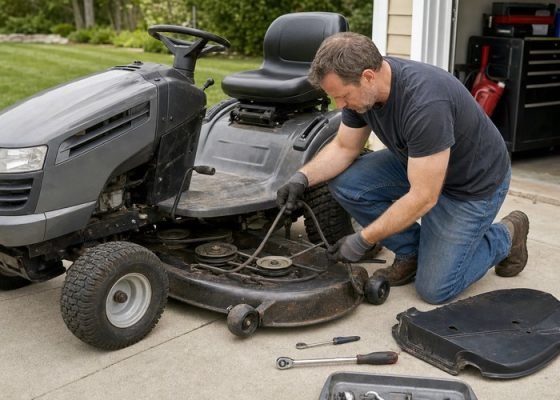
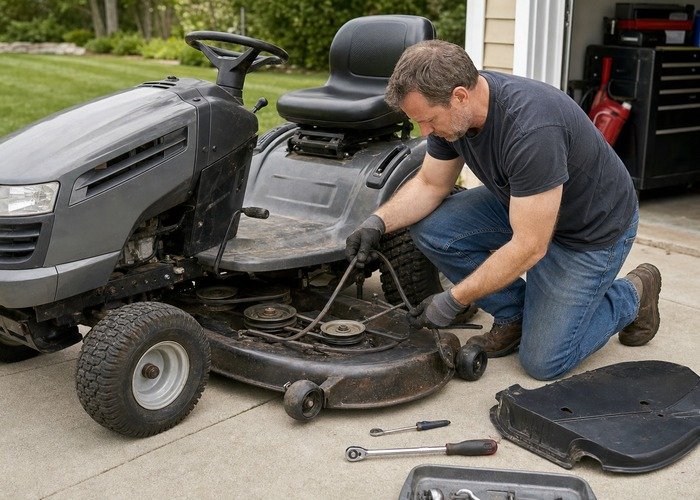
Lawn mower deck belt troubleshooting is easier when you treat the belt as part of a system. The belt, pulleys, spindle bearings, idlers, tension spring, deck level, guards, and blade load all work together. If you only replace the belt without finding why it slipped, jumped off, squealed, or broke, the new belt may fail the same way. If you are comparing machines in the SeekMach lawn mower category, belt access and deck serviceability are worth checking before purchase.
A deck belt lives in a harsh place. It sees grass dust, heat, moisture, vibration, pulley misalignment, blade shock, and operator habits such as mowing too fast in heavy growth. A belt that fails early is usually giving a clue. The clue may be a stuck idler, bad spindle bearing, missing guard, wrong belt, bent bracket, packed grass, or a deck that is not level.
This guide starts with safety, then walks through symptoms and causes. It is written for owners and crews who want to diagnose the deck before throwing another belt at the problem.
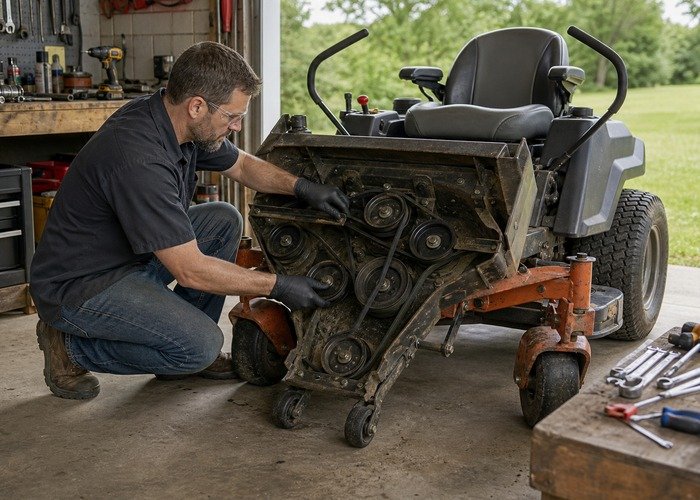
Shut the mower off, remove the key, disconnect the spark plug wire or follow the machine’s lockout guidance, and wait for all moving parts to stop. Let hot parts cool. Wear gloves when working around blades and sheet metal. Never inspect a running belt with guards removed. A belt path that looks slow from a distance can still grab clothing or fingers instantly.
Das Consumer Product Safety Commission lawn mower safety page is a useful reminder that mower injuries often involve blades, thrown objects, and contact with moving parts. Belt troubleshooting should never turn into a live demonstration with covers removed.
| Symptom | Likely causes | First checks |
|---|---|---|
| Belt jumps off | Misaligned pulley, weak spring, bent bracket, wrong routing | Belt path diagram, idler travel, pulley wobble |
| Belt squeals | Slipping belt, seized pulley, heavy grass load | Pulley rotation, belt glaze, deck buildup |
| Belt breaks | Wrong belt, sharp pulley edge, seized spindle, debris | Belt part number, pulley condition, spindle bearings |
| Uneven cut after belt work | Wrong routing, blade issue, deck not level | Blade engagement, deck level, blade condition |
| Burning smell | Belt slipping or rubbing guard | Tension, routing, shield clearance |
Use the table to narrow the search. A belt that jumps off is not the same problem as a belt that shreds. The belt’s damage pattern is evidence.
The simplest mistake is installing the wrong belt. A belt can be close in length and still be wrong in width, profile, or construction. A deck belt is not just a generic loop. It must fit the pulleys and tension system. Use the manual or parts diagram for the exact model and deck size.
Routing mistakes are common after a belt breaks because the old belt may be gone before anyone studies the path. Look for the deck diagram, manual, or reliable parts illustration. The belt should sit fully in pulley grooves, pass on the correct side of idlers, and clear guards without rubbing. If a new belt immediately smokes or jumps, stop and recheck routing before damaging it.
Das University of Missouri Extension lawn care resources are useful for understanding mowing load from grass conditions. Heavy, wet, or overgrown turf can overload the deck and expose belt problems that do not show up in light cutting.
With the belt removed, each pulley should spin as expected and feel smooth. A rough spindle bearing, seized idler, wobbling pulley, or bent shaft can destroy a belt quickly. Listen for grinding. Look for side play. Check whether pulley edges are sharp, damaged, or packed with debris. A belt that is frayed on one edge often points toward alignment or rubbing.
Do not ignore the idler arm. It must move freely and return under spring tension. If it sticks, the belt may be loose in one part of the engagement cycle and overloaded in another. A weak or stretched spring can allow belt slap. A bent bracket can make the belt run at an angle.
Packed grass under the deck increases blade load and heat. Wet grass makes the problem worse. A belt may squeal when the blades are asked to start through heavy buildup or when grass clumps block airflow. Clean the deck safely with the machine off and supported correctly. Keep guards in place after service.
Mowing height and speed matter. Cutting too low or driving too fast through tall grass increases load. A healthy belt can handle normal mowing, but it is not a substitute for matching speed to conditions. If the mower repeatedly struggles, sharpen blades, clean the deck, and reduce ground speed before blaming the belt alone.

A glazed belt has shiny, hardened surfaces from slipping and heat. Once glazed, it may keep slipping even after the original cause is fixed. Belt tension systems vary by mower, so follow the manual. Too little tension allows slip and jumping. Too much tension can overload bearings and shorten belt life.
Engagement should be smooth. If the deck slams on violently, check the clutch, idler movement, and engine speed guidance. If the blades take too long to come up to speed, check belt condition, tension, pulley drag, and grass buildup. Repeated squeal during engagement is a warning sign, not a normal sound to ignore.
Das Penn State Extension turfgrass maintenance material can help operators understand how grass condition affects mowing demand. Healthy mowing is not only about the machine; turf height, moisture, and cutting frequency change the load placed on the belt and blades.
Aftermarket belts can work well when they match the required specification, but a cheap belt with the wrong profile can create repeat failure. If belts keep breaking, compare the failed belt to the correct part number. Measure carefully, but do not rely only on length. Width, angle, material, and construction matter.
Also inspect guards and covers. A missing cover may allow debris into the belt path. A bent cover may rub the belt. Guards are not decorations; they help keep debris out and people away from moving parts. Replace missing hardware after service.
Spring belt problems often come from storage effects: cracked rubber, stuck idlers, rusty pulleys, rodent damage, or a deck packed with last year’s dry debris. Early summer problems often come from heavy growth and wet mowing. Late summer problems may show up after dust, heat, and long mowing days have hardened or glazed the belt. Fall leaf cleanup can add debris that rides into the belt path and pulley grooves.
Treat seasonal service as prevention. Before the first mowing day, remove covers safely and inspect the belt path. During heavy growth, slow down and mow more frequently when possible. Before storage, clean the deck and inspect pulleys so a weak bearing is not waiting for spring. The University of Georgia Extension lawn mowing guidance is a useful reminder that mowing height, frequency, and turf condition affect machine load as well as lawn health.
If a property also needs hauling, grading, or rough cutting beyond the mower’s design, review the SeekMach product application solutions page before pushing a finish mower through unsuitable work. Belt failures sometimes point to a maintenance problem, but sometimes they point to the wrong machine for the job.
For yards with slopes, obstacles, and mixed mowing zones, compare mower type and deck access against the site’s broader lawn mower application guidance. A mower that is easy to service is less likely to run for weeks with a noisy idler or half-routed belt because the inspection takes too long.
Keep a short service note after each belt failure: hours on the belt, grass condition, deck height, whether the belt jumped or broke, where the belt was damaged, which pulley looked hot, and whether the idler arm moved freely. A few notes can reveal patterns. If every failure happens in wet heavy grass, operating conditions are part of the cause. If the same edge frays each time, alignment or rubbing is more likely.
Photos help. Take a picture of the belt path before removing the old belt. Take a picture of any frayed edge, burnt spot, or broken cord. Compare those photos after the next inspection. This habit is especially useful for crews with more than one operator because the person repairing the mower may not have been the person mowing when the symptom appeared.
Sometimes the belt is blamed for a blade or deck problem. Dull blades make the deck work harder. Bent blades vibrate. Unbalanced blades stress spindles. A deck that is badly out of level can scalp and overload one side. Tire pressure differences can change deck height. A mower that cuts unevenly after a belt repair may need a deck-level and blade inspection, not another belt.
If mowing rough fields, brush, or heavy weeds is common, compare whether a tractor and rear implement from the SeekMach tractor category is better suited than a finish mower. Using the wrong machine for rough material can turn belts, blades, and spindles into consumables.
First, document the symptom. Did the belt jump, slip, squeal, shred, or snap? Second, remove covers safely and compare the belt route with the diagram. Third, remove the belt and spin each pulley. Fourth, move the idler arm through its range and inspect the spring. Fifth, inspect spindle bearings, pulley edges, and guards. Sixth, clean the deck and sharpen or replace blades as needed. Seventh, install the correct belt and test in light grass before returning to heavy mowing.
After the test cut, stop and recheck belt position. Look for dust patterns, rubbing marks, heat smell, or fresh fraying. A five-minute recheck can save another belt. For mixed property work where mowing is just one task, the SeekMach product overview can help separate mower jobs from tractor or loader jobs before maintenance problems become routine.
Clean the deck regularly. Keep blades sharp. Avoid mowing wet, heavy grass when possible. Replace missing guards. Check pulley movement during seasonal service. Store the mower where belts are not exposed to constant moisture and rodents. During spring startup, inspect belts for cracks, glazing, and flat spots before the first heavy mowing day.
Do not pressure-wash bearings aggressively. Water forced into spindle or idler bearings can create problems later. Use the cleaning method recommended for the mower. If a belt fails, keep the old belt long enough to study the wear pattern before discarding it.
Common causes include wrong routing, a weak tension spring, pulley misalignment, a bent idler bracket, a wobbling spindle, or the wrong belt. Inspect the whole path before replacing the belt again.
Squeal usually means slipping, heavy load, pulley drag, or poor tension. Clean the deck, check pulleys and spindles, confirm belt routing, and inspect the tension system.
No. The belt must match the mower’s required width, profile, construction, and length. A same-length belt can still be wrong.
Yes. Guards help protect the belt from debris and help keep people away from moving parts. Never operate the mower with safety covers removed unless the manual explicitly instructs a service procedure.
Indirectly, yes. Dull blades increase cutting load, which can make the belt slip and heat. Blade maintenance is part of belt life.
Watch a detailed belt diagnosis here: mower deck belt issues solved on YouTube. Then diagnose in order: safety, correct belt, routing, pulleys, spindle bearings, idler movement, deck buildup, blade load, and a controlled test cut.