Telephone/WhatsApp:+86 156 2656 0610
Telephone/WhatsApp:+86 156 2656 0610
Email:seekmach@gmail.com

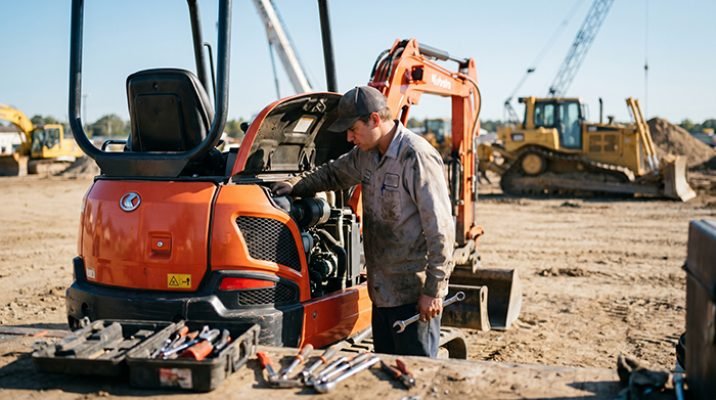
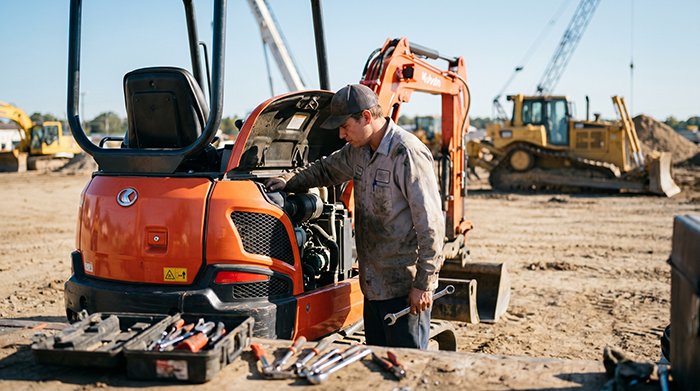
Neglecting your mini excavator’s maintenance schedule doesn’t save money — it destroys it, quietly and compoundingly, until a preventable failure becomes a business crisis.
According to the Verband der Gerätehersteller, nearly 40% of total excavator operating costs are tied to the undercarriage alone — making disciplined maintenance not a cost center, but a direct line to profitability. For contractors, rental fleet operators, and equipment procurement managers, that single statistic reframes the entire conversation. A thorough mini excavator maintenance guide isn’t paperwork — it’s your most reliable ROI tool.
Bold truth: Every dollar skipped on scheduled maintenance typically returns as three to five dollars in unplanned repair costs.
Consider the real economics of downtime. A mid-range mini excavator purchased for $30,000–$50,000 can accumulate idle-time losses — delayed projects, emergency labor, expedited parts shipping — that exceed its original purchase price within five years of irregular servicing. In practice, operators who follow factory-direct maintenance intervals consistently report longer component lifespans, stronger resale values, and fewer mid-season breakdowns.
Maintenance discipline also correlates directly with machine pricing integrity. Well-documented service histories command premium resale prices, while neglected units depreciate sharply. Whether you’re running a compact machine through tight access sites or pushing a small fleet through seasonal demand, a consistent care routine protects your capital investment at every stage.
This is the “Built for the Toughest Jobs” mindset in its truest form — preparation before punishment, not recovery after failure. The sections ahead break that mindset into actionable daily, weekly, and long-interval routines. It starts where most problems actually begin: the walkaround you do before the key ever turns.

A consistent daily inspection routine is the single most cost-effective habit a mini excavator owner can build — and skipping it is where compounding damage quietly begins.
Before the engine turns over each morning, a structured walkaround takes roughly 10–15 minutes and directly addresses the leading causes of premature component failure. According to EquipmentWorld, daily fluid level checks and greasing of pivot points can reduce premature component wear by up to 50% — a figure that makes the morning routine feel less like a chore and more like a direct deposit into your equipment’s lifespan.
Daily Checklist: What to Inspect Every Morning
Pro-Tip: Don’t just look — feel. Running a finger along hydraulic hose connections catches slow seeps that a visual pass misses entirely.
In practice, operators who treat this walkaround as non-negotiable report fewer emergency shutdowns and longer intervals between major repairs. The concept mirrors broader excavator service life extension tips (tips for extending excavator service life) — small, consistent actions compounding into significant long-term savings.
Of course, the walkaround is only part of the equation. Some of the costliest wear happens at ground level — and that’s exactly where attention needs to shift next.
The undercarriage is the single most expensive system on your mini excavator — and the one most abused by neglect. According to industry data, the undercarriage can account for up to 50% of a machine’s total lifetime maintenance costs. That number isn’t an anomaly; it’s the predictable result of skipping what experienced operators treat as non-negotiable daily habits.
Debris buildup is the silent multiplier. Packed soil, gravel, and clay wedged around rollers and sprockets create constant abrasive friction. Over time, this grinds down components that would otherwise last thousands of hours, dramatically shortening roller and sprocket life in ways that don’t show up until replacement costs hit.
Track tension is equally critical. The standard rule: maintain 10–15mm of sag at the midpoint of the bottom track run. Too tight, and you’re stressing rollers and the drive motor. Too loose, and de-tracking becomes a real risk — particularly when maneuvering in tight spaces where the machine pivots repeatedly under load. Monitoring track tension specifically for mini excavators prevents de-tracking events and reduces undercarriage wear by 20–30%.
⚠ WARNING: Excessive track sag is a leading cause of de-tracking. Never operate with visible loop or droop in the lower run.
Cleaning protocols differ by track type:
A thorough mini excavator daily maintenance checklist (daily maintenance checklist) for your mini excavator should include undercarriage inspection as a mandatory line item, not an afterthought. With the undercarriage handled, attention shifts to the system that powers every movement — the hydraulics.
Hydraulic power loss is one of the most common — and most preventable — failures mini excavator owners face, and it almost always traces back to skipped filter changes.
Mini excavators are especially vulnerable to hydraulic contamination because their compact systems operate with tighter tolerances and smaller fluid reservoirs than full-size machines. Less fluid volume means contaminants concentrate faster, and pressure spikes hit harder. What a larger machine might tolerate for an extra hundred hours can destroy a mini excavator’s pump in a fraction of that time.
As Construction Equipment Magazine puts it plainly: “The hydraulic system is the lifeblood of a mini excavator; neglecting filter changes is the fastest way to invite catastrophic pump failure.”
Hydraulic filter change intervals — typically every 500 hours or annually, whichever comes first — are non-negotiable for pump longevity. Running contaminated fluid degrades seals, scores valve surfaces, and accelerates wear on expensive pump components that can cost thousands to replace.
Beyond contamination, two warning signs demand immediate attention:
In practice, overheating and air contamination rarely appear without warning. Slow cycle times, unusual noise from the pump, or foam in the reservoir are early signals that most operators miss because they aren’t looking.
Understanding how to create a mini excavator maintenance schedule — how to build a structured service schedule — is what separates reactive repairs from proactive protection. Maintaining clean fluid, healthy filters, and proper levels keeps the entire system performing as designed.
With hydraulic health addressed, the next logical step is the broader service work that falls due at the 250-hour mark — where deeper mechanical inspection begins.
Reaching 250 hours is the critical threshold where break-in wear exits the system — making this service interval the single most important scheduled maintenance your mini excavator will ever receive.
According to SANY SY16C Service Standards, the 250-hour mark is explicitly identified as the point where accumulated break-in contaminants must be flushed and reset before they cause cascading damage. Operators searching for answers to hydraulic weakness — a concern common enough to generate searches like how to maintain mini excavator hydraulic power — will often find the root cause traces directly to a missed or incomplete 250-hour service.
A missed 250-hour service doesn’t just delay maintenance — it multiplies wear across every connected system.
Here’s what the deep service protocol should include:
In practice, most operators complete this service in three to four hours with standard hand tools. The investment is modest; the alternative — a hydraulic or engine failure mid-project — is not.
With core mechanical systems addressed, the next layer of protection shifts with the calendar. Seasonal demands place unique stress on every one of these components, and adjusting your approach accordingly keeps performance consistent year-round.
Your mini excavator maintenance checklist isn’t static — the operating environment dictates which risks demand the most attention each season.
Because mini excavators have significantly smaller hydraulic reservoirs than full-sized units, they’re far more sensitive to ambient temperature swings — a fact confirmed by Construction Equipment Magazine. That sensitivity makes seasonal adjustments non-negotiable, not optional.
| Season | Primary Risk | Action Step |
|---|---|---|
| Winter | Battery failure; coolant freeze | Test battery load capacity; verify antifreeze ratio (typically 50/50 mix) |
| Sommer | Hydraulic overheating; clogged radiator | Clean radiator fins weekly; check hydraulic fluid temp under load |
| Dry season | Dust infiltration into filters and seals | Inspect air filters daily; clean cab seals and undercarriage |
| Wet season | Mud/clay packing into tracks and frames | Power-wash undercarriage after every shift |
Winterization goes beyond topping off antifreeze. Cold temperatures thicken hydraulic fluid, increasing pump strain at startup. Allow a 5-minute warm-up idle before applying any load in temperatures below 40°F. Simultaneously, battery capacity drops sharply in cold — load-test your battery every fall and replace any unit showing less than 75% capacity.
Summer heat compounds hydraulic stress. A clogged radiator restricts airflow, pushing fluid temperatures toward dangerous thresholds. Weekly fin cleaning with compressed air is a low-cost habit that prevents costly pump and valve failures.
Dust and agricultural settings demand daily air filter checks — fine particulate loads filters far faster than manufacturers anticipate under field conditions. Construction environments introduce a different problem: mud and clay pack into track rollers and undercarriage joints, accelerating wear if not cleared promptly after each shift.
The right parts and fluids make all these protocols far more effective — which is where sourcing strategy becomes critical.
The parts you install are only as reliable as the facility that made them — and that single variable determines whether your maintenance investment pays dividends or disappears into recurring repairs.
OEM parts matter because they’re engineered to exact ISO 9001 tolerances. Aftermarket alternatives may look identical on the shelf, but dimensional variances in seals, filters, and bushings accumulate over time, accelerating wear in the very components your 250hr service checklist is designed to protect. When you substitute a non-certified hydraulic filter — a component that manages complex pressurized fluid dynamics — you introduce an unknown failure variable into a precision system.
Integrated production is the practical solution to this problem. Seekmach operates a 50,000m² integrated production facility, meaning components are designed, manufactured, and quality-checked under one roof. That vertical integration eliminates the inconsistency that creeps in when a supplier chain spans multiple vendors across different continents. Every hydraulic fitting, track roller, and filter element ships to the same specification — batch after batch.
The factory-direct model also has a direct financial benefit. Removing middlemen from the supply chain redirects margin back to operators, freeing budget to invest in premium-grade lubricants and genuine service kits rather than compromise-grade substitutes. In practice, that cost structure makes doing the job right the more affordable option.
The numbers, protocols, and sourcing decisions covered throughout this guide all converge on one bottom line — which the next section summarizes into a practical action framework.
Every hour you invest in proactive maintenance directly determines whether your mini excavator generates profit or drains it. As covered throughout this guide, the difference between a machine that lasts 5,000 hours and one that surpasses 10,000 comes down to a handful of disciplined habits — repeated consistently, season after season.
According to the Equipment Lifespan Guide, consistent maintenance can effectively double the operational lifespan of a mini excavator compared to neglected units. That’s not a minor efficiency gain — that’s the difference between replacing your machine in year six or year twelve.
What You Need to Know
The five practices below carry the highest return on investment of anything covered in this article:
These aren’t complicated disciplines — but they do require consistency. If you still have questions about specific intervals, part compatibility, or troubleshooting symptoms, the next section tackles the most common real-world questions operators ask.
Your maintenance habits today directly determine whether your machine reaches 8,000 hours or pushes well beyond 10,000.
Wie lange halten Minibagger normalerweise?
According to Wickham Tractor Co., most mini excavators last between 8,000 and 10,000 hours — but proactive maintenance can push that figure significantly higher. Machines that receive consistent fluid changes, filter replacements, and greasing on schedule routinely outlast neglected units by thousands of operating hours. The maintenance schedule isn’t overhead; it’s the investment that pays the machine off twice.
Why is my mini excavator losing hydraulic power?
Reduced hydraulic performance almost always traces back to one of two culprits: a clogged hydraulic filter restricting flow, or a worn pump losing pressure efficiency. In practice, contaminated fluid accelerates wear on both components simultaneously. Check your filter condition first — it’s the lowest-cost fix. If performance doesn’t recover after a filter and fluid service, a pump inspection is your next step.
Can I use generic grease on my mini excavator?
This is a common shortcut that carries real consequences. Stick to EP2 lithium-complex grease. Generic alternatives often lack the extreme-pressure additives and water-resistance properties your pins and bushings need, especially under heavy load cycles. Using the wrong grease quietly accelerates joint wear between service intervals.
How often should I change the tracks?
Track replacement depends on operating conditions rather than a fixed hour interval. Abrasive surfaces like rock and concrete wear rubber tracks far faster than soft soil. Inspect track tension and tread depth at every 250-hour service. When tension can no longer be properly adjusted or tread is visibly worn flat, replacement is overdue. If you’re evaluating machine size for your next purchase, factor track longevity into your total ownership cost comparison.