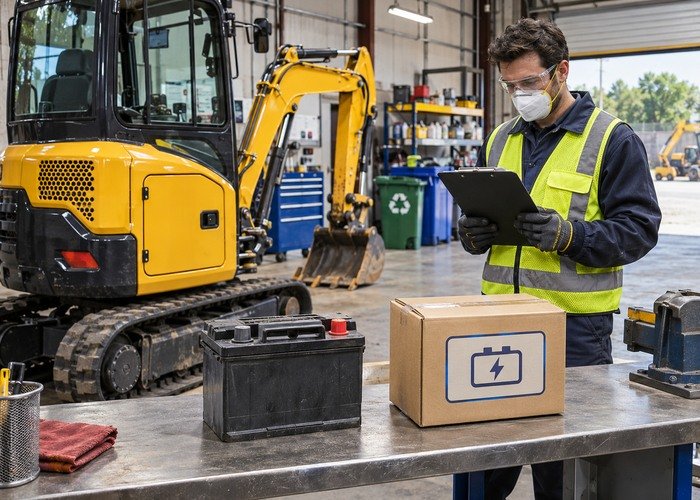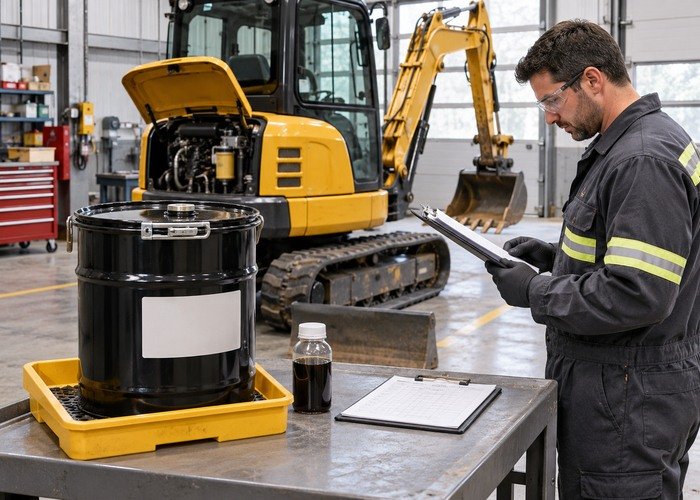















































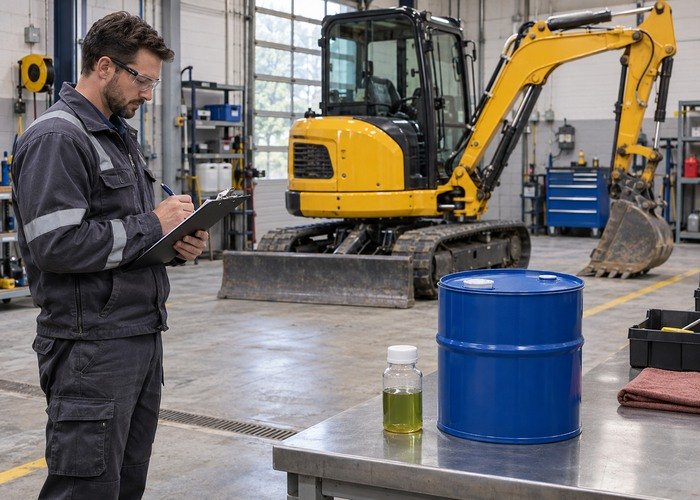
After a mini excavator service, drained coolant is a separate waste stream that needs an identified destination. Keep it apart from engine oil, hydraulic fluid, fuel, solvent and unknown liquids; record what the machine used and what entered the container; then ask a qualified local waste provider what classification, container and paperwork apply. Do not decide that a liquid is harmless from its color, age or smell.
This guide is about coolant after removal, not choosing a coolant product or diagnosing an overheating engine. Those are different decisions: see how to confirm a mini excavator’s coolant requirement and what to check when the engine overheats. The waste route depends on the fluid’s condition and local rules, so use the machine and service records as evidence rather than guessing.
Start by identifying the stream
“Coolant waste” can describe several different materials. Unused product left in its original packaging is not the same as coolant drained after service. Spent coolant that has circulated through an engine may contain corrosion products, metals, oil or cleaning residues. A flush liquid can be diluted with water and carry a different contaminant profile. Material collected after a spill can include absorbent, soil or other debris, so it may require a separate assessment. Keep these streams distinguishable when practical and explain any mixing that has already occurred.
Write down the machine or fleet identifier, service date, the cooling system serviced, the product name or specification if known, and the approximate quantity. Mark estimates as estimates. If the product identity is missing, say so; do not infer a chemical composition from a green, orange, pink or blue appearance. Product color is not a reliable waste classification method, and two products that look alike may not have the same formulation.
These details let a recycler or waste specialist ask a useful follow-up question. They also help the fleet reconcile the maintenance event with a collection receipt later. If several machines contributed to a shared container, maintain a source log so that the batch is not treated as an unexplained liquid.
Keep coolant separate and contained
Use a suitable, closed and clearly identified container accepted by the receiving provider. The container should be compatible with its contents, in sound condition and protected from damage. A secondary containment arrangement may be required by the site’s environmental plan or local rules. Follow the supplier’s and waste provider’s instructions for the particular container; there is no universal container size or holding period that applies to every location and generator.
Do not add antifreeze to a used-oil drum, fuel container, solvent waste or a container holding unknown material. Mixing can make a recyclable stream harder to process and can change the waste classification. If coolant has already been mixed, keep the batch closed and tell the provider what may be present. Do not try to correct the mixture by adding water, oil or another chemical.

Place the container in the designated service or waste area, away from drains and traffic where the site plan requires. Keep the label legible and update it if the contents change. A temporary note should identify the contents as used coolant or antifreeze, the source equipment and the accumulation date where required. Never represent a guess as a confirmed product or classification.
Classification is local and evidence-based
There is no single global rule that says every batch of used coolant is hazardous or nonhazardous. Classification can depend on the coolant chemistry, contaminants, process history and jurisdiction. In the United States, generators must make a hazardous-waste determination under applicable federal and state requirements. If the facility lacks enough knowledge about the stream, a qualified environmental professional or laboratory may help determine whether testing is appropriate. A buyer’s acceptance alone does not replace the generator’s legal responsibility.
State examples show why general online claims are risky. Missouri’s Department of Natural Resources explains that antifreeze is not a federally listed hazardous waste by itself, but metals or other substances can make it characteristic hazardous waste; the generator must determine the status based on knowledge or appropriate testing. Washington Ecology describes state-specific dangerous-waste requirements for ethylene-based antifreeze and a recycling route for spent antifreeze subject to special requirements. These are examples for those jurisdictions, not permission to apply the same conclusion elsewhere.
In the United Kingdom, Environment Agency and DEFRA guidance says businesses must classify waste before collection, disposal or recovery, and its vehicle-waste guidance addresses antifreeze separately from oils. Other countries and local authorities may use different waste codes, transfer controls or recycling rules. A machine owner operating across regions should ask the local regulator or a competent waste provider rather than copy a code from another country.
For general context, review the Missouri DNR antifreeze guide, Washington Ecology’s antifreeze guidance, and UK vehicle and oily-waste classification guidance. Check the current local rules before arranging a shipment.
Ask the receiver specific questions
Before a pickup, tell the service provider whether the material is spent coolant, unused product, flush liquid or spill cleanup. Share the product label or safety data sheet when available, explain known cross-contamination, and state whether several machines contributed. Ask whether the provider accepts that exact stream, whether it requires a sample or analysis, what container and label it will accept, and what documents need to accompany the transfer.
Ask where the material will go and whether it will be recycled, treated or disposed of. A provider that collects used oil may not accept antifreeze. A general liquid-waste contractor may need prior approval. Get acceptance in writing for unusual or mixed batches instead of relying on a broad statement such as “we take shop waste.” Confirm who is responsible for transport documentation and whether local movement controls apply.

At handover, record the date, number and type of containers, estimated or measured quantity, provider, destination and receipt or tracking reference. If the provider rejects part of the batch, record the reason and keep it segregated while you obtain the next instruction. Do not relabel a rejected stream to make it appear acceptable.
Build a short service-to-pickup record
A useful log does not need to make unsupported claims. It should connect the maintenance event to the container and final transfer. Include the machine ID, service order, fluid identity as shown on the product documentation, date removed, quantity basis, container identifier, any known contamination, the person who recorded it, the classification decision or source of advice, provider acceptance, pickup date and destination paperwork. Store the record with the service file and waste transfer documents.
Where a laboratory result or written determination supports the classification, retain it with the batch record. Where classification was based on process knowledge, note what facts were used and who approved the decision. If the source or contamination is uncertain, keep that uncertainty explicit. “Unknown coolant mixed with flush water” is more useful and honest than an invented composition.
Review the log against the provider’s receipt. A large mismatch between the service estimate and collected amount deserves a follow-up. The purpose is traceability and prevention, not creating false precision. If the fleet sends several fluid types to different contractors, use separate container IDs so coolant is not confused with used engine oil or hydraulic oil; our guide to classifying and documenting used hydraulic oil covers that separate stream.
Common errors to avoid
- Assuming all antifreeze is automatically hazardous or automatically nonhazardous.
- Using color or smell as the only evidence of product identity.
- Combining coolant, flush liquid, oil and spill cleanup in one container without prior approval.
- Sending the stream to an oil recycler without confirming acceptance.
- Copying a waste code or storage rule from a different state or country.
- Discarding the product label, service record or collection receipt before the route is confirmed.
If there is a leak or spill, follow the site emergency and environmental response plan. Do not improvise cleanup instructions from this article. Contain access as directed by the site procedure, notify the responsible supervisor and environmental contact, and use trained personnel. Cleanup residues may need their own classification and destination.
Frequently asked questions
Can used mini excavator coolant go into the used-oil tank?
No, do not combine coolant with used oil unless a qualified receiver has specifically assessed and accepted the mixture under the applicable rules. Mixing can affect recycling and classification. Keep the fluids separate and disclose any accidental mixing.
Does coolant color identify its waste status?
No. Color can help distinguish products during service, but it does not establish chemical identity, contamination or legal classification. Use product records and a competent local determination.
Do I need a laboratory test?
Not always. The applicable rules may allow a determination based on reliable knowledge of the stream, or may require further evaluation if the information is insufficient. Ask the local environmental authority or qualified waste professional which method applies.
What should I keep after pickup?
Keep the service record, container or batch identification, provider acceptance, transfer or shipping papers, receipt and destination information required in your jurisdiction. Retention periods differ, so verify the local requirement.
In short: identify the coolant stream, keep it separate, document what is known, and get the receiving route confirmed under local rules before collection. That approach protects recycling options and leaves a defensible record without guessing at the waste classification.