















































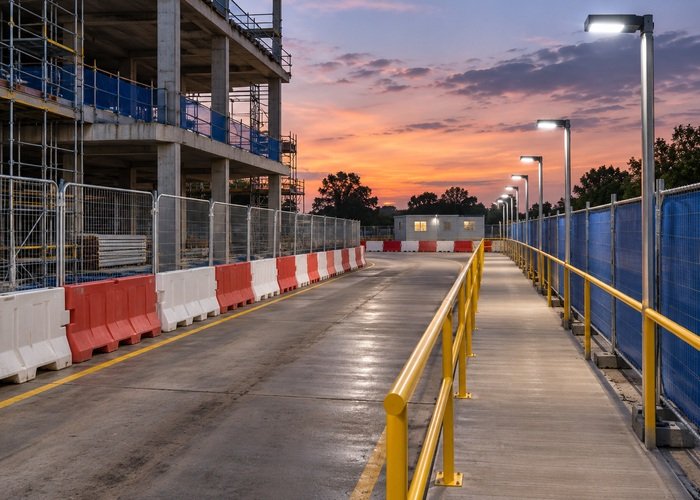
Release mini excavator night work only after the work area, access routes, pedestrian movements and lighting-failure arrangements have been assessed together. A bright lamp on the machine does not establish that the site is ready. The operator must be able to carry out the planned task while people can reach, move through and leave the surrounding area safely.
This guide is a site-lighting handover framework for owners and contractors. It is not an electrical installation design or a universal illumination specification. A competent person must establish the actual lighting arrangements and applicable local requirements. The cited UK HSE material is guidance for its own jurisdiction, rather than proof that a particular SeekMach model or lighting layout is approved.
Define what will happen after daylight
Start with the complete work sequence. Identify unloading, travelling to the work area, excavation, spoil handling, attachment-related activity, breaks and the final exit. Name the places where workers walk and where vehicles arrive or manoeuvre. A lighting review limited to the bucket’s digging position can leave important parts of that sequence unexamined.
The HSE guidance on construction site lighting addresses artificial lighting when daylight is inadequate, shadows, safety-sign visibility and arrangements for lighting failure where necessary. These are site-planning questions. They cannot be settled by asking only how many lamps are installed on the excavator.
Write down the work stage being proposed. A release for a delivery or inspection need not cover excavation, loading or an extended shift. If the task expands beyond the area originally reviewed, return the change to the responsible planner. Do not assume that the same lighting arrangement covers every later activity because the machine has stayed on site.

Use separate zones to expose missing decisions
A simple planning sketch can distinguish the working area, vehicle approach, delivery or loading position, pedestrian route, welfare access and emergency exit. Its purpose is to show what needs competent assessment, not to draw a ready-made arrangement for another site. Include interfaces with neighbouring activities and any public access that the work may affect.
For each zone, record the intended use and the person responsible for acceptance. This helps prevent a gap where the excavator contractor assumes the site team has checked an access route while the site team assumes the machine lamps cover it. Resolve shared responsibilities before the shift starts, especially where separate businesses supply plant, lighting and supervision.
| Zone or event | Evidence to review | Question before release |
|---|---|---|
| Excavation and spoil handling | Task visibility with the actual machine positions | Can required detail remain visible throughout the sequence? |
| Vehicle approach and delivery | Routes, junctions and manoeuvring arrangements | Who controls an unexpected arrival? |
| Pedestrian movement | Complete route and relevant crossing or gate interfaces | Can people complete their journey safely? |
| Lighting failure | Agreed stop, communication and escape arrangements | What happens if the main lighting is lost? |
On small screens, scroll the table sideways to read all columns. Treat an unanswered question as an item requiring resolution, not as a box that can be ticked on the operator’s behalf. The useful handover explains who accepted each part of the arrangement and under what conditions it remains valid.
Review visibility with the equipment present
The HSE workplace-transport lighting guidance highlights traffic routes, manoeuvring areas and the effect of vehicle positions on shadows and glare. A layout viewed while the yard is empty can look different when an excavator, truck or stored material occupies it. Include the intended equipment positions in the competent review.
Consider the task through its changing positions. A lamp that illuminates one side of the work can leave another area in shadow when the upperstructure or a delivery vehicle moves. Have the responsible assessor consider the actual work sequence rather than relying on a photograph taken from one convenient viewpoint before activity begins.
Do not conduct an uncontrolled moving-machine demonstration merely to discover where visibility is poor. The review itself needs a safe method and appropriate control of people and equipment. This article gives no universal lamp height, mounting location, cable route or electrical supply method; those require the correct design and competent implementation.
Manage glare and transitions as distinct problems
More light is not always more useful visibility. Ask whether the operator or an approaching driver could be dazzled directly or through a mirror, and whether the arrangement obscures signs or other important information. Refer the concern to the lighting and site-planning leads rather than asking the operator to compensate throughout the shift.
The HSE human-factors guidance on lighting explains that different tasks need different lighting and that equipment can cast shadows not considered in an empty-workplace design. Use that principle to describe the detail people need to see. A catalogue light-output figure alone does not establish suitable visibility for every task.
Review transitions between brighter and darker areas, including buildings, gates and temporary work zones. Identify where the work plan needs adjustment rather than assuming a person can immediately see equally well in every direction. A camera display that appears bright in the cab is also not evidence that a pedestrian route is adequately lit.

Keep machine-lamp fit separate from site acceptance
The mini excavator work-light replacement guide addresses identifying and replacing an appropriate machine component. A correctly fitted lamp does not, by itself, release a night-work package. The site’s routes, neighbouring activity and failure arrangements still need their own assessment.
If a lamp or other visibility component is damaged, report the defect and confirm the resulting work restriction with the responsible supervisor. Do not fit an improvised high-output replacement, alter a mounting or change wiring as an informal solution. Obtain the applicable manufacturer information and qualified service support for the identified machine.
The mirror and camera replacement guide covers a related component decision. Keep its limits clear: a working mirror or camera helps with a particular function, while the complete site arrangement must address how people and machines are separated and controlled. One device cannot substitute for an unresolved work boundary.
Agree the response before the lights fail
Name the person who can stop the affected work, the communication method and the approved route out of the area. Have the competent team establish the necessary emergency-lighting arrangements for the actual risks and applicable rules. This guide does not specify a backup supply, test interval or electrical installation method.
Ask what happens during a partial failure as well as a complete outage. A dark access section, failed lamp near a gate or loss of visibility at the loading position can affect the work even if the excavation remains illuminated. Identify which changes require a pause and how the supervisor receives the report.
A handheld torch may have a role in an approved arrangement, but it is not automatically an adequate substitute for lost site lighting. Do not improvise continued excavation or vehicle movement on that assumption. Follow the planned safe stop and response procedure, and have the responsible people assess the defect before releasing affected work again.
Include the public interface and neighbouring activity
Where the work is beside a road or public footway, keep lighting review aligned with the approved traffic arrangement and relevant local restrictions. The roadside traffic and pedestrian handover guide explains that site activity and authority approval are separate decisions. Adding a lamp does not provide permission to occupy another area.
Consider deliveries, other contractors and changes in adjacent operations. A vehicle waiting in a previously clear area can alter both visibility and access. Agree who reviews such changes and how the revised instructions reach the excavator operator, traffic lead and ground crew before they act on different assumptions.
Also ask the responsible planner about effects outside the immediate work area. The applicable assessment may need to consider neighbours, drivers or other users affected by glare or light spill. This article sets no universal nuisance limit or planning rule; obtain the location-specific requirements through the appropriate competent lead.
Record a usable night-shift handover
Keep the accepted work stage, layout reference, responsible contacts, unresolved defects and change conditions together. Record what was actually checked rather than stating only that lights were available. A replacement operator should be able to understand the work limits and stop conditions without guessing what an earlier crew intended.
Review the arrangement when equipment positions, routes, weather, staffing or task requirements change. Retain the history of revisions while keeping the active work pack current. A previous acceptance should not be copied forward to cover an enlarged work area or a different machine configuration without the necessary review.
Night-work questions
Are the excavator’s own work lights enough?
That cannot be established from their presence or brightness alone. The actual task, access routes, people, surrounding activity and lighting-failure arrangements need competent site assessment.
Can brighter replacement lamps solve every shadow?
No. Equipment positions, beam direction, glare and the layout can all affect visibility. Resolve the actual cause through the responsible lighting and work-planning team rather than selecting an unverified component.
What should happen after a lighting failure?
Follow the agreed safe stop and response plan, report the defect and obtain the appropriate reassessment before affected work resumes. Do not invent a temporary operating method to preserve the original schedule.