Telephone/WhatsApp:+86 156 2656 0610
Telephone/WhatsApp:+86 156 2656 0610
Email:info@seekmach.com

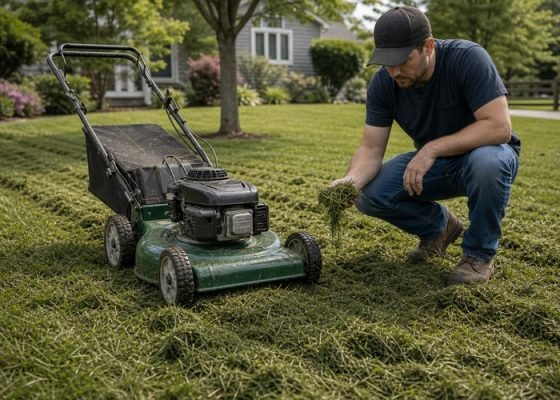
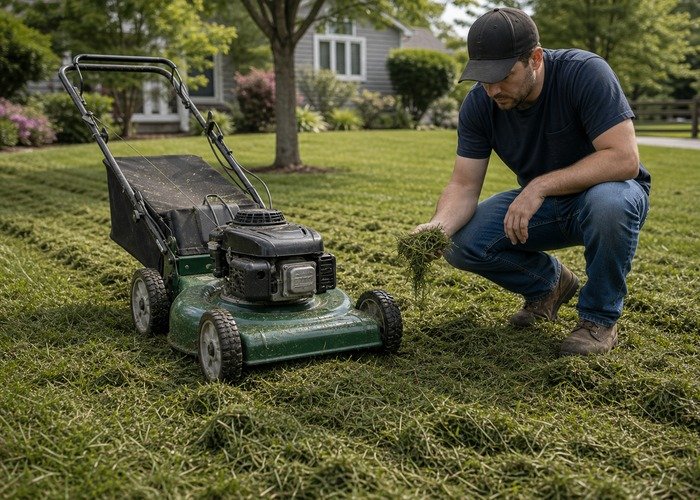
When a lawn mower leaves clumps, the lawn usually tells you what went wrong. Heavy piles behind the deck, wet ropes of grass, random streaks, or brown patches under old clumps all point to different causes. If you are looking at a mower from the SeekMach lawn mower category, remember that clumping is often a setup and timing problem, not only a machine problem.
The most common causes are wet grass, too much grass removed at once, dull blades, clogged deck airflow, ground speed that is too fast, or a discharge path that cannot clear. The fix starts with reading the pattern. Do not wash away the evidence before you look at where the clumps appear.
Lawn care guidance from extension sources such as University of Georgia lawn care resources is useful because it connects mowing practice with plant health. Clumps are not just ugly. Thick clippings can block light, trap moisture, and leave weak spots if they sit too long.
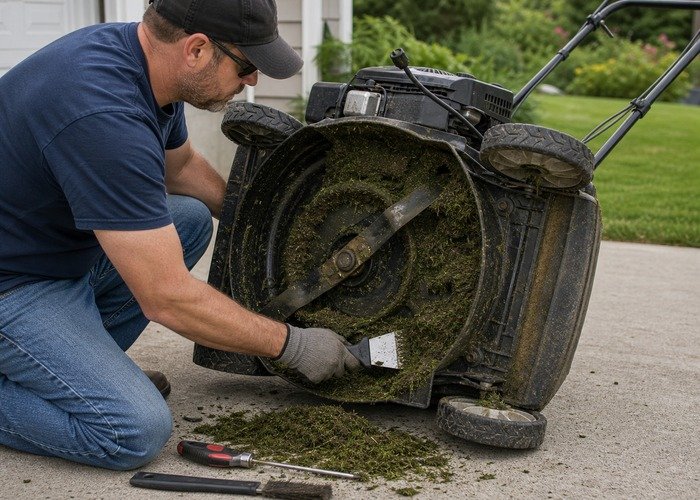
Wet grass sticks to itself and to the underside of the mower deck. Even a sharp blade can struggle when the deck airflow is full of heavy wet clippings. If the clumps are rope-like and the deck is packed with grass, the best fix may be waiting for drier conditions rather than changing parts.
Compare mower use with the wider SeekMach product overview before blaming the machine. The right mower still needs the right timing. The University of Minnesota lawn care guidance also explains why lawn care changes with weather and growth conditions.
| Field condition | What to check | Better decision |
| — | — | — |
| Long wet ropes | Grass too wet | Wait, raise deck, or mow in lighter passes |
| Heavy piles every few feet | Ground speed too fast | Slow down and let the deck clear |
| Brown shredded tips | Dull or damaged blade | Sharpen or replace blade |
| Clumps mostly on one side | Discharge blockage or deck buildup | Clean deck and inspect chute |
| Rows after tall growth | Too much removed at once | Cut higher first, then mow again later |
| Uneven streaks | Deck height or pitch issue | Check deck setup on flat ground |
A mower deck needs airflow to lift and discharge grass. Packed buildup under the deck reduces that airflow and narrows the space where clippings should move. The mower may sound normal but leave heavy clumps because grass cannot exit cleanly. Cleaning the deck after wet mowing can solve a problem that feels like a power issue.
Use the SeekMach application solutions when mower work is part of property planning. Some cleanup jobs belong to other equipment, while the mower should focus on turf. The Penn State Extension turfgrass resources offers turfgrass resources that help explain why mowing quality affects recovery.
A dull blade tears, bruises, and drags grass instead of cutting cleanly. The deck then has to move heavier, ragged pieces. If clumps come with brown tips and a fuzzy cut surface, inspect blade sharpness before changing deck height or mowing direction.
Before touching a blade or cleaning under the deck, follow safe shutdown procedures. The CPSC lawn mower safety guidance is a useful safety reminder because mower injuries often happen during clearing and maintenance, not just during mowing.
A mower can only cut, lift, and discharge so much grass at once. If the grass is tall or thick, slow down. This gives the blade and airflow time to process material. Fast travel through heavy grass usually leaves rows of clumps that require another pass anyway, so it rarely saves time.
On larger properties, a SeekMach tractor category may handle rougher areas before finish mowing. The point is to avoid forcing the lawn mower to behave like a brush machine when the grass is already out of range.
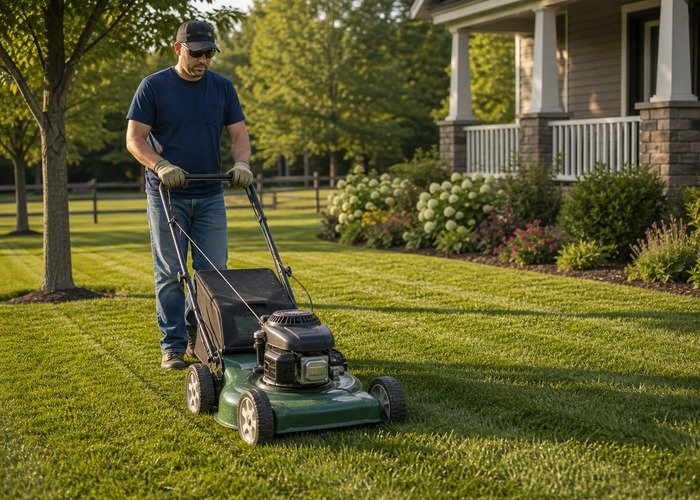
A second pass can spread clumps, but only after the cause is addressed. If the grass is still wet, the deck is still clogged, or the blades are still dull, the second pass may simply make smaller clumps. Clean, sharpen, raise the deck, slow down, or wait for better conditions before repeating the same mistake.
If the site includes material movement, storm cleanup, or landscaping, the SeekMach skid steer loader category and SeekMach excavator category may help handle work around the lawn. For crews, the OSHA landscaping and horticultural services gives broader landscaping safety context.
A mower leaves wet piles every few feet after a rainy week. The operator stops, lets the deck cool, safely cleans the buildup, raises the deck, and returns at a slower speed. The clumps do not disappear by magic, but the discharge becomes even enough that a later cleanup pass is light instead of frustrating.
That decision fits the SeekMach product overview: the best result comes from matching the machine, condition, and timing instead of simply pushing through the job.
The most common reasons are wet grass, deck buildup, dull blades, cutting too low, or driving too fast through heavy growth.
Only after fixing the cause. Otherwise the second pass may create more clumps.
Heavy clumps can block light and trap moisture. Spread or remove them if they sit in thick piles.
Yes. Clean cuts move through the deck better than torn, ragged grass.
Bagging wet grass can clog quickly. Waiting for drier conditions is usually better when possible.
A good mower result starts with reading the grass. With lawn mower leaves clumps, the best setting is usually the one that fits today’s growth, moisture, and ground condition. A lawn that handled one height last week may need a different height after rain, heat, or missed mowing.
Do not judge the cut only from the operator seat. Walk the lawn after the first few passes. Look for torn tips, uncut strips, heavy clumps, or scalp marks on high spots. The pattern tells you whether the issue is speed, blade condition, deck height, or grass moisture.
Mower maintenance should be tied to symptoms. Brown shredded tips point toward blade condition. Heavy wet rows point toward moisture and deck buildup. Repeated scalping in the same place points toward uneven ground or a deck set too low. Fixing the symptom directly is faster than guessing.
A practical mowing log can be very simple: date, height setting, weather, grass condition, and any problem seen afterward. After several weeks, the log shows which height works during fast growth, dry periods, or shaded wet areas.
| Work stage | What to record | Why it matters |
| — | — | — |
| Before mowing | Check moisture, deck setting, blade condition, and obstacles | Prevents clumps, scalping, and safety issues |
| First pass | Use a height and speed that match current grass condition | Keeps the deck from overloading |
| Problem areas | Slow down near shade, wet spots, slopes, and uneven ground | Improves cut quality and control |
| After mowing | Check deck buildup and look for streaks or clumps | Shows what should change next time |
Most rework comes from skipping a small observation at the start. Check the surface, listen to the machine, and stop when the result changes. If the machine begins leaving ridges, clumps, crooked holes, tire marks, or uneven finish, the correct move is not always more power. Often it is a slower pass, a cleaner setup, sharper cutting edge, better moisture timing, or a different machine for that part of the job.
Think of the job as a sequence instead of a single pass. Plan where material will go, how water will move, how the operator will turn, and what the finished surface should look like from ground level. The relevant SeekMach pages, including SeekMach lawn mower category and SeekMach product overview, are helpful starting points because equipment choice should come from the work pattern, not from the product name alone.
The last check should happen before tools are put away. Walk the work area, look at the surface from several angles, and note what changed. If the result will be exposed to rain, traffic, or repeated use, the first inspection after real conditions is even more valuable. That feedback is what turns one finished job into a better next job.
The first mistake is treating the machine as if it can overcome the wrong conditions. Wet turf, dry hardpack, loose gravel, rocky soil, sharp debris, or poor drainage each asks for a different pace. Forcing the same setting through every condition usually creates more work. When the result changes, stop and identify the condition that changed.
The second mistake is ignoring the edge of the work area. Edges are where water collects, tires drop, tools catch, decks scalp, and attachments swing close to objects. A clean center line with damaged edges is not a good finish. Make the turn area, shoulder, outlet, fence line, or discharge path part of the original plan.
The third mistake is using the final pass to hide earlier problems. A finish pass should refine good work, not cover up poor setup. If the base is uneven, the hole is crooked, the deck is clogged, or the tire path is full of debris, the final pass will only make the problem look smoother for a short time.
A fourth mistake is skipping the operator’s pause. A useful pause takes less than a minute: lower the attachment safely, look at the last ten meters of work, inspect the pattern, and decide whether to change speed, height, angle, route, or timing. That pause is often the difference between a clean article-worthy result and a job that needs to be redone tomorrow.
Stopping early is sometimes the professional choice. If soil starts smearing, grass begins clumping heavily, gravel turns to dust, tires start spinning, or the machine feels unstable, pushing ahead can damage the surface and the equipment. A short delay, a cleaning break, a different attachment, or a second machine may protect the job.
Another reason to stop is uncertainty. If an underground mark is unclear, a slope feels uncomfortable, a hydraulic connection leaks, a blade or tooth looks damaged, or the operator cannot see the work clearly, do not continue by habit. Clear the uncertainty first. Small machines are still powerful enough to turn a small question into a large repair.
Weather also decides timing. Rain can help settle dust and reveal drainage, but wet conditions can create ruts, clumps, and smeared finish. Heat can stress turf and operators. Cold or frozen ground can make digging and grading unpredictable. The schedule should serve the result, not the other way around.
After the job, write down one thing that worked and one thing to change next time. This habit sounds small, but it builds a local playbook for your soil, lawn, driveway, yard, crew, and machine. The best equipment advice is always improved by local experience because every site has its own weak spots.
A better next job starts faster because the operator already knows the first setting to try, the area to inspect, and the mistake to avoid. Over time, that means fewer wasted passes, less surface damage, cleaner finish, and more confidence when conditions are not perfect.
Watch a related mower clumping video here: https://www.youtube.com/watch?v=fvv7USS9eEs. When a lawn mower leaves clumps, treat the pattern like a diagnosis: moisture, deck airflow, blade condition, cutting height, and speed usually reveal the answer.