Telephone/WhatsApp:+86 156 2656 0610

Telephone/WhatsApp:+86 156 2656 0610
Email:info@seekmach.com

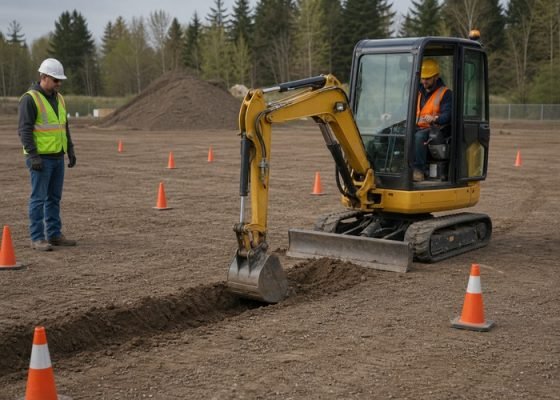
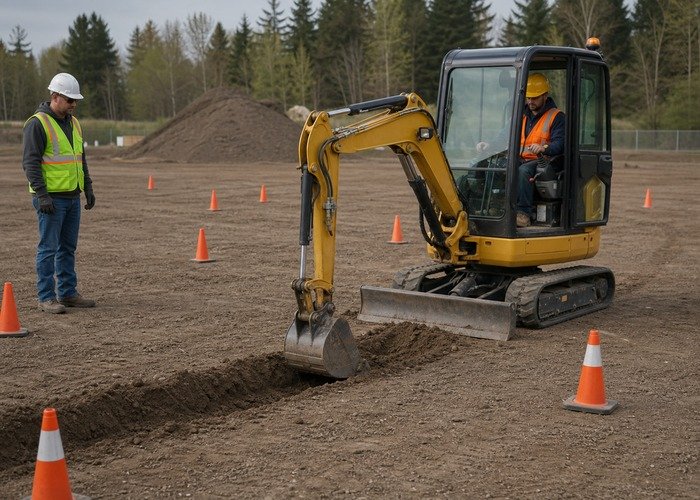
Quick answer: Learn the exact control pattern, complete a walkaround, set the machine level, keep the blade and tracks positioned for the task, use smooth combined movements, maintain an exclusion zone and stop whenever stability or visibility is uncertain.
| Stage | Operator check |
|---|---|
| Before start | Manual, control pattern, fluids, leaks, tracks and surroundings |
| Setup | Level ground, blade position, swing clearance and utilities |
| Digging | Smooth inputs, manageable bites and stable spoil placement |
| Shutdown | Lower equipment, neutralize controls and inspect damage |
No. Follow the manual and use controlled settings while learning smooth coordinated movements in a clear area.
Quick answer: A beginner should first build a stable machine position, identify the control pattern, keep people out of the swing area, rehearse smooth boom-stick-bucket coordination at low speed, and stop whenever visibility or ground support is uncertain.
Start on firm level ground with an empty bucket. Practice raising and lowering the blade, then boom, stick, bucket curl, and slow house rotation as separate inputs before combining them into a digging cycle.
| Stage | Pass condition |
|---|---|
| Setup | Machine level and exclusion zone clear |
| Controls | Pattern confirmed before digging |
| Cycle | Smooth cut, controlled swing, low dump |
| Shutdown | Attachment grounded and pressure released |
Continue until every control can be stopped smoothly and predictably; time alone is not proof of competence.
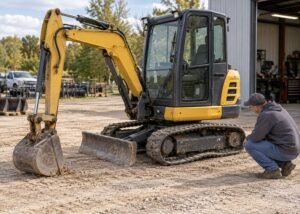
Mini excavator operating tips for beginners should start before the engine starts. A compact excavator looks approachable because it is small, but it can still tip, strike a person, damage utilities, overload a trailer, undermine a trench edge, or tear up a finished property in seconds. Good beginner operation is slow, planned, and repeatable. It is not about moving the joysticks fast.
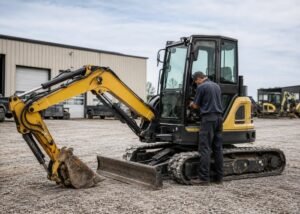
If you are comparing equipment in the SeekMach excavator category, think about operation and job fit together. The right machine size, bucket, blade position, track stance, ground condition, and operator visibility make the work easier before skill is tested. A beginner with a stable setup learns faster than a beginner fighting the wrong machine for the job.
The first goal is control. Learn how the upper structure swings, how the boom and stick move together, how the bucket curls, how the blade supports grading, and how the tracks change the machine’s balance. Practice on level open ground before working near walls, trees, slopes, foundations, utilities, people, or traffic.
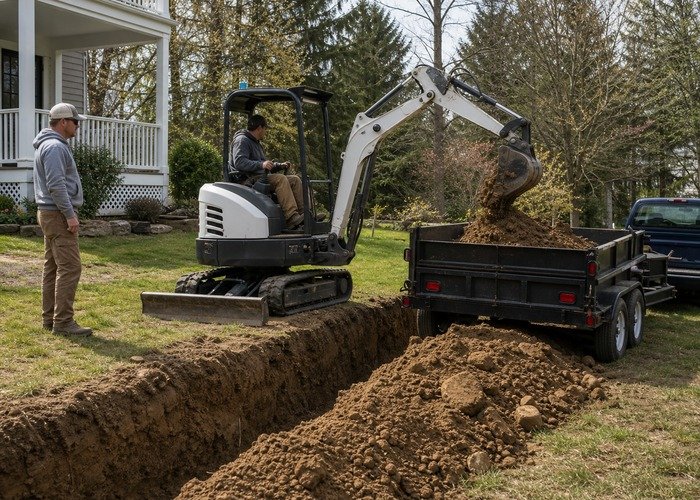
Walk the site before moving the excavator. Look for overhead lines, soft soil, buried utilities, slopes, hidden debris, septic systems, irrigation, tree roots, bystanders, pets, traffic, and places where spoil can be safely placed. Call the appropriate utility locating service before digging. In the United States, Call 811 explains the basic process for contacting local utility notification centers before excavation.
Do not treat a small trench as harmless. Soil can cave in, trench edges can fail, and undermined ground can drop under the tracks. The OSHA trenching and excavation page is written for jobsite safety, but the principles also help property owners understand why soil type, trench depth, access, and protective systems matter.
Set a swing zone. Keep observers outside it. A person standing near the counterweight, bucket, or trailer is too close even if the operator is moving slowly. Beginners often focus on the bucket and forget the tail swing behind them.
Before digging for production, practice each movement separately. Raise and lower the boom. Move the stick out and in. Curl and dump the bucket. Swing slowly left and right. Travel forward and backward. Raise and lower the blade. Then combine movements one at a time. Smooth operation is built from small coordinated motions.
Keep the bucket low when traveling. Travel slowly with the blade oriented in a way that improves stability for the task and follows the operator manual. Avoid sudden starts, stops, or turns. If the machine feels light or bouncy, stop and reassess the ground, attachment, load, and route.
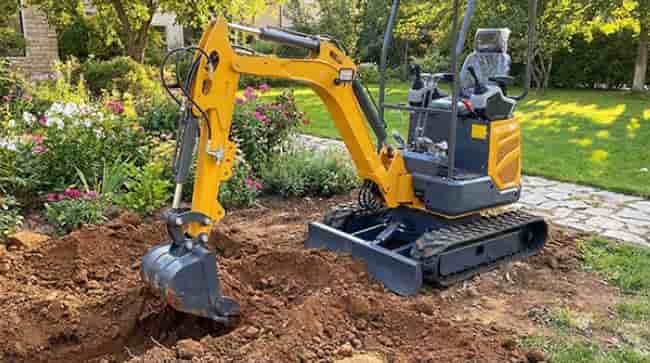
Practice digging a shallow trench where mistakes do not matter. Make a short pass, clean the bottom, place spoil away from the edge, and backfill. Repeat until the movements feel predictable. A beginner who practices twenty quiet minutes on open ground can save hours of repair later.
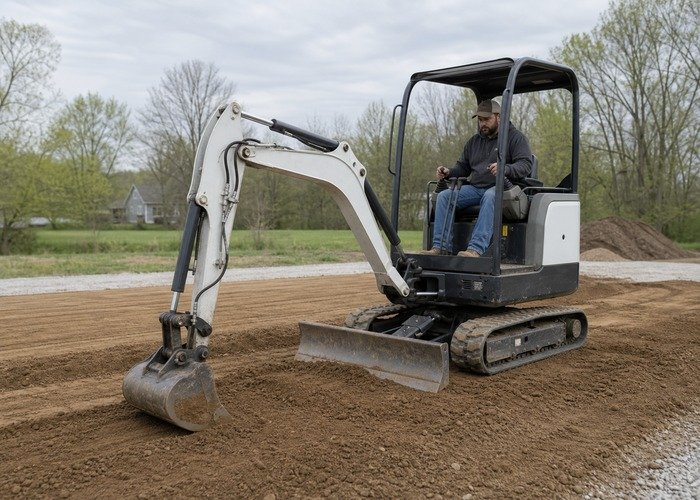
The backfill blade is useful for grading, stabilizing, and cleanup. It is not only a parking stand. When trenching, many operators set the blade for stability and reference, then dig with controlled bucket strokes. For finish grading, the blade can smooth loose material while the bucket shapes edges and pulls soil into low spots.
Do not force the blade into heavy pushing beyond the machine’s capacity. A mini excavator is not a bulldozer. If the blade starts bouncing, the tracks spin, or the machine veers sideways, the pass is too aggressive. Take smaller cuts and keep the machine level.
Blade position also affects awareness. Know where it is before turning or backing. On tight properties, a lowered blade can catch edges, curbs, forms, or landscaping. Slow travel protects the site and the machine.
A clean digging cycle usually starts with the bucket teeth entering at a manageable angle, the stick pulling, the bucket curling through the cut, and the boom lifting just enough to maintain control. Beginners often try to take too much material at once. The machine stalls, the trench gets rough, and the operator starts jerking the controls.
Use smaller bites. Keep the bucket teeth doing the cutting. Do not pry hard against buried objects you have not identified. If the bucket hits resistance, stop and investigate. Roots, rocks, pipes, concrete, and debris all need different responses.
Spoil placement matters. Keep spoil far enough from the trench edge that it does not overload the wall or roll back into the work. The OSHA excavation safety guidance summarizes basic hazards and is worth reviewing before any trenching task, even when the work is small.
A trenching bucket, grading bucket, auger, hydraulic breaker, thumb, and rake all change how the machine behaves. A bucket that is too wide for the soil or depth may overload the machine and make the trench sloppy. A narrow bucket may dig cleanly but take more passes. A thumb can help with logs, stones, and debris, but it changes visibility and pinch points.
Use the SeekMach product application solutions page when the job is bigger than a single bucket choice. Drainage, landscaping, demolition, trenching, and small foundation work each reward different machine and attachment combinations.
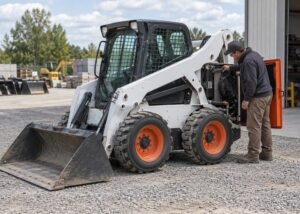
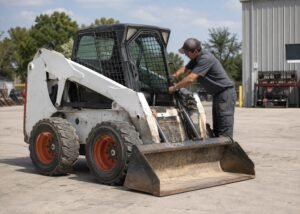
If most work is material handling rather than digging, compare the plan with the SeekMach skid steer loader category. A mini excavator can load and place material, but a loader may be more efficient when the job is repeated carrying, sweeping, grading, and loading on firm ground.
Slope work is where beginners can get into trouble quickly. Keep the machine as level as possible, avoid swinging heavy loads downhill, and do not cross steep slopes casually. The heavier the bucket load and the farther it is from the machine, the more leverage it creates. Even a compact excavator can feel stable one moment and wrong the next.
Plan the route before climbing or descending. Keep travel slow. Avoid working close to drop-offs, trench edges, retaining walls, or freshly disturbed soil. If the machine feels unstable, lower the attachment, stop, and reposition rather than trying to correct quickly with a swinging load.
The NIOSH construction safety resources are useful because they frame equipment work around struck-by, caught-between, visibility, and planning hazards. A beginner should think beyond the bucket and consider everyone and everything in the work zone.
Use the same pre-start routine every time. Check fluid leaks, track condition, loose hardware, bucket pins, quick coupler engagement, hydraulic hoses, mirrors or cameras if fitted, seat belt, controls, horn, lights, and the surrounding ground. Grease points should follow the manual. A machine that starts the day inspected is easier to trust.
Keep communication simple. If a spotter is needed, agree on hand signals and stop rules before the job begins. The operator should stop when the spotter disappears from view. Phones, shouting, and vague gestures are poor safety systems around moving equipment.
After the job, clean mud from the tracks, inspect for damage, park on stable ground, lower attachments, lock controls, and remove the key. These habits protect the next start as much as the current job.
The first mistake is moving too fast. Smooth work is faster in the end because it avoids rework and damage. The second is digging too close to a wall, utility, or trench edge without a plan. The third is forgetting tail swing. The fourth is lifting or carrying loads as if the excavator were a crane. The fifth is working with bystanders inside the swing radius.
Another mistake is ignoring transport. If the machine must be moved, trailer capacity, ramp angle, tie-down points, attachment position, and total loaded weight matter. Review the FMCSA cargo securement rules when transport is part of the job, and follow applicable local requirements.
Finally, do not learn near expensive surfaces. Practice away from finished driveways, utilities, buildings, fences, and landscaping. The repair bill for one careless swing can be larger than the rental or training time you tried to save.
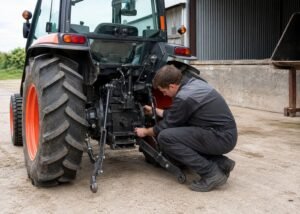
A beginner should not force every job through the excavator just because it is available. Moving pallets, spreading gravel over a wide pad, sweeping a paved area, or carrying repeated bucket loads across a site may be better handled by a loader. The SeekMach tractor category is also worth comparing when the property work includes mowing, light grading, pulling implements, and material movement rather than precise digging.
Good crews separate tasks. The excavator opens the trench, shapes the drainage line, pulls stumps, or reaches over an obstacle. A loader or tractor moves material, spreads aggregate, or supports cleanup. That division keeps the excavator from traveling too much, keeps the bucket work precise, and reduces ground damage. For a new operator, it also lowers pressure. You can focus on smooth digging and controlled placement instead of trying to make one compact machine do every job on the site.
A first excavator job is too hard when the consequences of a mistake are expensive, dangerous, or hard to reverse. Digging near marked or unmarked utilities, working beside a foundation, cutting into a slope, lifting awkward objects, or trenching where people must enter the excavation should not be treated as casual practice. A beginner can still help on those projects, but the plan should include experienced supervision, correct protective systems, and a stop-work rule that everyone respects.
The better first jobs are visible, shallow, and forgiving: cleaning a drainage swale, reshaping a small soil pile, practicing backfill, loading loose material from level ground, or digging a short practice trench away from utilities and structures. These jobs teach bucket angle, swing control, spoil placement, blade use, and travel feel without forcing the operator to solve every hazard at once. Once those movements are smooth, the operator can add tighter access, deeper cuts, and more demanding finish work step by step.
Keep notes after each practice session. Record what felt smooth, what felt jerky, where visibility was poor, and which setup changes made control easier. Those notes turn beginner practice into a repeatable improvement plan instead of a series of guesses. Repeat the easy drills often.
Basic control can feel familiar after a short practice session, but productive and safe work takes repeated practice. Digging near utilities, slopes, structures, or people should be treated as higher-risk work, not beginner practice.
No. A bigger bucket can overload the machine, make the trench rough, and reduce precision. Match bucket width to soil, trench purpose, depth, and machine capacity.
Yes, but finish grading takes patience. Use the blade and bucket together, take small corrections, and avoid overworking wet or loose soil.
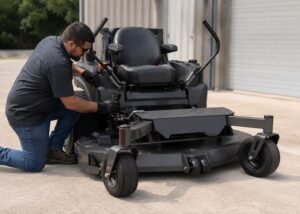
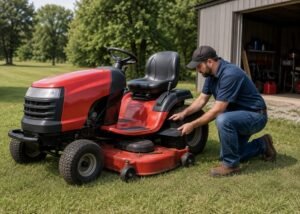
Plan the work zone, call for utility locating where available, inspect the ground, keep bystanders away, and understand soil and trench hazards. The SeekMach lawn mower category can help compare whether mowing and property-care tasks should stay with a mower instead of being forced into an excavator job.
Watch this directly related beginner operation video: mini excavator operating tips on YouTube. Then practice slowly in an open area before taking the machine to a tight jobsite. Mini excavator operating tips for beginners are most useful when they become repeatable habits.
For a repeatable inspection routine covering fluids, hoses, grease points, tracks, and service records, use the mini excavator maintenance checklist.
Search performance shows readers need a faster answer for mini excavator operating tips. Confirm the exact model, operating weight, included equipment, service support, documents, and recurring ownership costs in writing. Compare alternatives on the same scope and never substitute a headline number for a complete delivered-and-supported specification.
| Check | Evidence | Decision |
|---|---|---|
| Machine fit | Manual and serial-specific specification | Pass only when job limits are covered |
| Support | Parts list, warranty route, response owner | Price downtime risk separately |
| Total cost | Written quote with exclusions | Compare like for like |
Related planning: used compact tractor inspection checklist and mini excavator trailer transport guide.